Plywood Standard Sizes and Dimensions: A Global Manufacturer's Guide
Standard plywood sizes vary by market: 4×8 ft in North America, 2500×1250 mm in Europe, 2400×1200 mm in Australia, and 1220×2440 mm in Korea. This guide covers formats, thicknesses, tolerances, and how to order the right size.
Why Plywood Sizes Vary by Market
Plywood sheet sizes are not universal. A US lumber yard stocks 4×8-foot panels because American framing conventions are built around 16-inch and 24-inch stud spacing. A German builder expects 2500×1250 mm sheets because European modular construction evolved around metric dimensions. Korean formwork contractors work with 1220×2440 mm panels certified to KS F 3113, while Australian sites use 2400×1200 mm sheets graded under AS 6669.
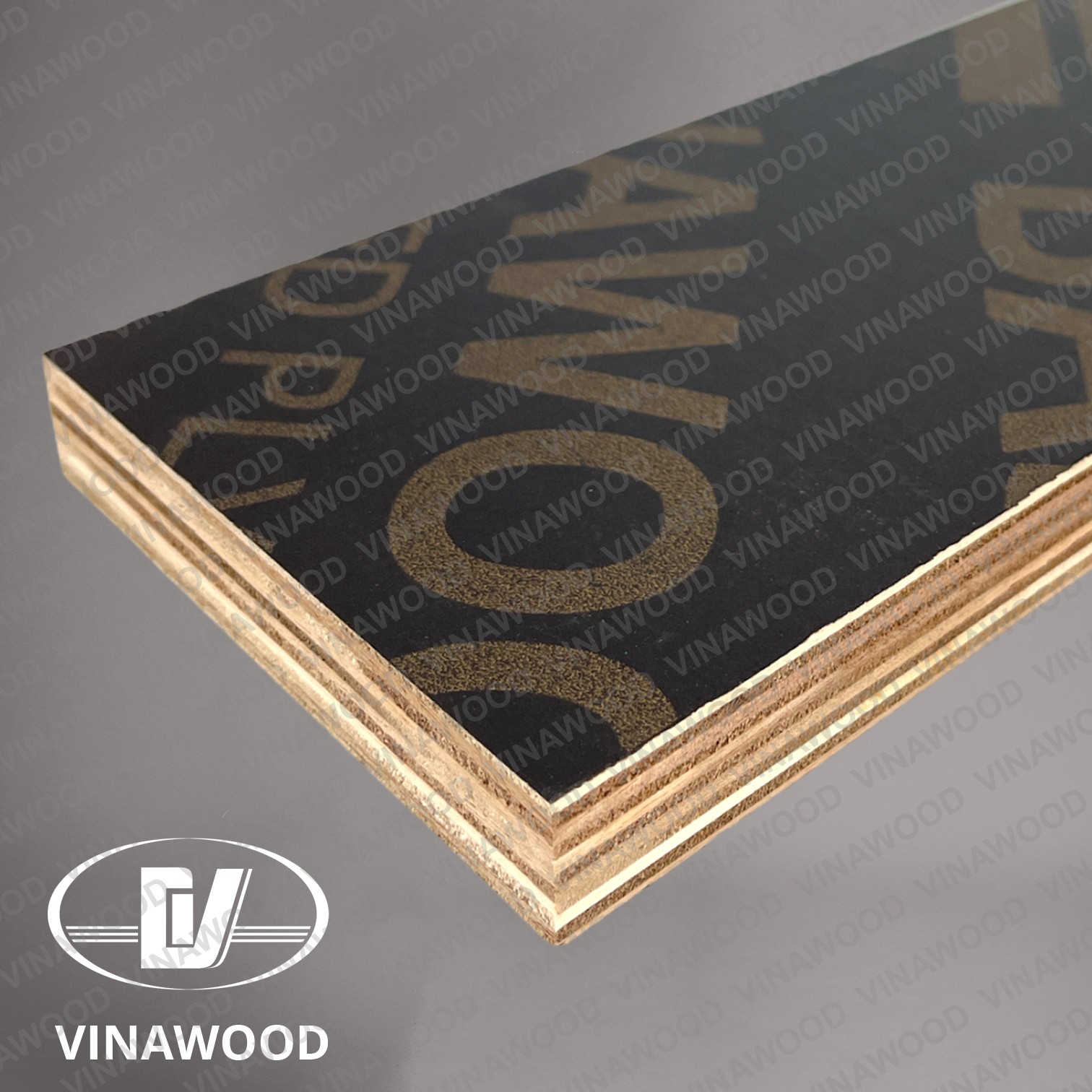
For manufacturers like Vinawood, this means producing the same core product — cross-laminated hardwood plywood with a phenolic film face — in multiple standard formats to serve 19+ export markets. Understanding which size convention applies to your project is the first step in specifying the right panel.
US and North America: 4 ft × 8 ft (1220 × 2440 mm)
The standard North American plywood sheet measures 48 inches by 96 inches, commonly called 4×8. The metric equivalent, as cut at the factory, is 1220 × 2440 mm. This format dominates US and Canadian lumber yards across all plywood types — CDX sheathing, sanded panels, and structural formwork grades alike.
Common thicknesses in the North American market include ¼″ (6 mm), ⅜″ (9 mm), ½″ (12 mm), ⅝″ (15 mm), and ¾″ (18 mm). For concrete formwork, 18 mm (¾″) is the standard working thickness, offering the balance of bending strength, weight, and reuse potential that formwork systems require.
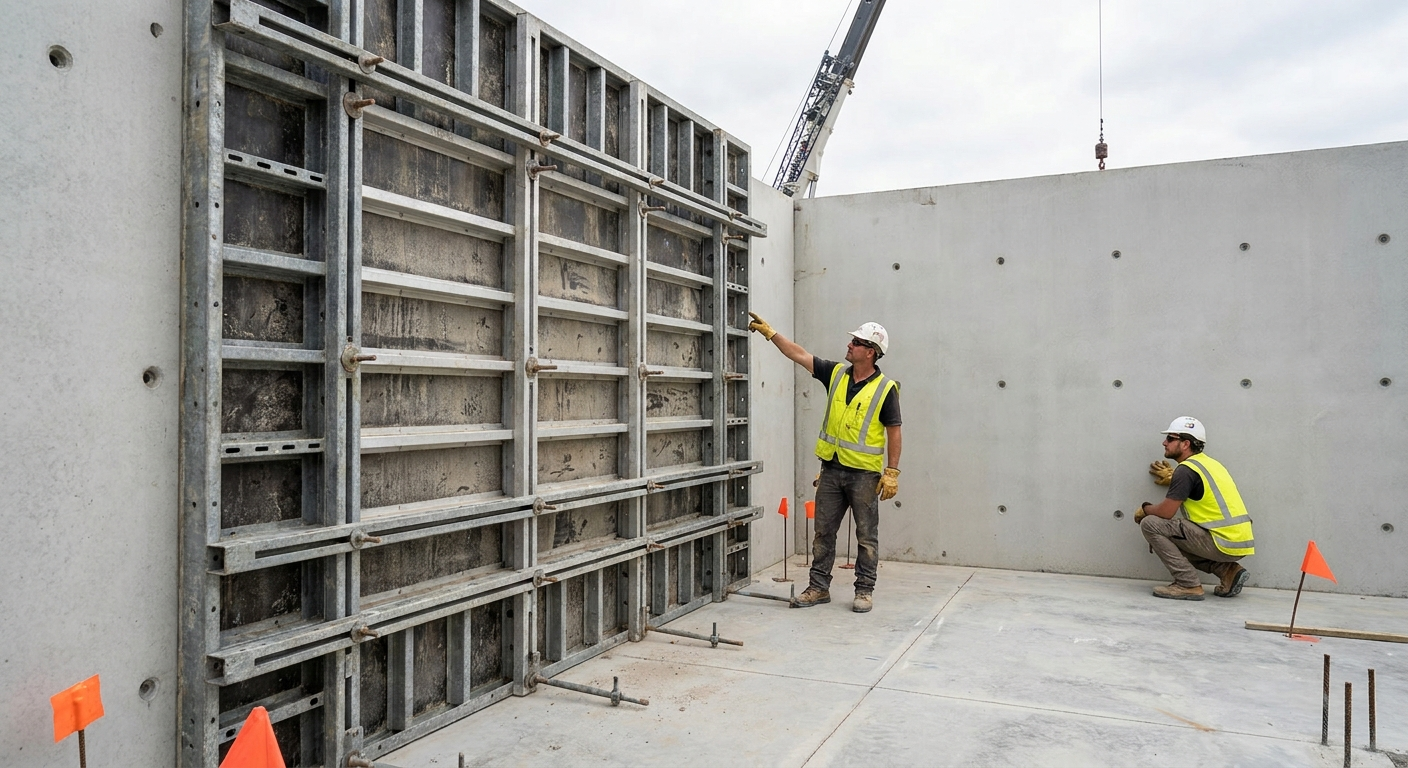
HDO and MDO formwork plywood in North America standardises on the 1220 × 2440 × 18 mm format. Vinawood's imperial-size plywood collection and HDO plywood range are manufactured to this specification.
Europe: 2500 × 1250 mm
The standard European panel measures 2500 × 1250 mm — slightly larger than the imperial 4×8 format in both length and width. This size aligns with European modular construction grids and fits the PERI, DOKA, and other metric formwork systems used across the EU.
Common thicknesses for European formwork plywood are 12, 15, 18, 21, and 24 mm. The 18 mm thickness is the most widely specified for standard wall and slab formwork, while 21 mm and 24 mm panels are used for heavy-pour walls and slabs with wider stud spacing.
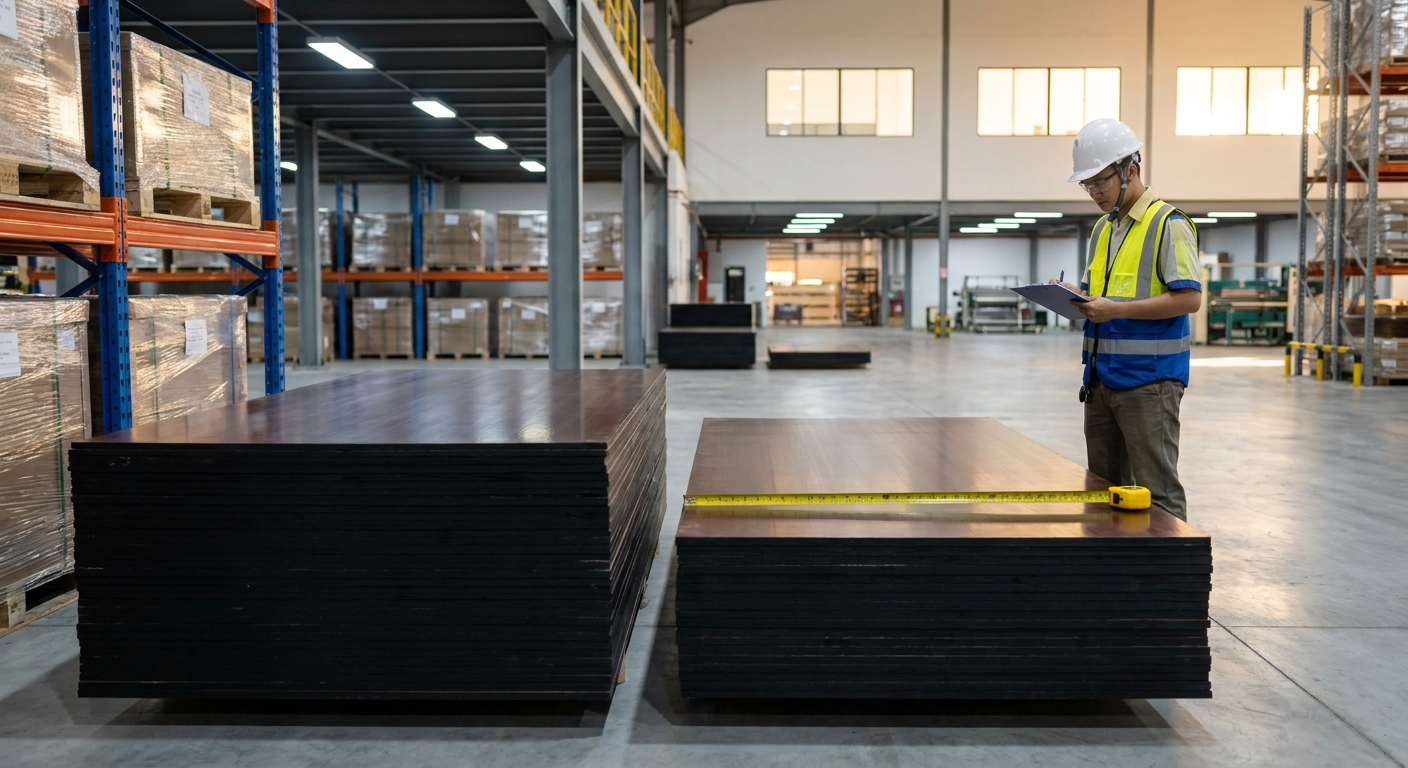
Dimensional tolerances under EN 315 allow ±1 mm per metre for length and width, and +0.74 / −0.94 mm for thickness. A nominal 2500 mm panel can legitimately measure between 2497.5 and 2502.5 mm and still pass specification.
Many European sites also receive 1500 × 3000 mm oversized formwork panels for applications where reduced joint lines improve concrete surface finish. Vinawood's European-size plywood collection covers the full range, and Pro Form (EN 636-3, WBP phenolic, up to 20 reuses) is the premium option for demanding European specifications.
Korea: KS-Standard Sizes
Korean construction uses plywood certified to KS F 3113 for concrete formwork. The standard sheet size is 1220 × 2440 mm — dimensionally identical to the US imperial format but carrying different certification, film specification, and quality inspection marks.
Standard thicknesses under the Korean system include 12, 15, 17, and 18 mm. The 17 mm thickness is a Korea-specific convention for concrete form applications, rarely seen in other markets. Korean formwork contractors rely on this specification for compatibility with locally designed forming systems.
Vinawood's KS plywood collection is manufactured specifically for the Korean market with KS F 3113 certification.
Australia and Oceania
The standard Australian plywood sheet measures 2400 × 1200 mm — a metric close-approximation of the 4×8-foot imperial format. Australian structural plywood is graded under AS/NZS 2269, with formwork panels additionally meeting AS 6669.
The F-grade system rates structural plywood by characteristic bending strength: F11 (11 MPa, light-duty), F14 (14 MPa, residential), F17 (17 MPa, standard commercial formwork), and F22 (22 MPa, heavy-duty). F17 is the default specification for most Australian commercial formwork projects.
Nominal thicknesses in Australia include 12, 17, and 19 mm. The 17 mm thickness — not 18 mm — is standard under AS/NZS rounding conventions. For detailed guidance on Australian formwork specification, see our Formwork plywood Australia guide.
Thickness Tolerances and What They Mean on Site
Plywood dimensions are nominal, not exact. EN 315 defines the international tolerance band that most export markets reference:
Thickness: +0.74 mm / −0.94 mm. An 18 mm panel can measure anywhere from 17.06 to 18.74 mm and still pass specification. A 17 mm panel can measure 16.06 to 17.74 mm.
Length and width: ±1 mm per metre. A 2440 mm panel has a tolerance of ±2.44 mm; a 2500 mm panel allows ±2.5 mm.
On site, these tolerances affect formwork accuracy in three ways: shim adjustments at panel joints, stacking regularity when panels of different batches are mixed, and joint-line visibility on the finished concrete surface. For high-quality architectural off-form concrete (AS 3610 Class 1–2), tighter manufacturing tolerances and consistent batch sourcing are recommended.
Use Vinawood's dimension converter for quick imperial-metric thickness conversions.
Panel-to-Project Math: How to Count Sheets
Calculating sheet requirements starts with coverage area. A single 1220 × 2440 mm sheet covers 2.98 m² (32.05 ft²). A 2500 × 1250 mm European sheet covers 3.13 m².
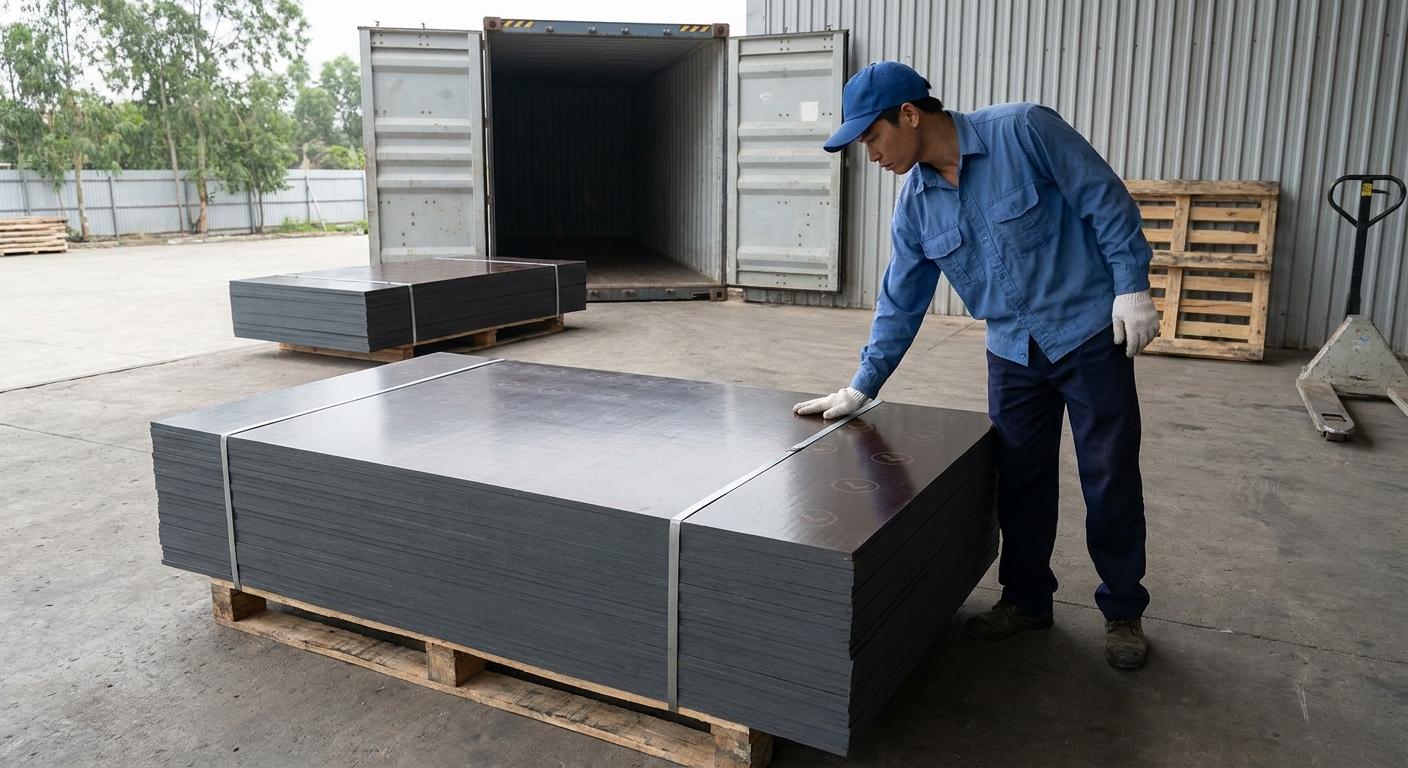
For container logistics, sheet count depends on thickness. At 18 mm, a standard 40HC container holds approximately 500–550 sheets of 1250 × 2500 mm plywood, or around 22–24 m³ of panel volume. Planning container loads accurately avoids costly underloads and shipping surcharges.
Vinawood's packing calculator and CBM calculator help project managers plan sheet quantities for container-load orders.
Which Size Should You Order?
The decision framework is straightforward: match your order to the local standard of your project location.
Projects in the US, Canada, or any market using imperial framing: 1220 × 2440 mm panels. This is the native format for North American formwork systems and building codes.
Projects in the EU, UK, Scandinavia, or any market using metric modular construction: 2500 × 1250 mm panels. Compatibility with PERI, DOKA, and European formwork systems is built into this format.
Projects in Australia or New Zealand: 2400 × 1200 mm panels, F17-graded where formwork is the application.
Projects in Korea: 1220 × 2440 mm with KS F 3113 certification.
Vinawood manufactures all major panel formats and can produce custom sizes for container-load orders with standard lead times. For product selection by application, the Form Basic (EN 636-2, WBP melamine, up to 10 reuses) and Pro Form (EN 636-3, WBP phenolic, up to 20 reuses) ranges are available in both imperial and European sizes.
Category
guides
Related Countries
Related Products
▶Sources & References (5)
- EN 315:2000 — Plywood. Tolerances for dimensions — European Committee for Standardization (CEN) (2000-01-01)
- Panel Design Specification — Softwood Plywood Sizes — APA — The Engineered Wood Association (2023-01-01)
- AS/NZS 2269:2012 — Plywood — Structural — Standards Australia / Standards New Zealand (2012-01-01)
- KS F 3113 — Plywood for concrete form — Korean Agency for Technology and Standards (2018-01-01)
- Plywood Sizes Reference — Canadian Wood Council (2019-01-01)