EU Plywood Capacity Shrinks as Metsä Exits Suolahti
Metsä shut Suolahti softwood plywood at the end of May and PAGED closes Bartoszyce in August. EU27 plywood output already fell 1.4% in 2025 as German housing permits jumped 15.1%.
Metsä Group cut the last softwood plywood sheets at Suolahti, Finland, at the end of May 2026. That closed a mill that had already lost its birch line in March 2025, and it took about 370 jobs with it. Timber Industry News reported the shutdown on 12 June. Inventories will keep some customers supplied through the rest of 2026. After that, those tonnes are gone.
A second cut landed this month. PAGED is shutting its Bartoszyce plant in northern Poland in August 2026. The site made blockboard cores, not commodity film-faced sheets, and it was small at around 12,000 m³ a year. Still a hole in a regional supply chain that has already been shrinking. The European Panel Federation put EU27 plywood output at 2,388,600 m³ in 2025, down 1.4%. Only Poland and the Baltics grew.
Our last two briefs covered birch duties and the US tariff-scope calendar. This fortnight the story is capacity. European buyers of formwork and structural panels are losing local tonnes while German housing permits finally turn up. That mismatch is what procurement teams should price, not a generic "tight market" line.
The tonnes that left
Suolahti is the bigger loss. Softwood plywood production stopped on 22 May. Around 140 staff stayed into early June to clean the site. Metsä blamed weak profitability and said it will keep shipping from stock through year-end. The associated Kumpuniemen Voima heat-and-power plant is coming down from September. Machinery dismantling will run more than a year. New tenants are unlikely before 2028.
That is not a temporary curtailment. It is an exit.
PAGED's Bartoszyce closure is narrower. Twenty-six people worked there. The group keeps four plants, with plywood concentrated at Pisz and Morāg and a veneer mill near Pärnu in Estonia. PAGED did not state a reason. The lost output was core stock for blockboard, so furniture and interior buyers feel it first. Formwork buyers should still treat it as a signal. When a regional mill network sheds a node, the remaining presses get busier and less flexible on short-notice lots.
EPF numbers, released at the Milan general assembly on 12 June and reported by Timber Industry News, put the 2025 plywood slide in context. Particleboard, MDF and softboard all grew. Plywood did not. Across a wider Europe that includes Russia, Turkey, Ukraine and Belarus, plywood output fell 4.2% to 6,349,600 m³. Poland rose 11% and the Baltic states 5.1%. Those two exceptions are now carrying more of the load just as one Polish specialty plant closes and a Finnish plywood town goes dark.
Replacement capacity is not a 2026 story
Latvijas Finieris is the main European mill adding birch plywood, not shedding it. Timber Industry News ran the expansion recap on 17 August. Verems near Rēzekne lifted annual plywood capacity from about 45,000 m³ to 85,000 m³ on a €100 million spend. That line is finished. The next two are not. A €15 million peeling upgrade at Sastamala, Finland, is due to start in early 2027. Kohila Vineer in Estonia just signed a construction contract on 7 August for more than €70 million, with work starting at the end of this month and a new line scheduled for early 2028.
Group plywood production reached about 344,000 m³ in 2025, up from 333,000 m³ in 2024. Gradual. Verems adds roughly 40,000 m³ of nameplate, but Kohila will not ship a single extra sheet this winter. From a Vietnamese mill desk, that timing is the part European buyers keep missing. We have had Q4 form-ply conversations this month where the buyer assumed Baltic expansions would already offset Suolahti. They will not. The new presses are a 2027 and 2028 event.
Latvijas Finieris is also spreading log intake across Latvia, Estonia, Finland and Sweden, processing more than 900,000 m³ of birch a year. That is a birch-ply strategy. It does not refill the softwood plywood gap Metsä left in central Finland, and it does not make film-faced plywood for concrete work any easier to book on four weeks' notice.
Price and freight, 19 August
Public plywood FOB prints for this fortnight are still thin. The cleanest nearby read is North American lumber, which is not a panel but sets the mood for structural wood costs. Lumber futures sat at $581 per thousand board feet on 19 August, up 1.84% on the day after a weak run, per Trading Economics. The contract is still down 10.06% over the month and 2.52% versus a year earlier. Trading Economics models point to about $562 by the end of the quarter. Soft input costs do not, by themselves, loosen European plywood. They just stop adding pressure from the sawn-wood side.
Ocean freight is working in Europe's favour this month and against the US. Drewry's World Container Index rose 1% to $4,339 per 40ft box on 13 August, lifted by the transpacific. Shanghai to Rotterdam fell 5% to $4,425. Shanghai to Genoa dropped 8% to $5,080. Shanghai to Los Angeles rose 6% to $6,244 and Shanghai to New York jumped 10% to $8,706. Carriers blanked 10 transpacific sailings in each of the past two weeks. Asia to Europe had three blanks on the books. A European importer booking Vietnamese formwork this quarter pays less for the box than a US Gulf or East Coast buyer on the same week.
That split showed up in our late-August tariff brief. It still holds. Capacity leaving Europe plus cheaper Asia-Europe freight is the pairing that matters for Q4 landing cost.
Permits up. Presses down.
Germany is the EU's largest plywood importer, and Destatis published the first-half housing numbers on 18 August. Authorities approved 126,300 dwellings in the first six months of 2026, up 15.1% or 16,600 units on the same period in 2025. That is the strongest first-half rise since 2016. Destatis was careful to say the jump started from a low base: 106,700 permits in H1 2024 and 109,800 in H1 2025.
The mix leans toward concrete. New-build dwellings in residential buildings reached 103,100, up 15.8%. Multi-family buildings, the largest class, accounted for 67,000 new dwellings, up 16.9%. Single-family permits rose 12.7% to 24,000. June alone cleared 21,600 dwellings, 13.8% above June 2025. Multi-family work eats formwork panels. Detached housing eats sheathing. The German rebound is heavier on the first of those.
A permit is not a pour. Ifo still talks about cancellations and a completions year that looks soft. Even so, a 16,600-unit swing in approvals in the EU's biggest import market, arriving in the same summer that Suolahti stopped pressing, is the demand-side half of the capacity story. Buyers who wait for the 2027 Baltic lines will be shopping against that permit pipeline with fewer local mills in the bid list.
What Vietnam can and cannot fill
Vietnamese wood and wood-product exports reached US$1.58 billion in April 2026, up 12% on March and 8% on April 2025, according to Viet Nam Customs figures carried by Fordaq from the ITTO market report. January-April totals hit US$5.57 billion, up 3% year on year. Finished wood products inside that pile were US$3.57 billion, down 3%. The UK line was firmer: US$26.8 million in April, up 23% year on year, and US$94.3 million for the first four months, up 16%.
Keep the US duty scope straight if you also buy for North America. The Commerce final determinations that took effect 21 July cover hardwood and decorative plywood. Film-faced formwork, construction sheathing and marine-grade structural panels sit outside that investigation. Our mid-August birch brief made the same point on the European duty list. Do not provision a decorative-grade cash deposit against a formwork bill of lading.
EUDR is the other calendar item. Large and medium operators must comply from 30 December 2026. Micro and small operators follow on 30 June 2027, except those already under the old EU Timber Regulation, who stay on the December date. The European Commission restated those dates after the 2024 and 2025 amendments. Plot coordinates and a due-diligence statement are now part of the landed cost for any HS 4412 sheet entering the Union. Plantation-grown acacia, eucalyptus and hevea from a documented mill is easier to file than a mixed-origin birch bundle with a thin paper trail.
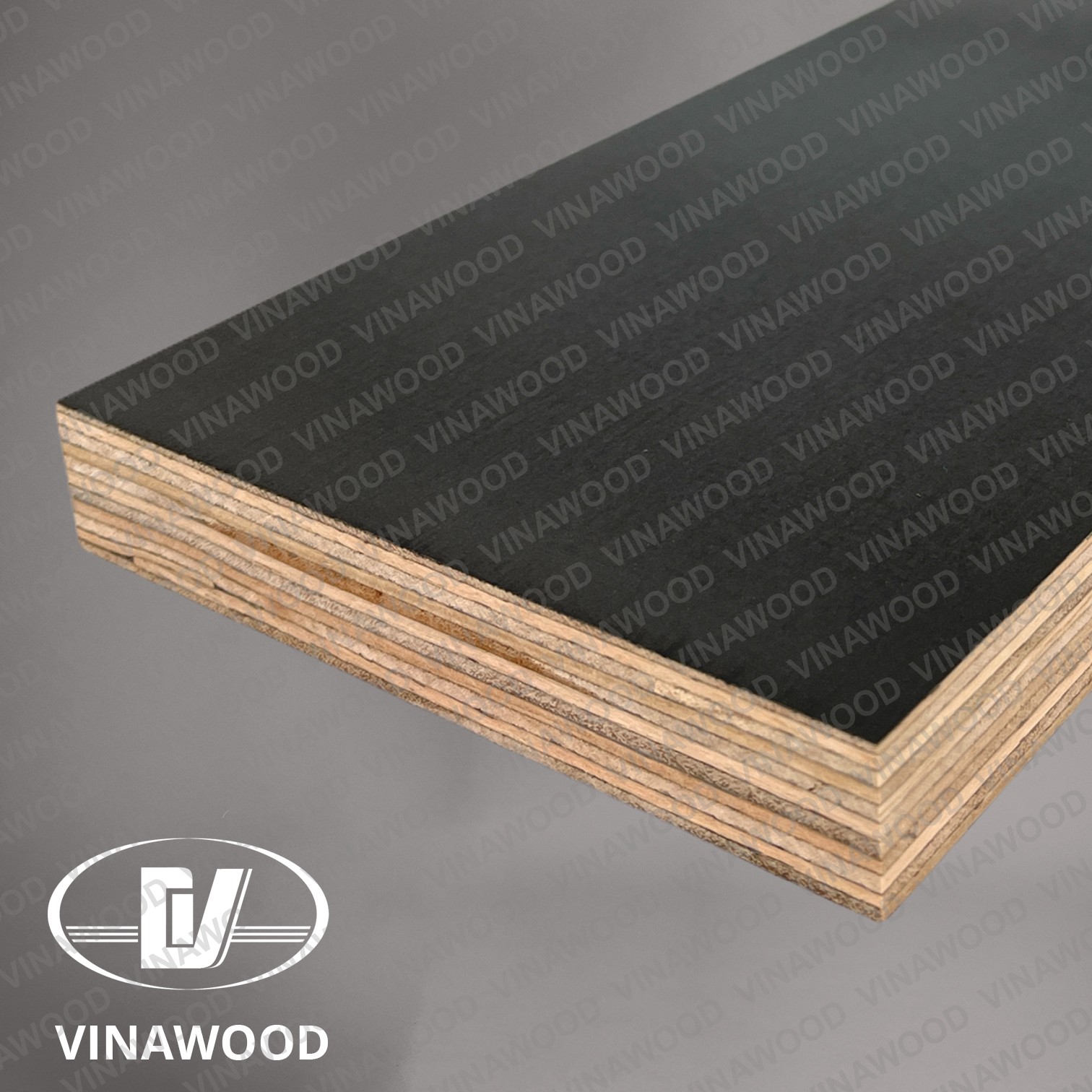
For Class 3 / EN 636-3 exterior formwork, the specification is phenolic-bonded product such as Pro Form. Form Extra is a higher-melamine-content MUF panel in the EN 636-2 envelope, not a Class 3 sheet. Mixing those two on a bid because "both are film-faced" is how a site ends up with the wrong glue class after the first wet season.
What Q4 buying looks like from here
European plywood capacity is tighter than it was in May, and the mills that are expanding will not close the gap this year. German permits say more concrete work is being approved. Asia-Europe boxes got cheaper in the week to 13 August while transpacific boxes did the opposite. Lumber eased on the month, which takes one cost argument off the table without putting extra panels into Antwerp or Hamburg.
Lock Q4 and early-Q1 formwork volume against mills that can document origin, glue class and CE marking now. Ask for the DDS pack before the vessel, not after discharge. The Suolahti inventory window closes at year-end. Kohila does not open until 2028. That is the gap.
About Vinawood
Vinawood is a Vietnamese plywood manufacturer established in 1992. The mill ships more than 5,000 containers a year to 55+ countries, with film-faced and formwork panels built on a 12-step process and 100% individual sheet inspection. Core certifications include ISO 9001, FSC-COC, PEFC, EN 13986 CE marking, and EPA TSCA Title VI for US-bound orders. Wood is plantation-grown. For Q4 and Q1 formwork enquiries, request a quote.
Category
market-insights
Related Markets
Related Products

▶Sources & References (10)
- Metsä Group ends production at Suolahti plywood mills — Timber Industry News (2026-06-12)
- PAGED closes Polish wood processing plant — Timber Industry News (2026-08-10)
- European wood-based panels production output rose 3% in 2025 — Timber Industry News / EPF (2026-06-16)
- Latvijas Finieris bets big on birch plywood expansion — Timber Industry News (2026-08-17)
- Baugenehmigungen für Wohnungen im Juni 2026: +13,8 % zum Vorjahresmonat — Statistisches Bundesamt (Destatis) (2026-08-18)
- Drewry WCI rises for second week as Transpacific rates climb — Container News / Drewry (2026-08-13)
- Lumber — Price, Chart, Historical Data, News — Trading Economics (2026-08-19)
- Vietnam wood exports steady at US$1.58 Billion in April amid trade defence pressure — Fordaq / ITTO (2026-05)
- Regulation on Deforestation-free products — European Commission (2026-08)
- 1–15 August 2026 Tropical Timber Market Report — ITTO (2026-08)