Storm Floods Leave Vietnam Mills Short of Dry Veneer
P&I clubs cancelled Red Sea war-risk cover from 16 August as Drewry’s index rose 4% to $4,526. Transpacific boxes jumped 9%. Storm Narra rain tightens veneer supply at other mills.
International Group P&I clubs cancelled commercially reinsured war-risk cover on a defined Red Sea and western Indian Ocean box from 16 August. NorthStandard, UK P&I, The Swedish Club, London P&I and other Group members posted the notices after their commercial reinsurers pulled back, Splash247 reported. The excluded waters run south of latitude 25°30'N through the Gulf of Aden. Ordinary hull and P&I mutual cover was not withdrawn. The extra war-risk layer is what left the standard policy.
For a buyer quoting a Q4 container of film-faced plywood out of Vietnam, whether the discharge is New York, Rotterdam, Jebel Ali or Melbourne, the mill can still load on a published production week. What moved is the ocean route and the insurance endorsement on the bill of lading. Clubs say cover can be bought back on separately agreed terms. That is a procurement cost, not a mill FOB change.
The same week, northern Vietnam sat under Storm Narra (Storm No. 4). The National Centre for Hydro-Meteorological Forecasting placed the centre over the Gulf of Tonkin at 4 a.m. on 24 August, about 140 km east-southeast of Quang Ninh, with sustained winds of 88 kph, VnExpress International reported. The system had not made landfall in Vietnam. Circulation rain still flooded houses and washed out roads. Freight moved with the insurance news: Drewry's World Container Index rose 4% to $4,526 per 40ft on 20 August. Shanghai to New York jumped 9% to $9,507. Shanghai to Los Angeles rose 9% to $6,802. Shanghai to Rotterdam eased 1% to $4,401. Shanghai to Genoa fell 2% to $4,955. Our 19 August capacity brief already had Europe paying less for the box than the US East Coast. That split is now wider. A US importer has to put the transpacific premium on the worksheet before arguing FOB. A European, Middle Eastern or Australian importer has a different worksheet: a cheaper or unchanged ocean line that can still disappear if the ship changes route after the war-risk endorsement is priced.
What the cancelled cover means for routing
The notices take effect from 16 August. The zone reaches further north than some earlier Red Sea restrictions, so more of the Saudi western coastline now sits inside the war-risk definition. Mutual P&I for ordinary marine liabilities stays in place.
Lloyd's List Intelligence's Red Sea Brief for 20 August is the traffic picture a buyer should read before accepting a Suez transit time. Nearly 1,090 transits passed the Suez Canal in the four weeks to mid-August, the highest four-week volume since January 2024 and still 41% below pre-crisis levels. Clubs introduced buyback cover after the reinsurer pullback, Lloyd's List said. Some buyback wording excludes Saudi-owned, operated or flagged ships.
Carriers are treating Suez as a conditional routing. Europe and the eastern Mediterranean feel that first. A buyer into Rotterdam, Genoa, Piraeus or a Black Sea relay should write the routing on the purchase order: Suez or Cape, and who pays if the ship flips after the war-risk endorsement is priced. Gulf and Red Sea discharge ports sit closer to the defined box; insurance language belongs on the file even when the ocean print looks calm. Australia and the rest of Asia-Pacific usually sit outside that box on a typical eastbound string, but any relay or feeder that touches the Gulf of Aden inherits the same endorsement question. Transit time, not the spot rate, is what a site manager feels when a pour date is fixed. A US buyer on a typical transpacific string is not in the Red Sea box. The same week's 9% USEC jump still lands on that Q4 budget.
Storm Narra: haul, veneer supply and inspection
VnExpress, citing the forecast centre, recorded 100-200 mm of rain across northeastern Vietnam and Thanh Hoa from 7 p.m. on 21 August to 4 a.m. on 24 August. Lang Son, Quang Ninh, Bac Ninh and Hai Phong saw 180-380 mm. Hong Ha in Quang Ninh logged 547 mm. Viet Nam News put the Gulf of Tonkin under a Level 3 disaster-risk warning, with a Guangxi landfall expected around 27 August.
Published damage reports remain inland. VnExpress reported one death in a Lang Son landslide and 2,506 homes flooded there. Viet Nam News reported more than 900 washouts on local roads. In Bac Ninh, the Thuong River at Phu Lang Thuong sat 2 cm above the Level 3 mark. Official notices described Gulf of Tonkin seas as very rough, with 2-4 m waves. As of 24 August, no commercial container-terminal closure in Hai Phong or Quang Ninh has been published, and no named plywood mill has announced a press stop.
After this rain, the plywood risk is not only haulage. Flooding and heavy rain tighten veneer supply because logs and peeler blocks stay wet and dryers take longer to reach a press-ready moisture content. Where that drying is skipped, or wet veneer is pressed, bond quality suffers. Faces can telegraph. Cores can move after stuffing. That risk travels with the sheet to every discharge port. Buyers who book against unnamed wet-season capacity, in the US, Europe, the Middle East or elsewhere, should treat moisture control as a specification, not an assumption.
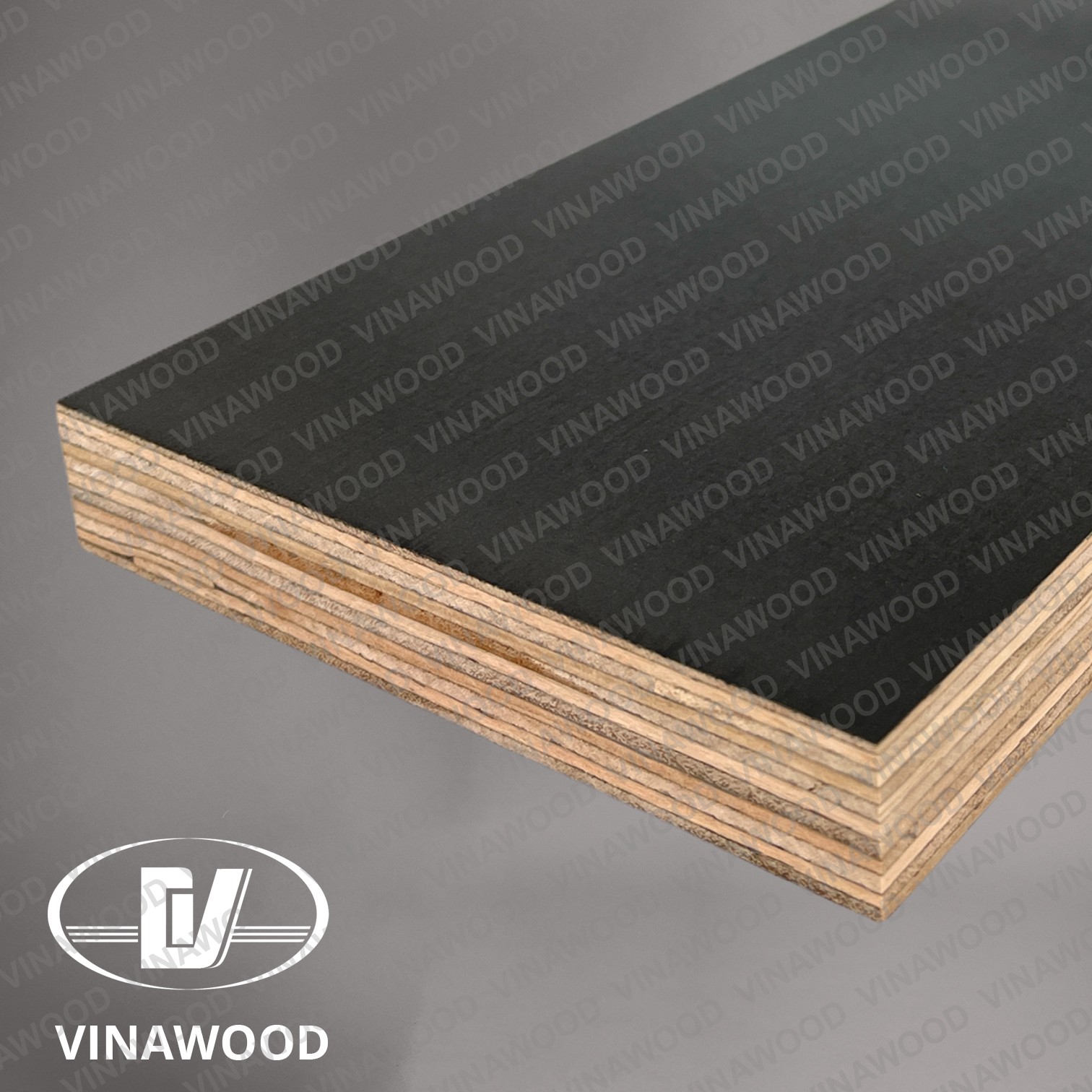
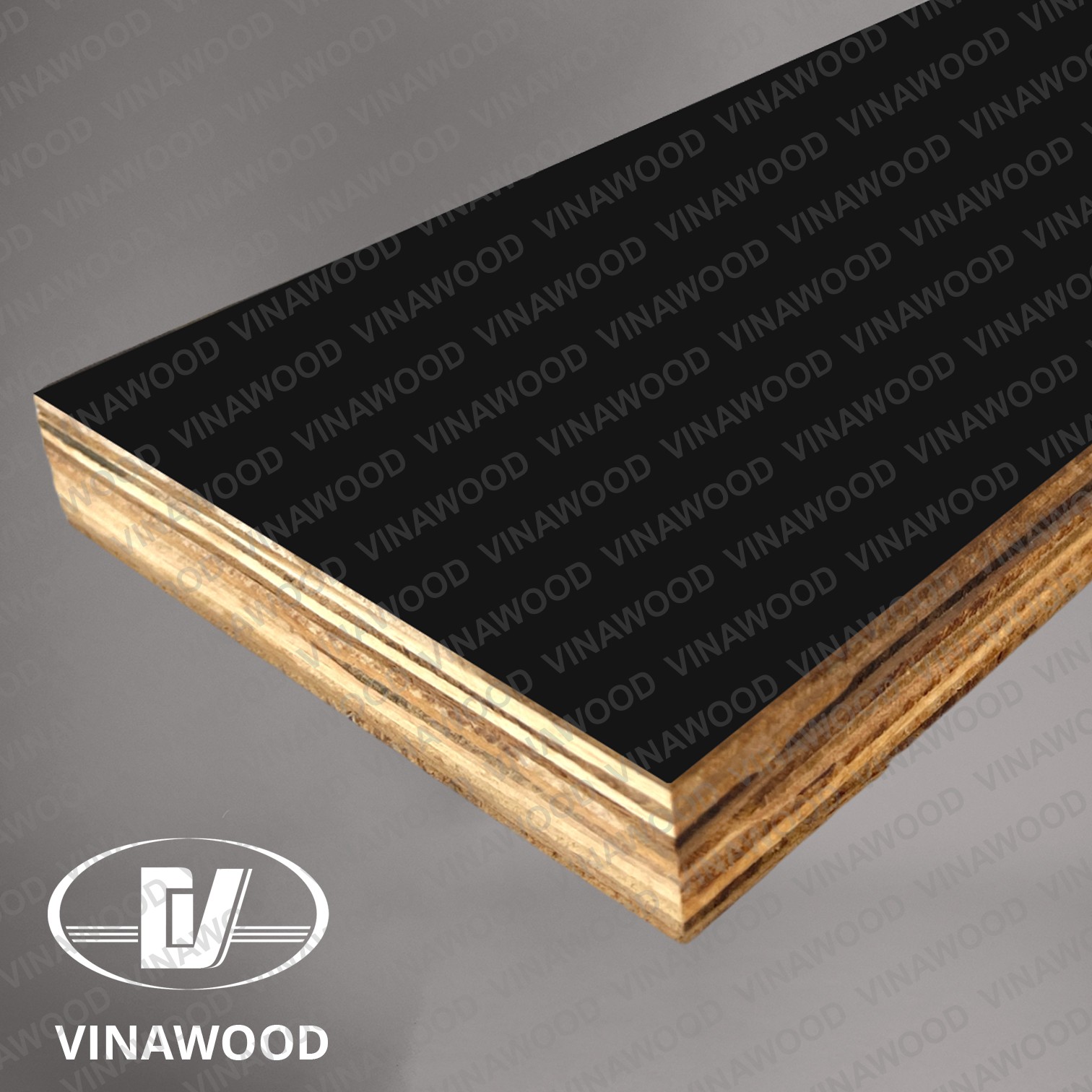
Ask for a moisture-content record on the veneer and the finished sheet. Ask for a written inspection note on glue-line quality, not a verbal WBP on the invoice. Wet-season haul on damaged secondary roads is still how a ready stack misses a cut-off even when the vessel is alongside. Specify wrap and a dry-stuffing instruction if the nominated yard has been under 400 mm of rain. On glue class, keep phenolic Class 3 / EN 636-3 product such as Pro Form on exterior or long wet-storage pours. Form Extra is a higher-melamine-content MUF panel in the EN 636-2 envelope and is not Class 3. Mixing those two because both are film-faced is how a wet-season pour ends up with the wrong bond, in any market.
From our mill desk, Q4 lots into any export market should be placed with a mill that can show drying records and sheet-by-sheet inspection, then confirmed against the nominated load week's truck and a dry box.
What the box costs in the US, Europe and other export markets
The Drewry composite hides the split. US East Coast space is the expensive one. Drewry logged seven blank sailings for the coming week on the transpacific. August capacity on Asia to the US East Coast is down 9% month on month. Several carriers have filed Panama Canal surcharges on Asia-USEC and Asia-Gulf Coast trades from September. A Vietnamese formwork shipment booked into New York or Houston now carries a higher ocean line than the July recap.
US privately owned housing starts ran at a seasonally adjusted annual rate of 1,239,000 in July, 12.4% below the revised June figure, according to the Census Bureau and HUD release of 18 August. Permits rose 5.0% to 1,443,000. A permit is not a start. A start is not a pour. The permit rebound keeps a Q4 form-ply conversation open in the US. It is not a reason to assume American demand will absorb a $9,507 Shanghai-New York box plus a Panama surcharge. Book USEC space earlier than a Europe string.
Europe is cheaper on the water and still not simple. Two blank sailings are on the Asia-Europe book for next week in Drewry's 20 August note. A Rotterdam or Genoa arrival of film-faced panels from Southeast Asia pays less for the box than a US East Coast arrival on the same Thursday. Destatis, in figures published 18 August, said German authorities approved 126,300 dwellings in the first half of 2026, up 15.1% on the same period in 2025, the strongest first-half rise since 2016. Germany is the EU's largest plywood importer. A permit rebound there supports formwork conversations into northern Europe. It does not remove Suez-or-Cape uncertainty, German port labour disruption, or a 25-hour wait at Rotterdam in week 33.
Gulf, Red Sea and eastern Mediterranean discharges sit closer to the war-risk box than a transpacific string. The ocean print may look closer to the Asia-Europe line than to New York. The endorsement and the transit-time risk do not. Australia and other Asia-Pacific arrivals usually avoid that box on a typical eastbound service. They still take the same Vietnamese load week, the same storm-week haul, and the same moisture file. FOB Vietnam contracts are almost always in dollars. A buyer converting euros, sterling, dirhams or dollars is converting the same invoice into a different landed-cost sheet.
Keep each market's duty and due-diligence file next to the freight file. The US Commerce final determinations that took effect 21 July cover hardwood and decorative plywood. Film-faced formwork, construction sheathing and marine-grade structural panels sit outside that investigation. The ITC injury vote on the decorative case is still due 4 September, as our early-August import brief flagged. Do not provision a decorative-grade cash deposit against a formwork bill of lading. Formwork and PS-structural panels are also excluded from Vietnam hardwood CVD. There is no blanket duty-free claim in that sentence. A US importer who mixes decorative and formwork lines on one PO is the party who creates the deposit risk. In the Union, EUDR still applies from 30 December 2026 for large and medium operators. Plot coordinates and a due-diligence statement travel with the sheet into Europe, and similar origin paperwork is now part of how professional buyers in other regions audit a mill. Ask for the DDS pack before the vessel, not after discharge, whatever the discharge port.
How we would book Q4 from here
Price the ocean routing on one line and the war-risk endorsement on another, for every destination that can touch Suez, the Cape or the Gulf of Aden. Treat northern Vietnam haulage, dry-stuffing and veneer-moisture evidence as a third file for any load week still under Narra's rain. Glue class is a separate conversation. For US East Coast and Gulf discharges, lock space against the 9% transpacific print and keep formwork out of the decorative CVD drawer. For Europe and the Mediterranean, a cheaper box is only cheaper if the ship stays on the schedule you bought. For the Middle East, write the endorsement before the freight. For Australia and the rest of the book, the storm-week mill file still applies even when the war-risk box does not. Lock Q4 formwork against mills that can document origin and inspection, regardless of flag state or discharge port.
About Vinawood
Vinawood is a Vietnamese plywood manufacturer established in 1992. The mill ships more than 5,000 containers a year to export markets across Asia, the Americas, Europe, the Middle East, Africa and Australia, with film-faced and formwork panels built on a documented production process and individual sheet inspection. Core certifications include ISO 9001, FSC-COC, PEFC, EN 13986 CE marking, and EPA TSCA Title VI for US-bound orders. Wood is plantation-grown. For Q4 and Q1 formwork enquiries, request a quote.
Category
market-insights
Related Markets
Related Countries
Related Products
▶Sources & References (8)
- Insurers pull war-risk cover from swathe of Red Sea — Splash247 (2026-08-16)
- Red Sea Brief: 20 August 2026 — Lloyd's List Intelligence (2026-08-20)
- World Container Index — 20 August 2026 — Drewry (2026-08-20)
- World Container Index – 20 August 2026 — Daily Cargo News / Drewry (2026-08-20)
- Monthly New Residential Construction, July 2026 — U.S. Census Bureau / HUD (2026-08-18)
- Storm Narra leaves one dead, triggers widespread flooding, landslides across northern Vietnam — VnExpress International (2026-08-24)
- Typhoon Narra stalls offshore as floods batter northern Việt Nam — Viet Nam News (2026-08-24)
- Typhoon No. 4 lingers over Gulf of Tonkin as further showers expected across northern region — Viet Nam News (2026-08-23)