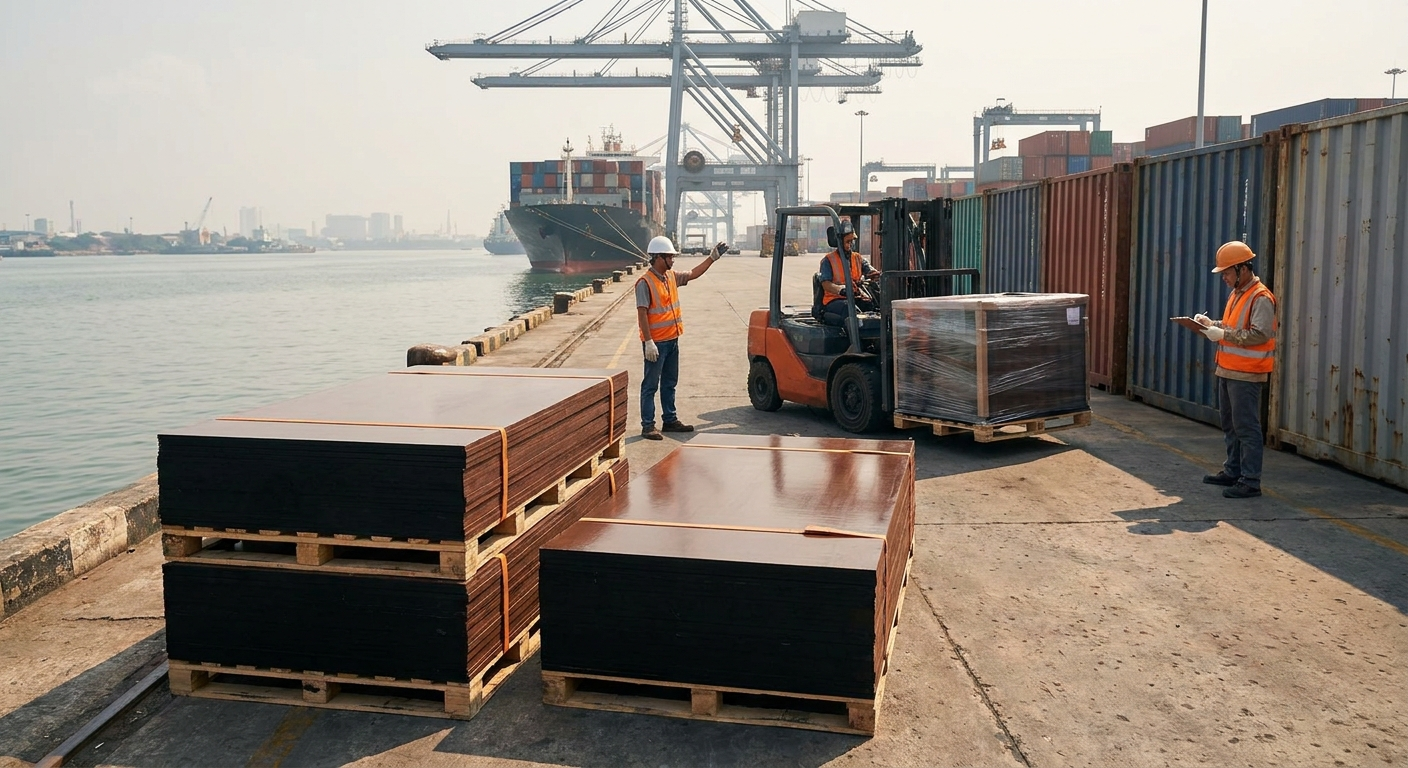
Tariff Turbulence Redirects Plywood Trade Toward Middle East and South Asia
US tariff pressures and anti-dumping duties accelerate plywood trade diversification toward the Middle East and South Asia, where construction booms absorb growing supply.
Lumber Softens While Tariff Layers Compound
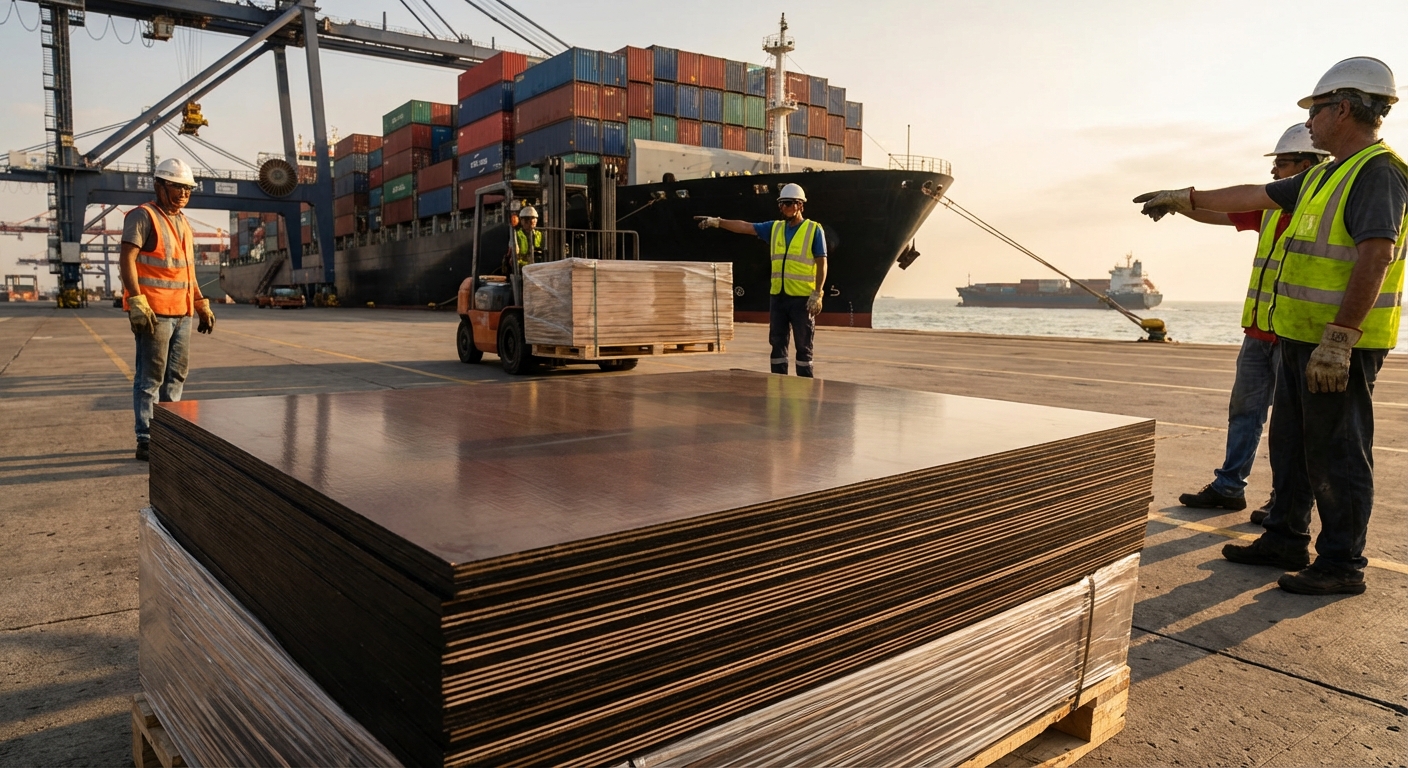
North American lumber futures fell to $584.54 per thousand board feet on April 6, 2026, according to Trading Economics — down from the three-month high of $614.50 reached in January. The pullback reflects weakening residential construction activity: single-family housing starts dropped 14.2% as mortgage rates climbed to 6.45%, tempering spring demand expectations. Despite the short-term softness, prices remain up 4.3% over the past month and 2.3% year-over-year, supported by structural supply constraints from Canadian mill closures and Section 232 tariffs that have pushed combined duties on Canadian softwood to approximately 45%.
For plywood specifically, the tariff landscape has grown more complex. While plywood (HTS 4412) was exempted from Section 232 duties, it was not excluded from the reciprocal tariff regime that took effect in April 2025. Vietnamese goods currently face a 20% reciprocal tariff on US-bound shipments — reduced from the initial 46% announced in April 2025 through bilateral negotiations concluded in August 2025. Layered on top are the preliminary anti-dumping duties of 191.85–194.80% and countervailing duties announced in March 2026 on hardwood and decorative plywood from Vietnam, with final determinations scheduled for May 11, 2026 (CVD) and the ITC hearing set for July 16, 2026.
Middle East Construction Pipeline Absorbs Redirected Supply
As US market access becomes prohibitively expensive for Vietnamese hardwood plywood exporters, the Middle East has emerged as a critical alternative destination. Saudi Arabia's construction sector — valued at $104.8 billion in 2024 and growing at an 8.7% compound annual rate toward $174.4 billion by 2030 — is the region's demand anchor. The kingdom imported $2.5 billion in timber and timber products in 2023, and Vision 2030 targets 1.5 million new homes by the end of the decade.
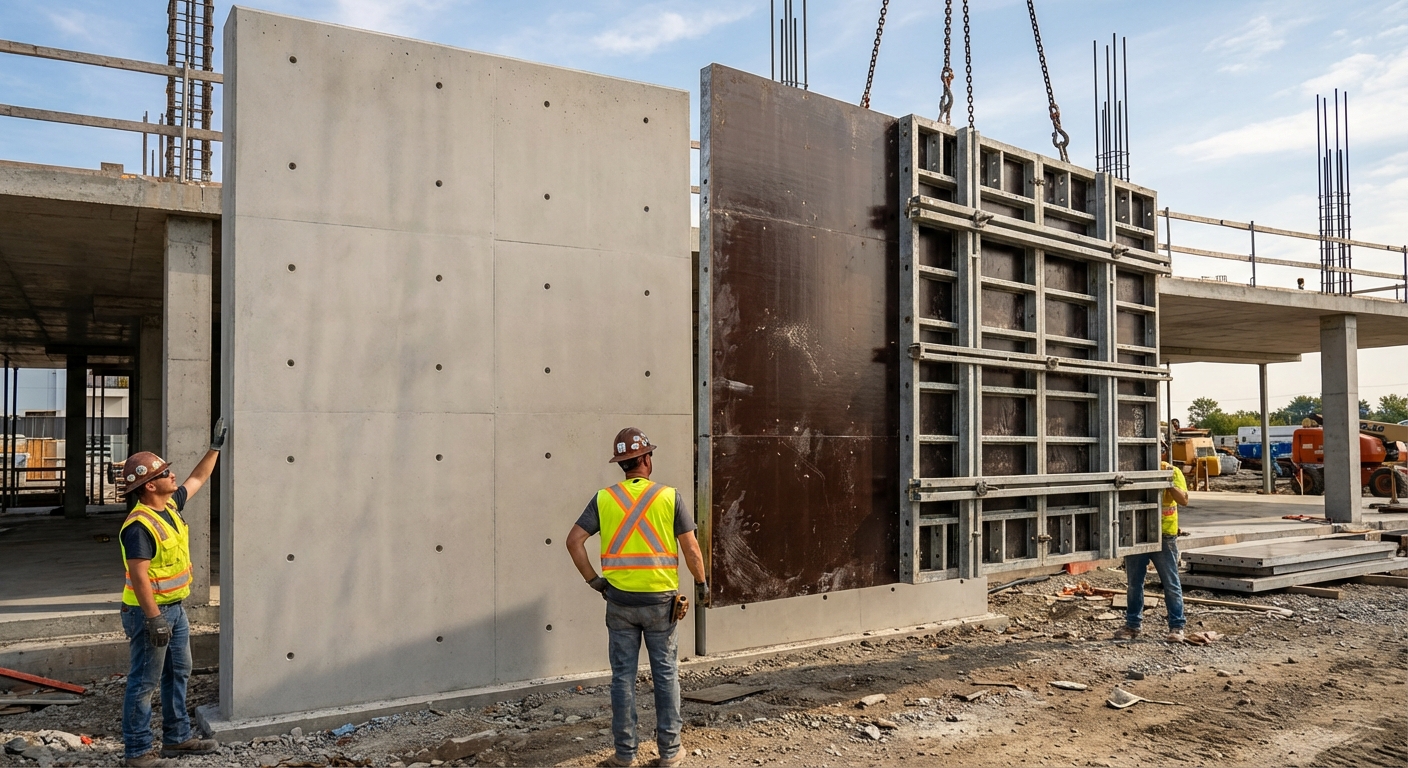
Formwork plywood is particularly well-positioned in this market. According to PS Market Research, Saudi Arabia's wooden formwork systems market reached $94.4 million in 2024, with plywood holding approximately 50% market share. The UAE adds further scale, importing $2.4 billion in timber products annually. Both markets are structurally import-dependent — domestic production covers only a fraction of demand from mega-projects like NEOM, The Red Sea development, and Abu Dhabi's infrastructure expansion.
For Vietnamese exporters of film-faced formwork plywood for GCC construction, this demand profile creates an opportunity to redirect capacity from tariff-constrained US routes toward markets where duty-free or low-duty access combines with genuine infrastructure-driven demand growth.
India's Infrastructure Push Lifts Plywood Demand
India's plywood market — valued at INR 247.85 billion ($29.5 billion) in 2025 according to IMARC Group — is projected to grow at a 5.22% compound annual rate through 2034, reaching INR 391.90 billion. The construction sector is the dominant consumer, and the Indian government's February 2025 budget allocation of over ₹11.5 lakh crore ($137 billion) for infrastructure signals sustained demand for shuttering plywood and formwork panels.
The organized sector now accounts for 62% of India's plywood market, reflecting a shift toward branded, quality-certified products with standardized specifications. This trend favors established manufacturers like those in Vietnam's export sector, where FSC and CE certifications are standard. For procurement managers sourcing formwork plywood for Indian infrastructure projects, the combination of quality requirements and volume demand creates favorable conditions for long-term supply agreements with Southeast Asian producers.
Freight Costs Add Margin Pressure
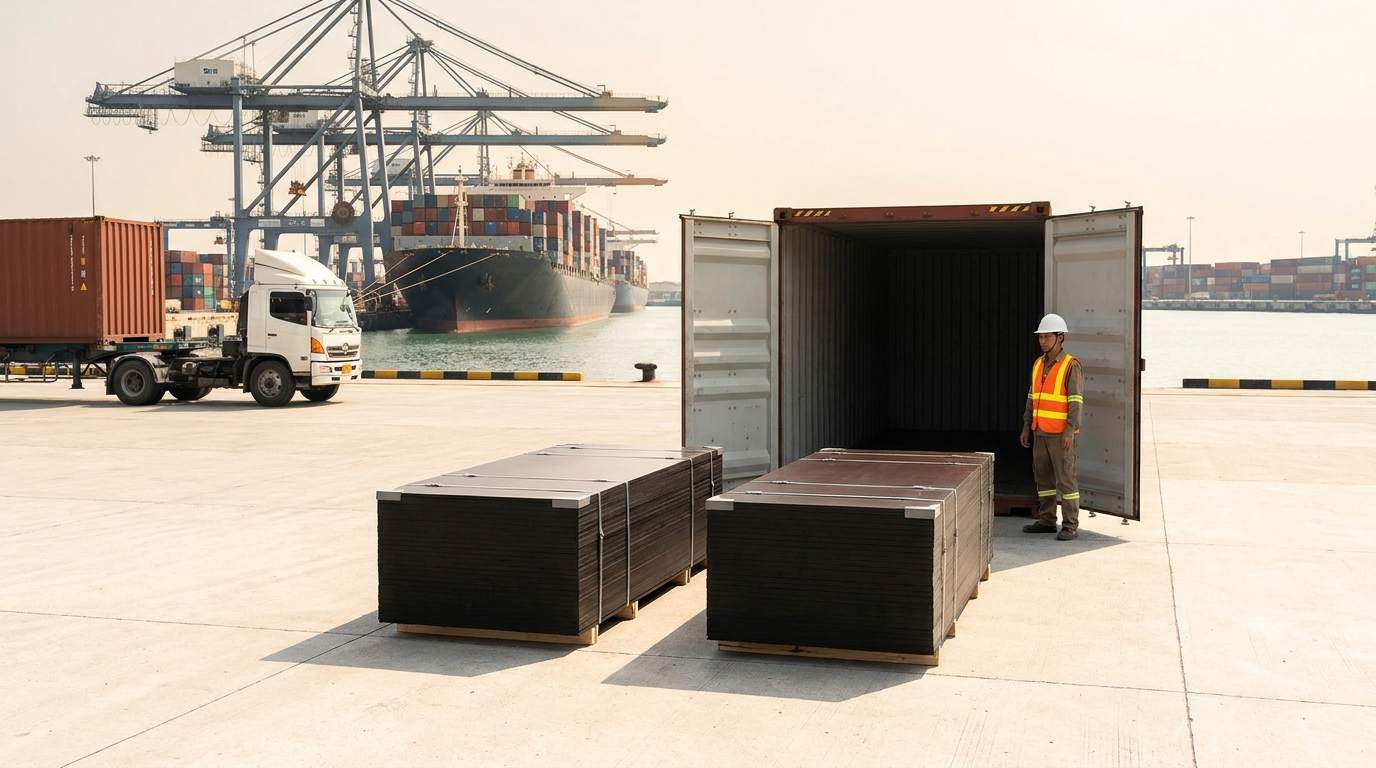
Logistics costs are compounding the trade route restructuring. The Drewry World Container Index held steady at $2,287 per 40-foot container as of April 2, 2026, but the headline number masks emerging pressure points. Maersk has applied to US regulators for an emergency bunker surcharge of $200 per TEU on head-haul routes and $100 per TEU on backhaul, citing elevated fuel costs from tensions in the Strait of Hormuz — a chokepoint handling nearly 20% of global oil shipments.
For wood product shipments from Southeast Asia, these surcharges directly impact landed costs. A typical plywood shipment of 25 cubic meters in a 20-foot container absorbs the surcharge as a per-unit cost increase of approximately $8/m³ — material for thin-margin commodity grades but manageable for higher-value film-faced and formwork panels. Carriers expect spot rates to edge higher in the coming weeks, per Drewry's forward assessment, though the broader 2026 outlook calls for rate moderation as vessel capacity expands and global trade growth cools to about 1.7%.
Vietnam's Export Strategy Diversifies Under Pressure
Vietnam's wood and wood products sector exported $17.2 billion in 2025 and has set a target of $18.5–19 billion for 2026, according to government data. Total foreign trade reached $155.7 billion in the first two months of 2026, up 22.2% year-over-year — but the composition of plywood trade is shifting. With US anti-dumping duties potentially making the American market unviable for hardwood plywood, Vietnamese plywood manufacturers are accelerating market diversification.
The EU remains the most strategically valuable alternative, offering 0% duty under the EVFTA with valid Certificate of Origin. But the Middle East and South Asia are absorbing incremental volume that would previously have targeted US buyers. Nearly 100 Vietnamese plywood exporters are named in the ongoing US trade investigation, and the final CVD determination on May 11 will clarify whether the preliminary duty rates hold — or worsen.
Outlook: Buyers Outside the US Should Expect Tighter Supply
The April 2026 plywood market is defined by a redistribution of trade flows rather than aggregate demand weakness. US tariff structures are effectively redirecting Southeast Asian plywood supply toward the Middle East, India, the EU, and other markets — which means buyers in those regions should anticipate tighter availability and firmer pricing through Q2 2026.
Lumber prices are expected to remain soft through April before recovering 6–8% by year-end as the US construction season gains momentum. For plywood, the key decision point arrives in May–July when US final duty determinations could permanently reshape Vietnamese export allocations. Procurement managers in the Middle East and South Asia who lock in supply agreements before these determinations will be better positioned than those waiting for clarity.
Category
market-insights
Related Markets
Related Countries
Related Products


▶Sources & References (10)
- Lumber Commodity Data — April 2026 — Trading Economics (2026-04)
- Drewry World Container Index — April 2, 2026 — Drewry (2026-04)
- Saudi Arabian Wooden Formwork Systems Market Analysis — PS Market Research (2026)
- USD 1.6 Trillion Saudi Construction Industry Drives Demand for Timber — Timber Design and Technology (2026)
- India Plywood Market Size, Share, Trends, Forecast 2034 — IMARC Group (2026)
- Hardwood and Decorative Plywood from Vietnam: Preliminary CVD Determination — Federal Register (2026-01)
- Wood Exports of Vietnam Surpass USD 17 Billion Milestone — MP Logistics (2026-01)
- Vietnam Reciprocal Tariff — 46% Decree and Vietnam's Reaction — Uni Customs Consulting (2025)
- Section 232 Tariffs on Wood Products Announced — RVIA (2025)
- Middle East Construction Industry Databook Report 2026 — GlobeNewsWire (2026-02)