Plywood vs Solid Wood: Strength, Cost & Best Uses Compared
Plywood vs solid wood compared across strength, cost, moisture resistance, and best uses. Cross-grain plywood excels in panels and construction; solid wood wins where natural beauty and refinishing matter.
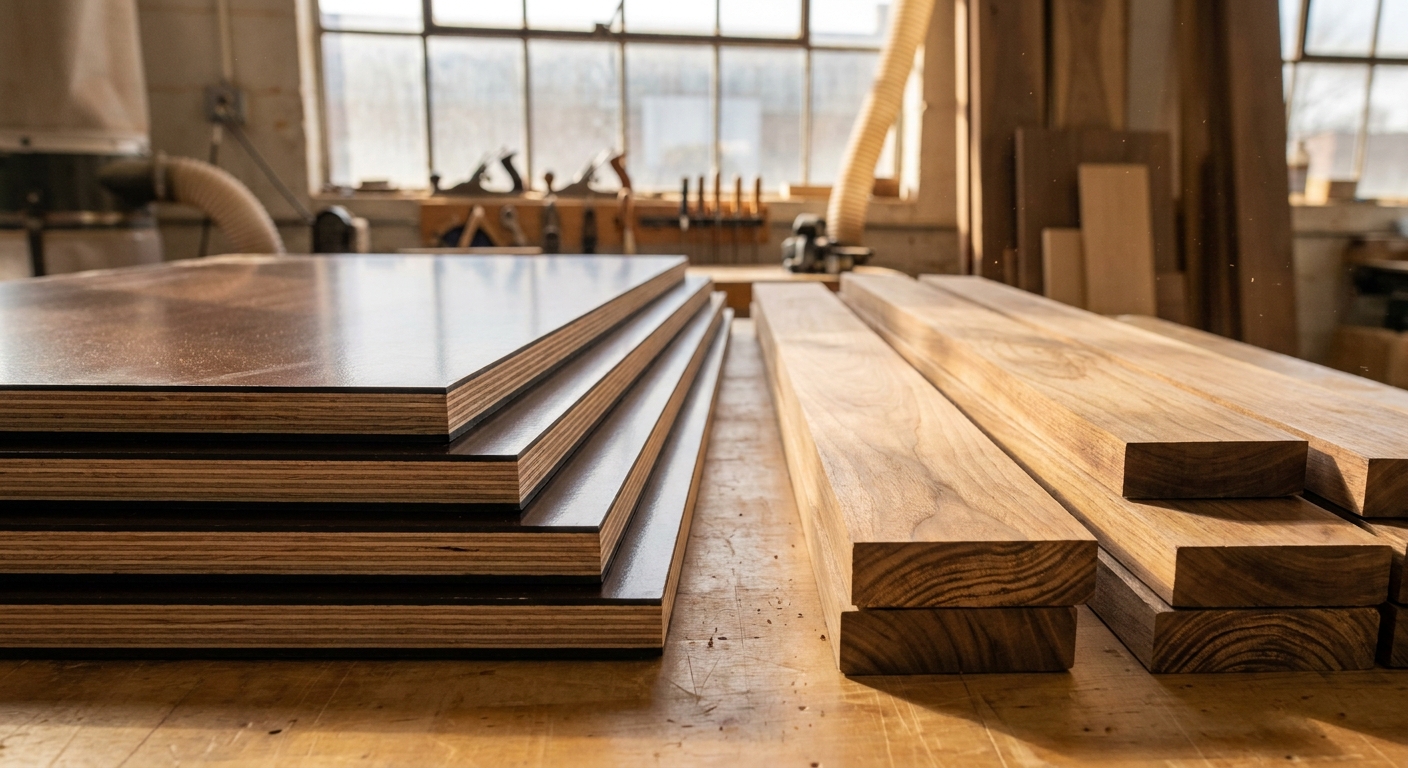
Plywood and solid wood solve different problems. Choosing between them is not about which material is "better" in the abstract — it is about which one fits the structural requirement, moisture exposure, budget, and finish expectation of a specific project. A cabinet maker selecting face frames for a kitchen has a completely different calculus from a general contractor ordering formwork panels for a concrete pour.
This guide compares plywood and solid wood across the criteria that actually drive material selection decisions: strength characteristics, moisture performance, cost per unit area, workability, repairability, and sustainability. Written from the manufacturer's perspective by Vinawood — a Vietnamese plywood producer established in 1992, exporting construction-grade and commercial plywood to 55+ countries.
What Is Plywood?
Plywood is an engineered wood panel made by gluing together an odd number of thin wood veneer layers (plies), with each layer's grain direction rotated 90 degrees from the adjacent one. This cross-laminated construction is the defining feature — it distributes stress across two perpendicular grain directions, making the panel resist splitting, reduce expansion and contraction, and maintain consistent strength across its full sheet area.
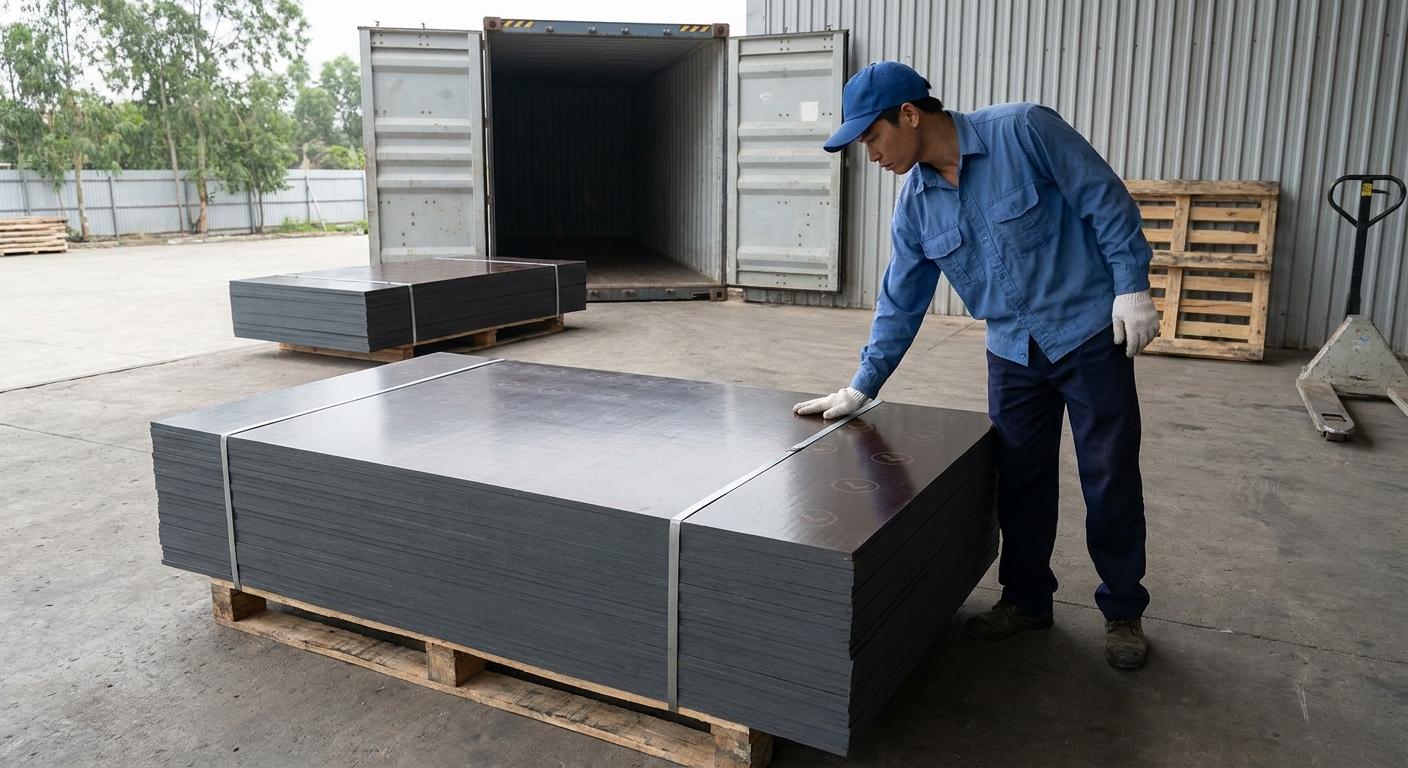
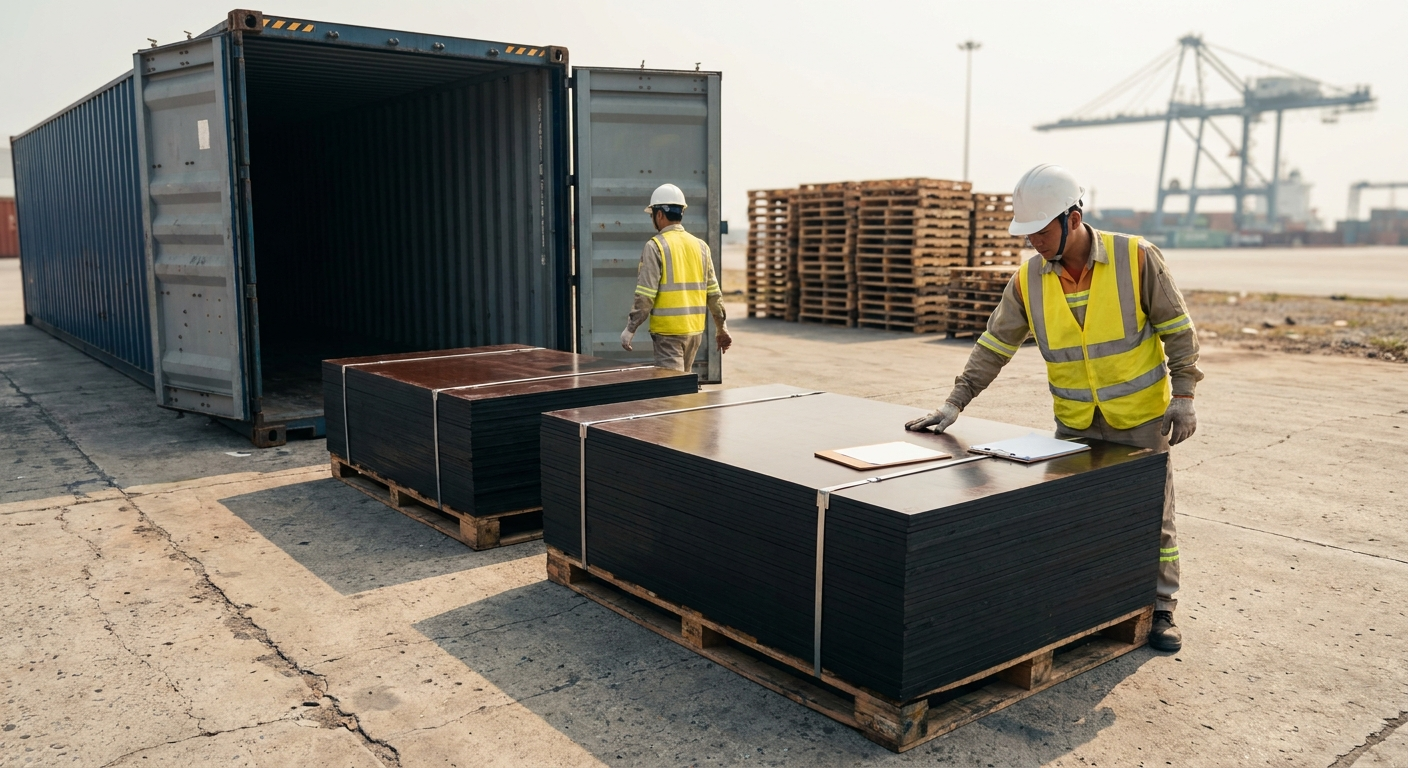
A standard structural plywood sheet measures 1220 × 2440 mm (4 × 8 ft) in North America or 2500 × 1250 mm in Europe, with thicknesses ranging from 6 mm to 25 mm. Common types include softwood plywood (pine, fir cores for sheathing), hardwood plywood (birch, oak, or tropical hardwood faces for furniture and cabinetry), marine plywood (void-free core with waterproof adhesive), and structural film-faced plywood for concrete formwork.
The core species and adhesive system determine the panel's performance class. WBP phenolic adhesive (EN 636-3) gives the highest moisture resistance for exterior and formwork use. Melamine adhesive (EN 636-2) suits humid-condition and protected-exterior applications. Interior adhesive (urea-formaldehyde) is limited to dry indoor environments.
What Is Solid Wood?
Solid wood — also called lumber or timber — is natural wood sawn directly from a tree trunk and dried to a working moisture content (typically 6–12% for interior use, 12–19% for exterior). The grain runs in one direction throughout the piece, giving solid wood its characteristic strength along the grain, its natural beauty, and its susceptibility to movement across the grain when moisture levels change.
Hardwood species (oak, maple, walnut, cherry, teak, mahogany) are the premium tier for furniture, flooring, millwork, and visible structural members. Softwood species (pine, fir, spruce, cedar) dominate framing lumber, decking, and general construction. Each species has distinct density, hardness (measured on the Janka scale), and natural durability characteristics that determine where it performs best.
Solid wood's primary advantage is longevity and repairability. A well-made oak table can be sanded, refinished, and repaired across generations. Its primary disadvantage is dimensional instability — wood expands and contracts across the grain as ambient humidity changes, which limits maximum panel width and requires careful joinery design to accommodate seasonal movement.
Plywood vs Solid Wood — Side-by-Side Comparison
The following table compares the two materials across the factors that matter most for project selection:
| Factor | Plywood | Solid Wood |
|---|---|---|
| Strength direction | Balanced — cross-grain lamination distributes load in both directions | Strong along the grain, weak across it (prone to splitting) |
| Moisture resistance | Better dimensional stability; WBP grades resist delamination through wet-dry cycles | Expands and contracts with humidity; prone to warping, cupping, and checking |
| Cost | Lower cost per square metre for panel applications; less waste | Higher per unit area; varies dramatically by species ($2–$25+ per board foot) |
| Appearance | Face veneer or paint-grade; consistent surface across full sheet | Natural grain character; unique figure and colour variation |
| Weight | Generally lighter for equivalent coverage area | Heavier per unit volume (species-dependent) |
| Workability | Easy to cut to size; less splitting; holds screws well in face | Excellent for traditional joinery; planes, routes, and carves cleanly |
| Repairability | Difficult to refinish — face veneer is thin (0.5–3 mm typically) | Can be sanded and refinished many times over decades |
| Sustainability | More efficient wood use — veneer peeling extracts more usable surface per log | Requires larger, older trees for wide boards; higher raw material per unit |
| Sheet/board sizes | Standard 4×8 ft or 2500×1250 mm sheets — large panels in one piece | Limited by tree diameter; wide panels require edge-gluing |
| Dimensional stability | Excellent — cross-grain construction resists expansion/contraction | Poor across the grain; seasonal movement must be accommodated in design |
Is Plywood Stronger Than Solid Wood?
This is one of the most searched questions in the comparison, and the answer depends on what you mean by "stronger."
Along the grain: Solid wood wins. A piece of oak, maple, or Douglas fir has higher tensile and bending strength in the direction of its grain than an equivalent thickness of plywood. This is why solid wood is preferred for table legs, chair frames, and structural members that bear load primarily in one direction.
Across the grain and in shear: Plywood wins. Because the cross-laminated plies distribute stress in both directions, plywood resists splitting, racking, and shear forces far better than solid wood. A plywood panel loaded perpendicular to the face grain will not split the way a solid board would. This is why plywood dominates as sheathing, subflooring, and structural diaphragm material — applications where loads arrive from multiple directions.
For panel applications (shelving, cabinet sides, tabletops, formwork): Plywood is effectively stronger because the cross-grain construction prevents the warping, cupping, and splitting that limit solid wood panels beyond about 300 mm width without breadboard ends or other movement-management joinery.
In construction-grade applications, hardwood-cored film-faced plywood — such as Vinawood's Form Basic — achieves 45 N/mm² bending strength along the face grain and 30 N/mm² across it. For comparison, #2 Douglas Fir lumber rates approximately 8.6 MPa (allowable bending stress) under NDS design values. The comparison is not straightforward because the test standards and safety factors differ, but the point stands: plywood's cross-grain construction makes it the stronger choice for panel and shear applications.
When to Use Plywood Instead of Solid Wood
Plywood is the better choice in applications where dimensional stability, large panel coverage, cost efficiency, or moisture resistance is the primary requirement:
Subflooring and roof sheathing. CDX or structural plywood provides a continuous, dimensionally stable substrate that resists racking loads and bridges framing members. Solid wood planks were the historical standard but have been replaced by plywood and OSB in virtually all modern construction because cross-grain panels resist diagonal forces better and install faster.
Cabinet boxes, drawer bottoms, and furniture panels. Plywood provides flat, stable panels that do not cup, bow, or split as ambient humidity changes. A 600 mm-wide plywood cabinet side stays flat year-round; a 600 mm solid wood panel needs floating-panel construction or will crack. For a deeper look at plywood types suited to furniture and cabinetry, see the hardwood plywood guide.
Large flat surfaces. Desktops, workbench tops, countertop substrates, and wall panelling — any application requiring a wide, flat surface benefits from plywood's inherent stability. Solid wood alternatives require edge-glued panels with careful grain selection.
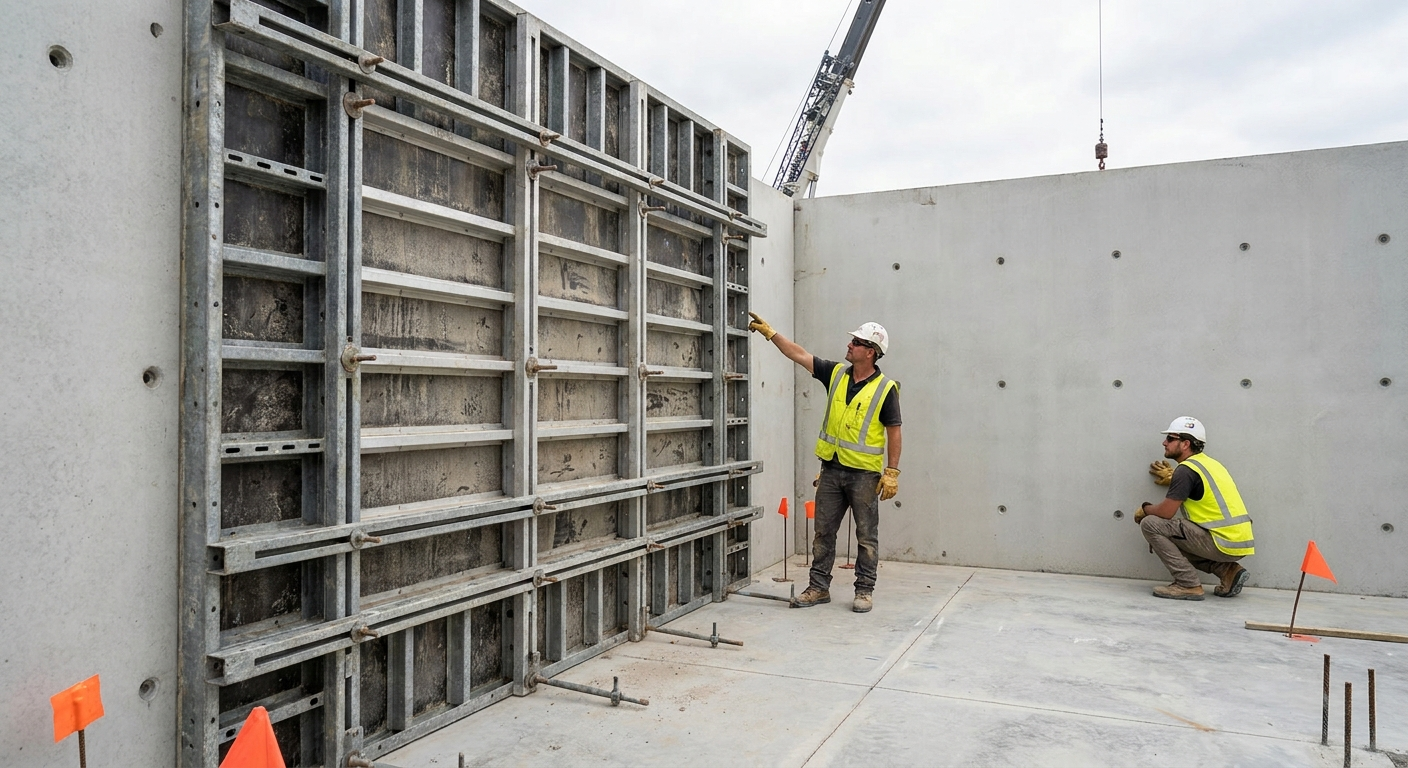
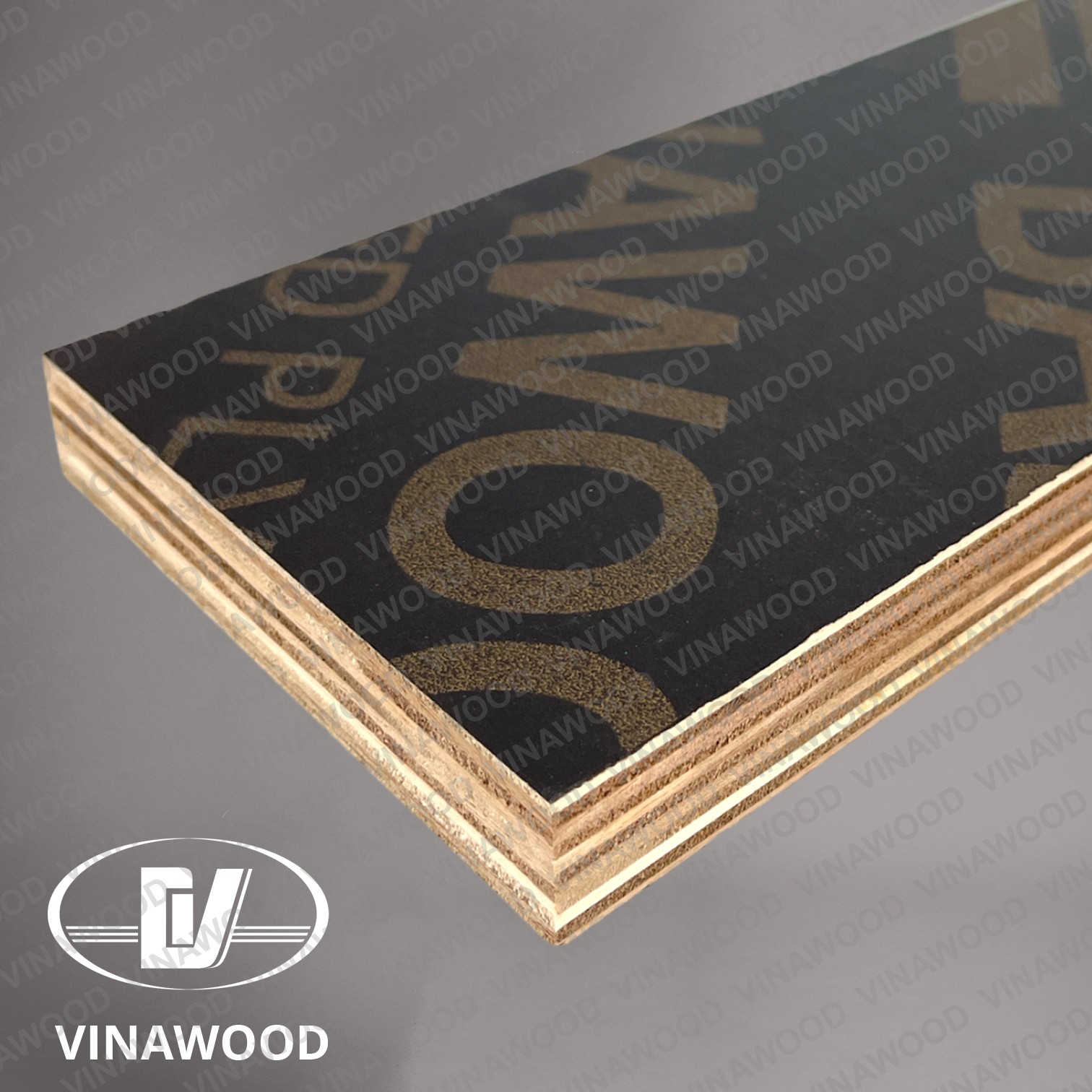
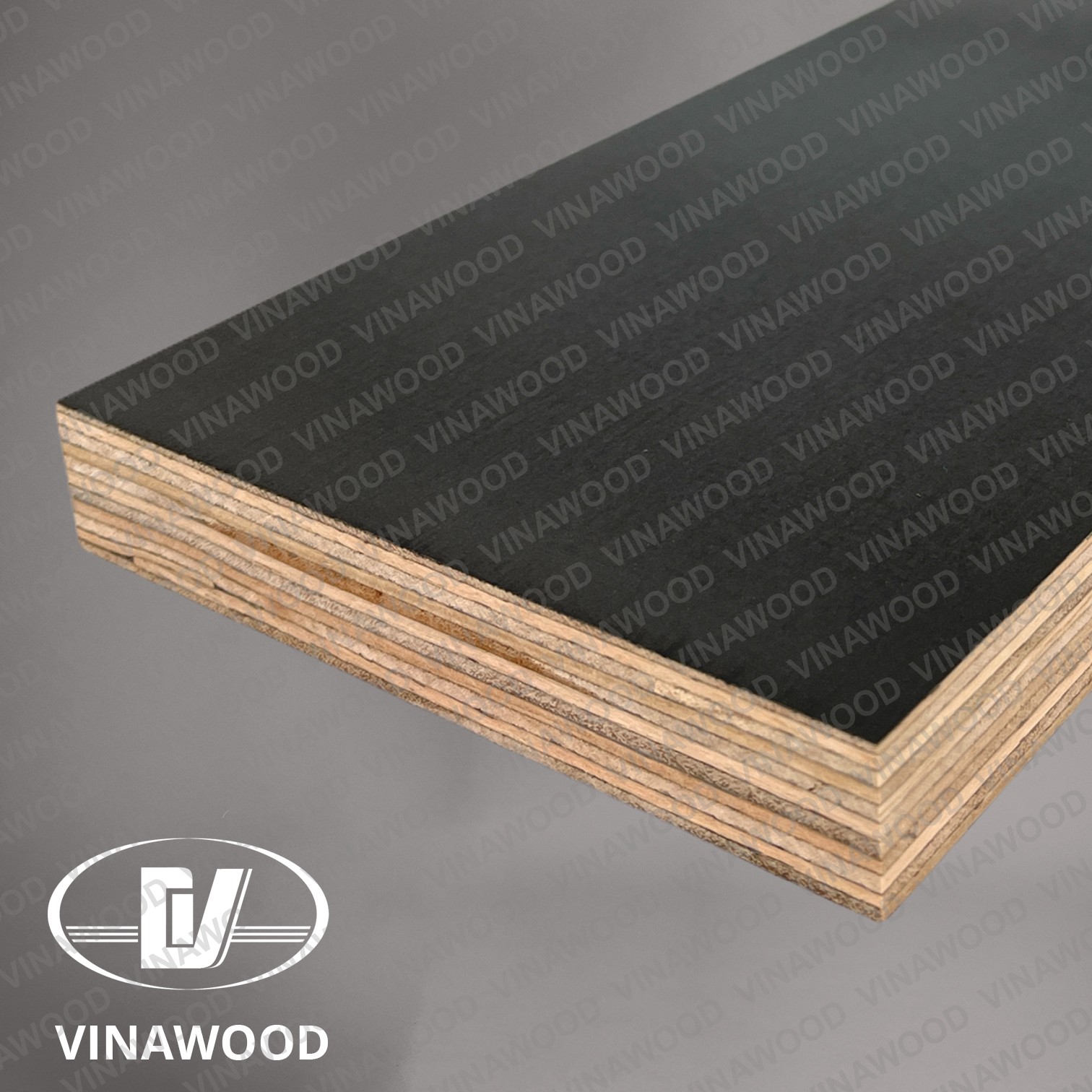
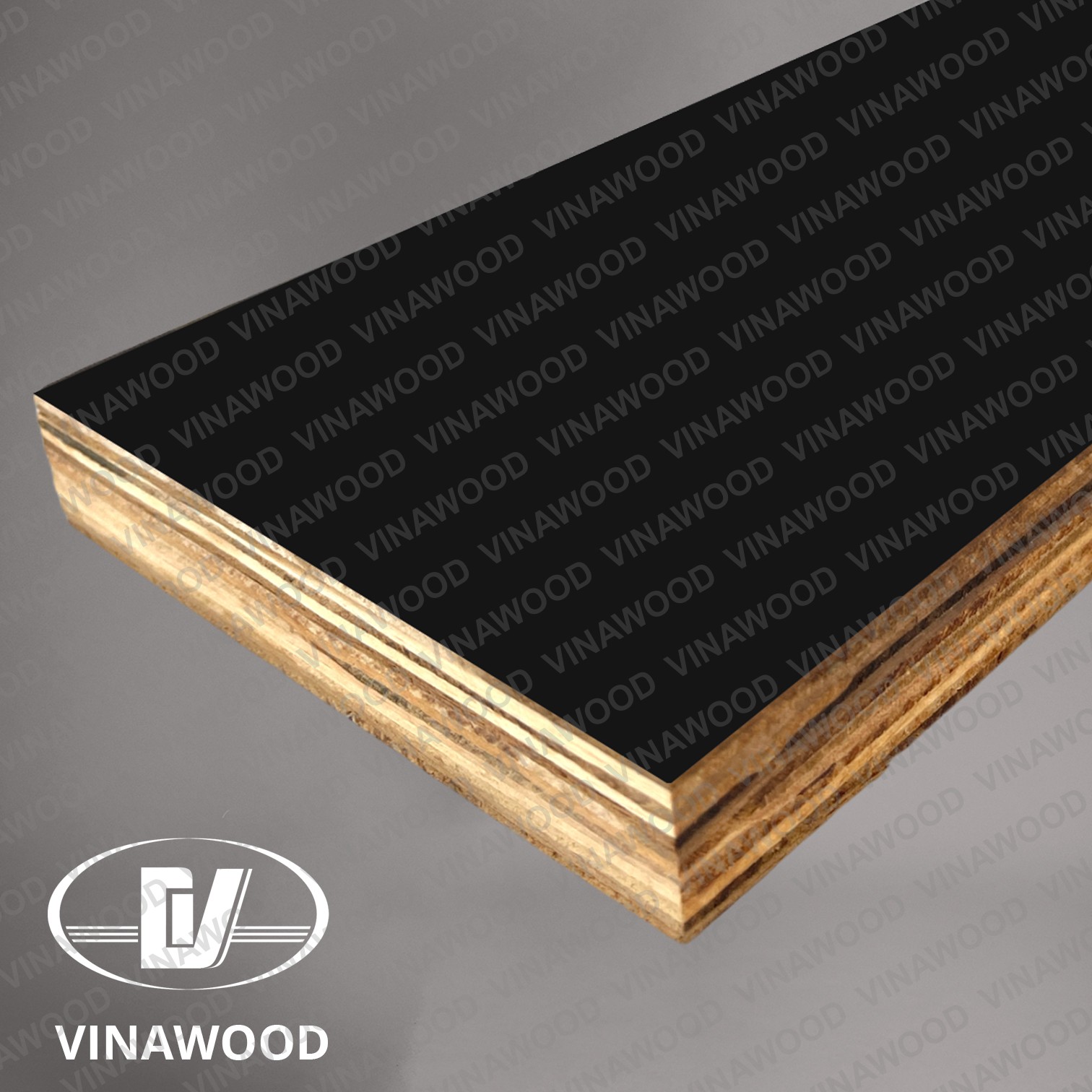
Concrete formwork. Film-faced plywood is the global standard for concrete forming. The phenolic film surface releases cleanly from cured concrete, the WBP adhesive resists moisture through multiple pour cycles, and the cross-laminated core holds form ties without splitting. Vinawood's Pro Form (EN 636-3, WBP phenolic, up to 20 reuses) and HDO Basic 1SF Formply are purpose-built for this application.
Moisture-prone environments. Marine-grade and WBP-bonded plywood outperforms solid wood in kitchens, bathrooms, and exterior protected applications because the cross-laminated construction resists differential expansion, and the waterproof adhesive prevents ply separation.
When to Use Solid Wood Instead of Plywood
Solid wood earns its premium in applications where natural beauty, repairability, or traditional joinery is the priority:
Visible furniture frames and legs. Table legs, chair frames, and bed posts — structural members where the end grain, edge grain, and face grain are all visible — look and perform better in solid wood. Plywood edge grain reveals the laminated layers, which is undesirable in fine furniture.
Trim, moulding, and millwork. Baseboards, crown moulding, window casings, and door frames are traditionally solid wood because they require complex profiles that would expose plywood's inner plies. Solid wood profiles can also be easily repaired with filler and refinished in place.
Cutting boards and food-contact surfaces. End-grain cutting boards from maple or walnut are self-healing and safe for food preparation. Plywood adhesives are not food-safe in direct contact, and the cross-grain construction does not self-seal knife cuts the way end-grain hardwood does.
Heirloom and high-value pieces. Furniture intended to last multiple generations — dining tables, bookcases, desks — benefits from solid wood's ability to be sanded, refinished, and repaired indefinitely. A solid walnut tabletop can be resurfaced five or six times over a 100-year lifespan; a plywood tabletop with a 1 mm veneer face cannot.
Exterior decking (naturally durable species). Hardwood decking species (ipe, cumaru, teak) resist rot and insect damage without chemical treatment and provide a surface texture that plywood cannot match for barefoot outdoor use.
Cost Comparison: Plywood vs Solid Hardwood
Cost comparisons require careful unit normalisation — plywood is priced per sheet (or per square metre), while solid hardwood is priced per board foot (a 1" × 12" × 12" unit, roughly 0.0024 m³).
Plywood: A 4×8×3/4" sheet of cabinet-grade hardwood plywood (birch or maple face) runs $50–$90 at US retail. That covers 2.98 m² of panel area, or roughly $17–$30 per square metre. Construction-grade CDX runs $40–$55 per sheet ($13–$18 per m²).
Solid hardwood: #1 Common red oak lumber runs approximately $4–$7 per board foot; walnut $8–$14; maple $5–$8. Converting to per-square-metre at 3/4" thickness: oak comes to roughly $52–$92/m², walnut $105–$184/m², maple $66–$105/m². These numbers assume no waste — in practice, 20–30% waste from defect cuts and edge-jointing pushes the effective cost higher.
For panel applications (cabinet sides, shelving, tabletops), plywood costs 40–60% less than equivalent solid hardwood coverage after accounting for waste. For narrow components (table legs, mouldings), the comparison inverts — solid wood in small sections is often cheaper than cutting plywood to narrow widths and edge-banding.
Moisture and Durability
Moisture performance is arguably the most practically important difference between the two materials.
Solid wood expands across the grain as it absorbs moisture and contracts as it dries. A 300 mm-wide oak board can move 3–5 mm seasonally in a heated interior. This movement cracks finishes, opens joints, and cups or bows panels. Wide solid wood panels require floating-panel construction (frame-and-panel doors, breadboard ends) to accommodate seasonal movement without structural failure.
Plywood's cross-laminated construction constrains this movement. Each ply's grain direction opposes the adjacent ply's, so expansion in one direction is restrained by the perpendicular ply. A 1220 mm plywood panel typically moves less than 1 mm seasonally — an order of magnitude less than equivalent solid wood.
For formwork and exterior construction, WBP-bonded plywood (EN 636-3, phenolic adhesive) survives repeated wet-dry cycles without delamination — the application it is designed for. Solid wood in the same exposure would check, split, and warp within a few cycles unless it is a naturally durable species (teak, white oak, ipe) or pressure-treated.
Sustainability Considerations
Both materials can be sustainably sourced, and both can be irresponsibly sourced. The relevant comparison is resource efficiency per unit of usable material.
Plywood manufacturing extracts more usable surface area per log than solid lumber milling. Rotary peeling — the process that produces veneer — converts approximately 60–70% of a log's volume into usable veneer. Sawmilling converts roughly 40–50% into usable boards, with the remainder going to chips, sawdust, and slabs. This makes plywood a more wood-efficient material per square metre of finished product.
Solid wood, however, requires less energy-intensive processing — no adhesive pressing, no hot-press curing. The total carbon footprint depends on the specific supply chain: a locally sourced air-dried oak board may have a lower embodied energy than a Vietnamese plywood sheet shipped 15,000 km, even if the plywood is more wood-efficient.
For buyers where sustainability certification matters: FSC Chain of Custody and PEFC certification are available for both plywood and solid hardwood. Verify certificates directly with the issuing body rather than relying on marketing claims.
Frequently Asked Questions
Is plywood considered real wood?
Yes. Plywood is made entirely from real wood — thin layers of natural wood veneer bonded together with adhesive. It is not a synthetic material. The face veneer is genuine hardwood or softwood, and the core plies are real wood species (eucalyptus, acacia, birch, pine, etc.). The only non-wood component is the adhesive between plies, which typically represents less than 5% of the panel's mass.
Can you stain plywood to look like solid wood?
Hardwood-faced plywood (birch, oak, walnut veneer face) accepts stain and finish nearly as well as solid wood. The grain pattern is natural wood — because it is real wood veneer. The limitation is sanding: you can lightly sand and restain a plywood face veneer once or twice, but aggressive sanding will cut through the thin face layer (typically 0.5–3 mm) and expose the cross-grain core beneath. Softwood plywood and construction-grade panels do not stain attractively and are typically painted.
Which lasts longer, plywood or solid wood?
In a climate-controlled interior, solid wood furniture lasts longer because it can be refinished indefinitely. In a moisture-variable environment (formwork, exterior sheathing, marine applications), WBP-bonded plywood often outlasts solid wood because its cross-laminated construction resists the warping and splitting that destroy solid wood panels in wet-dry cycling. Lifespan depends entirely on the application, species, adhesive quality, and maintenance regime.
Is plywood better than solid wood for shelves?
For most shelving applications, plywood is the better choice. A 3/4" plywood shelf is lighter, less prone to sagging over time (because the cross-grain construction resists creep), and more dimensionally stable than a solid wood shelf of the same thickness. Solid wood shelves in fine furniture look better at the exposed edge but require edge-finishing on plywood to achieve the same result — and the plywood shelf will remain flatter over a 20-year span.
When should you NOT use plywood?
Avoid plywood where visible end-grain aesthetics matter (furniture legs, turned components), where the surface will be heavily sanded or refinished multiple times over the product's life, where food-contact safety is required (cutting boards), and where traditional hand-joinery techniques (mortise-and-tenon, dovetails) are part of the design — these joints work best in solid wood where the grain structure provides mechanical interlock.
Category
guides
Related Markets
Related Countries
Related Products
▶Sources & References (3)
- Wood Handbook: Wood as an Engineering Material — USDA Forest Products Laboratory (2021)
- APA Product Guide: Plywood — APA — The Engineered Wood Association (2023)
- EN 636:2012+A1:2015 — Plywood. Specifications — European Committee for Standardization (CEN) (2015)