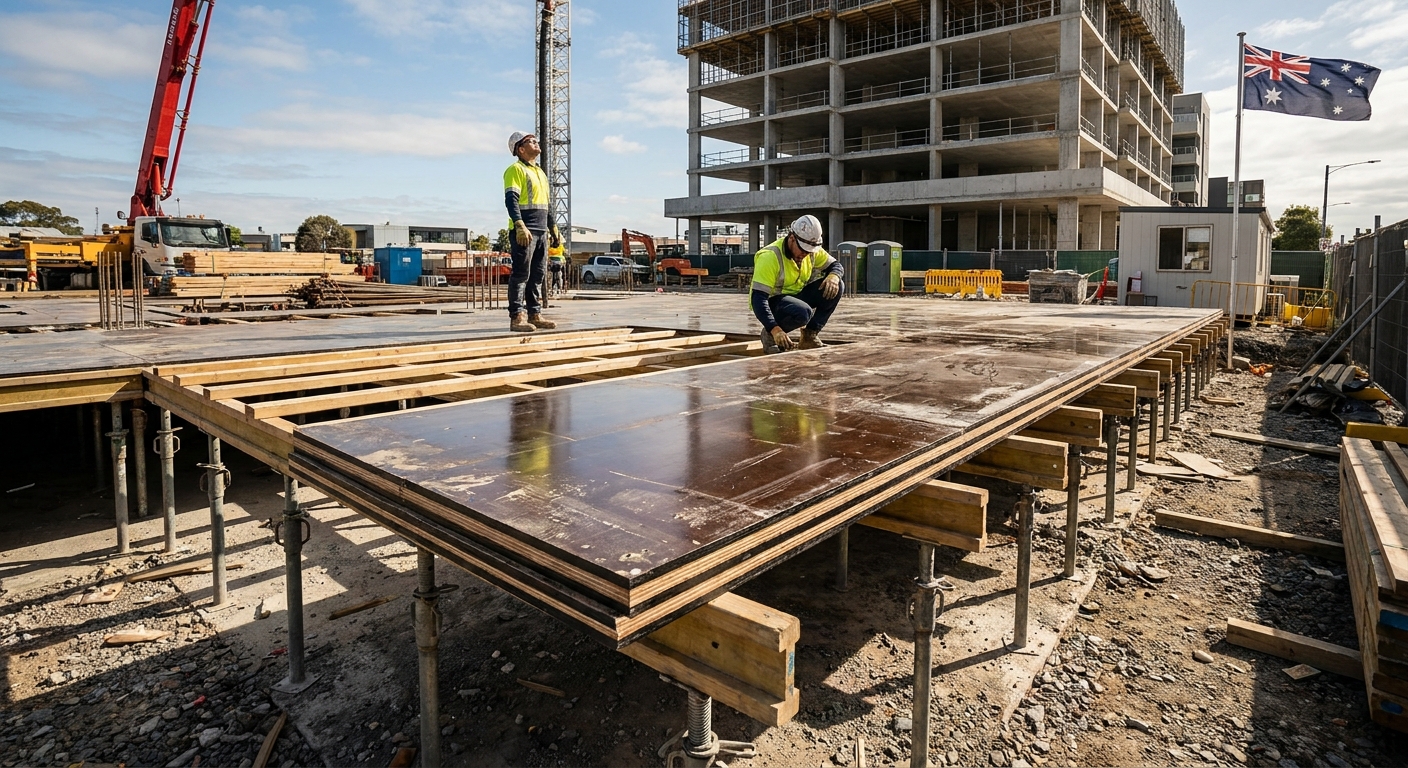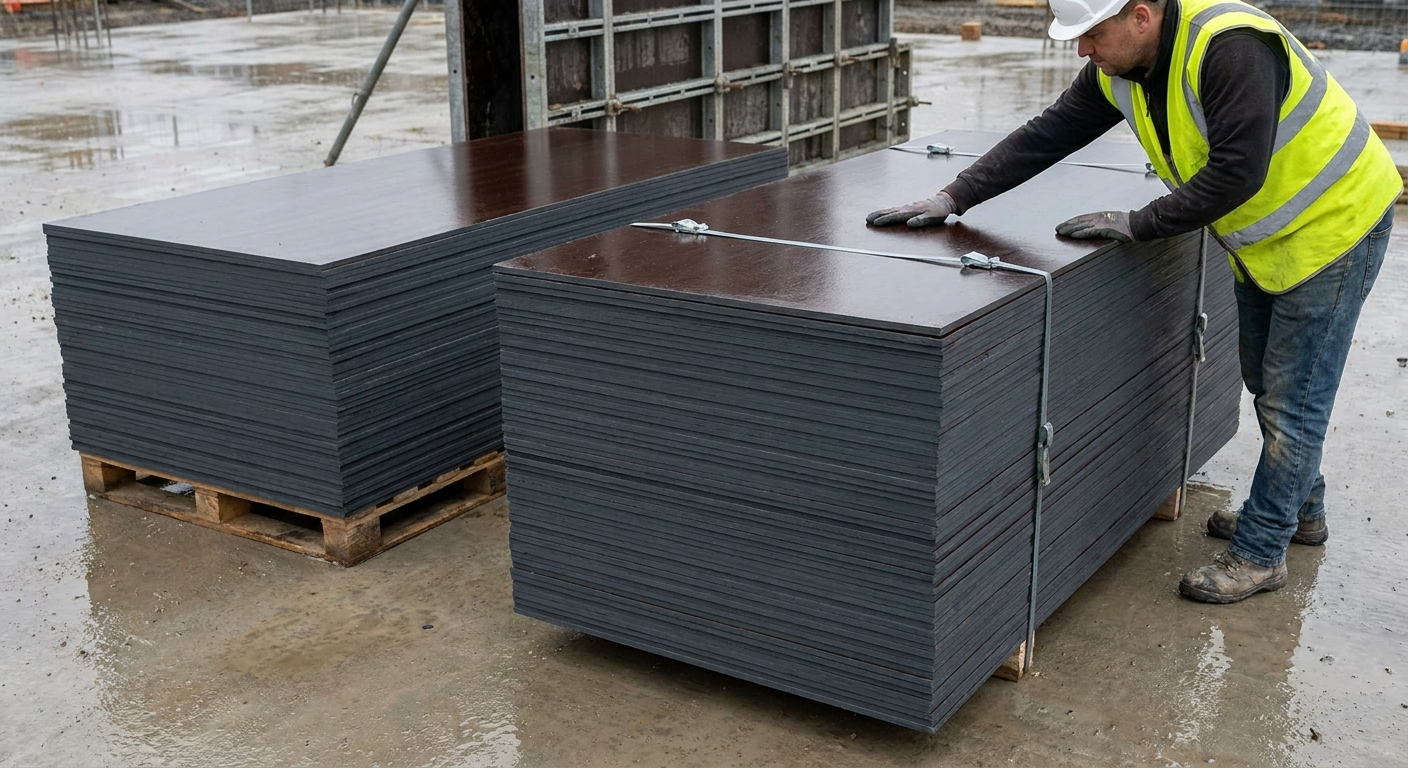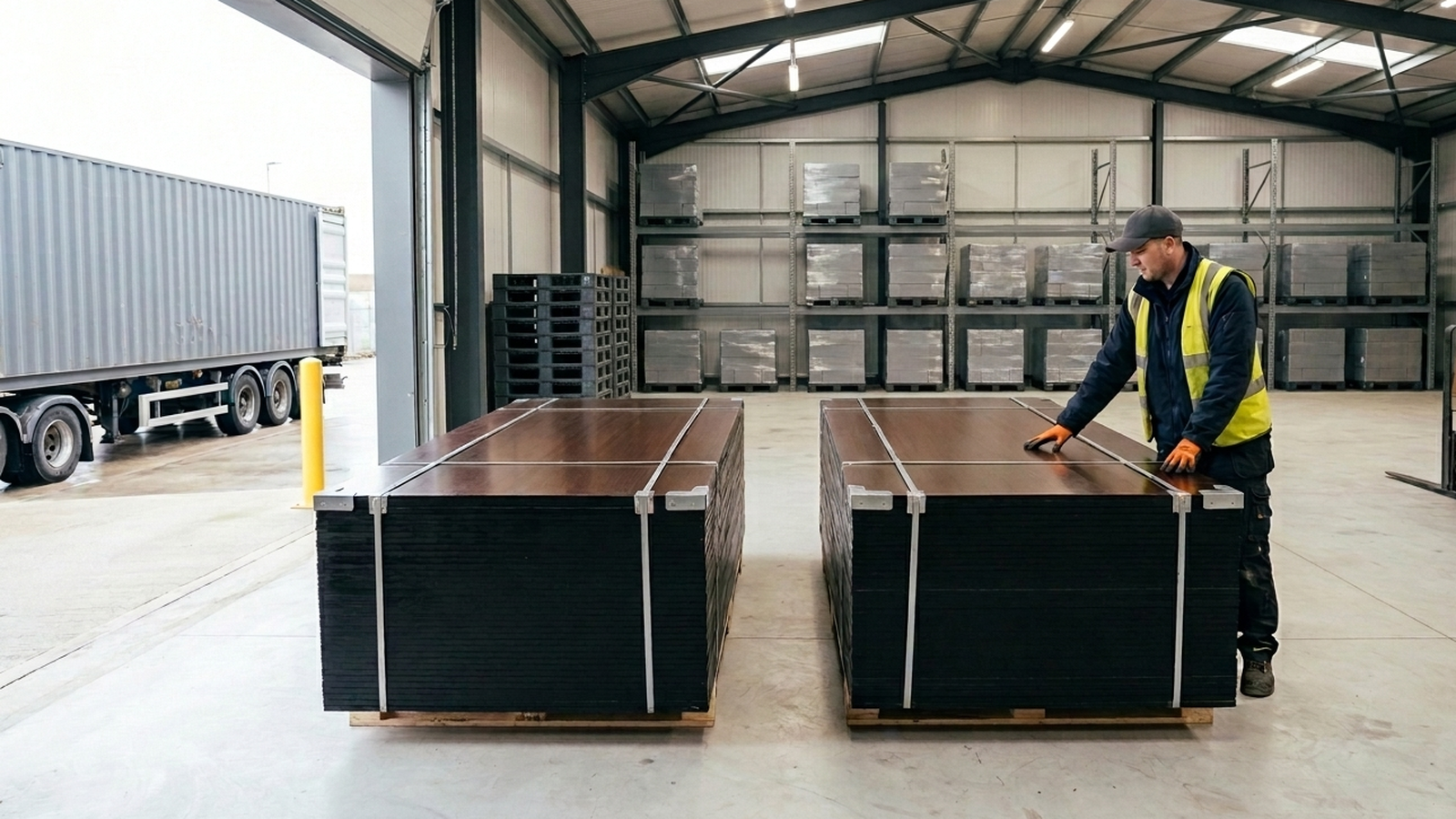
Pro Form vs Form Basic: The Superior Choice for Film Faced Plywood
Pro Form and Form Basic share a phenolic face film but not a core. Here is how the PF Class 3 and MUF Class 2 bonds change reuse, where Form Extra and Pro Form Lite fit, and how to work out cost per pour.
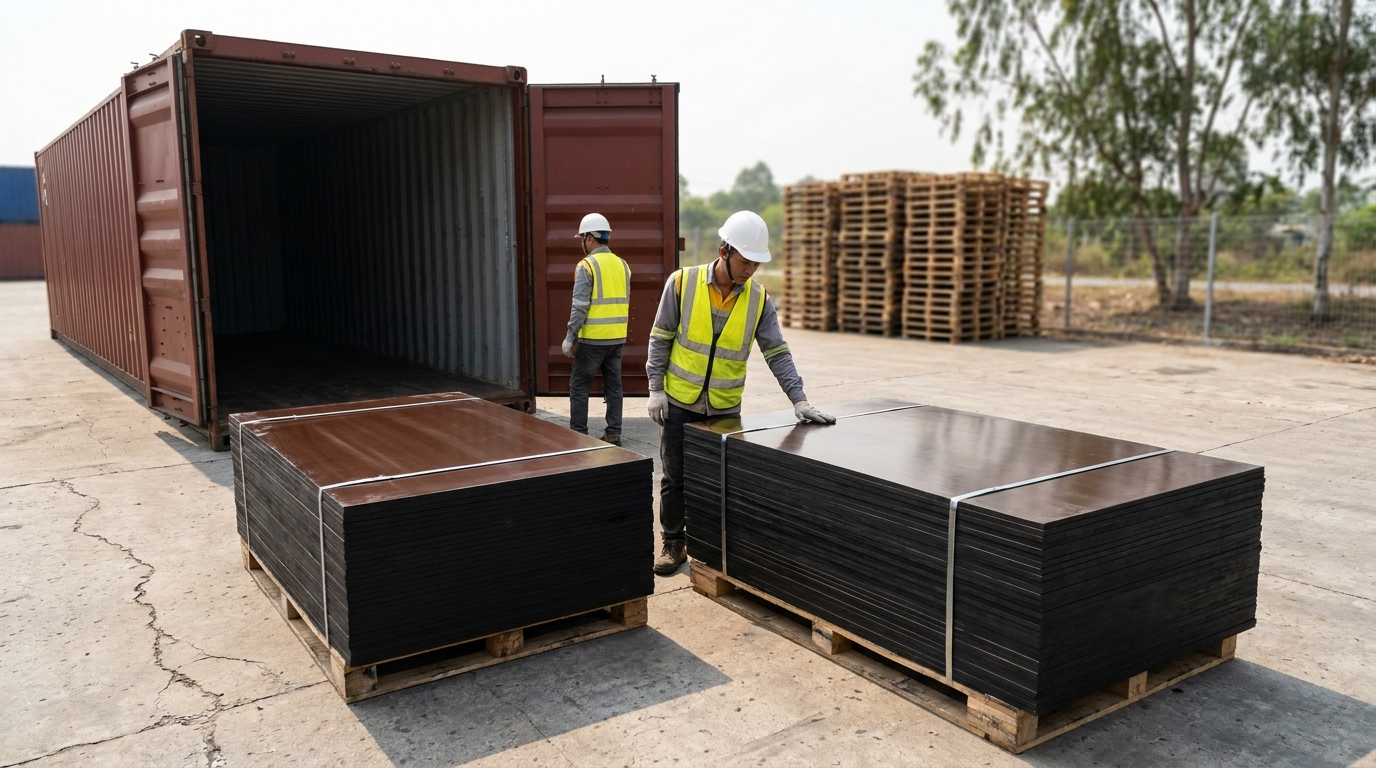
Short answer first. Pro Form is our phenolic board: a WBP phenolic (PF) core bonded to EN 314-2 Class 3, which is what EN 636-3 exterior panels require, and it's rated for up to 20 pours. Form Basic uses an MUF core (melamine-urea-formaldehyde resin) bonded to Class 2, the EN 636-2 level for humid conditions, and it's rated for up to 10. The right pick depends mostly on how many times you plan to pour against each sheet. There are also two grades in between, and on plenty of jobs one of those is the better buy.
Why the glue matters more than the film
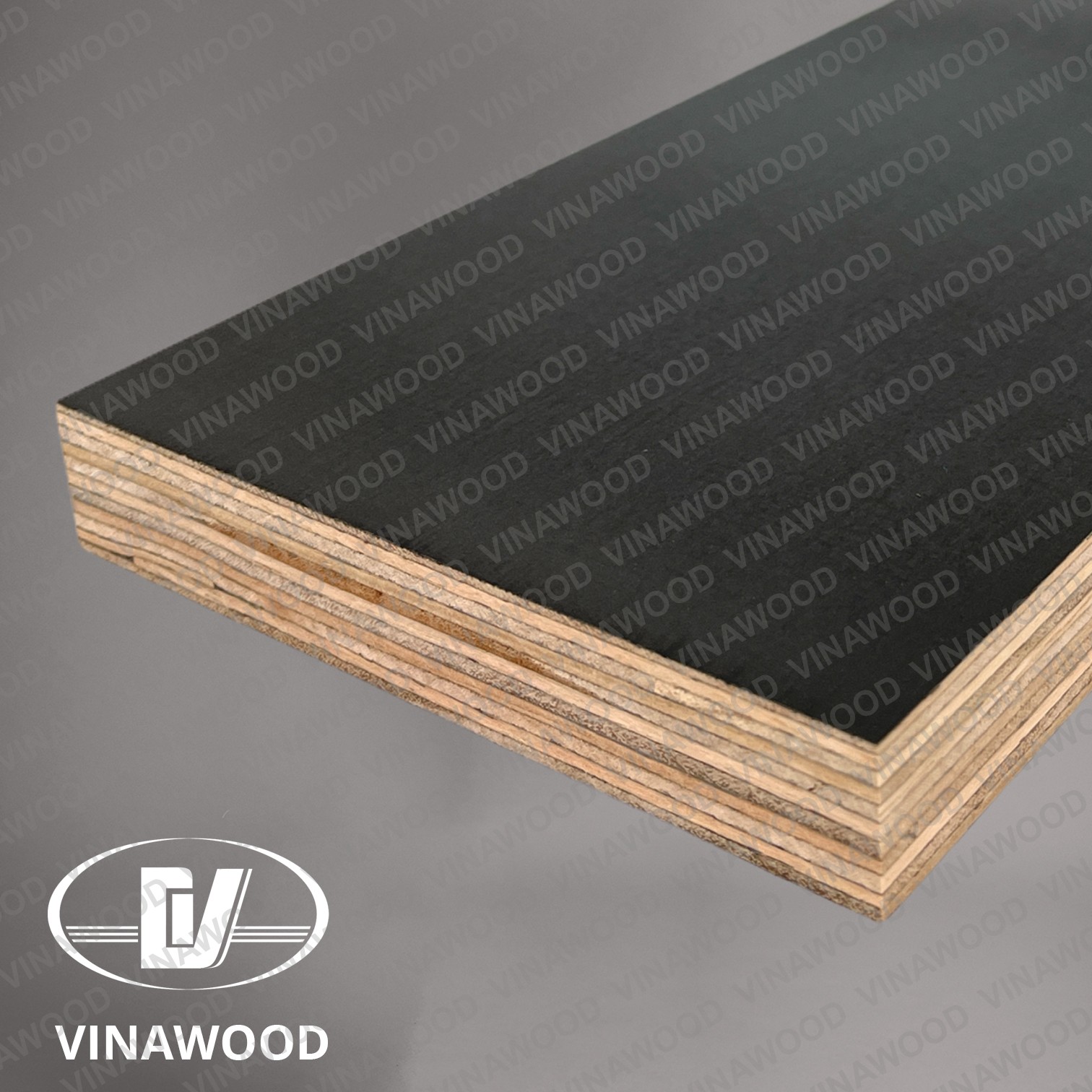
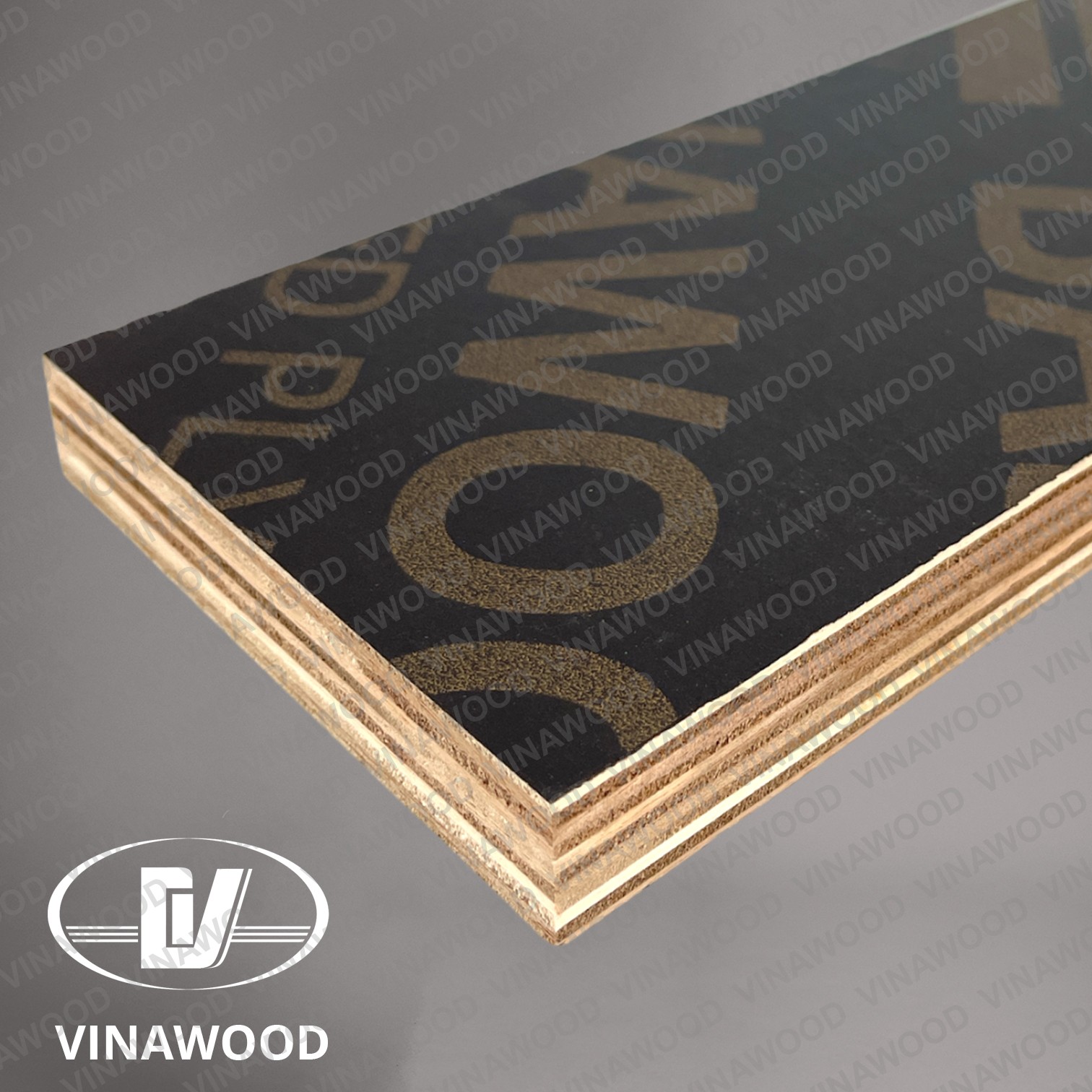
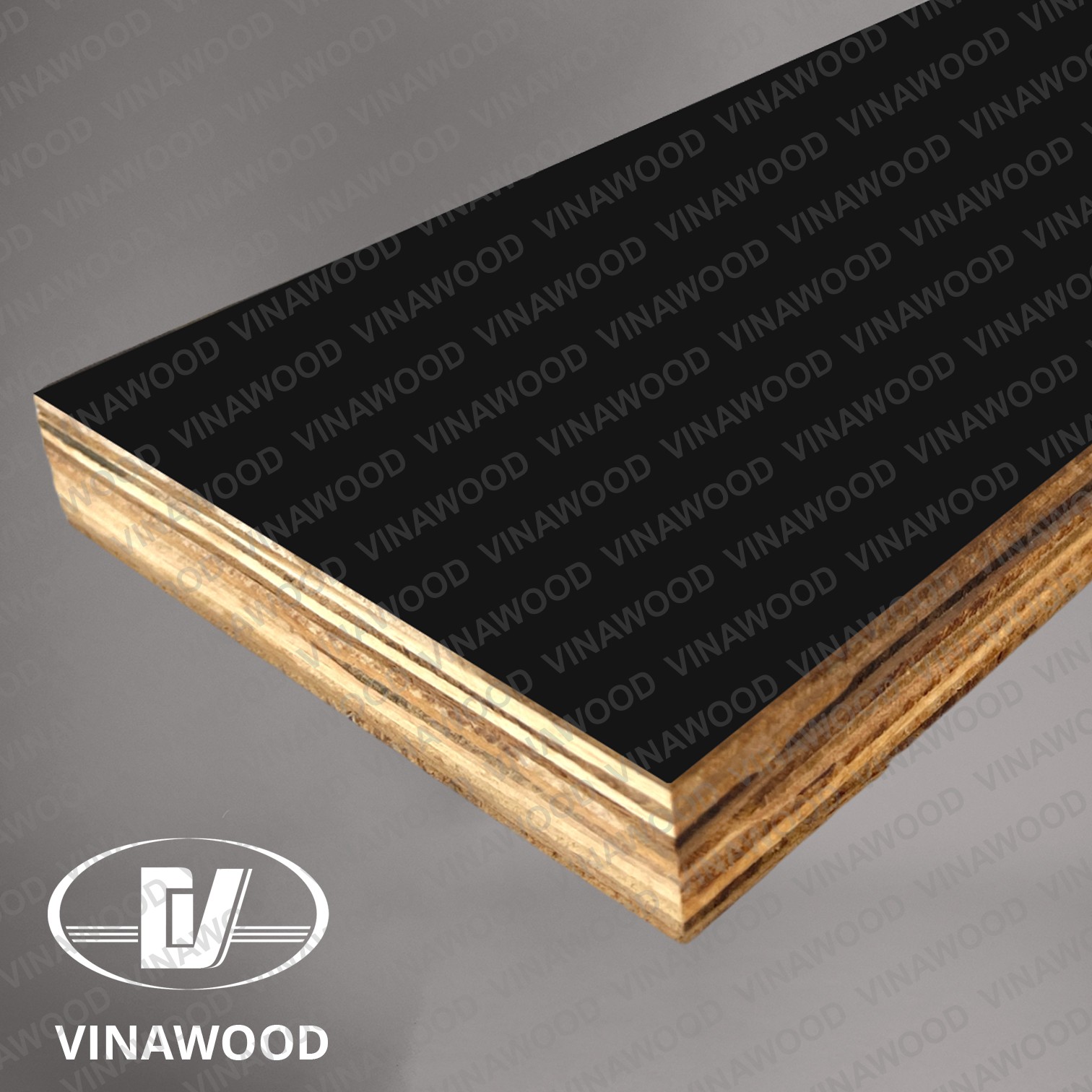
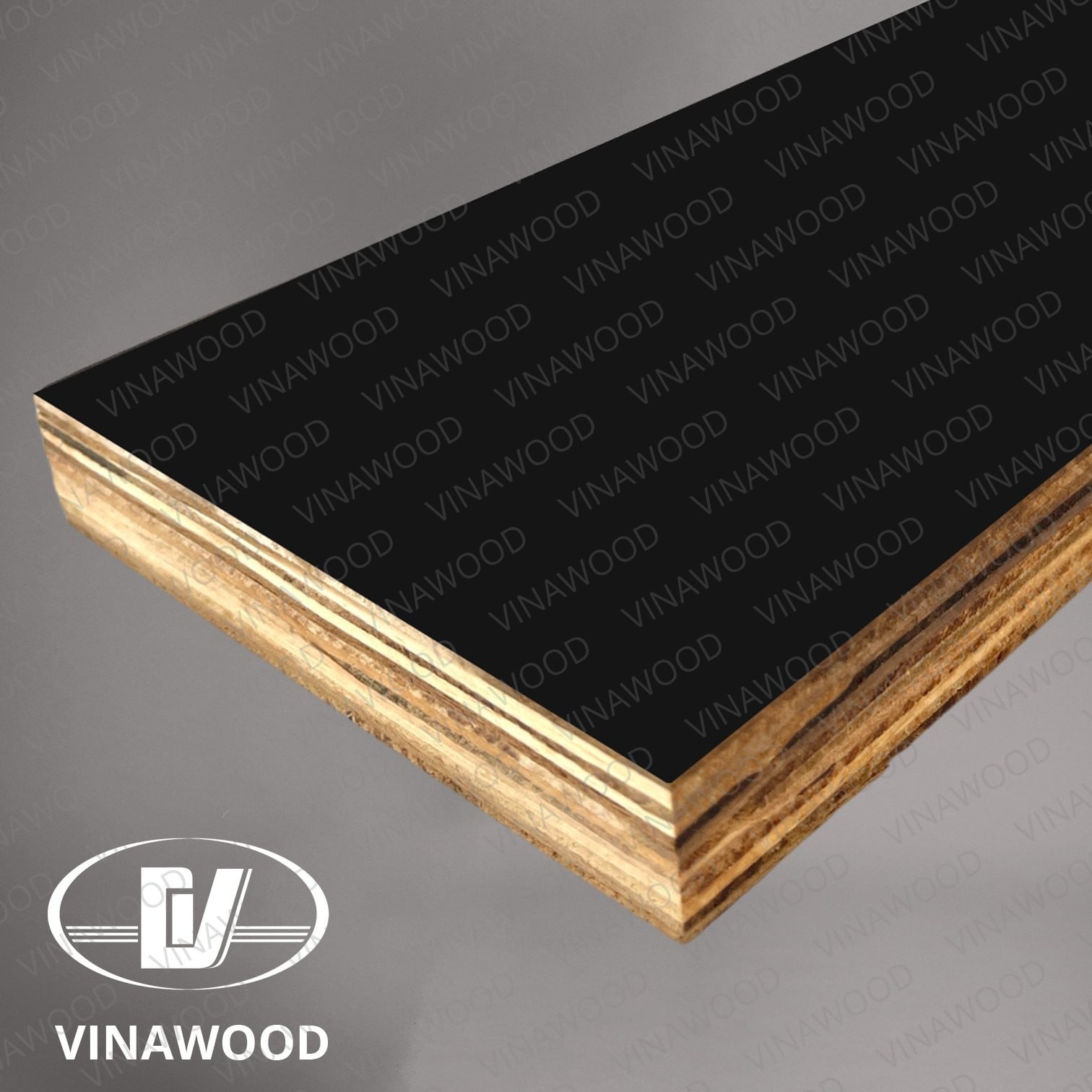
People tend to judge formwork plywood by its face, which makes sense, since the face is what the concrete sees. Both boards wear a dark brown phenolic surface film on the face and on the back, so calling one of them "the phenolic one" (as older catalogues used to) misses the point. The difference is inside. Phenolic resin cures into a bond that survives long boiling and repeated wetting and drying; that is exactly what the Class 3 test checks. An MUF bond is tested for humid or covered exterior use at Class 2, and it is still a proper formwork bond, built for wet concrete and open sites. Its ceiling under long exposure is simply lower.
That ceiling shows up the moment a face gets scratched or a cut edge soaks up water. From then on, the glue line is all that keeps the veneers together.
It also explains something that confuses buyers reading the spec sheets side by side. Form Basic has the heavier film, 165 gsm of standard-grade paper, while Pro Form carries 125 gsm of top-grade film. You would expect the heavier film to last longer, and it doesn't, because the number of pours is set mainly by the core bond and by how evenly the panel was pressed and calibrated. The timber isn't the variable either: both use plantation-grown Acacia and Eucalyptus with an AA core grade.
Pro Form vs Form Basic (and the two grades between)
These figures come from our product data. Think of the reuse column as a ceiling under decent site practice rather than a promise, and the next section covers what pushes a crew toward it or away from it.
| Grade | Core glue | Bond class | Face film | Reuse | Best fit |
|---|---|---|---|---|---|
| Form Basic | WBP MUF (standard) | Class 2 / EN 636-2 | Phenolic, 165 gsm standard | Up to 10 | Short programmes, footings, buried work |
| Form Extra | WBP MUF (Superior Glue) | Class 2 / EN 636-2 | Same phenolic film as Form Basic | Up to 15 | Longer runs where Class 3 is not specified |
| Pro Form Lite | WBP phenolic (PF) | Class 3 / EN 636-3 | Phenolic, 165 gsm standard | Up to 15 | Class 3 specs on a tighter budget |
| Pro Form | WBP phenolic (PF) | Class 3 / EN 636-3 | Phenolic, 125 gsm top grade | Up to 20 | Repeated wall and column cycles, wet sites |
Form Extra gets misread a lot. It's still an MUF board at Class 2 and it has the very same face film as Form Basic; the extra five pours come from a stronger glue recipe, not from a thicker face. Pro Form Lite is the newest of the four. It combines a phenolic Class 3 bond with the standard 165 gsm film and a mixed-grade core, which is why it lands between Form Extra and Pro Form on reuse and on price. (For very high pour pressures there's also Pro Form High Density, a phenolic board with a denser hardwood core, but that belongs in a different article.)
What gets a sheet to 10 pours, or to 20
No board reaches its ceiling on its own. Crews that get there usually do the same few things: they put release agent on thin and even before each pour so paste can't grip the film, and they clean with plastic or rubber scrapers instead of a steel bar. A shovel blade drags a scratch across the face, and water will find that scratch on the very next pour. Fresh cuts get sealed the same day. Leave one open and the edge drinks moisture until the outer veneers swell, and the sheet is finished long before its face is worn.
Storage is the other half. Sheets stacked flat on bearers, off the ground and under a cover, stay true. Sheets dumped on wet soil, or propped against a wall in full sun, soon cup and twist. On a well-run site Pro Form's extra headroom gets used. On a careless one the gap between the grades shrinks, because neither board comes close to its number.
Choose Form Basic when, choose Pro Form when
Both lists describe the job rather than the budget. That's deliberate, since the job is what decides whether a board earns its price.
Choose Form Basic when:
- the programme is short and each sheet will only see a handful of pours
- you're forming footings, pile caps or other buried concrete nobody will look at
- slabs are going in during the dry season and stock is kept covered
- the price per sheet matters more than the price per pour on this order
Choose Pro Form when:
- one set of wall or column forms will cycle again and again
- the site is wet or exposed, or you're pouring through a monsoon
- the concrete stays exposed and should still look even after many pours
- the programme really does need more than 10 pours, and the crew will look after the sheets
Form Extra is the middle road when Form Basic's pour count is too low but nobody has written Class 3 into the spec. Pro Form Lite is the middle road when the tender does demand Class 3 / EN 636-3 and up to 15 pours will cover the work.
Cost per pour, worked out in words
A sheet price on its own tells you surprisingly little. Take the landed cost of a sheet, add what you spend sealing edges and patching faces, then divide by the pours your crew actually got on the last similar job (not the brochure figure). Do it for both grades with your own numbers. On a long run of walls the phenolic board tends to win despite the higher sheet price, and on a short footing job it usually loses.
We'd honestly rather ship a Form Basic order that suits the job than a Pro Form order that gets stripped twice and binned. If you're not sure, tell us what you're pouring and how many uses you expect from each sheet. We'll say which grade fits.
Sizes, paperwork and ordering
The standard sheet across the range is 1220 × 2440 mm (4 × 8 ft), and each product page lists the thicknesses and other sizes offered for that grade. Conformity and emission papers come per lot on request: EN 13986 CE documentation for European shipments, and TSCA Title VI (CARB Phase 2) paperwork on US lots. We've been making plywood in Vietnam since 1992 and now ship about 5,000 containers a year to more than 55 countries, so most paperwork questions are ones we have answered many times.
Full specs are on the Pro Form, Form Basic and Pro Form Lite pages. If you landed here comparing film-faced plywood with Australian formply, our film-faced plywood vs formply guide covers that question. Once you've settled on a grade, send us your sizes and quantities for a quotation.
Related Products
▶Sources & References (2)
- BS EN 636:2012+A1:2015 Plywood. Specifications — BSI / CEN (2015)
- BS EN 314-2:1993 Plywood. Bonding quality. Requirements — BSI / CEN (1993)