Bamboo Plywood: Benefits, Uses, Cost & Where to Buy
In recent years, bamboo plywood has become an increasingly popular alternative to traditional wood plywood. Bamboo plywood is environmentally sustainable, thanks to the tree’s ability to regenerate quickly, reaching full maturity in just four years. Its durability and rapid growth make it stable…
Bamboo's tensile strength runs about 28,000 psi. That's roughly the same as some structural steels and higher than most softwood at 5,000 to 15,000 psi. The catch: bamboo is technically a grass, not a tree, and it grows from rhizome at 91 cm a day in good conditions. Cut a Moso clump at the ground and new culms break the surface within weeks. That's the entire reason bamboo plywood became the go-to "renewable" panel. A 4-year harvest cycle vs. 25 to 60 years for hardwood. The strength comes for free with the species choice.
What is Bamboo Plywood?
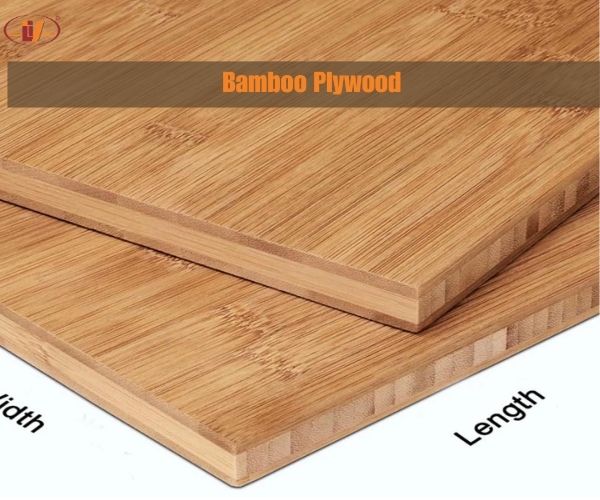
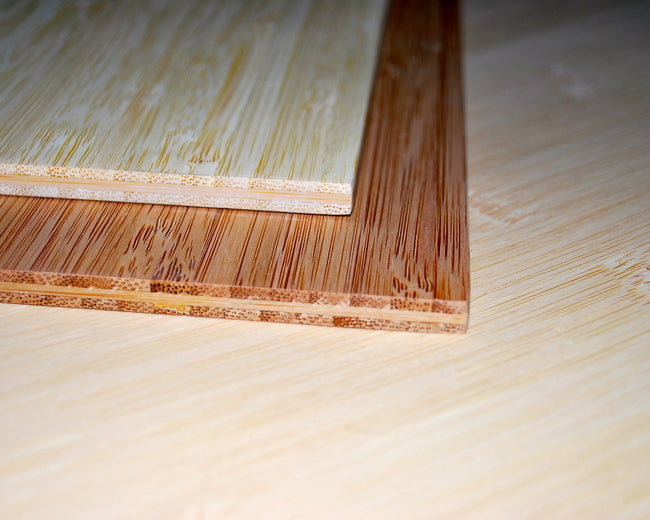
Bamboo plywood is engineered panel built from thin strips of bamboo bonded under heat and pressure. The strips can run vertical, horizontal, or end-grain. That last one — strand bamboo — is the densest. Adhesive is the same urea-formaldehyde, melamine, or phenolic resin used in conventional plywood. Pick the right resin based on indoor or outdoor use.
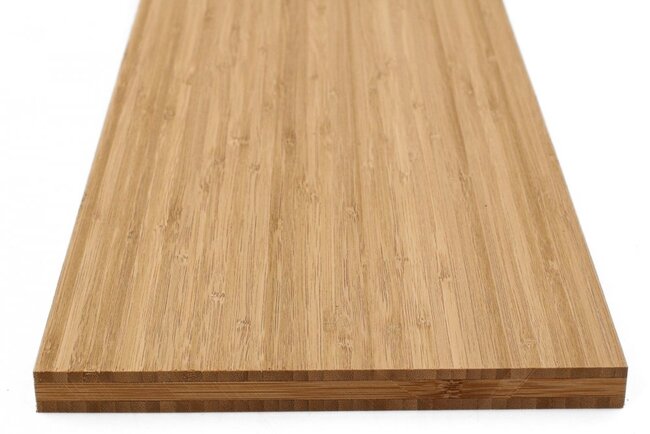
The result reads like premium hardwood ply on the spec sheet. Dense. Dimensionally stable. Holds screws and routs cleanly. The face has a distinct horizontal-band pattern that doesn't look like wood. Aesthetic feature or deal-breaker, depending on the project.
What is bamboo plywood used for?
Bamboo plywood shows up across a range of build types. The applications follow the species' strength-to-weight ratio and surface stability:
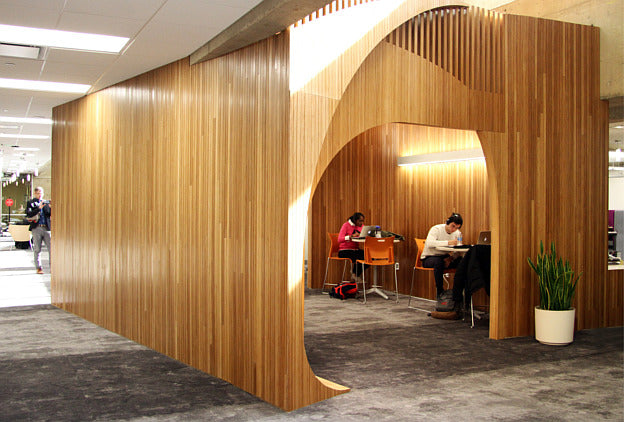
- Furniture: Tables. Chairs. Cabinets. Shelves. The horizontal grain pattern reads modern and works in clean-line interiors.
- Flooring: Face Janka comes in around 1,400 to 1,700 lbf for vertical-grain bamboo. That's harder than red oak. Easy install. Alternative to hardwood flooring when the look fits the room.
- Cabinets and joinery: Solid plywood for cabinets in kitchens and bathrooms when sealed properly. Holds up to splash and humidity better than uncoated softwood ply.
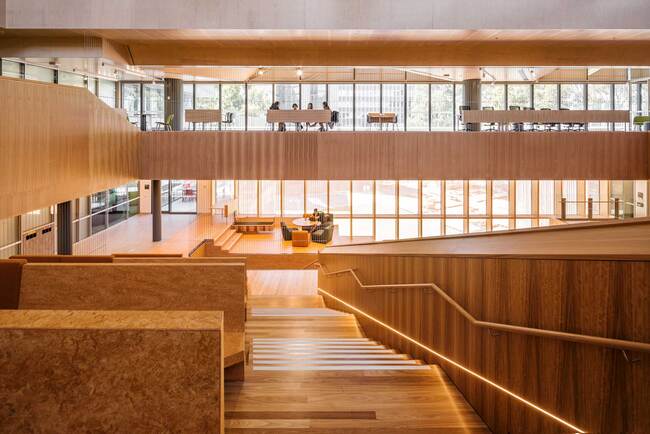
- Architectural panels: Wall and ceiling panels. Residential and commercial fitouts both use it. The dense fiber damps sound, which earns it acoustic-panel use.
- Doors: Stable enough for both interior and exterior service when the finish is right.
- Countertops: Edge-grain bamboo holds up to knives, water, and daily wear as a kitchen surface.
- Decorative items: Picture frames, cutting boards, smaller millwork. Easy to mill and finish.
- Eco-friendly building material: Green building specs (LEED, BREEAM) credit bamboo as rapidly renewable. Boosts its appeal in commercial certification work.
> Read more: baltic birch plywood, maple plywood, ACX plywood, BBOES plywood
Why Choose Bamboo Plywood?
1. Sustainability and Eco-Friendliness
Bamboo hits maturity in 3 to 5 years. Hardwood takes 25 to 60. Carbon sequestration per acre per year runs roughly 35 percent higher for bamboo than equivalent hardwood plantations because the turnover happens more often. Math favors bamboo for any spec that scores embodied carbon.
2. High Strength and Durability
Tensile strength around 28,000 psi puts bamboo in the same class as some structural steel. The dense fibers, when laminated cross-grain in plywood form, produce panels that handle real loads. Up to and including structural sheathing.
3. Lightweight and Flexible
Density runs about 700 kg/m³ for solid bamboo. Heavier than pine (~500). Lighter than oak (~750). The plywood version tracks similar. Easier to handle than hardwood ply at the same dimension, and the natural grain flex resists splitting.
4. Moisture and Pest Resistance
Treated bamboo handles humid environments and resists insects that go after softwood. Mold can still grow on the surface if moisture sits. Sealing matters.
5. Aesthetic Appeal
The horizontal band pattern is the visual signature. Stains and clear coats both work. Some projects pick bamboo specifically because it doesn't read like the standard oak-or-walnut palette.
Bamboo plywood sizes and thicknesses
Standard bamboo plywood panels ship in:
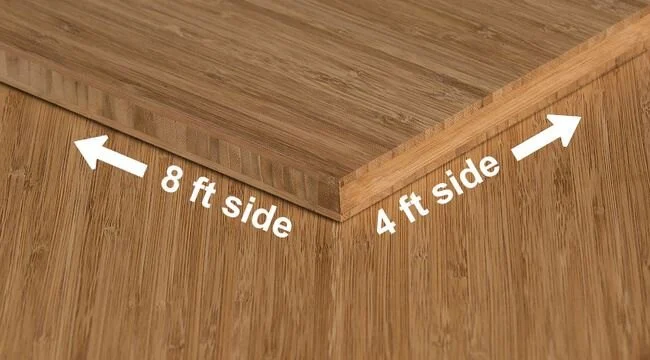
- Sizes: 4x8 ft (1220x2440 mm), 6x8 ft custom available.
- Thicknesses: 1/4", 1/2", 5/8", 3/4", up to 1".
- Cores: Solid bamboo. Some specialty panels use bamboo face over MDF core.
Is bamboo plywood stronger than regular plywood?
Generally yes, on tensile and compressive metrics. Bamboo's tensile strength sits around 28,000 psi. Higher than most softwoods (5,000 to 15,000 psi). Competitive with mid-range structural hardwoods. Compressive strength tracks similarly. Once the strips are bonded into plywood form, those species-level numbers carry through into the panel.
The cross-laminated structure is the same as conventional plywood. Strips run perpendicular layer to layer. Loads distribute evenly. Splitting resists. Combined with bamboo's higher base strength, the resulting panel handles point loads, racking forces, and sustained loads better than standard softwood ply at the same dimension.
Conventional plywood from laminated plywood stock varies a lot in strength. Softwood pine ply is the lowest performer. Hardwood ply made from types of wood like birch and maple comes closer, but rarely matches bamboo on tensile.
Impact and abrasion resistance also favor bamboo. The dense fiber doesn't dent the way pine does and resists scratches better than most softwood faces. Natural moisture and insect resistance reduce the long-term weakening that affects untreated traditional ply.
> Explore further: MDF vs Plywood, Particle Board vs Plywood, OSB and Plywood, plywood ceiling
> Learn more: marine plywood, birch plywood, MDO plywood, HDO plywood
Is bamboo ply eco-friendly?
The eco-friendly tag is real but qualified. Bamboo grows fast (3 to 5 years to maturity) and regenerates from rhizome without replanting. Harvest-cycle math beats hardwood. The catch: most bamboo is grown in China and shipped overseas. Embodied transport carbon partially offsets the renewable-resource gain. Adhesives matter too. Formaldehyde-heavy resins drag the eco score down. Look for E0 or E1 emission ratings on the spec sheet.
What are the disadvantages of bamboo wood?
Bamboo has trade-offs. The main ones, especially in flooring use:
- Prone to Scratches and Dents: hard but not impervious. Heavy furniture and pet claws still leave marks.
- Moisture Sensitivity: absorbs water if exposed long enough. Warps and swells in humid zones.
- Limited Water Resistance: some treated bamboo handles splash, but none is waterproof. Skip it in bathrooms and basements.
- Fading from Sunlight: direct UV shifts the color over time. South-facing rooms see it first.
- Limited Refinishing Options: the wear veneer is thinner than solid hardwood. Two refinish cycles is the practical maximum.
- Environmental Concerns: not all bamboo is sustainably grown. Some processing uses harsh chemicals. Verify the source.
- Inconsistent Quality: mill quality varies. Cheap product is often poorly bonded.
- Susceptibility to Scratching: the same dense fiber that resists denting can still scratch.
- Sensitivity to Humidity Changes: expands and contracts with humidity swings. Gaps and buckling in extreme conditions.
- Difficult to Install: tighter tolerances than standard hardwood flooring. Pro install is often the safe call.
- Off-Gassing: some products release VOCs from the adhesive. Check the certification.
Limited Style Variety: sleek, modern look. Doesn't fit every interior.
Can bamboo plywood be bent?
Yes. Thin sheets and panels with vertical grain bend most easily. Steam or soak the panel first to soften the fiber. Clamp it to the form. Let it dry. The bend holds. Curved furniture, architectural elements, and millwork all use bent bamboo for this reason.
Is bamboo plywood safe to use?
Generally safe when the product meets quality standards. The key risk is the adhesive. Older formulations released formaldehyde, which is a respiratory irritant and a carcinogen at high exposure. Modern panels often use low-VOC or formaldehyde-free resins. Look for FSC certification and ISO compliance labels to confirm the manufacturer meets recognized standards.
Why Choose Bamboo Plywood from Vinawood?
Vinawood supplies bamboo boards built for furniture, joinery, and interior fitout work. The product line:
- Made from Moso bamboo — the species with the highest density and fiber strength.
- Multiple thicknesses and finishes covering most project specs.
- Suitable for interior applications and custom furniture.
- Responsibly sourced and certified to international quality standards.
Is bamboo plywood durable?
Yes. Durable enough to compete with hardwood ply on most metrics. The fiber strength is intrinsic to the species, not a coating. Pressure-bonded layers preserve that strength in the panel. Dense, screw-holding, scratch-resistant, stable across humidity swings.
Is bamboo plywood good?
For cabinets, furniture, and architectural cladding: yes. The structural integrity holds up under load. The face doesn't crack or splinter under cuts and routs. Long service life is the consistent feedback from builders who use it.
> Read more: plywood sizes, 3/4 plywood, 4×8 plywood, 1/2 plywood, 5/8 plywood, 1/4 plywood
Is bamboo plywood stable?
Yes. Bamboo's natural moisture-cycle behavior is more stable than most hardwoods, and the cross-laminated structure adds dimensional stability on top. It holds its shape across seasonal swings without warping the way pine ply does.
> Learn more:
- Can you stain pressure treated wood
- What is CDX plywood
- What is the best outdoor plywood
- How to waterproof plywood
VINAWOOD – Vietnam Plywood Supplier & Manufacturer