Concrete Cold Joints: Causes, Prevention & When They Matter
A concrete cold joint forms when a pour delay lets one lift set before the next is placed, so the two never bond. It is a placement and timing issue, not a plywood defect. Here are the real causes, the time limit, how it differs from a planned construction joint, and how to prevent and repair one.
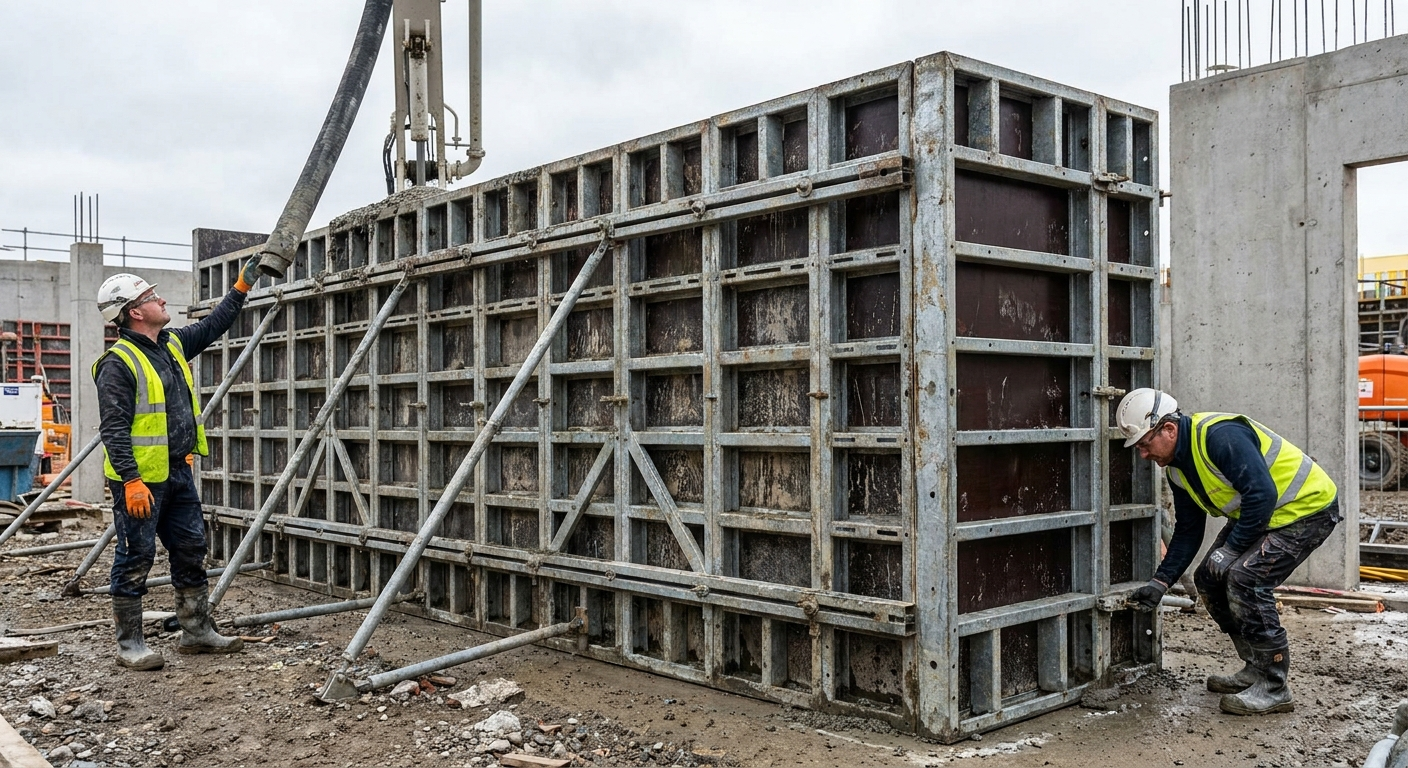
A concrete cold joint is the visible line, and the plane of weakness behind it, that forms when one batch of concrete starts to set before the next is placed against it. The two lifts never properly intermingle, so instead of curing as one continuous mass they meet at a discontinuity. The trade calls it a cold joint because the earlier concrete has gone cold, in the sense of stiffening, before the fresh concrete arrives.
From a formwork panel maker's seat, the honest version is short: a cold joint is a pour-scheduling and placement story, not a plywood one. It comes from a delay between lifts, a slow or interrupted supply, or hot weather speeding the set. The form face has only a supporting role, which we get to near the end. No panel causes a cold joint, and no panel prevents one. Here is what actually drives them, the time window you are working against, how a cold joint differs from a planned construction joint, and how to prevent and repair one.
What a cold joint actually is
The American Concrete Institute defines a cold joint as a joint or discontinuity resulting from a delay in placement long enough that the previously placed concrete has begun to set, so the new concrete cannot be vibrated into and knitted with it. That is the whole mechanism in one sentence: time ran out before the next lift went in.
Fresh concrete bonds to a previous lift through intermingling. The poker vibrator pushes the new concrete into the surface of the lift below while that surface is still plastic, and the two become one. Once the lower lift passes its initial set, vibration can no longer work the fresh concrete into it. What you get instead is a butt contact between a hardened surface and a fresh one, with no continuous paste across the boundary. That boundary is the cold joint, and it is weaker in tension and shear than the surrounding concrete and more open to water.
Why cold joints form
Every cold joint traces back to one root condition: too long a gap between placing one lift and the next. The reasons that gap opens up are all on the site and logistics side.
- Delay between lifts or batches. The single most common cause. A pour stops, for any reason, long enough for the exposed surface to stiffen before work resumes.
- Slow pour rate or supply gaps. If concrete arrives slower than the form is being filled, the working surface waits. A late truck, a pump breakdown, or a batching plant that falls behind all open the window.
- Poor pour sequencing and planning. A large pour split across an area without a worked-out sequence can leave one zone waiting while the crew is committed elsewhere.
- Hot weather and rapid set. High ambient temperature shortens the time to initial set, so the same delay that would be harmless in cool conditions becomes a cold joint in summer. Wind and low humidity compound it by drying the surface.
- Pour interruptions. Equipment failure, a rebar problem found mid-pour, or a sudden weather stoppage can halt placement past the point of no return.
Look at that list and not one item is the form panel. Cold joints are a function of scheduling, supply, and weather. We see the same pattern in our own customers' field reports: when a cold joint shows up on a job running our panels, the trail leads to a stalled truck or an over-ambitious pour plan, not to the sheet that shaped the wall.
The time limit: how long before a cold joint forms
There is no single clock that applies everywhere, which is exactly why searchers ask for one. The honest answer is that the window is set by the concrete's initial set, and initial set moves with temperature, cement type, and admixtures.
As a practical rule, many crews treat roughly the time to initial set, often in the region of a couple of hours for an ordinary mix in mild conditions, as the outer limit for placing a fresh lift against the last one without a cold joint. That figure is a planning aid, not a specification. In hot weather it can shrink to well under an hour. In cool conditions, or with a set-retarding admixture, it stretches. The reliable trigger is the state of the concrete surface, not the reading on a stopwatch: if the surface no longer responds to vibration and a poker will not blend a fresh lift into it, the window has closed regardless of how many minutes have passed.
This is where set-retarding admixtures earn their place on hot-weather and large-volume pours. By delaying initial set, a retarder widens the window in which successive lifts can still knit together, which is one of the main tools for avoiding cold joints when a long continuous pour is unavoidable. The mix designer and the ready-mix supplier set the dose against the conditions on the day.
Cold joint vs construction joint vs control and expansion joints
These four get conflated constantly, and the distinction is practical rather than academic. A cold joint is the unplanned accident; a construction joint is the planned, detailed version of the same break done deliberately and bonded; control and expansion joints serve a completely different purpose around movement. The table sorts them.
| Joint type | Planned? | Purpose | Bonded across the joint? |
|---|---|---|---|
| Cold joint | No — unintended | None. It is an accidental discontinuity from a placement delay | Poorly, or not at all — a plane of weakness |
| Construction joint | Yes — designed in | A deliberate stopping point between pours, located and detailed by the engineer | Yes — surface prepared and bonded so the lifts act together |
| Control (contraction) joint | Yes — designed in | A planned weak line that tells shrinkage cracking where to form | Partial — the section is deliberately reduced |
| Expansion (isolation) joint | Yes — designed in | A full gap that lets adjacent elements move independently with thermal change | No — by design, the parts are separated |
The line that matters most: a cold joint and a construction joint can occur at the same place and look similar, but a construction joint is intended, located by design, and its surface is prepared and bonded so the two pours act as one. A cold joint is the same break left to chance, with none of that preparation. The remedy for an unavoidable pour stoppage is to convert it into a construction joint rather than let it become a cold joint. Control and expansion joints are a separate subject entirely, about managing movement, and should not be confused with either.
Are cold joints bad?
It depends on where the joint is and what the element does, and the sensible response is to assess rather than panic or ignore. Two consequences are worth weighing honestly.
The first is structural. A cold joint is a plane of reduced bond, so it is weaker in tension and shear than the surrounding concrete. In a member that carries little tension or shear across that plane, for example a lightly loaded wall where the joint runs horizontally, the consequence may be minor. In a member where the joint crosses a path of significant tension or shear, it can matter, and the assessment belongs with the structural engineer rather than being judged from the ground.
The second is durability. A cold joint is a potential path for water. In a water-retaining structure, a basement wall, or any element exposed to wet-dry or freeze-thaw cycling, seepage along the joint is the real concern, and it is often what drives the decision to inject and seal. On a buried or internal element that stays dry, the same joint may carry no practical consequence at all.
So the answer is neither alarmist nor dismissive. A cold joint may indicate a weakness worth checking, particularly on water-retaining or structurally demanding elements, and it may equally be cosmetic on a dry, lightly loaded face. Classify it before deciding anything.
How to prevent cold joints
Prevention is almost entirely about pour planning and supply, with the form playing a supporting part. The habits that work:
- Plan the pour and the rate. Match the placement rate to a realistic supply rate so the working surface never has to wait. Size the crew, the pump, and the truck schedule to keep the front moving.
- Secure continuous supply. Confirm batching capacity and truck spacing before the pour, and have a contingency for a late or failed delivery so a gap does not open mid-pour.
- Use set retarders in hot weather. On warm-weather or large continuous pours, a set-retarding admixture widens the window for lifts to knit together. Agree the dose with the supplier against the day's temperature.
- Vibrate into the previous lift while it is workable. Place and revibrate each new lift into the surface of the one below before that surface sets, so the two intermingle. This is the single placement habit that turns two lifts into one continuous pour.
- Plan stopping points as construction joints. Where a stop is unavoidable, locate it deliberately at an engineer-approved construction joint and prepare the surface, rather than letting the pour stall in an arbitrary spot.
The pour rate also drives the lateral pressure the fresh concrete puts on the form, which is its own design step; our guide to concrete pressure on formwork covers how rate and temperature feed into panel and tie selection.
Where the form face honestly fits
This is the part a plywood maker can speak to, so it is worth being precise about how narrow the role is. The form face does not cause or cure a cold joint. What well-built formwork does is remove two things that would otherwise make a joint worse.
The first is grout loss. Tight, well-braced forms with sealed joints stop the mortar fraction leaking out at panel gaps and at the base. A grout leak near a joint line exaggerates its appearance and can leave a starved, porous band right where the discontinuity already sits. Stiff bracing and tight panel joints keep the paste where it belongs. The lateral pressure of the fresh concrete is what those joints and ties have to resist without opening up.
The second is clean construction-joint preparation. When a stop is planned as a construction joint, the formwork provides the stop-end that defines it. A clean, leak-tight stop-end gives a sound surface to prepare and bond the next lift against, which is what turns a potential cold joint into a proper bonded construction joint. That is the form's contribution: a tight boundary to work to, not a fix for the timing problem itself.
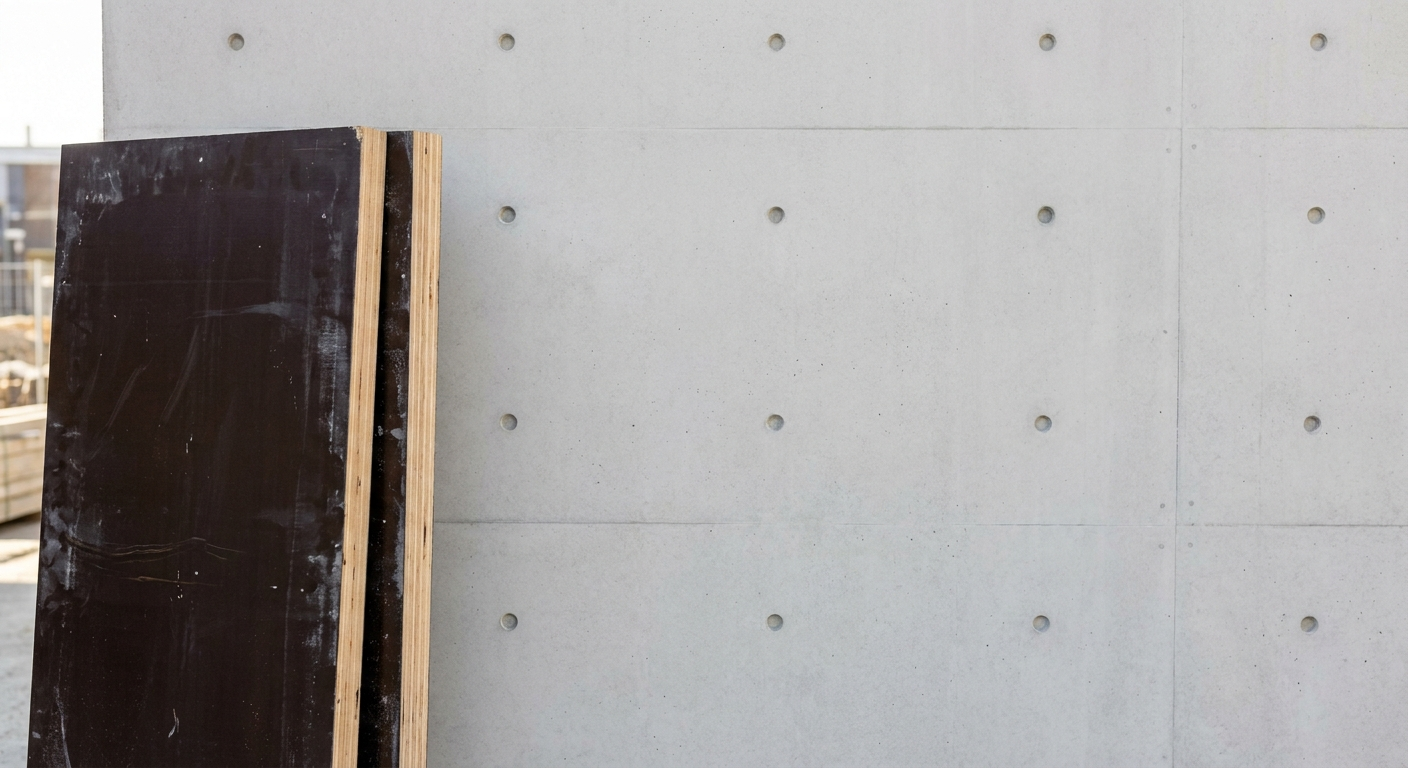
A cold joint, to be clear, is never a panel defect. Marks, colour variation, and edge wear on a stripped panel are the form telling its history, a separate subject from a discontinuity in the concrete caused by a placement delay.
How to repair and treat a cold joint
Where a cold joint needs attention, the treatment depends on whether the concern is appearance, structure, or water-tightness. The general sequence for a joint that has to be sealed:
- Assess first. Establish whether the joint is cosmetic, a potential structural concern, or a leakage path. On a structural or water-retaining element, bring in a structural engineer before treating it as a finish issue.
- Prepare the surface. Clean the joint of laitance, dust, and any loose material so a repair or sealing material can bond to sound concrete.
- Bond a surface repair where appropriate. For a joint that is mainly cosmetic or needs surface continuity, a bonding agent followed by a matched repair mortar can close and blend the line.
- Inject for water-tightness. Where the joint leaks or must be made watertight, low-pressure polyurethane resin injection is the established field method for sealing the discontinuity through the section. This is the route specialist injection contractors use on basement and water-retaining structures.
Match the repair to the requirement. A dry, hidden joint may need nothing. A leaking basement joint needs injection, not a skim of mortar over the face.
Quick reference: cold joints at a glance
| Question | Short answer |
|---|---|
| What causes a cold joint? | A placement delay long enough that the earlier lift sets before the next is placed, so they cannot knit together |
| How long before one forms? | Until initial set, which varies with temperature, cement and admixtures. The surface state, not the clock, is the real trigger |
| Cold joint or construction joint? | A construction joint is the planned, prepared and bonded version of the same break; a cold joint is the unplanned one |
| Are they bad? | Sometimes. A plane of weakness in tension or shear, and a water path. Assess by location and exposure |
| How do I prevent them? | Pour planning, continuous supply, retarders in heat, and vibrating each lift into the last while workable |
| How do I fix one? | Surface bonding for cosmetic joints; polyurethane injection for water-tightness; an engineer for structural cases |
Sound forming for a clean, continuous pour
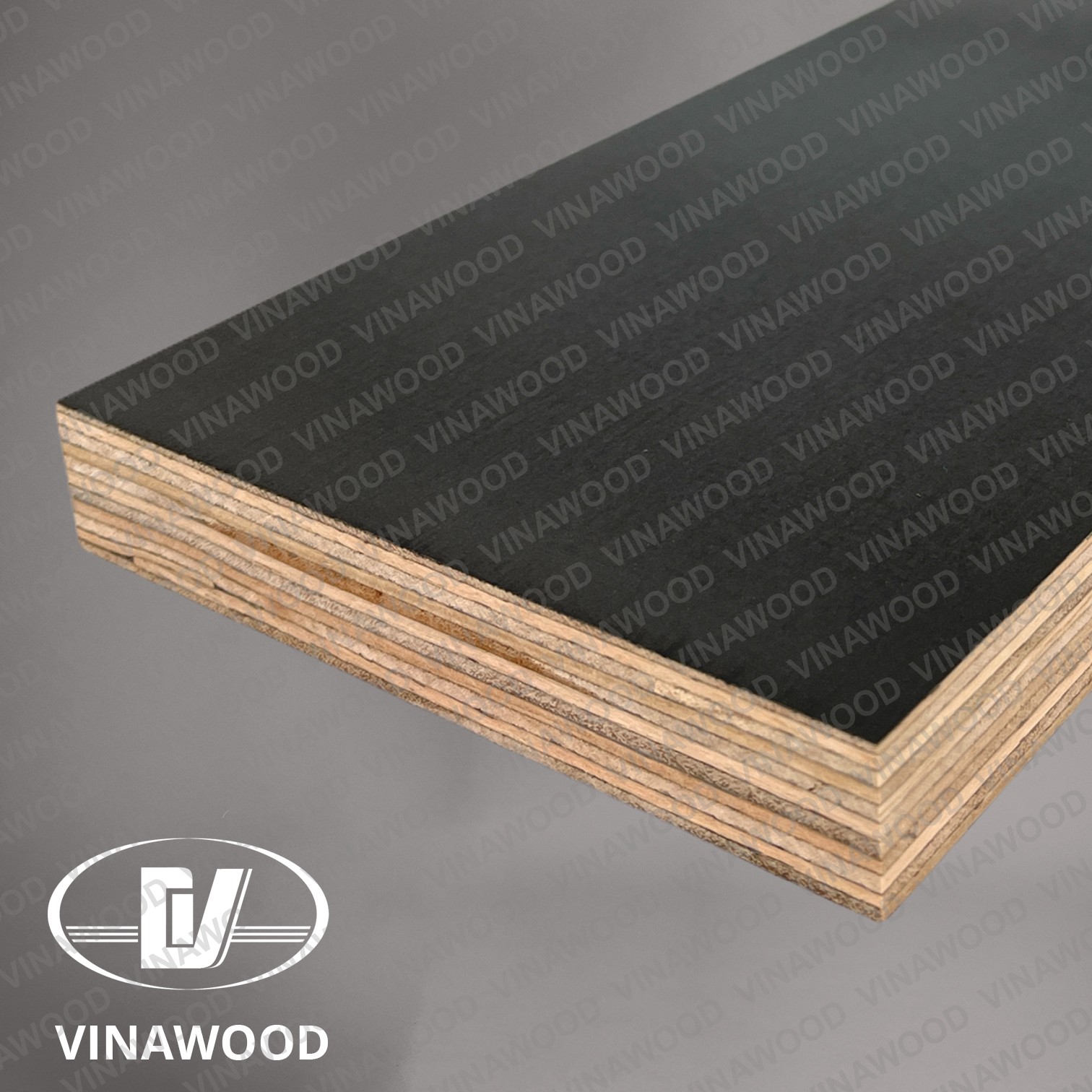
A continuous, well-bonded pour is mostly earned at the planning stage and at the truck schedule, with the form contributing tight, leak-resistant boundaries and clean stop-ends where construction joints are planned. Film-faced and overlaid plywood with sealed edges and well-supported joints keeps grout where it belongs and gives a sound surface to detail a construction joint against. Vinawood manufactures film-faced and phenolic formwork plywood in Vietnam, with factory edge-sealing and 100% individual sheet inspection across the range. For finish-critical, repeat-use wall and column forming, Pro Form is a WBP phenolic panel to EN 636-3 rated up to 20 reuse cycles; for lower-rotation work, a melamine-core (MUF) panel such as Form Extra reaches up to 15 reuses at EN 636-2, and Form Basic up to 10. Form Extra's longer life comes from a more durable, higher-melamine-content core glue, not a heavier face film, and both carry the same phenolic face. The wider film-faced plywood range covers the budget and lighter-duty tiers, and North American contractors working to imperial sizes and ACI joint detailing can look at the HDO plywood range, where the high-density overlay holds a clean face across high-rotation pours. None of these prevents a cold joint, which is decided by the pour schedule and the weather. What good forming does is give the pour tight boundaries and clean construction-joint stop-ends to work to. For more on the wider family of as-cast conditions, see our guides to bug holes in concrete and concrete form plywood. Request a quote with your panel sizes, finish class and project volume.
Category
guides
Related Markets
Related Countries
Related Products
▶Sources & References (3)
- ACI Concrete Terminology / CT-13 (cold joint definition) — American Concrete Institute (2024)
- ACI 304R — Guide for Measuring, Mixing, Transporting, and Placing Concrete — American Concrete Institute (2000)
- Cold joints (Fingertip) — The Concrete Society (2023)