Bug Holes in Concrete: What Causes Them and How to Prevent Them
Bug holes are small surface air voids on a concrete face, driven mostly by the mix, vibration and release agent rather than the plywood. Here are the real causes, how to prevent them, how to assess them, and where the form face honestly fits.
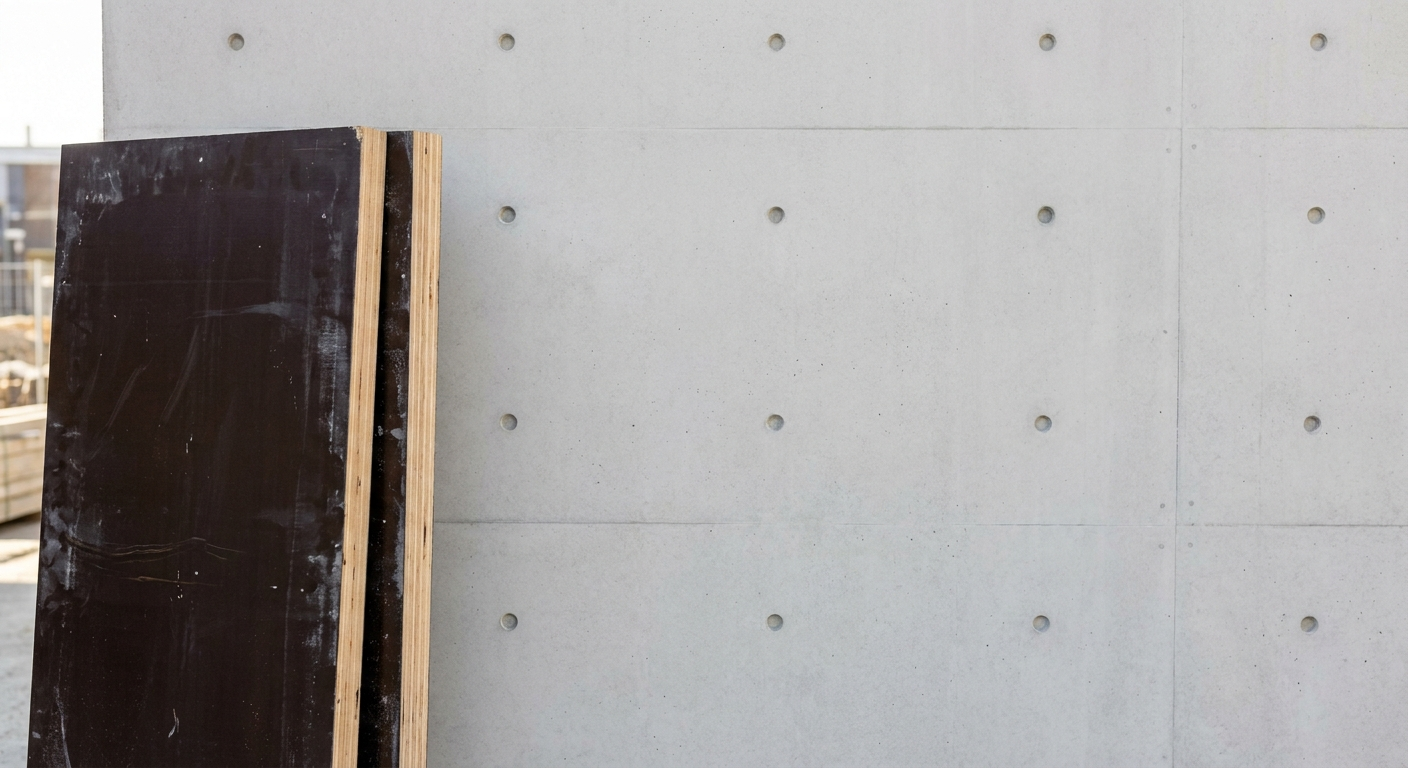
Bug holes are the small, rounded surface cavities you sometimes find on a concrete face after stripping the form. The trade calls them bugholes; specifications call them surface air voids. They are usually under about 15 mm (5/8 in) across, per the American Society of Concrete Contractors, and they tend to cluster on vertical faces such as walls and columns rather than on flat slabs. The name has nothing to do with insects. It comes from the pitted, dimpled look the voids leave behind.
From a panel manufacturer's seat, the honest version is this: bug holes are a placement, vibration, mix and release-agent story far more than a plywood story. A smooth, clean form face with a thin, even release film gives trapped air the best chance to escape, but the face does not cause bug holes on its own, and no panel cures them on its own. The proven industry split, from the precast trade, puts the causes roughly a third on the release agent, a third on the mix, and a third on placement and consolidation. Here is what actually drives them, how to keep them down, and where the form face genuinely fits.
What bug holes actually are
A bug hole is a void left where a pocket of air, or excess bleed water, was trapped against the form face during placement and could not work its way out before the concrete stiffened. As fresh concrete consolidates, most of that entrapped air migrates up and out. The bubbles that get pinned between the concrete and the form face stay put, and when the form comes off they read as small craters in the surface.
Two points set the right expectation. Bug holes are a surface phenomenon, not a sign of weak concrete through the section. And internal voids inside a panel core are a separate, normal thing that has nothing to do with the holes you see on the cast face. The voids on the concrete belong to the pour, not the plywood.
Cosmetic or structural: when bug holes matter
Most bug holes are cosmetic. On a wall that will be backfilled, plastered, clad or painted over, scattered small voids carry no real consequence and many specifications simply allow them within a stated size and frequency. The picture changes on exposed architectural or fair-faced concrete, where the surface is the finish and the tolerance for voids is much tighter.
The one case worth flagging is large or deep voids on an exposed face in a freeze-thaw climate. Open cavities can hold water, and repeated freezing can widen them over time, so durability enters the conversation. That is the exception, not the rule. The vast majority of bug holes are a finish question, and the sensible response is to assess size, depth and location before deciding anything. For the wider set of as-cast finish questions, our guide to fair-faced concrete covers the finish brackets in detail.
The real causes, split three ways
The precast industry's working model splits bug-hole causes into three roughly equal thirds, and it holds up well on site. None of the three is the panel by itself.
- The mix and workability. Too much water, a harsh or poorly graded mix, or low workability all make it harder for entrapped air to escape the form face. A sticky, under-workable concrete holds onto its surface bubbles.
- Placement and consolidation. Insufficient vibration leaves air pinned at the face; excessive or badly placed vibration can pull more air in or drive bleed water to the surface. Lift height and pour rate feed into this too, since a tall, fast lift gives air less time to rise before the concrete stiffens.
- The form interface. The release agent type and how evenly it is applied, plus the smoothness and condition of the form face, decide whether surface air slides up and out or stays trapped. Over-application of release agent is a named cause here, not a cure.
Two of those three sit entirely with the concrete and the crew. The third touches the form, and even there the dominant variable is the release film, not the panel grade.
The form-face and release-agent connection
This is where a plywood maker can speak with some authority, so it is worth being precise. A smooth, sound, clean phenolic film face with low porosity gives entrapped air a slick boundary to travel along as it rises, which helps it clear the surface rather than lodge against it. A torn, scored or heavily worn face does the opposite, trapping air in its irregularities. So a good form face is part of the solution, but it is a supporting part.
The release agent is the larger lever on this side of the split, and it cuts both ways. A thin, even film helps clean release and lets surface air migrate. Too much release agent, or agent pooling in low spots, becomes a cause of bug holes in its own right: the excess liquid sits at the face and pins bubbles in place. We keep our own guidance consistent on this. The rule is a thin, even coat reapplied per pour, and the detail sits in our companion guide to the concrete form release agent. In our own export experience, when a customer reports persistent bug holes on a job running our panels, the trail leads to release-agent technique or vibration far more often than to the sheet itself.
Bug holes, honeycomb and blowholes: name the difference
These three get muddled constantly, and the fixes differ, so the distinction is practical rather than pedantic.
| Surface condition | What it looks like | Root cause |
|---|---|---|
| Bug holes (surface air voids) | Small rounded craters, usually under 15 mm (5/8 in), on vertical faces | Entrapped air and bleed water at the form face; mix, vibration, release agent |
| Blowholes | Larger individual surface pockets, same family as bug holes but bigger | Larger trapped air or gas pockets against the form face |
| Honeycomb | Rough, stony patches with exposed coarse aggregate and open gaps | Mortar failed to fill around the aggregate; poor compaction, segregation, grout loss |
The key line: bug holes and blowholes are air-void problems at the surface, while honeycomb is an aggregate-and-mortar problem where the paste never filled in. For the full treatment of the stony version, see our guide to honeycomb in concrete. They share some prevention habits but they are not the same defect.
How to prevent bug holes on a new pour
Prevention is mostly pour discipline, with the form playing a supporting part. The habits that work:
- Design the mix for the section: enough workability for surface air to escape, without so much water that bleed worsens. A more flowable mix helps on congested, finish-critical faces.
- Vibrate properly. Insert the poker at regular spacing, hold long enough to bring entrapped air up, and avoid both under-vibration and over-vibration. Revibration of the top lift can release surface air that has risen.
- Control lift height and pour rate so each lift has time to release air before the next buries it.
- Prepare the form face: a smooth, clean, sound face with no torn film or dried concrete residue from the last pour.
- Apply release agent as a thin, even film, reapplied every pour. Wipe pooled agent out of corners and low spots before placing.
The lateral pressure of fresh concrete and the pour rate also shape how the face performs, which we cover in concrete pressure on formwork.
How to assess what you are seeing
Before treating bug holes as a problem, classify them. Count and measure: how many per square metre, how wide, how deep. Note whether the face is exposed or will be hidden. Note the exposure, since a freeze-thaw environment raises the stakes on deep voids. Then document it with photos and a location note. A non-alarmist inspection beats both panic and complacency, and the documentation settles disputes if the question comes up at handover.
It is also worth separating a genuine site issue from normal panel behaviour. Marks, color variation and edge swelling on a stripped panel are usually the form telling its history rather than a fault; our note on formwork plywood defects versus normal wear draws that line.
Repairing existing bug holes at a glance
Where bug holes do need attention on an exposed face, the sequence is familiar. Clean the voids of dust and laitance. Dampen the surface so the repair material bonds without the substrate drawing its water out. Work a parge coat or a cementitious grout into the holes, filling them flush, then finish to match the surrounding texture. The driver is usually cosmetic uniformity; only where water-tightness or durability is in play does the repair become more than a finish step. Match the repair material and colour to the parent concrete, and trial it on a sample area before committing to a visible elevation.
Bug holes in precast and architectural concrete
The stakes rise on precast and architectural work, where the cast face is the product. Precasters chase a near-void-free finish, which is exactly why the third-third-third model came out of that trade: they have had to control all three levers at once. Self-consolidating concrete (SCC) changes the picture, since it is designed to flow and release air without vibration, and it can dramatically cut bug holes when the mix is right, though it brings its own form-pressure and stability considerations. For most architectural faces, the combination that works is a workable mix, disciplined release-agent technique, and a smooth, sound form face on early reuse cycles.
Build for a clean face
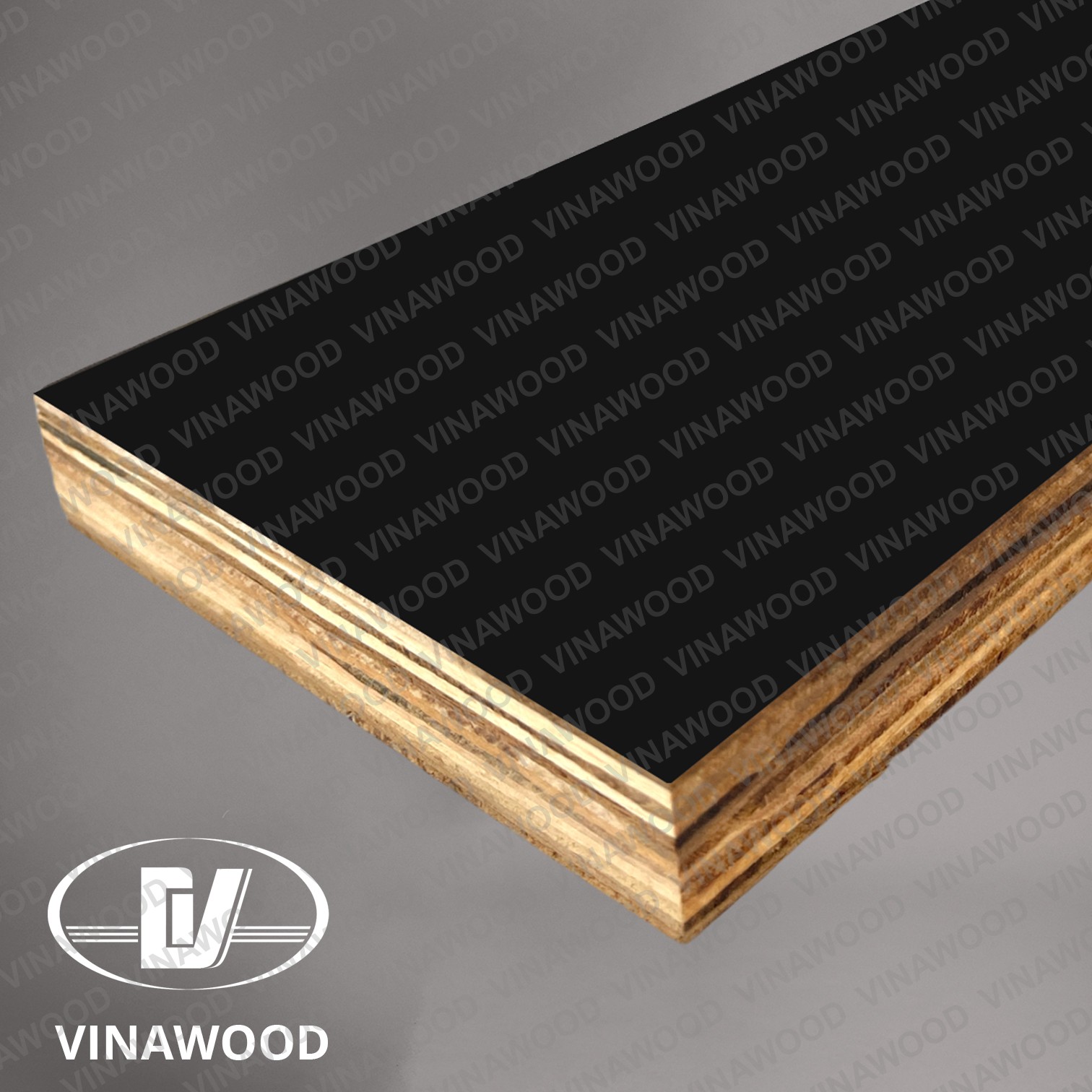
A clean concrete face is mostly earned at the pour, and the form's job is to present a smooth, sound, low-porosity boundary that lets surface air escape. Film-faced and overlaid plywood with an intact face does that; a worn or torn face does not. Vinawood manufactures film-faced and phenolic formwork plywood in Vietnam, with factory edge-sealing and 100% individual sheet inspection across the range. For finish-critical, repeat-use forming, Pro Form is a WBP phenolic panel to EN 636-3 rated up to 20 reuse cycles, and the wider film-faced plywood range covers lighter-duty work. North American contractors working to imperial sizes and ACI finish classes can look at the HDO plywood range, where the high-density overlay holds a clean face across high-rotation pours. None of these prevents bug holes on its own. A smooth, clean face with the right release film simply removes one of the three causes, and the mix and the crew handle the other two. Request a quote with your panel sizes, finish class and project volume.
Category
guides
Related Markets
Related Countries
Related Products
▶Sources & References (2)
- Bugholes in Formed Concrete (Position Statement 4) — American Society of Concrete Contractors (2019)
- Causes and Fixes for SCC Bug Holes — National Precast Concrete Association (2019)