Falsework vs Formwork: What Falsework Is, How It Differs, and Where the Plywood Goes
Falsework supports formwork; formwork moulds the concrete. A plain, plywood-aware guide to the difference, the types of falsework, how they stack on a slab pour, and where the plywood deck face actually sits.
On a busy slab pour, two words get used as if they mean the same thing: falsework and formwork. They do not. Formwork is the mould that shapes the wet concrete. Falsework is the temporary structure that holds that mould up until the concrete can carry its own weight. Get the distinction wrong on a method statement and you end up specifying the wrong thing in the wrong place, which is how decks come down before the concrete is ready.
Here is the plain version up front. Falsework supports. Formwork moulds. The plywood deck face that contractors buy and reuse is part of the formwork, riding on top of the falsework below it. The rest of this guide unpacks that, walks through how the two systems stack together on a real slab, and shows exactly where the plywood sits.
What is falsework?
Falsework is the temporary support structure that carries formwork and the wet, curing concrete until the permanent structure becomes self-supporting. It does the load-bearing job. Think of the vertical props and adjustable shores under a suspended floor, the proprietary aluminium or steel towers under a bridge deck, and the primary and secondary beams that spread the load across them.
The defining feature is that falsework is temporary and load-bearing. It carries the dead weight of the concrete and formwork plus the construction loads (workers, pumps, stacked materials) during the pour and curing window. Once the slab or beam reaches the required strength, the falsework comes out and the structure stands on its own.
In the UK, falsework sits under BS 5975, the code of practice for temporary works procedures and the permissible stress design of falsework. Across Europe the design standard is EN 12812, which sets performance requirements and design rules for falsework. Both treat falsework as engineered temporary works, not site improvisation. That is the point most search results miss: falsework is a designed structure with its own loadings, factors, and sign-off, not just "the bits holding the shutter up."
What is formwork?
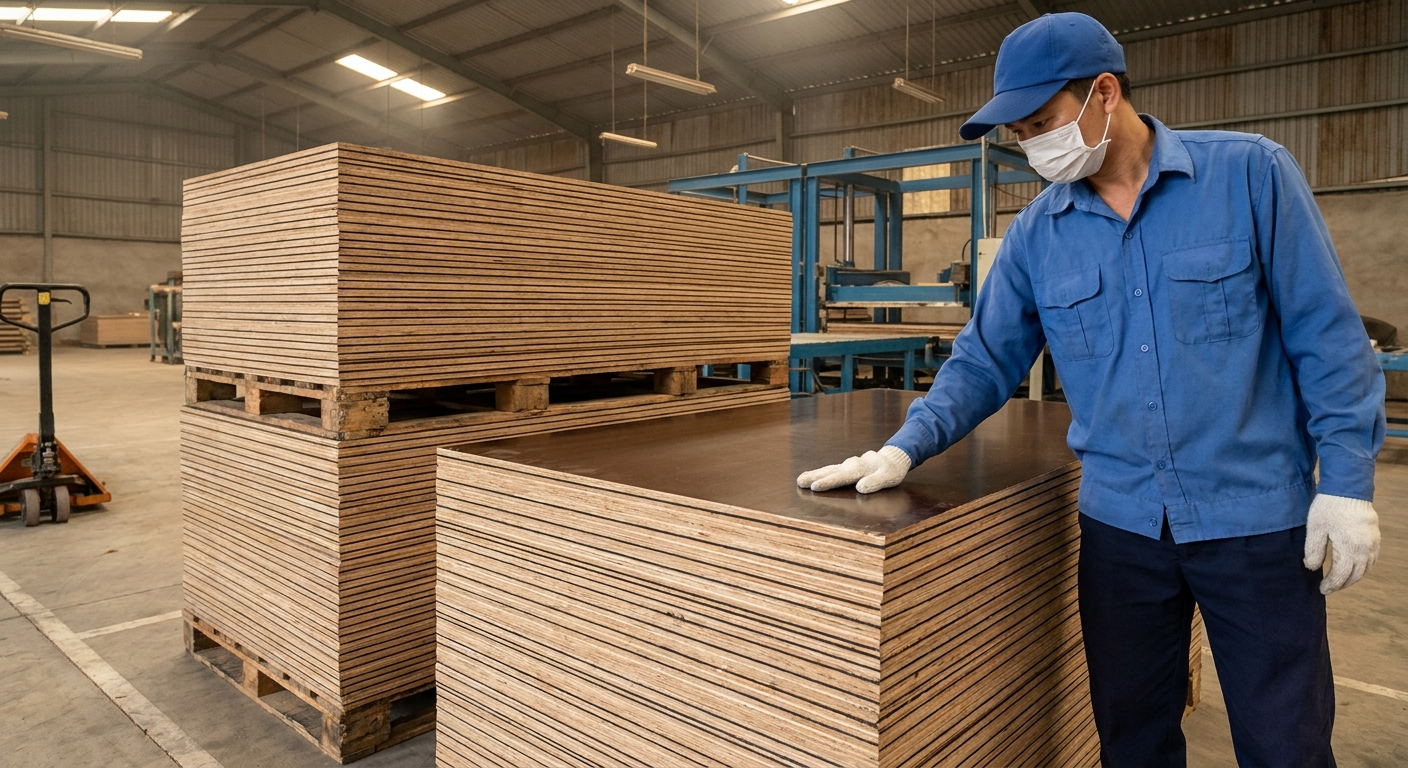
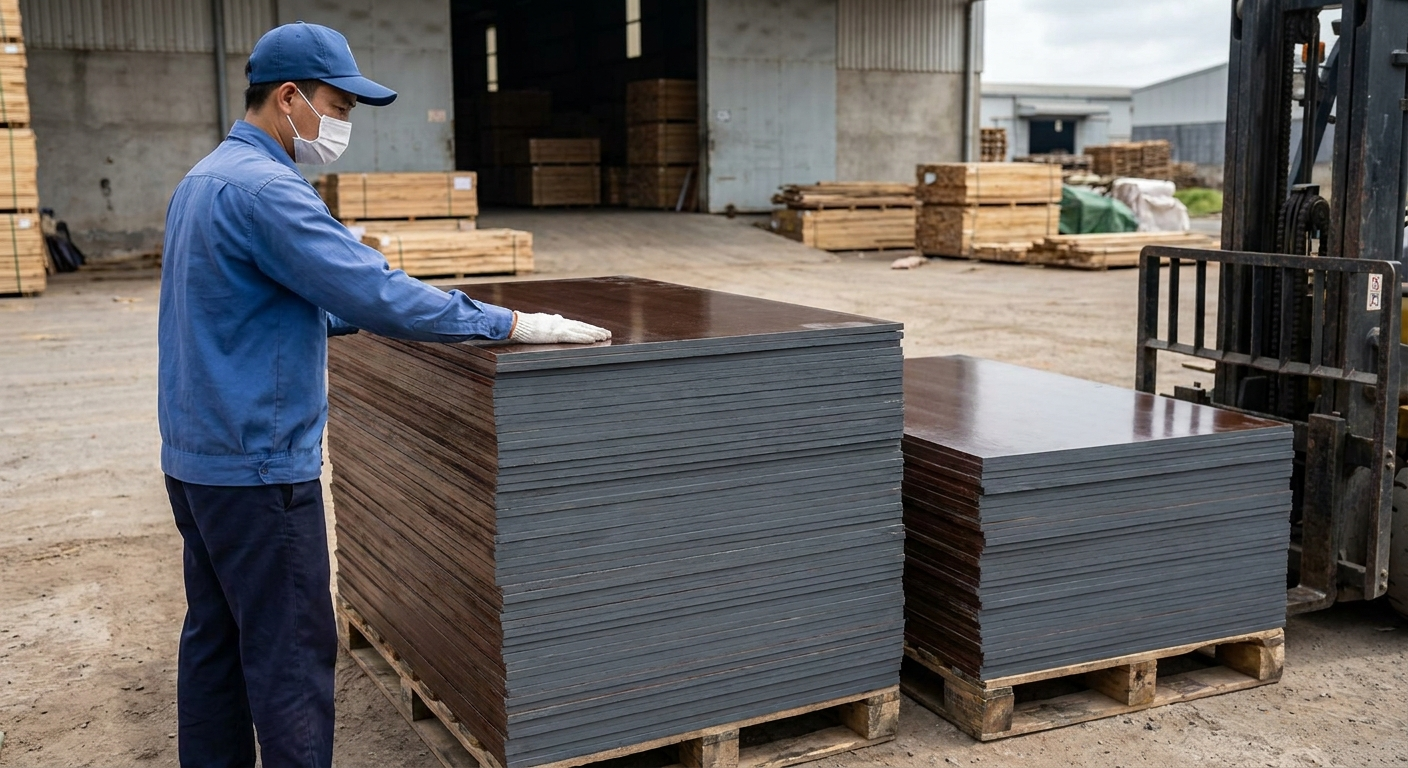
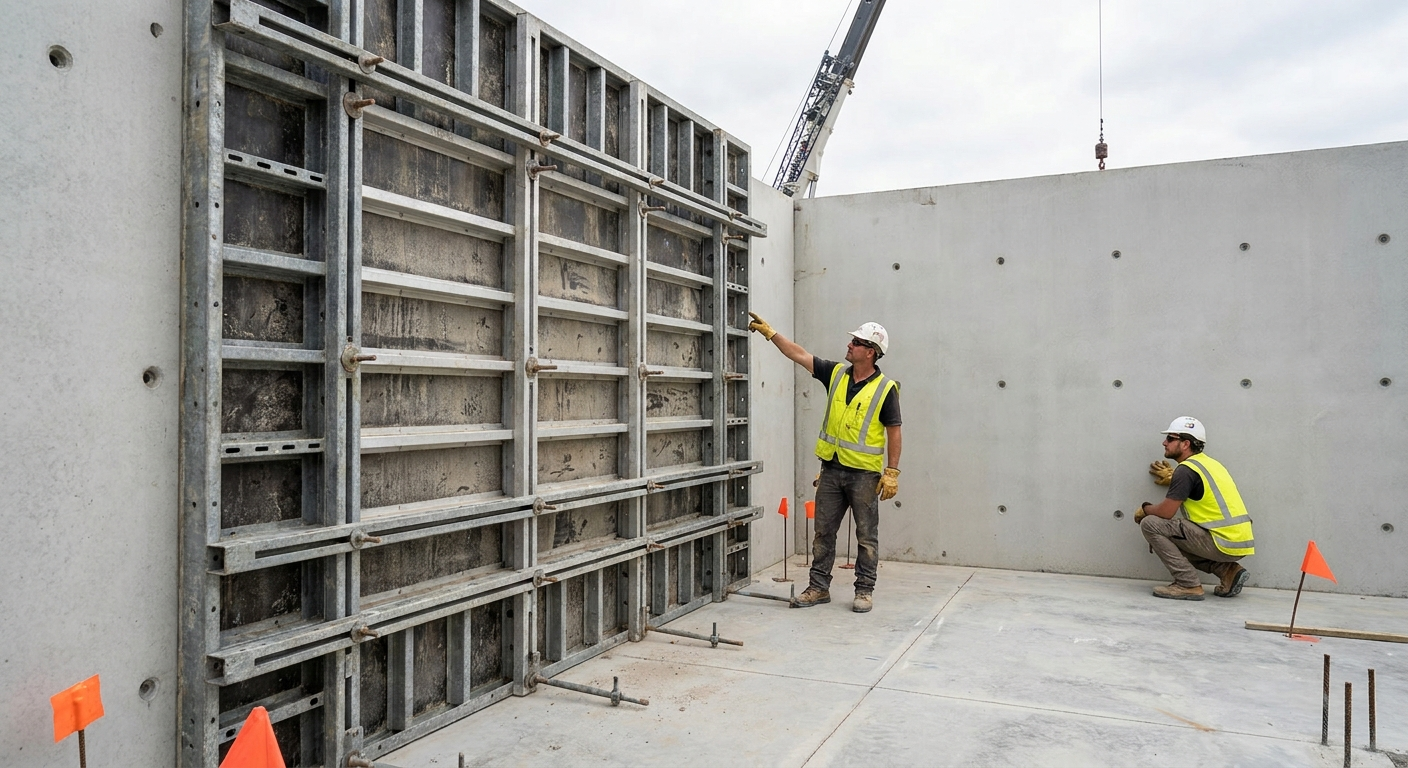
Formwork is the mould. It gives wet concrete its shape and holds it there until it sets. A formwork assembly has two parts: the frame or soldiers that give it rigidity, and the contact face that actually touches the concrete and leaves its finish behind. That contact face can be timber boards, steel, plastic, or, most commonly on slabs and walls today, film-faced plywood.
The contact face is where surface quality is won or lost. A worn, swollen, or poorly sealed face telegraphs straight into the concrete finish. This is the part of the system Vinawood actually manufactures: the plywood forming face, not the props or towers underneath. We make the skin that meets the concrete, in film-faced and overlaid grades engineered for repeat pours.
Falsework vs formwork: the clean distinction
The simplest way to separate the two is by function. One holds the concrete up. The other gives it shape. Everything else follows from that.
| Falsework | Formwork | |
|---|---|---|
| Function | Supports the formwork and wet concrete | Moulds and shapes the concrete |
| Typical materials | Steel/aluminium props, system towers, timber and aluminium beams | Frame plus a contact face: plywood, steel, plastic, timber |
| What it carries | Dead load, construction load, the formwork itself | The wet concrete pressure against its face |
| Who designs it | Temporary works engineer under BS 5975 / EN 12812 | Formwork designer; face spec by reuse target and finish |
| When it is struck | After the slab reaches required strength | Often earlier for vertical faces; later for soffits |
A question that comes up almost as often: is falsework the same as scaffolding? They are related but not interchangeable. Access scaffolding is built to carry people and light materials so trades can reach the work. Falsework is built to carry the structural load of wet concrete. The components can look similar and some systems share parts, but the design intent, the loadings, and the sign-off are different. Treating load-bearing falsework as if it were access scaffold is a known route to collapse.
Types of falsework
Falsework is not one product. The form depends on span, height, and load:
- Individual props and shores — adjustable telescopic steel props (acrows) under low-rise suspended slabs and beams. Fast, cheap, suited to modest spans.
- Proprietary system towers — modular aluminium or steel towers that lock together to carry heavy decks at height. The workhorse for commercial slab work.
- Primary and secondary beams — timber H20 or aluminium beams laid in two layers (primaries on the props, secondaries across them) to spread load and support the deck face.
- Birdcage falsework — a dense three-dimensional grid of standards and ledgers used to support large soffits over open areas, such as a wide concourse roof.
- Bridge falsework and centering — heavy purpose-designed support for bridge decks and arches. "Centering" is the older term for the temporary support beneath an arch, shaped to the curve of the soffit.
None of these is a Vinawood product. We make the deck face that rides on top of the beams; the support system below is supplied by formwork and falsework system houses.
How falsework and formwork work together on a slab pour
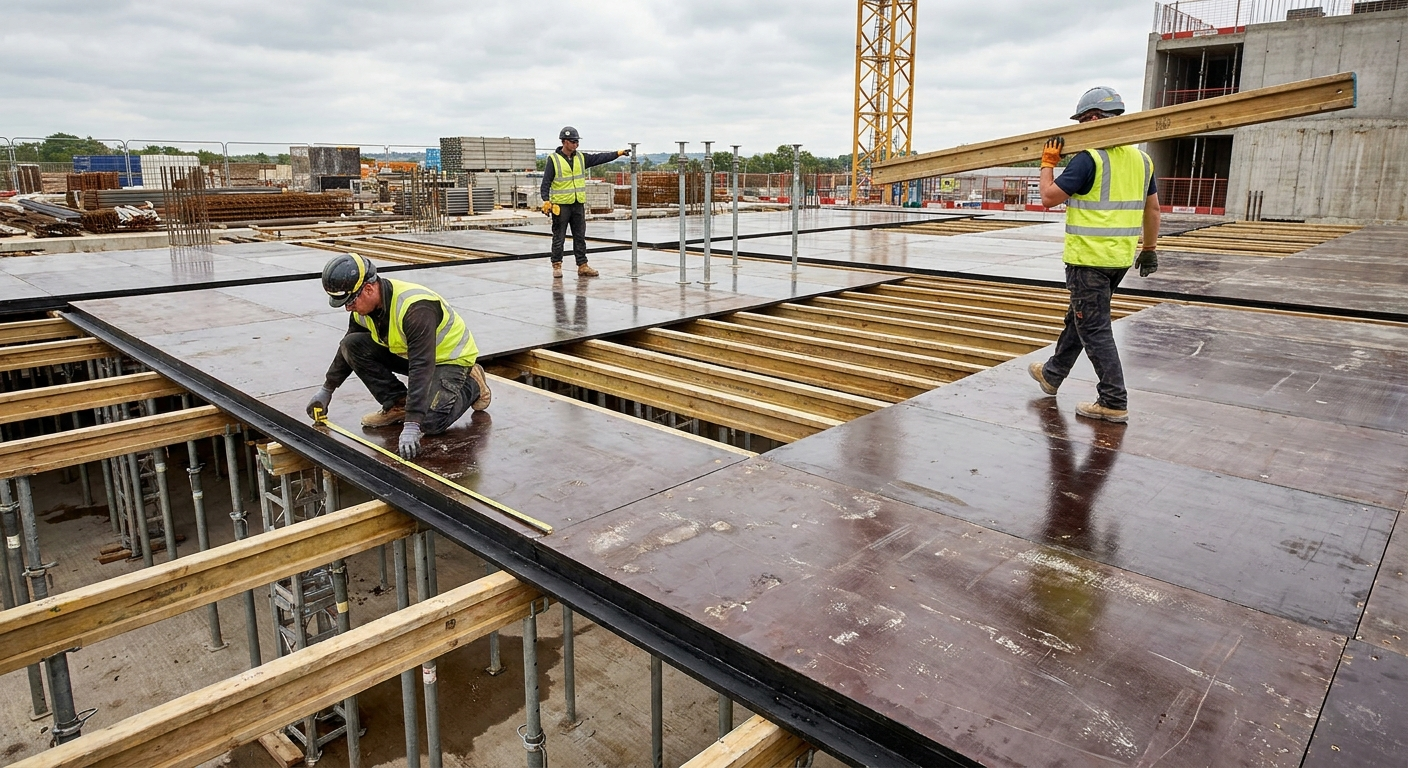
The clearest way to see the relationship is to build a slab soffit from the ground up. The load path runs in this order:
- Falsework towers or props stand on a firm, level base and carry everything above.
- Primary beams sit across the heads of the props or towers.
- Secondary joists run across the primaries at closer centres to support the deck.
- The plywood deck lays flat on the joists. This is the soffit face, the surface the underside of the slab is cast against.
- Concrete is poured onto the plywood deck and cured.
So the plywood is the topmost thin layer, an 18mm forming face sitting on a deep structure of mostly open air over the beams and props. It is not the structure. It is the skin. Everything below it is falsework doing the carrying. I have seen specifiers conflate the two and quote a deck panel where the real problem was prop spacing, which no panel grade can fix.
Where plywood sits in the system
The deck and soffit face is plywood, and you spec it by two things: the adhesive class and the reuse target. The two map onto each other.
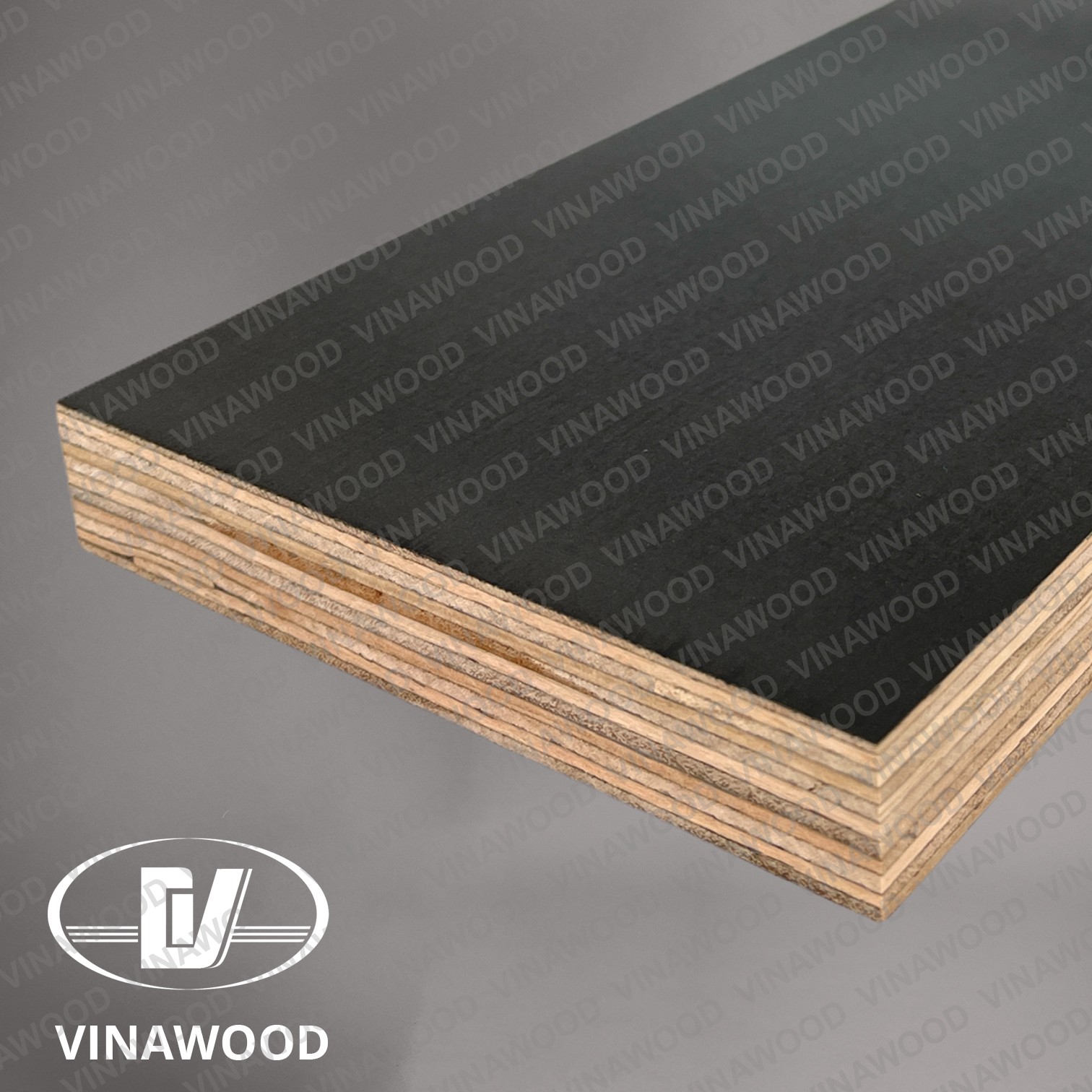
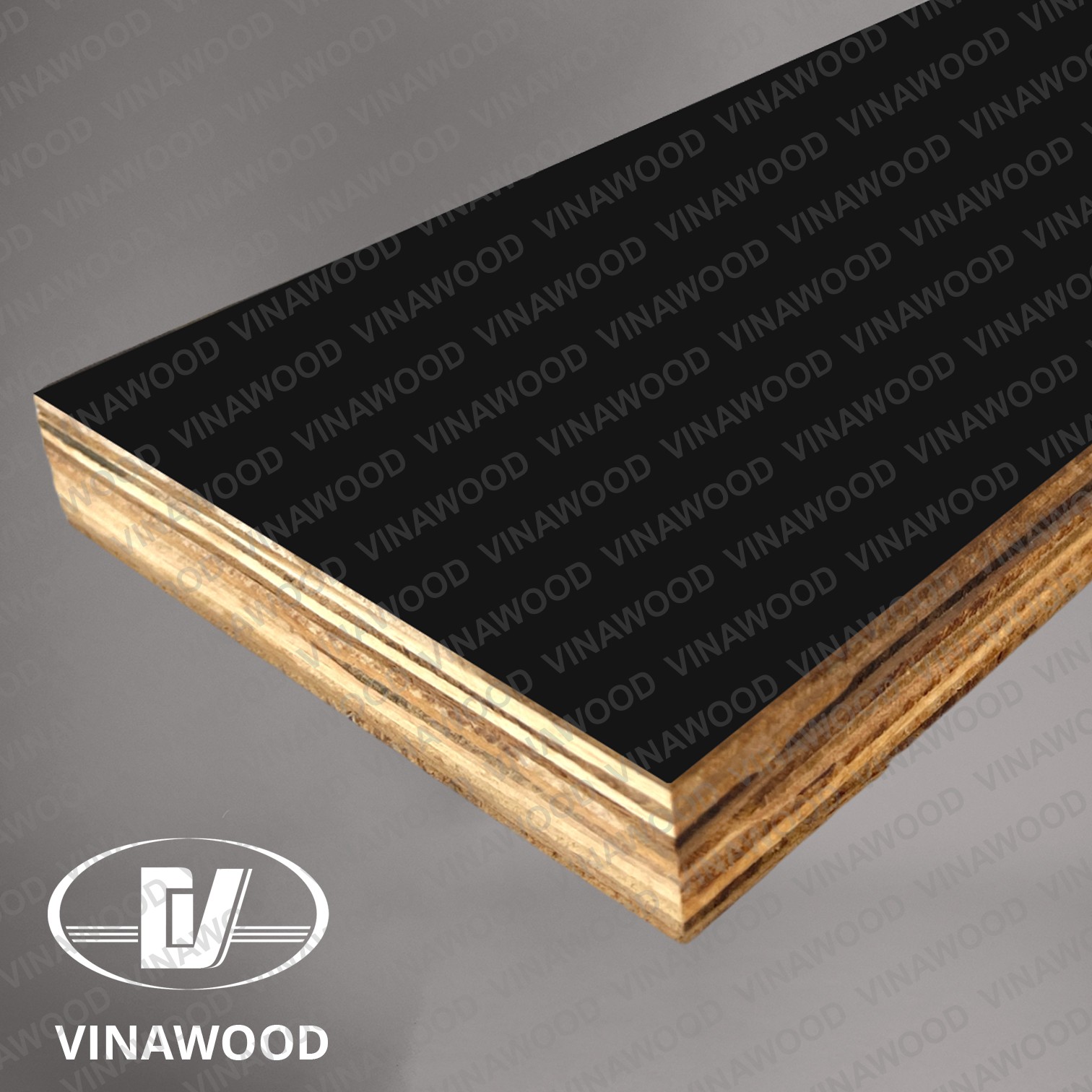
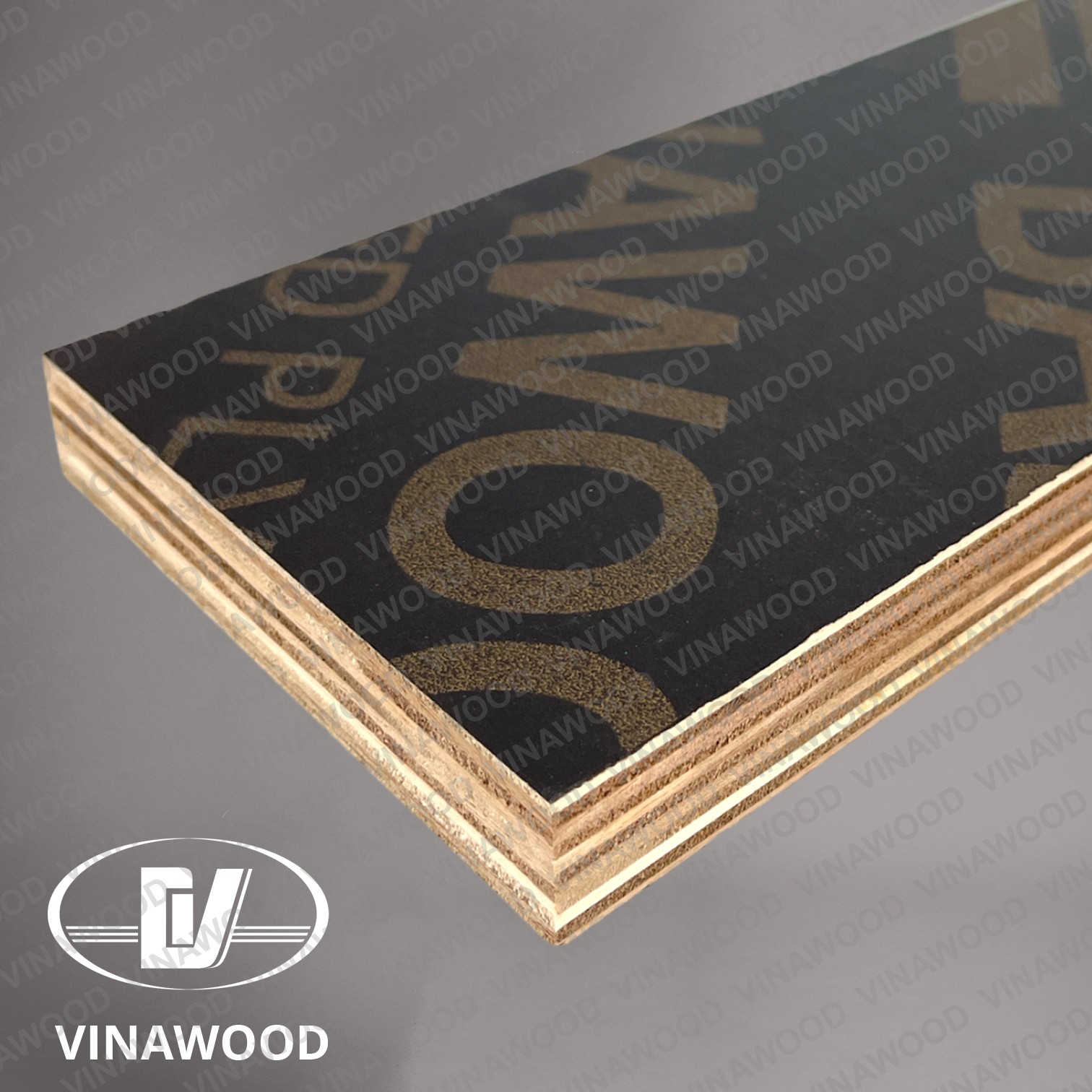
For decks you intend to strike and re-use many times, the right choice is a phenolic panel. Pro Form is a WBP phenolic-bonded panel, EN 636-3 / Class 3, rated for up to 20 reuse cycles with a phenolic film face that holds a clean finish across repeat pours. In North America the equivalent repeat-deck choice is the HDO range, also phenolic-bonded, Class 3, engineered for high-rotation decking.
For shorter runs or lighter programmes, a melamine-cored panel is the economical fit. Form Extra and Form Basic use a WBP melamine-urea-formaldehyde (MUF) core glue under a phenolic film face, classed EN 636-2 / Class 2. Form Extra reaches up to 15 reuse cycles and Form Basic up to 10. The longer life on Form Extra comes from a more durable, higher-melamine-content MUF glue formulation, not a heavier face film; both panels carry the same film. These are weatherable Class 2 panels, not interior-only boards, so the cabinet-trade intuition that "melamine means dry conditions" does not apply here.
One spec rule worth stating plainly: never label Form Extra or Form Basic as Class 3. They deliver more cycles inside the EN 636-2 envelope; they are not phenolic-bonded panels. Where a job genuinely calls for Class 3, the answer is Pro Form or HDO.
Safety and striking
Falsework is a temporary works discipline. Under BS 5975 a project appoints a temporary works coordinator who controls the design and checking of falsework, and signs the permits to load and to strike it. That role exists because falsework failures happen at the two riskiest moments: loading it during the pour, and removing it afterward.
The hard rule on striking is simple. Never strike falsework before the concrete reaches the required strength for that element. A soffit struck early can deflect or fail under its own weight. Strength gain depends on the mix and the temperature, so striking times are set by the temporary works design and confirmed by test results, not by the calendar. For the formwork side of the same question, the striking sequence and timing are covered separately in our guide to formwork removal time.
Regional terminology
The vocabulary shifts by market, which is part of why these searches get muddled. In the United States and parts of the Middle East, "shoring" often covers what UK practice calls falsework, and props are "shores." "Centering" still means the temporary support under an arch. In the UK and Australia, "props" or "acrow props" are the individual telescopic supports, and the deck face is film-faced plywood; in North American practice that deck face is typically an HDO panel. The support system underneath goes by different names. The plywood forming face is the constant.
For a deeper look at the deck face itself, our guide to slab formwork plywood covers grades, thicknesses, and reuse in detail.
About Vinawood
Vinawood is a Vietnamese plywood manufacturer established in 1992, shipping more than 5,000 containers a year to 55+ countries. We make the plywood forming face that rides on falsework, not the support system itself: film-faced and overlaid formwork panels in melamine-cored (EN 636-2) and phenolic-bonded (EN 636-3) grades, matched to reuse target and finish. Every sheet is inspected individually, and our panels carry CE (EN 13986), FSC-COC, PEFC, and EPA TSCA Title VI certification for the UK, EU, US, and Indian markets. To match a panel grade to your deck programme, browse our Pro Form formwork range or contact our team for a specification.
Category
guides
Related Markets
Related Countries
Related Products
▶Sources & References (4)
- BS 5975 — Code of practice for temporary works procedures and the permissible stress design of falsework — BSI (2019)
- BS EN 12812 — Falsework. Performance requirements and general design — CEN (2008)
- Formwork and Falsework Information Sheet — Safe Work Australia (2024)
- Temporary works and falsework guidance — HSE (2024)