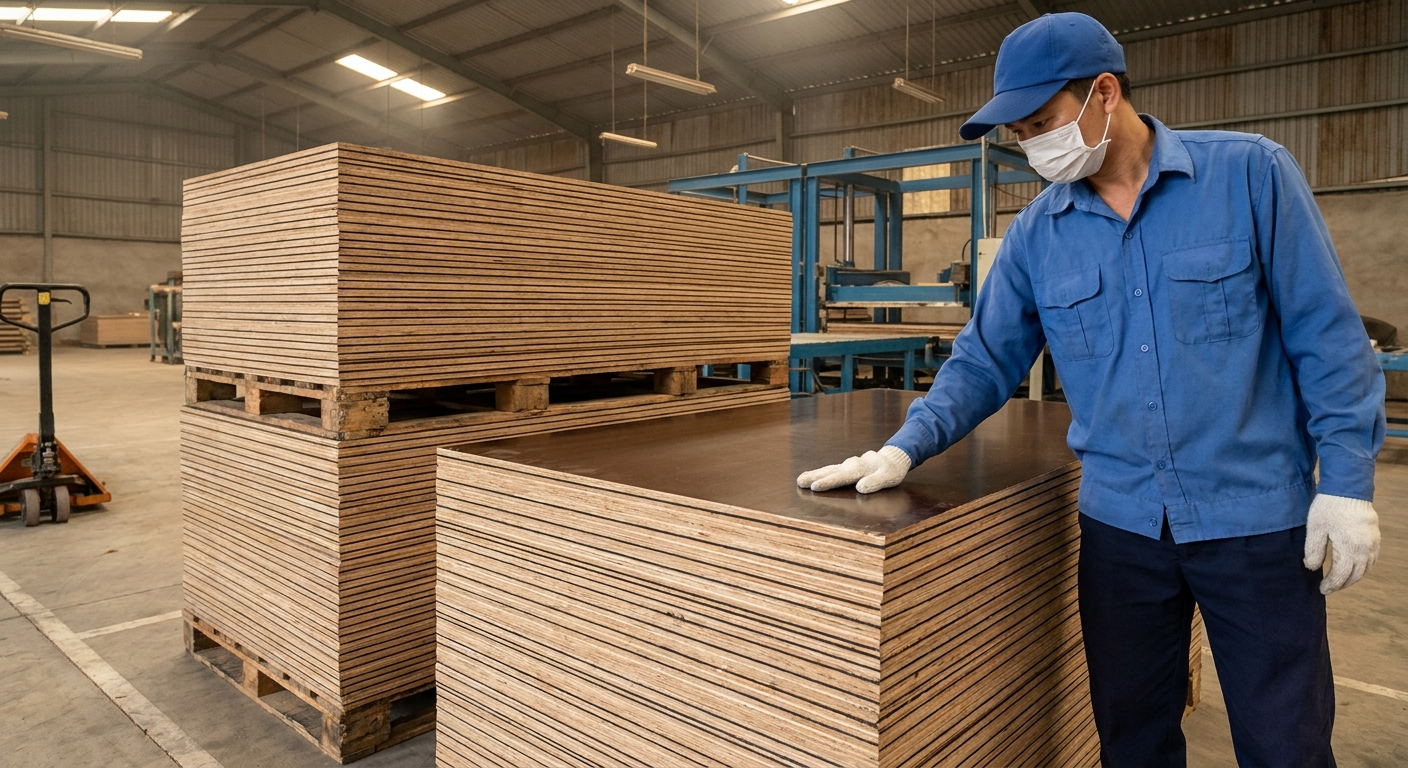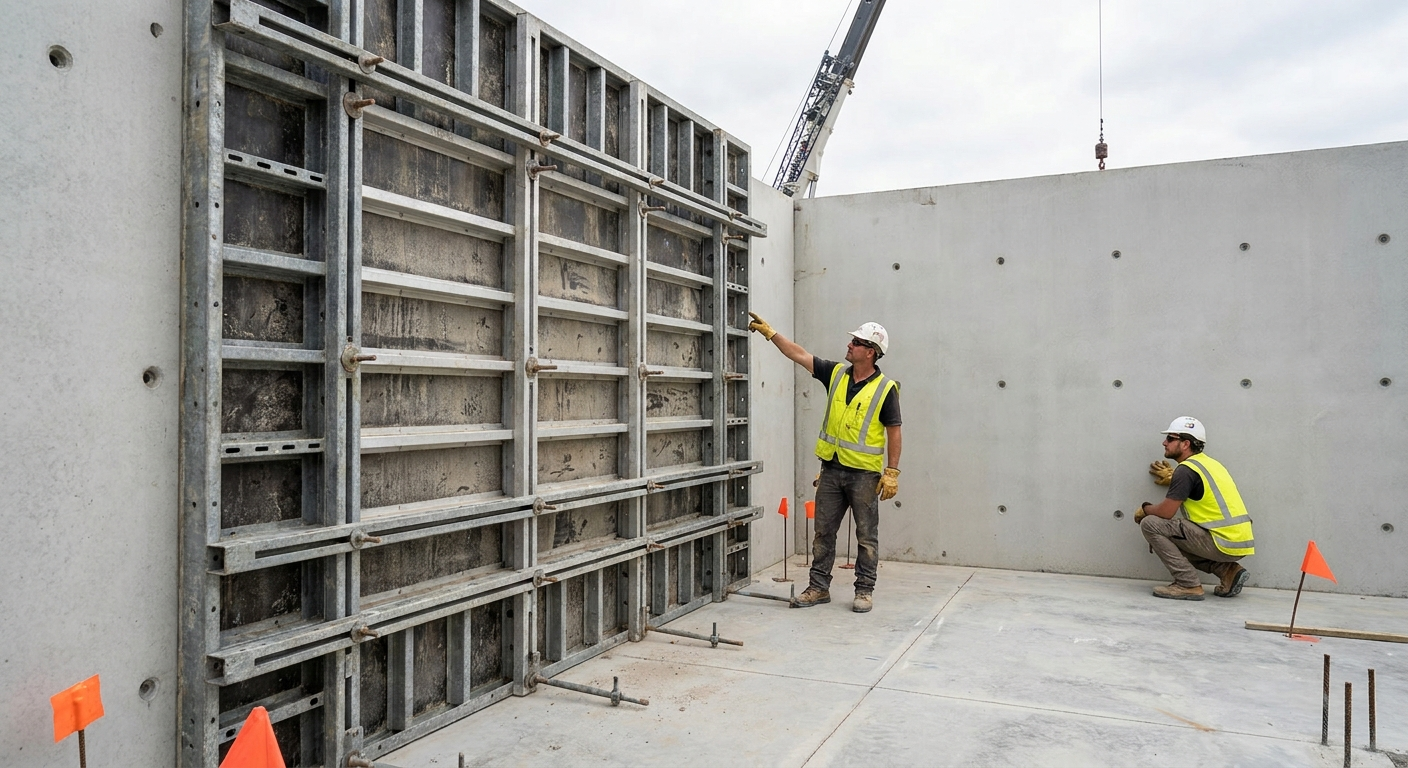
Hardwood vs Plywood: Solid Lumber vs Engineered Panel, Compared
Hardwood vs plywood is a category mismatch — one is a wood family, the other a panel format. Solid lumber and engineered panels each have a clear use case in furniture and cabinetry. Here is where each one wins.
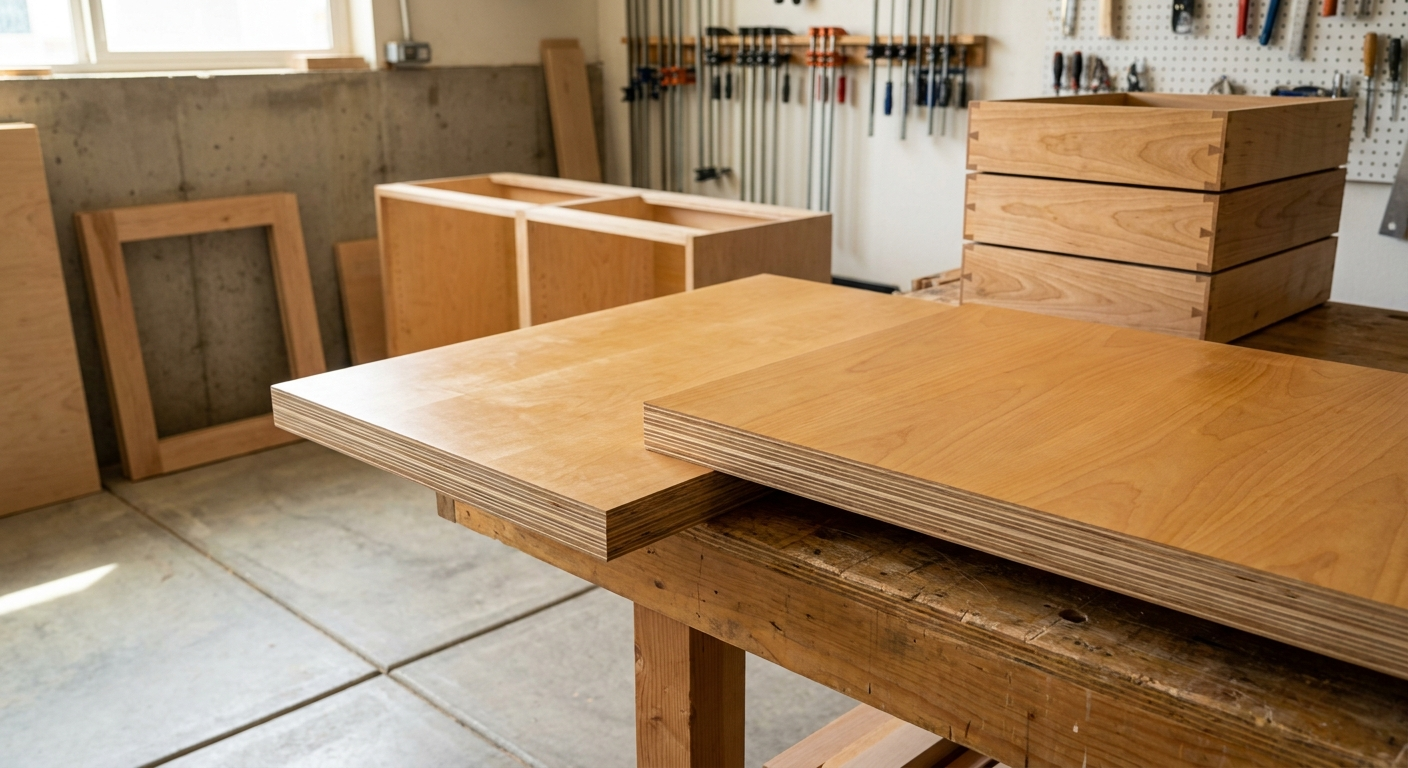
A working cabinet shop owner walks into a hardwood yard, walks across the parking lot to the panel supplier, and ends up buying both. Solid white oak for the rails and stiles. Plywood for the case sides. That decision happens hundreds of times a day in the United States, and it usually doesn't get written down anywhere, because to a tradesperson the answer is obvious. To everyone else, the question reads as "hardwood vs plywood," and the SERP fills up with listicles that miss the actual point.
The point is that "hardwood" and "plywood" are not opposite categories. One is a botanical classification. The other is a manufacturing format. A red oak plywood panel is, by any honest reading of the words, hardwood plywood. So when someone asks which to use, the real choice is between a solid sawn board and an engineered panel made from cross-banded veneer layers. That comparison has a clear answer for almost every project, once you know what each material actually does.
The term confusion comes first
In American hardwood lumber grading, "hardwood" means wood from broadleaf deciduous trees: oak, maple, walnut, cherry, ash, birch, mahogany. It has nothing to do with how dense the wood is. Balsa is technically a hardwood. Yellow pine is technically a softwood and is denser than several common hardwoods.
"Plywood" describes a panel built from wood veneers glued together with the grain of each layer rotated 90 degrees from the next. The face veneer can be hardwood (red oak, walnut, maple, birch) or softwood (Douglas fir, pine). A plywood sheet faced with hardwood veneer is sold as hardwood plywood. You can read more about softwood and hardwood plywood face species if the species side of the question matters more to your project than the panel-versus-board side.
Once that mismatch is out of the way, the question becomes the real one: solid hardwood lumber, or an engineered panel. The rest of this guide answers that.
Solid hardwood lumber and what it asks of you
Solid hardwood arrives at the yard in rough-sawn boards, surfaced two sides, or surfaced four sides. Pricing runs by the board foot — a unit equal to 144 cubic inches, which is roughly a board 1 inch thick, 12 inches wide, and 12 inches long. A 4/4 (four-quarter) red oak board lands somewhere around four to seven US dollars per board foot in mid-2026, with walnut and white oak well above that, and figured maple higher still.
Solid wood moves with humidity. It expands across the grain in summer and contracts in winter, and the magnitude depends on the species and the cut. A plain-sawn 24-inch-wide white oak tabletop can shift more than a quarter inch across its width over the course of a New England year. Quartersawn cuts move less. Rift-sawn moves less still. None of them move along the length of the grain in any quantity that matters to a woodworker.
That movement is the central design constraint on every solid-wood build. Tabletops sit on slotted fasteners. Frame-and-panel doors float the panel inside its rails and stiles. Wide solid panels get breadboard ends to keep them flat. The traditional joinery vocabulary of mortise and tenon, dovetail, sliding dovetail, and draw-bored peg exists in part because it lets solid wood do its seasonal thing without splitting.
Plywood, hardwood-faced or otherwise, and how it's built
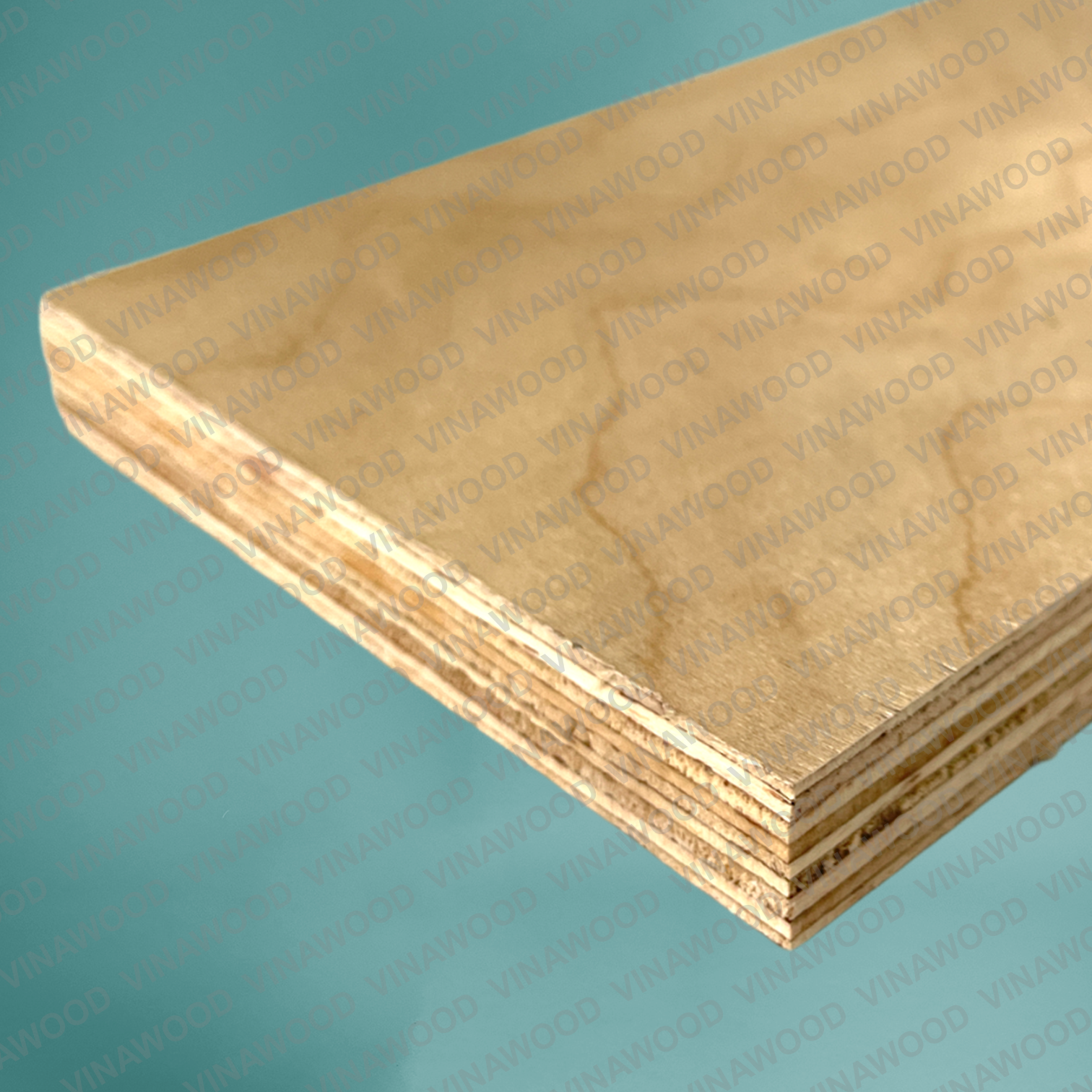
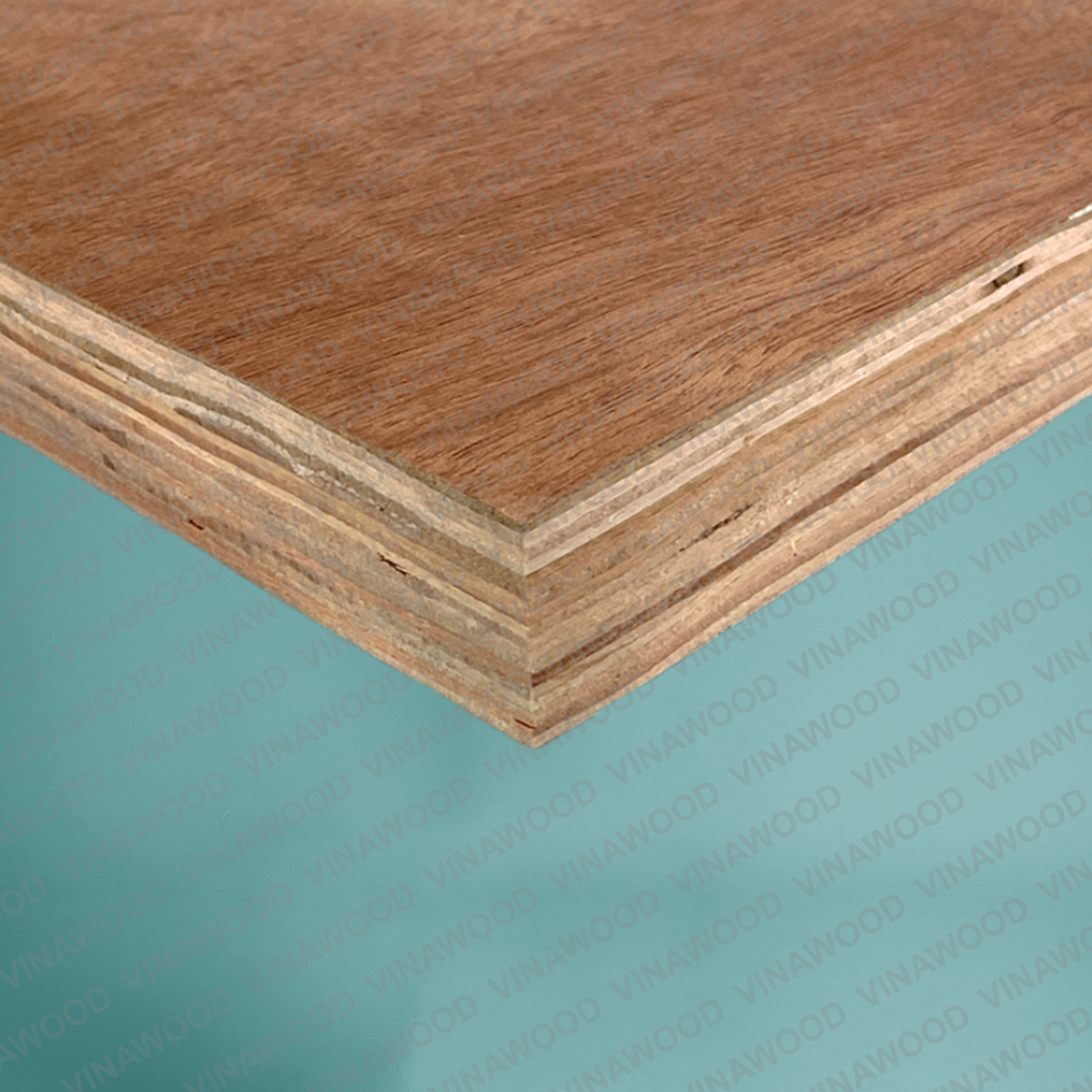
A plywood panel is a stack of veneer layers with adhesive between each. Common construction is 3-ply, 5-ply, 7-ply, 9-ply, and so on, always odd-numbered so the face grain runs in the same direction on both sides. Each veneer layer is laid 90 degrees to the one above and below. That cross-banding is what gives plywood its dimensional behavior.
The face and back veneers are usually selected for appearance: a hardwood plywood panel might have a 0.6 mm A-grade rotary-cut birch face, a B-grade back, and inner plies of poplar, eucalyptus, or whatever the mill is running that month. The face species determines what the panel looks like; the core determines how stiff and how heavy the panel feels. Plywood density by species varies more than most buyers expect.
Vinawood's plantation-grown hardwood plywood panels use acacia and eucalyptus cores, two species that have replaced older sources in mainstream construction-grade and interior-grade panels over the last decade. Density runs in the mid-to-upper range for plantation hardwoods. We've seen North American importers shift toward plantation hardwood cores in the last three years as availability tightened on the older alternatives.
Dimensional stability, head to head
Solid wood moves across the grain. A plywood panel barely moves at all. The cross-banded veneer layers restrain each other. A 4×8 sheet of half-inch hardwood plywood will shift maybe 1/32 of an inch across its width across a full humidity cycle. That number is small enough to ignore for most cabinet and casework purposes.
This is why plywood took over cabinet boxes. A glued-up solid panel for a 24-inch-wide cabinet side has to be designed around 1/8 to 1/4 inch of potential seasonal movement. A plywood panel of the same dimension can be glued, screwed, dado'd, and trim-nailed without any thought to expansion. The frame-and-panel cabinet door persists because the visible face benefits from solid wood; the case behind it can be plywood with no penalty.
For wide flat surfaces that need to stay flat (a sideboard top, a built-in desk, a wardrobe back), plywood is the safer answer. For narrow members under load, solid wood is fine.
Strength, span, and what each material wants to do
A solid hardwood board is stronger than a plywood panel of the same dimension along the grain. That's why furniture rails, table legs, chair stretchers, and structural members are almost always solid lumber. The fibers run continuously from end to end. There's nothing to delaminate.
A plywood panel is stronger than a glued-up solid panel across a wide span. The cross-banding means there's no weak axis. Shelves that would sag in solid pine perform better in 3/4-inch hardwood plywood at the same thickness. Floor underlayment, roof sheathing, shear walls — all engineered panel territory, all using plywood (or OSB, which is its own engineered category).
The rule of thumb most cabinet shops settle into: solid for anything narrow under load, plywood for anything wide and flat.
Cost, by the unit each material actually sells in
Solid hardwood is priced per board foot. A 4×8 sheet of 3/4-inch red oak plywood holds roughly 32 board feet of equivalent wood volume but sells as a single panel, often in the 80–140 US dollar range in mid-2026 depending on grade and core construction, with regional pricing variance on top.
To get the same surface area in solid red oak lumber, you'd need to glue up multiple boards, surface them, joint the edges, and accept the labor cost — and the solid material alone at four to seven dollars a board foot for clear stock runs more than the plywood panel before you've spent a minute of shop time. For face-grade material with a clean appearance, plywood is the cheaper route to a square foot of finished surface, almost always.
Where solid lumber wins on cost is in narrower members. A 1×2 oak leg blank is cheap. Rip-cutting it from a plywood panel makes no sense.
Workability and joinery
Solid wood takes traditional joinery: mortise and tenon, dovetail, half-lap, finger joint, drawbore. It rips, planes, jointed, and shaped on a router table the way it has for two hundred years. The end grain stains differently from face grain. You learn to work with that.
Plywood asks for a different vocabulary. Dadoes, rabbets, biscuits, pocket screws, dominos, and confirmat-style cabinet screws all hold well in plywood. Through-mortises don't, because the cross-banded layers can't be relied on to hold a friction fit. Plywood also exposes ply edges on every cut, which most projects address with edge banding, a hardwood face strip, or a face frame.
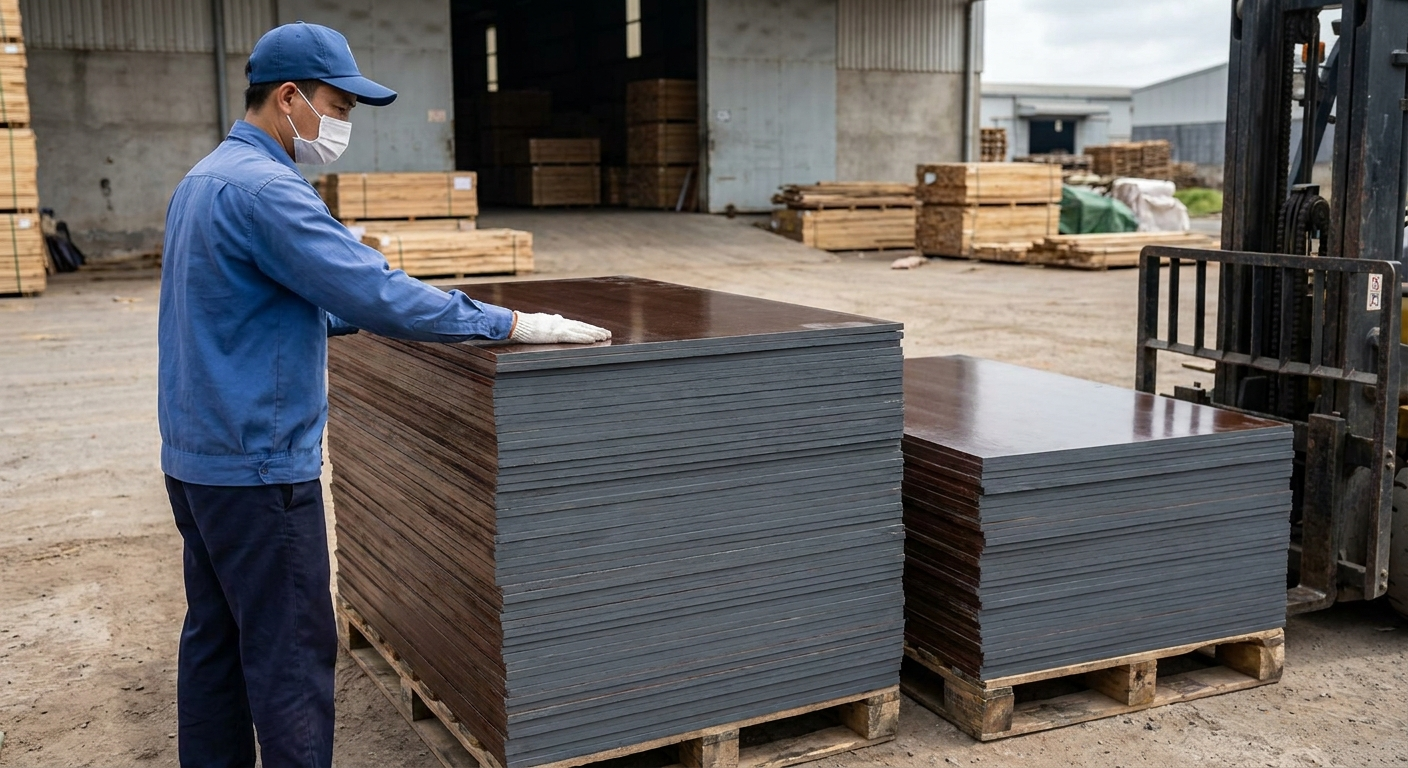
From a Vietnamese mill perspective, the panels we ship to North American cabinet plants are spec'd for clean machining: tight grain on the face veneer, void-free core construction at A-grade, and adhesive lines that don't gum up high-speed router bits. Lower-grade panels exist for less visible parts of a build, and the price drop is meaningful, but the machining behavior changes too.
Aesthetics and refinishing
Solid wood can be sanded and refinished many times across its life. A solid oak farm table can take a complete refinish every fifteen or twenty years for as long as someone wants to keep it. The surface comes back to bare wood and starts again.
Plywood face veneer is thin: 0.5 to 1.0 mm on most modern hardwood plywood, less on rotary-cut commodity panels. A heavy sanding pass can cut through it. One full refinish is sometimes possible. Two is risky. For furniture that's expected to be refinished across generations, solid wood is the longer-running material.
Even so, plywood holds finish well in its first life, and modern catalyzed lacquers and conversion varnishes give a far longer service interval before a refinish becomes necessary. For a cabinet box that will be replaced before it ever needs refinishing, the limitation doesn't matter.
What gets built from which
Tabletops, chair seats, and any member shaped on a lathe: solid wood. The geometry and the loads both call for it.
Cabinet boxes, drawer bottoms, large flat panels, wardrobe carcasses, shelving in casework: plywood. Stability and cost both favor the engineered panel.
Doors are usually a hybrid. A solid frame-and-panel door floats a plywood (or solid-glue-up) panel inside hardwood rails and stiles. The frame holds the geometry; the panel provides the surface.
Flooring is its own category and shouldn't be confused with the panel-versus-lumber question. Engineered hardwood flooring is a separate category from construction or cabinet plywood — it's a flooring product designed for installation on subfloor, with click-lock or T&G edges and a hardwood face wear layer.
Decision framework
The short version, in the order most projects encounter it:
| Project component | Material that usually wins | Reason |
|---|---|---|
| Cabinet box / case sides | Hardwood plywood | Wide flat panel, dimensional stability matters |
| Cabinet face frame | Solid hardwood | Narrow members, joinery, refinish life |
| Cabinet door (frame-and-panel) | Hybrid: solid frame, plywood panel | Stable panel inside floated solid frame |
| Drawer box (sides) | Solid hardwood or Baltic-birch plywood | Dovetail in solid, multi-ply for screw-and-glue |
| Drawer bottom | Plywood | Thin, wide, must stay flat |
| Tabletop | Solid hardwood | Refinish life, appearance, structural span |
| Wardrobe back panel | Plywood | Wide, low-stress, has to stay flat |
| Floating shelves | Solid hardwood for span, plywood with edge banding for budget | Span and finished look determine |
| Built-in cabinetry | Plywood case + solid trim | Standard cabinet-shop construction |
The honest answer to "hardwood or plywood" is that most furniture and cabinetry uses both. The question to ask of any given component is whether the piece is narrow and under load (solid) or wide and needs to stay flat (plywood), and whether it's a visible appearance surface that will outlive its finish (solid) or a structural surface that won't be seen again after install (plywood). Once those two questions are answered, the material picks itself.
Category
guides