Formwork Panels (Panneaux de Coffrage): Complete Guide to Choosing the Right Panel
Complete guide to formwork panels (panneaux de coffrage): film-faced plywood vs sawn timber vs metal. EN 636 bond classes, reuse cycles, cost per pour, and direct sourcing from Vietnam.
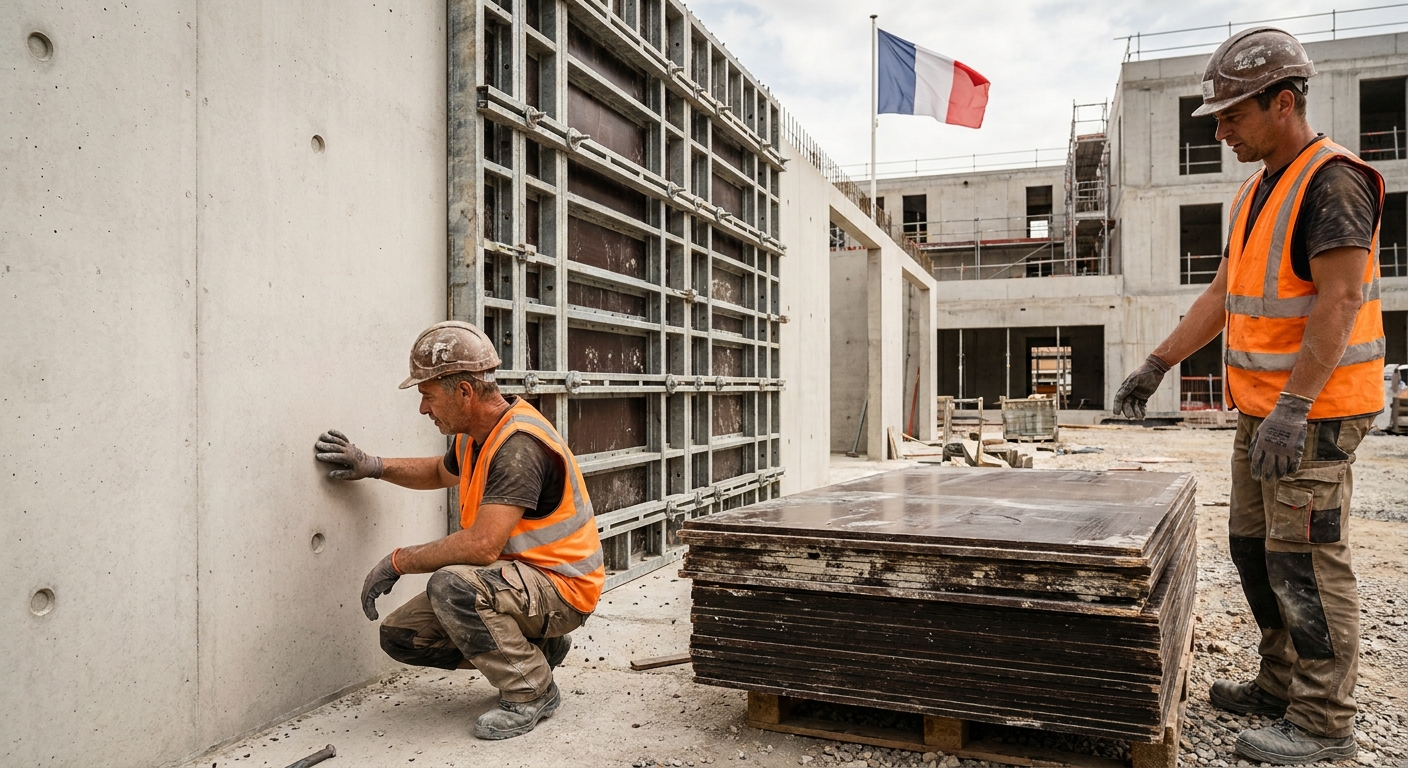
On a construction site, your choice of formwork panel — known as panneau de coffrage in French — directly determines the quality of the finished concrete surface, the number of reuse cycles you get, and the true cost per pour. A poorly specified panel — too thin, poorly bonded, or stored without care — warps after two uses and leaves visible marks on the concrete. A correctly chosen panel delivers a smooth surface for dozens of cycles.
This guide covers the types of formwork panels (panneaux de coffrage) available on the European market, applicable standards, selection criteria, and direct sourcing from Vietnam. Written by Vinawood, a Vietnamese plywood manufacturer since 1992, exporting to over 55 countries including France, Belgium, and Switzerland.
What Is a Formwork Panel (Panneau de Coffrage)?
A formwork panel is a temporary element that moulds fresh concrete until it sets. It must resist the hydrostatic pressure of liquid concrete, withstand the mechanical stresses of stripping, and maintain a surface smooth enough to produce a quality finish. Formwork panels serve for walls, columns, beams, and slabs — each application imposes different requirements for rigidity, flatness, and moisture resistance.
The panel material influences three economic parameters: the unit purchase price, the number of reuses before replacement, and the labour cost of stripping (a film-faced panel releases more easily than a rough-sawn board). The true performance metric is not the price per panel but the cost per pour (coût par coulage).
Types of Formwork Panels (Types de Panneaux de Coffrage)
Three material families dominate the market:
Film-Faced Plywood (Contreplaqué Filmé)
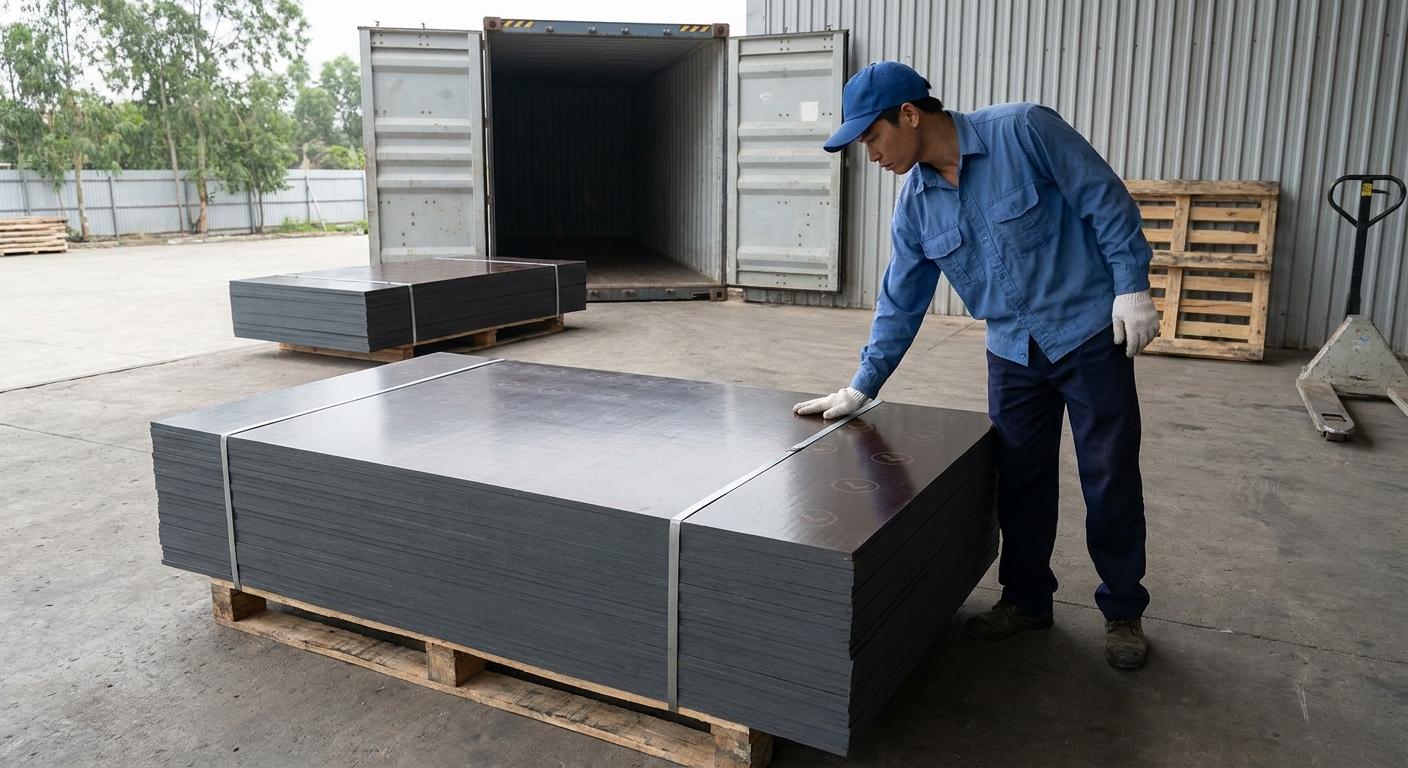
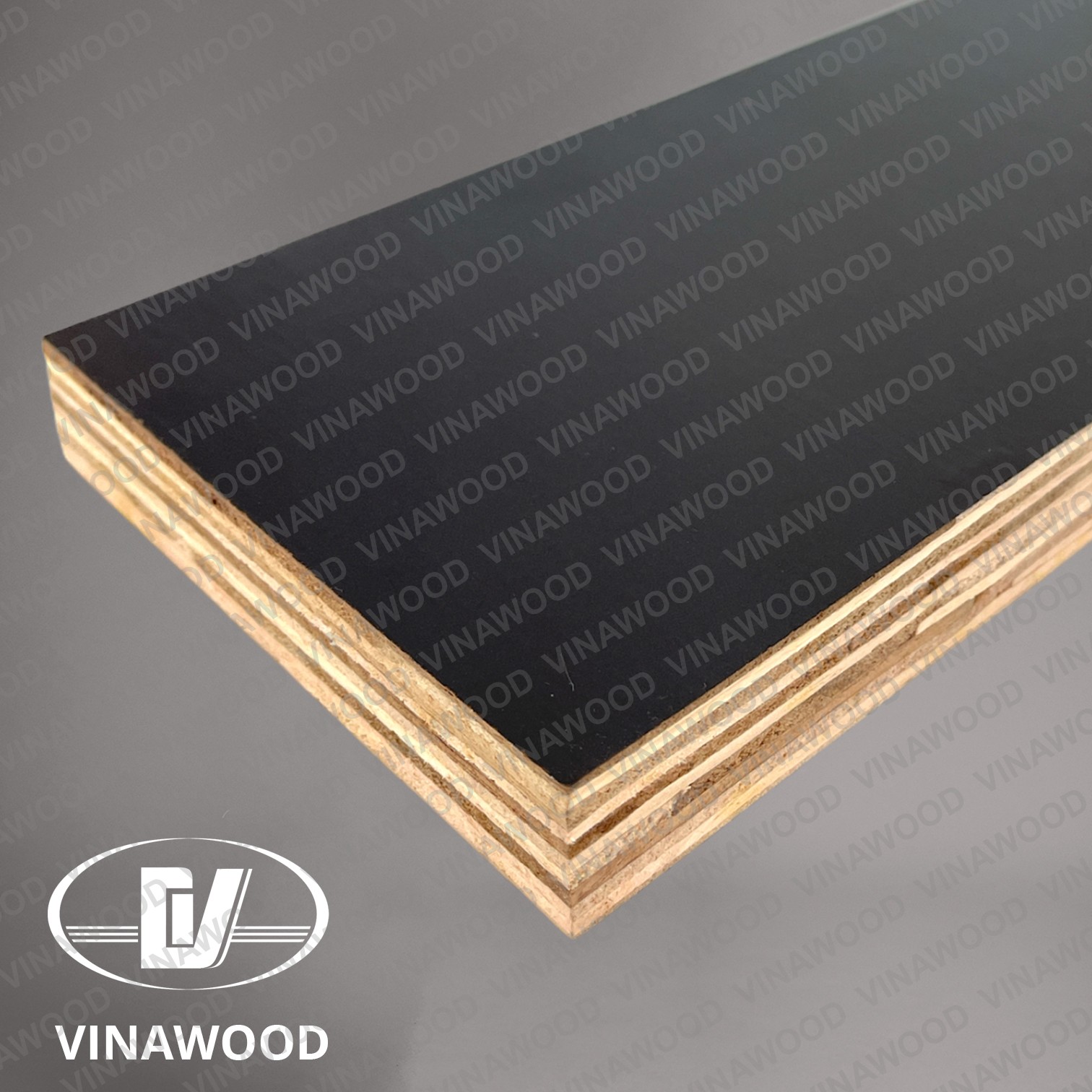
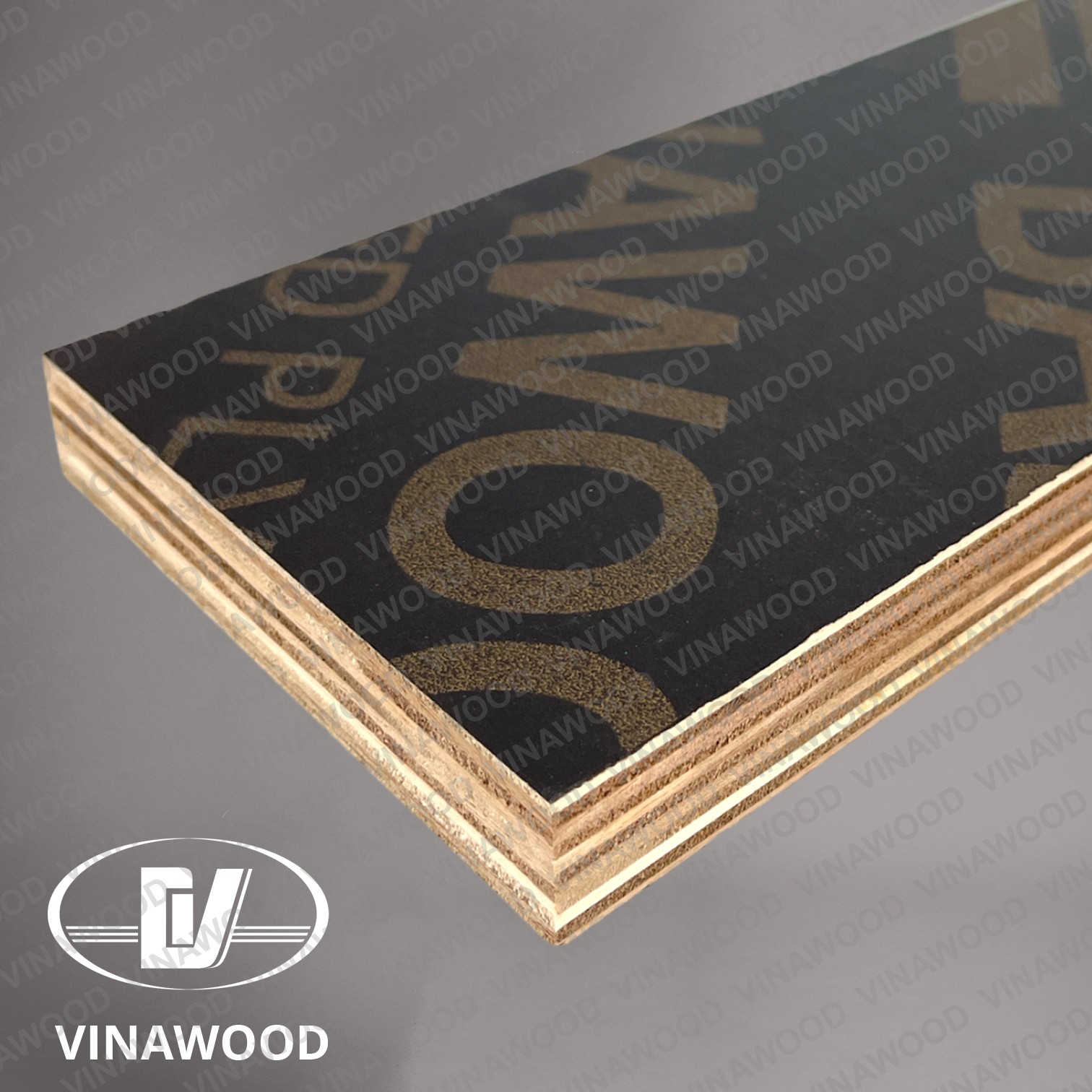
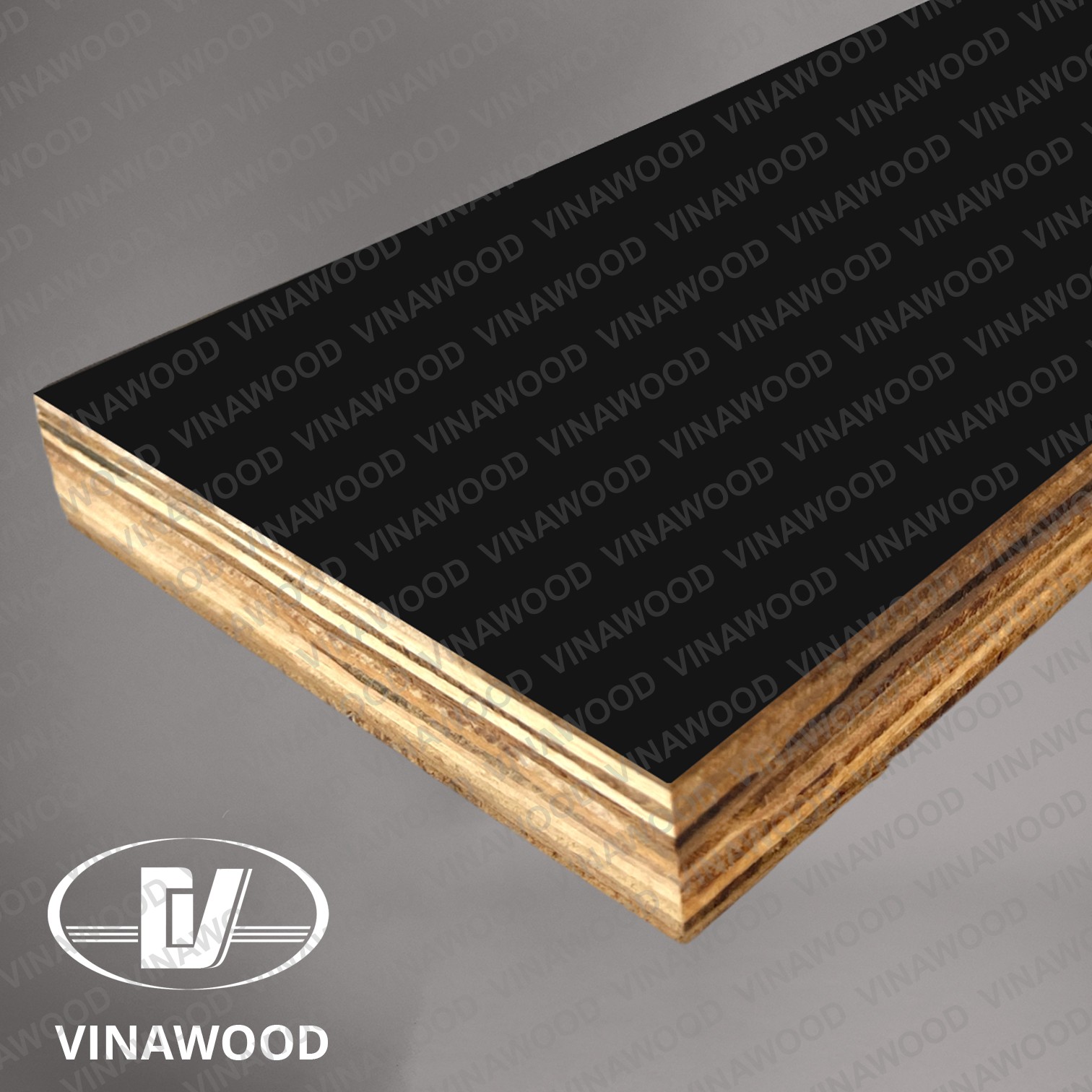
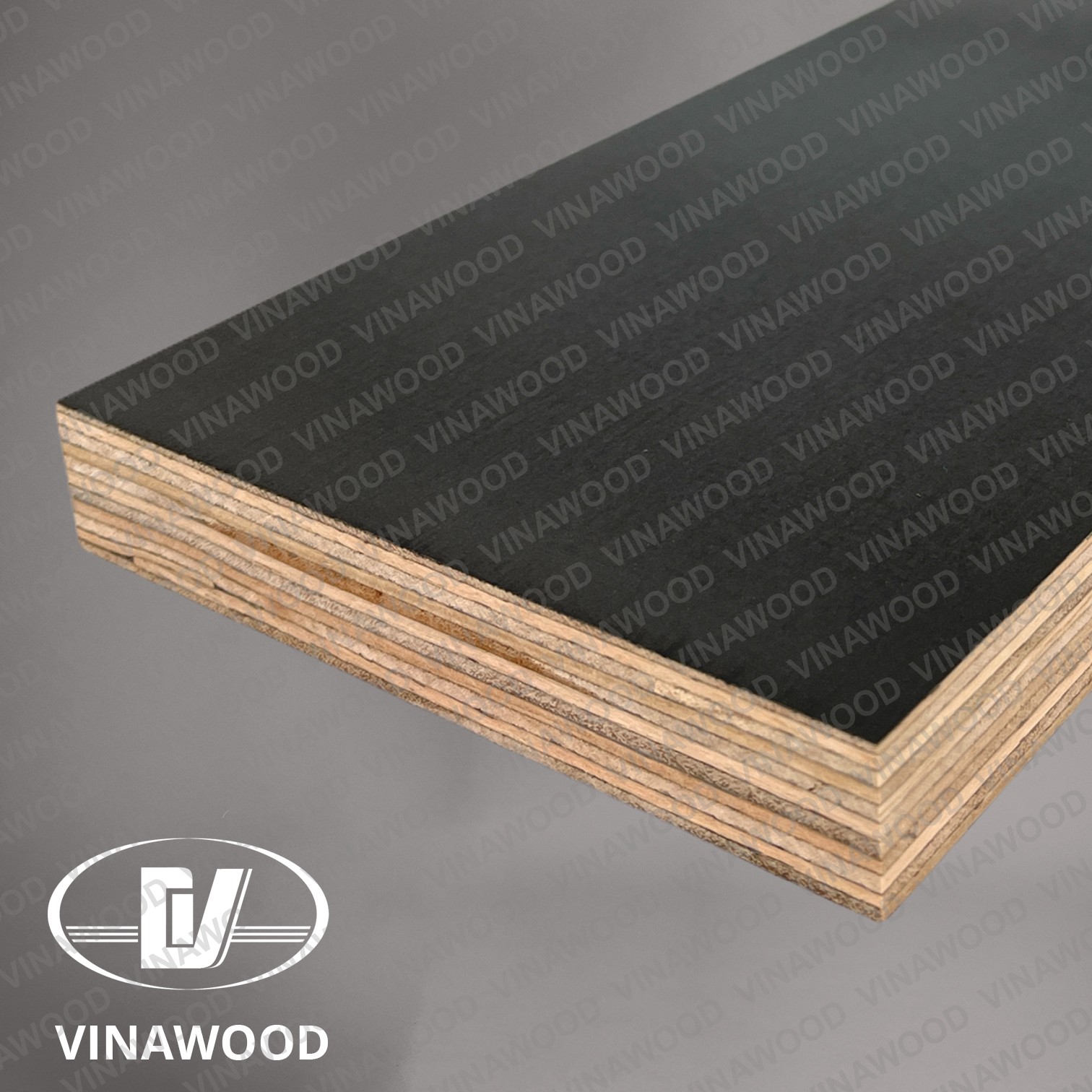
The standard on modern European jobsites. Structure: cross-laminated hardwood veneers (eucalyptus, acacia) bonded with WBP (weather and boil proof) resin, coated with a phenolic film on both faces. The film protects the surface, ensures clean release, and resists repeated wet-dry cycles. This panel type offers the best cost-per-reuse ratio for medium- and high-volume projects.
Sawn Timber Boards (Planches de Coffrage)
Rough-sawn boards in spruce or fir (planche de coffrage or planche coffrage) remain in use for low-demand formwork: buried foundations, strip footings, and small works where surface finish is not critical. Advantage: immediate availability from local merchants. Disadvantages: irregular surface, rapid water absorption, warping after two or three uses, and difficult stripping without release agent.
Metal Panels (Panneaux Métalliques)
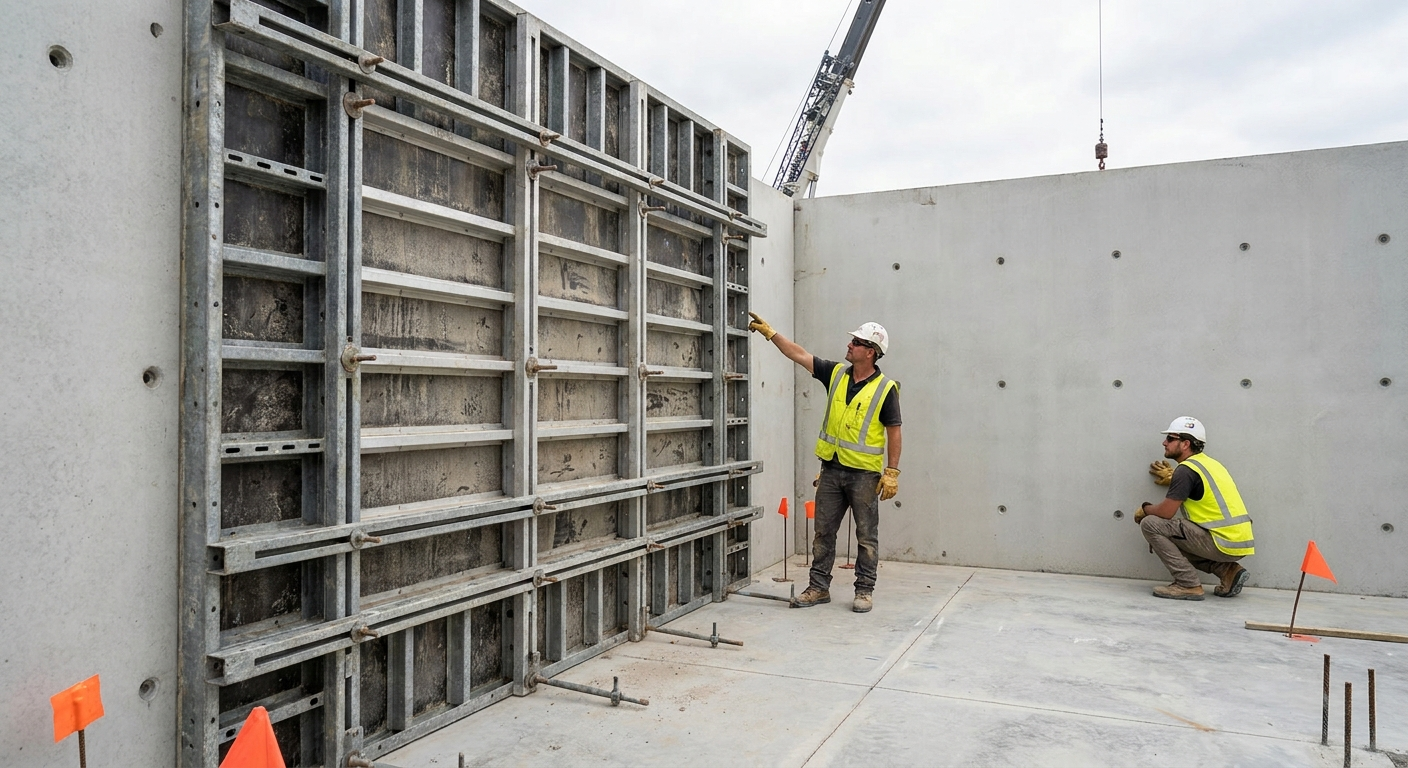
Metal formwork systems (PERI, DOKA, ULMA) are steel or aluminium frames carrying a film-faced plywood skin or a metal face. They offer superior rigidity and hundreds of reuses but represent a high initial investment (rental or purchase). The film-faced plywood panel that forms the casting face in these systems remains a consumable, replaced regularly.
Film-Faced Plywood: The Modern Jobsite Standard
Film-faced plywood (contreplaqué filmé, also searched as contre plaqué filmé) deserves a dedicated section because it accounts for the vast majority of formwork panels consumed on European jobsites.
Panel structure: An odd number of plies (typically 7 to 13 for an 18 mm panel) of hardwood veneers, cross-laminated at 90° to distribute loads in both directions. This cross-laminated construction prevents warping and gives the panel balanced bending strength.
Glue: Two systems exist, and the distinction is critical:
- WBP melamine (EN 636-2 / Class 2) — resists humid conditions and protected exterior exposure. Suitable for the majority of standard residential and commercial sites.
- WBP phenolic (EN 636-3 / Class 3) — resists permanent exterior exposure, including prolonged weathering between pours. Reserved for demanding projects: infrastructure, architectural concrete, and sites with extended exposure. Only Pro Form from Vinawood uses phenolic glue in the European range.
Phenolic film: The surface coating is a paper impregnated with phenolic resin, hot-pressed onto both faces. Two common weights:
- 120 g/m² — standard for typical sites, up to 10–15 reuses depending on maintenance.
- 220 g/m² — premium, for high-volume reuse sites, up to 20 reuses or more.
The Vinawood range for the European market covers four products, all available in the 2500×1250 mm EU format:
- Eco Form Plus — EN 636-2, WBP melamine glue, up to 8 reuses. Economy entry-level.
- Form Basic — EN 636-2, WBP melamine glue, up to 10 reuses. The jobsite standard.
- Form Extra — EN 636-2, WBP melamine glue, up to 15 reuses. Thicker film, tighter veneer grading.
- Pro Form — EN 636-3, WBP phenolic glue, up to 20 reuses. The premium panel for the most demanding projects.
Standard Dimensions and Thicknesses
Two formats dominate the market:
- 2500 × 1250 mm (European format) — the standard for metric formwork systems (PERI, DOKA, ULMA). Available from all French merchants including Point.P, Chausson, and BigMat.
- 2440 × 1220 mm (international / imperial format) — used in North America and parts of Asia. Occasionally found on French sites supplied through direct import.
Common thicknesses for formwork (bois de coffrage):
- 12 mm — lightweight formwork: slab edges, small works, curved forms.
- 15 mm — slabs and soffits with close joist spacing.
- 18 mm — the standard for walls, columns, and beams. Compatible with stud spacing of 400–600 mm.
- 21 mm — heavy pours, tall retaining walls.
- 25 mm — civil engineering and special structures.
The 18 mm thickness is by far the most common on the French market — it is what merchants stock as standard.
Reuse Cycles by Panel Type
The number of reuse cycles is the most underestimated economic factor when choosing a formwork panel (panneau coffrage). Here are the typical ranges:
| Panel Type | Reuses | Indicative Price (€/panel 18 mm) | Cost per Pour (€) |
|---|---|---|---|
| Rough-sawn boards (spruce/fir) | up to 3 | 15–25 € | 5–8 € |
| Standard plywood (no film) | up to 5 | 20–35 € | 4–7 € |
| Film-faced 120 g/m² (Class 2) | up to 15 | 25–40 € | 1.7–2.7 € |
| Film-faced 220 g/m² (Class 2) | up to 15 | 35–50 € | 2.3–3.3 € |
| Film-faced phenolic (Class 3) | up to 20 | 45–65 € | 2.3–3.3 € |
Prices are indicative, excluding tax, for 2500×1250×18 mm panels in EU format. Rates vary by volume, region, and market conditions.
The formula is simple: Cost per pour = Panel price ÷ Number of reuses. A film-faced panel at €35 reused 15 times costs €2.30 per pour — compared to €8 per pour for a rough-sawn board at €25 used 3 times. On a 500 m² formwork project, that difference adds up to thousands of euros in savings.
Applicable European Standards
Three standards govern plywood formwork panels on the European market:
EN 636 — Structural classification of plywood:
- EN 636-1: Dry conditions (interior only — not suitable for formwork).
- EN 636-2: Humid conditions — the minimum required for formwork (coffrage bois). WBP melamine glue.
- EN 636-3: Exterior conditions — the most demanding class. WBP phenolic glue only.
EN 314 — Bond quality: This standard defines the glue joint resistance tests (boil test). An EN 636-2 panel must pass EN 314 Class 2 tests; an EN 636-3 panel must pass Class 3 tests. Request EN 314 test reports from your supplier — this is the most reliable document to verify actual bond quality.
EN 13986 — CE marking: CE marking is mandatory for placing wood-based panels on the EU market under the Construction Products Regulation. It confirms the panel has been tested per applicable harmonised standards and that a Declaration of Performance (DoP) is available. Check that the notified body number and DoP reference appear on the marking.
In France, NF EN standards adopt European standards in full. French requirements do not add additional criteria for formwork panels, but the DTU (Documents Techniques Unifiés) framework governs formwork installation on site.
How to Choose the Right Formwork Panel
The choice depends on four main criteria:
1. Target concrete type. Architectural concrete (smooth finish, no air bubbles) demands a premium film-faced panel with 220 g/m² phenolic film and Class 3 glue — Pro Form is designed for this. Structural concrete below grade (foundations, footings, strip beams) can use a standard film-faced panel or even rough-sawn boards.
2. Target number of reuses. If your programme calls for fewer than 5 pours with the same set of panels, an Eco Form Plus or Form Basic is sufficient. Beyond 10 pours, Form Extra or Pro Form justifies its premium through lower cost per pour.
3. Climate conditions. On a site exposed to prolonged weathering between pours (winter projects, extended schedules), a Class 3 panel (phenolic glue) holds up better than Class 2 (melamine glue). Under normal cover and storage conditions, Class 2 is sufficient.
4. Total budget. Never compare panels on unit price alone. Always calculate cost per pour by dividing the price by the expected number of reuses. The cheapest panel per unit is almost always the most expensive per square metre of concrete formed.
Maintenance and Storage
The lifespan of a formwork panel depends as much on maintenance as on the initial product quality. Four practices significantly extend the number of reuse cycles:
Release agent (huile de décoffrage): Apply a release agent to the casting face before every use. The oil creates a barrier between the concrete and the film, easing stripping and protecting the surface. Never use waste motor oil — purpose-formulated vegetable or mineral release agents are designed not to stain concrete.
Post-stripping cleaning: Remove concrete residue immediately after stripping, while it is still fresh. Use a plastic scraper — never a metal one, which damages the film. Light pressure washing works for stubborn residue.
Edge sealing: Every site-cut exposes the internal veneers to moisture. Immediately apply acrylic sealant or edge-sealing paint to cut edges. This is the most important — and most often neglected — maintenance measure.
Storage: Store panels flat, on bearers off the ground, protected from rain and direct sunlight. UV exposure degrades phenolic film within weeks. Never store panels upright — gravity-induced warping is irreversible. For detailed guidance, see our complete guide on formwork plywood storage and maintenance.
Direct Sourcing from Vietnam
Direct import from a Vietnamese manufacturer like Vinawood offers a 20–35% price advantage over European distributors on container-volume orders. Here are the logistics parameters for the French market:
- Destination port: Le Havre (north), Marseille-Fos (south). Sea transit from Hai Phong (Vietnam): 25–30 days to Le Havre, 22–28 days to Marseille via Suez.
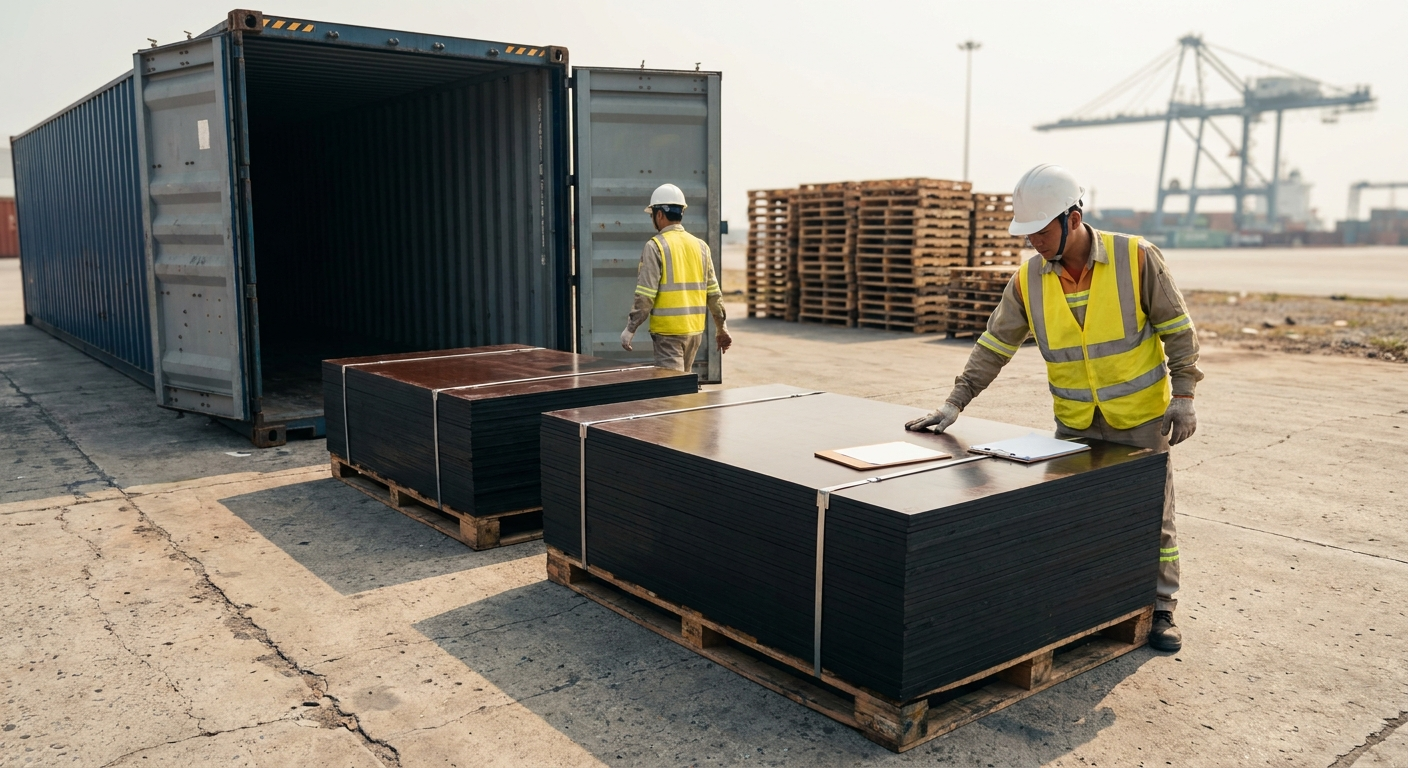
- Minimum quantity: 1 × 20-foot container (~22–24 m³, approximately 260–280 panels at 18 mm in 2500×1250 mm format).
- Documentation: CE marking (EN 13986), Declaration of Performance (DoP), FSC Chain of Custody certificate, EN 314 test report, CARB Phase 2 certificate.
- Incoterms: FOB (most common — buyer arranges freight), CIF (freight included to destination port), DDP (all-inclusive to delivery point).
- Total lead time: 6–8 weeks from order confirmation to on-site delivery.
For French projects consuming more than 250 panels per programme, direct import makes economic sense even after accounting for shipping, customs clearance, and import VAT. For smaller volumes, specialist merchants (who source in containers themselves) offer a compromise between price and flexibility.
Vinawood has been manufacturing film-faced plywood since 1992, with ISO 9001, FSC, PEFC, CE marking (EN 13986), and CARB Phase 2 certifications. Contact the export team for a custom quotation or sample order.
Frequently Asked Questions
What is the difference between a formwork panel (panneau de coffrage) and formwork boards (planche de coffrage)?
A formwork panel is a structural plywood (cross-laminated veneers, WBP glue, usually film-faced) designed to withstand concrete pressure and be reused many times. Formwork boards (planche de coffrage or planche pour coffrage) are sawn solid timber boards (spruce, fir) used for simple formwork and reusable only 2–3 times. Film-faced panels offer a lower cost per pour on medium- and high-volume sites.
Can you reuse a formwork panel?
Yes — that is the primary advantage of film-faced plywood. A standard film-faced panel (120 g/m², EN 636-2) can be reused up to 15 times with proper maintenance. A premium panel with phenolic glue (EN 636-3) like Pro Form achieves up to 20 reuses. Factors that reduce cycle count: skipping release agent, failing to seal cut edges, storing in sun or rain, and using metal scrapers.
What panel thickness for a wall?
18 mm is the standard thickness for walls and columns with stud spacing of 400–600 mm. For tall walls (over 3 metres of pour height) or high-pressure civil engineering works, 21 mm provides better rigidity. 12 mm is suitable only for slab edges and small, low-pressure works.
What is film-faced plywood (contreplaqué filmé)?
Film-faced plywood (contreplaqué filmé) is a structural plywood panel with both faces coated in a hot-pressed phenolic film. This film — available at 120 g/m² (standard) or 220 g/m² (premium) — creates a smooth, water-resistant film surface that eases concrete release and protects the panel against moisture. It is the most widely used formwork material on modern European construction sites. For a deeper comparison of melamine vs phenolic film, see our article on melamine vs phenolic film-faced plywood.
Is CE marking mandatory for formwork panels?
Yes, within the European Union. The Construction Products Regulation (CPR) requires CE marking for wood-based panels placed on the EU market, in accordance with EN 13986. CE marking confirms the panel has been assessed and a Declaration of Performance is available. Any panel sold in France without CE marking does not comply with regulations.
Category
guides
Related Markets
Related Countries
Related Products
▶Sources & References (3)
- EN 636:2012+A1:2015 — Contreplaqué. Exigences — Comité Européen de Normalisation (CEN) (2015)
- EN 314-1:2004 — Contreplaqué. Qualité du collage. Méthodes d'essai — Comité Européen de Normalisation (CEN) (2004)
- EN 13986 — Panneaux à base de bois utilisés dans la construction — Comité Européen de Normalisation (CEN) (2015)