Permanent Formwork (Stay-in-Place): How It Works, When It Pays — and When Reusable Wins
Permanent (stay-in-place) formwork stays cast in the pour instead of being struck and reused. What the material families are, when leaving the form in place pays, and when a reusable film-faced panel is the cheaper, better-finish answer.
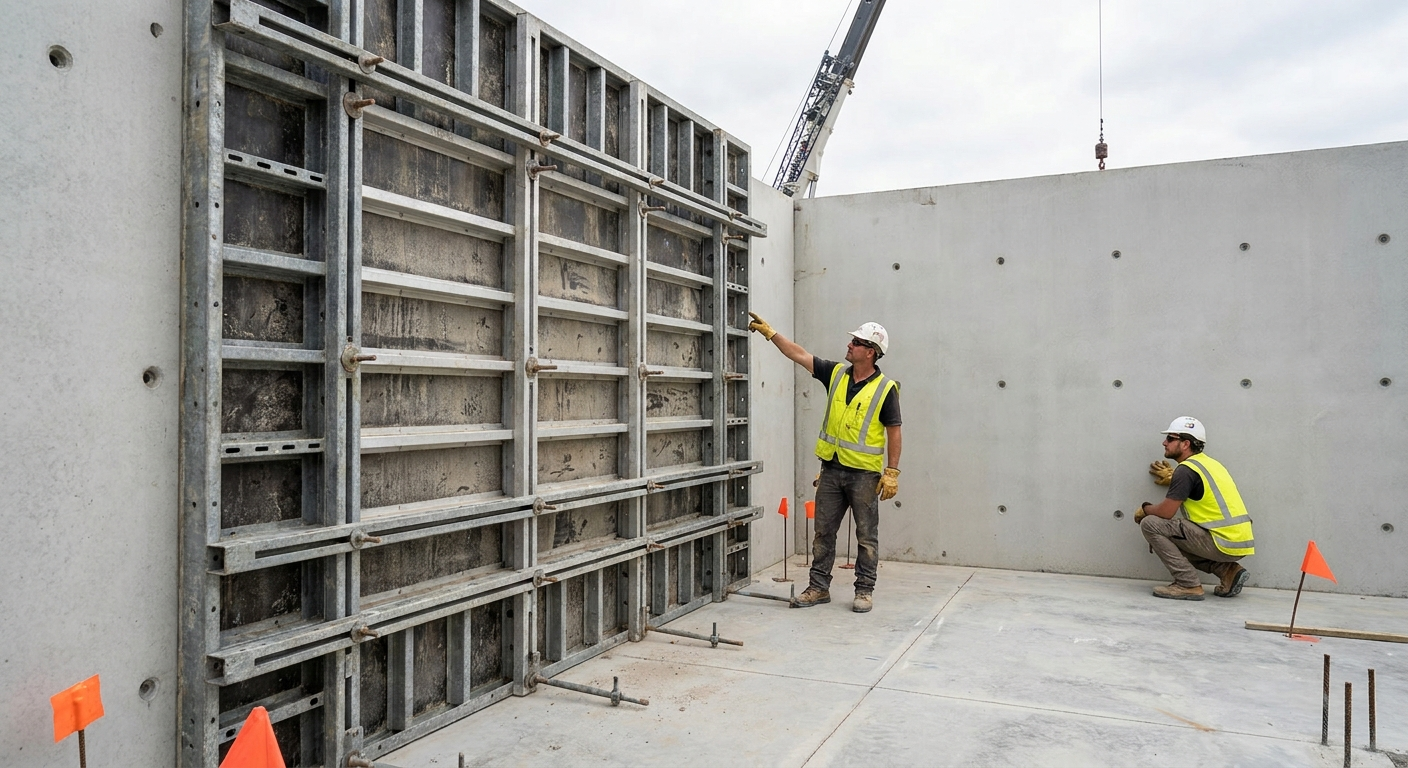
Most formwork on a site has a short, repetitive life. It is set, filled, left until the concrete gains strength, then struck, cleaned, and moved to the next pour. Permanent formwork breaks that cycle. It stays cast into the finished structure and is never removed. The trade also calls it stay-in-place or sacrificial formwork, and the decision to use it turns on a single question: is removing the form worth more than the material you leave behind?
Sometimes it clearly is not. A buried void that no one can reach to strip, a one-off curved soffit, a wall element that doubles as insulation. In those cases the form earns its keep by staying put. The rest of the time, a reusable panel that strips clean and pours again is the cheaper answer. This guide covers the material families, the cases where permanent formwork wins, and the point where a reusable film-faced panel takes over.
What permanent (stay-in-place) formwork means
Permanent formwork is any forming element left in the structure after the concrete has cured. "Sacrificial" and "lost" describe the same idea: the form is consumed by the pour rather than recovered. The UK Concrete Society uses a sharper term for a sub-case, "participating" formwork, where the left-in element also contributes to the load capacity of the finished member rather than just shaping it.
That distinction matters more than it sounds. A polystyrene former that shapes a ground beam and then sits there as insulation is permanent but not structural. A profiled steel deck that shapes a floor slab and then acts as tension reinforcement in the composite section is permanent and participating. The first is a site decision; the second pulls a structural engineer into the design.
Why builders leave the form in place
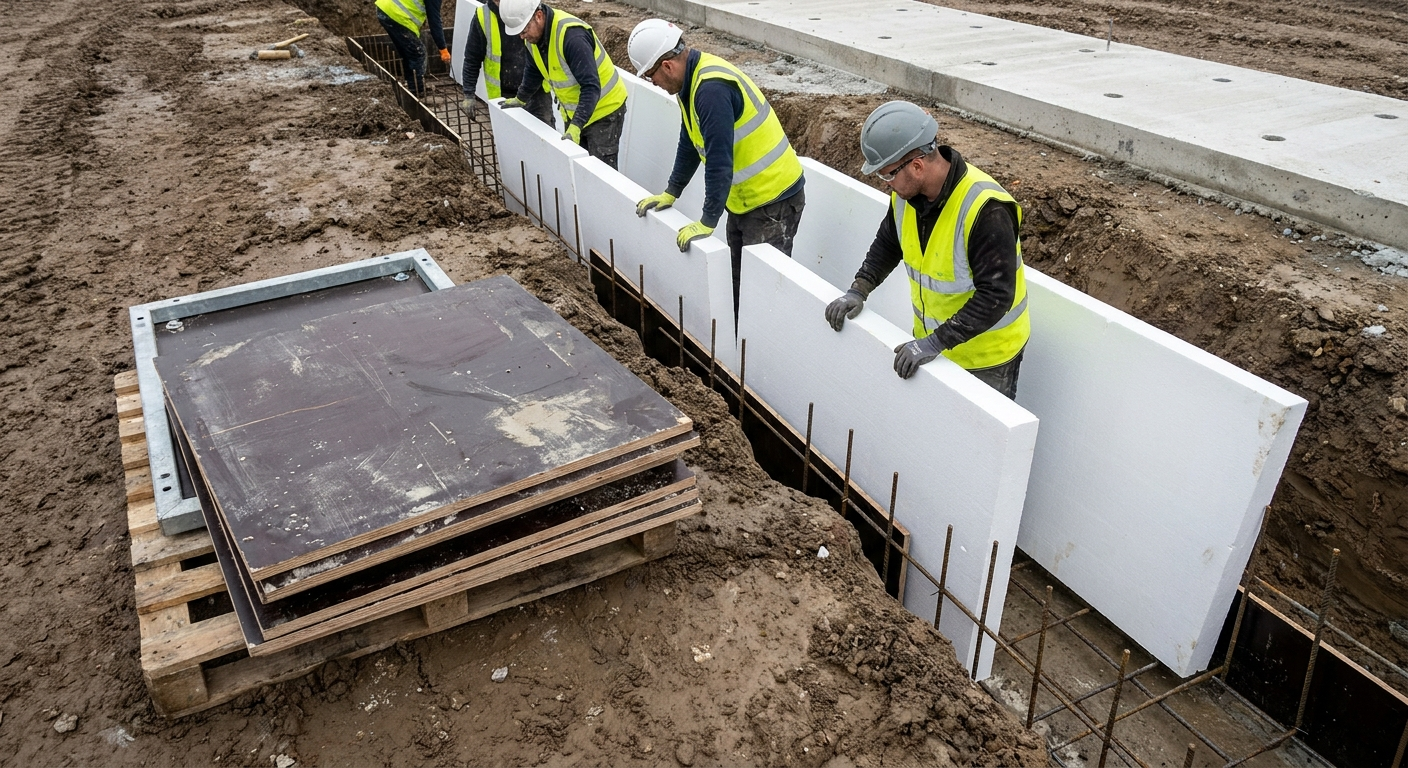
Three reasons come up on real jobs. The first is time. Striking, cleaning, and re-erecting a form eats hours that a one-off element never repays, so leaving it cast saves the whole strip-and-reset cycle. The second is access. Shaft heads, narrow voids, and pockets behind columns can be impossible or unsafe to strip, and a sacrificial former is sometimes the only clean way to form them. The third is dual function. An EPS former on a foundation delivers perimeter insulation as part of the same operation, and the material keeps working long after the concrete has set.
What rarely gets said is where the logic stops. As soon as the same geometry repeats, the material cost of a fresh sacrificial form every pour starts to lose against a panel you can reuse. We see this in our own export orders: buyers who form a repeating wall or column section come back for reusable film-faced panels, not a new lost form each time.
The material families
Permanent formwork is not one product. The material follows the element and the second function it has to perform.
| Material | Typical use | Second function | Notes |
|---|---|---|---|
| Expanded polystyrene (EPS) | Strip foundations, ground beams, ring beams | Perimeter insulation | Light; must be anchored against flotation during the pour |
| Fibre-cement / GRP boards | Columns, piers, parapets | Weather-resistant outer skin | Needs mechanical tie into the cage, not glue alone |
| Light-gauge steel mesh (Pecafil-type) | Ground beams, pile caps, blinding-free foundations | None structural; concrete keys through | Fast to place in trench excavations |
| Profiled steel decking | Composite floor slabs | Tension reinforcement (participating) | Designed to EN 1994; engineer-led |
| PVC / cement wall systems (Rediwall, Dincel-type) | Water-retaining walls, basements, pool walls | Permanent waterproof or durable face | Snap-together hollow profiles filled in situ |
| Film-faced plywood (one-off) | Awkward voids, shaft crowns, soffit pockets | None; lost where stripping is impractical | Economical only where the form cannot be recovered |
Each material has a narrow corridor. EPS rarely belongs in a suspended floor; profiled steel decking is wildly over-specified and over-priced for a strip foundation. Matching the family to the element is most of the decision.
ICF as a special case
Insulated concrete formwork (ICF) is the best-known permanent system in housing. Hollow polystyrene blocks stack into a wall, steel goes in the cavity, and concrete fills the core. The blocks never come off, so the wall arrives insulated on both faces in one operation. ICF is permanent formwork that has been productised for repeat residential walls, which is why search results for "permanent formwork" so often route straight to it. For one-off cast-in-situ work, the loose material families above are the more general answer.
Where the economics cross over
The number that decides most cases is reuse. A sacrificial form is paid for in full on every pour because the material is consumed each time. A reusable panel spreads its cost across the cycles it survives, so its cost per pour falls with every reuse.
Run the comparison on repeatable geometry and the crossover comes early. A phenolic film-faced panel rated up to 20 reuse cycles only needs to be struck and re-set a handful of times before its per-pour cost drops below a fresh sacrificial form each pour. In practice that crossover lands around the third or fourth repeat. After that, the reusable panel also gives tighter dimensional control and a more consistent face from one pour to the next, because it is a manufactured surface rather than a one-off assembly. So the honest rule is short: if the element repeats more than three or four times, reusable usually wins; if it is genuinely a one-off or unreachable, permanent earns its place.
Where plywood actually fits
Plywood sits on both sides of this decision, and it is worth being straight about which.
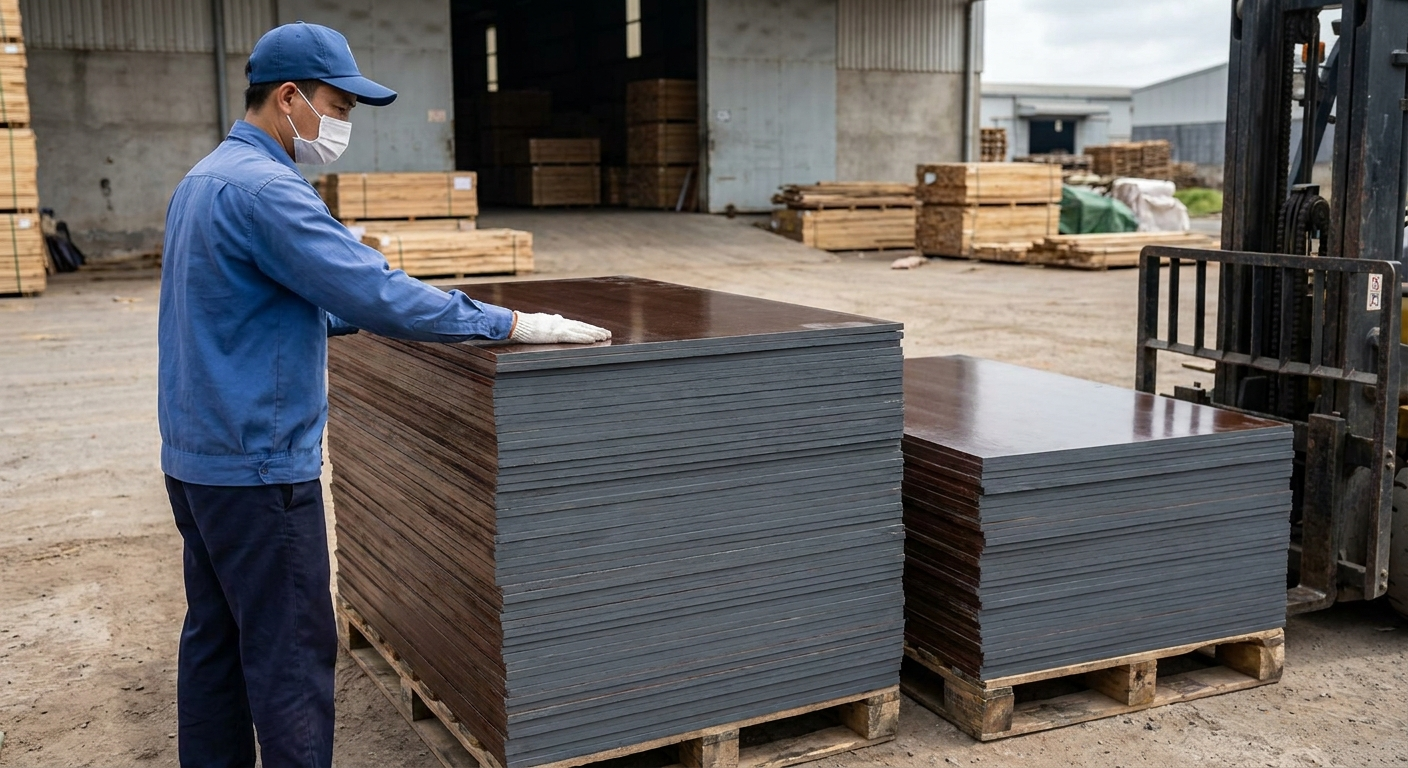
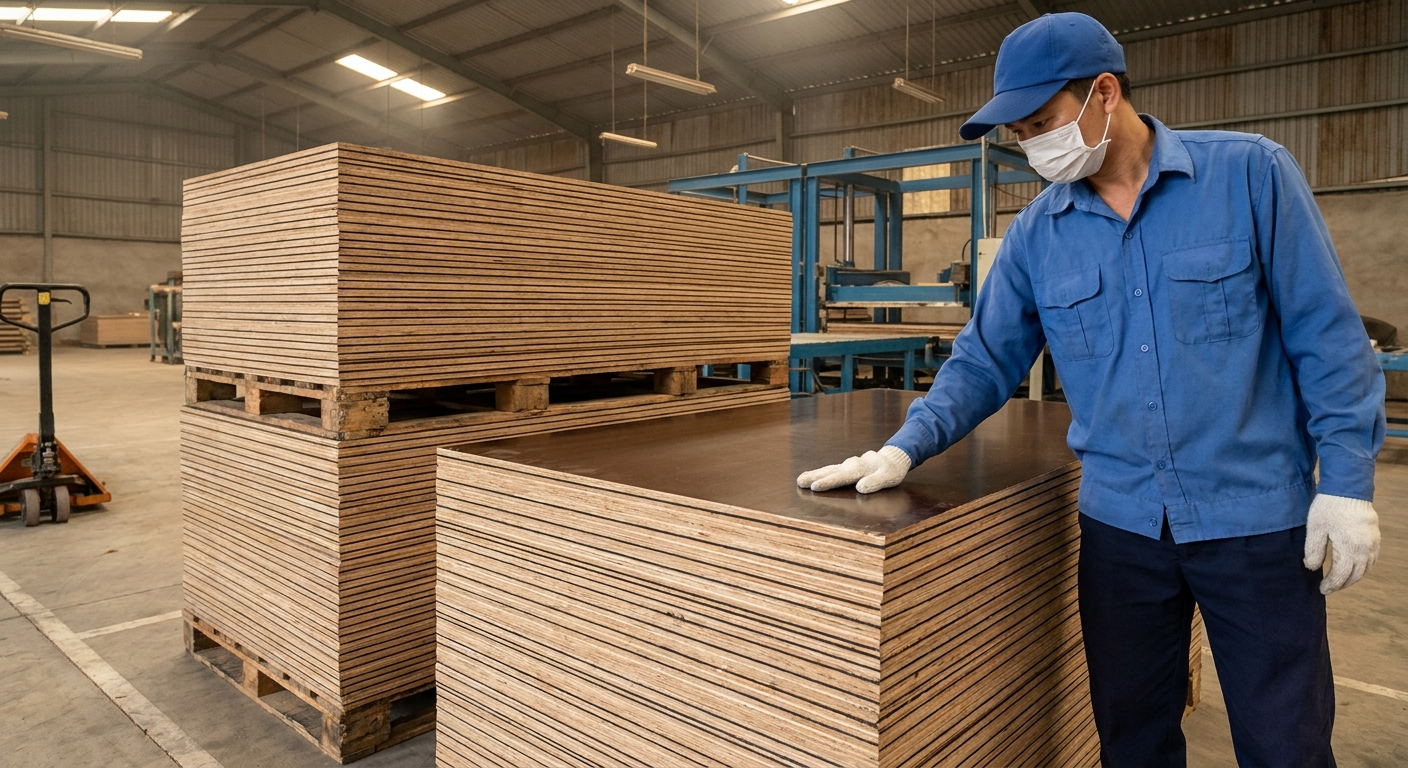
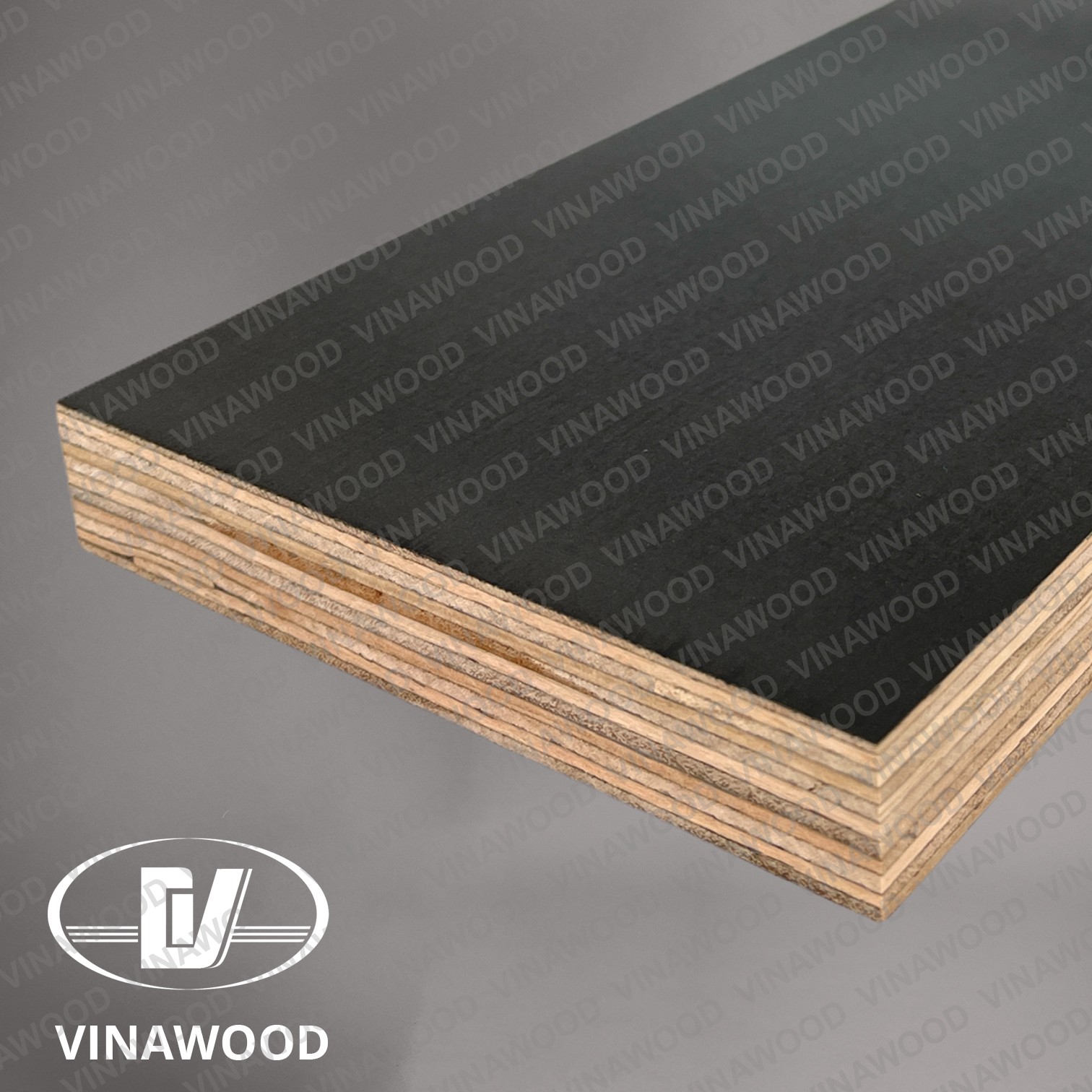
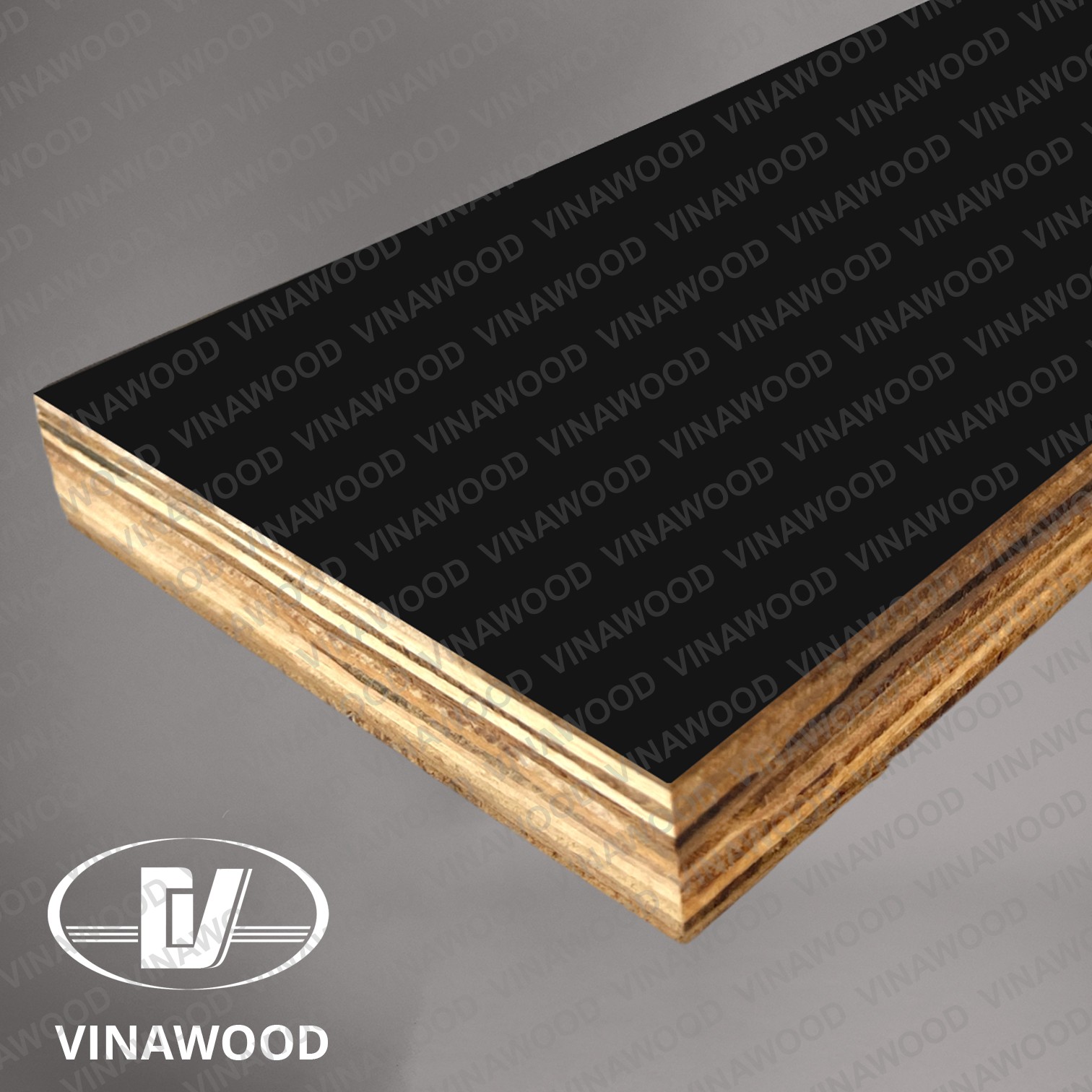
For repeatable geometry, film-faced plywood is the reusable alternative that beats a sacrificial form after a few pours. This is Vinawood's core product: a forming face engineered to strip clean and pour again, not a stay-in-place material. The panel is the skin the concrete is cast against, mounted on the contractor's frame or falsework, the same way it works in our guide to slab formwork plywood.
There is also a narrower, legitimate case where plywood is the lost former. A shaft crown, an irregular soffit pocket, or a void where striking would cost more than the sheet, an 18 mm film-faced panel makes a sound one-off sacrificial form. The limit is the same one that governs the whole topic: do it where the geometry is genuinely single-use, not where the element repeats.
Standards and who carries the design
Responsibility shifts with function. Where the left-in form only shapes the concrete, it stays a temporary-works and site matter. The moment it becomes participating and carries load, such as profiled steel decking acting compositely in a slab, the design moves to the structural engineer and the member is checked to the composite-structures code, EN 1994 in Europe. A fair-face permanent surface, by contrast, stays the site's responsibility, because the form face drives the finish and that cannot be corrected once the form is cast in. The split is clean enough to state plainly: load function is the engineer's; surface function is the site's. For the related question of what holds the form up versus what shapes the concrete, our guide to falsework vs formwork sets out the load path.
Choosing a reusable panel instead
When the geometry repeats and reusable is the call, spec the panel by adhesive class and reuse target. The two track each other.
For repeat pours and fair-face work, the right choice is a phenolic panel. Pro Form is WBP phenolic-bonded, EN 636-3 / Class 3, rated up to 20 reuse cycles with a phenolic film face that holds a clean finish across repeats. In North America the equivalent repeat-pour choice is the HDO range, also phenolic-bonded and Class 3.
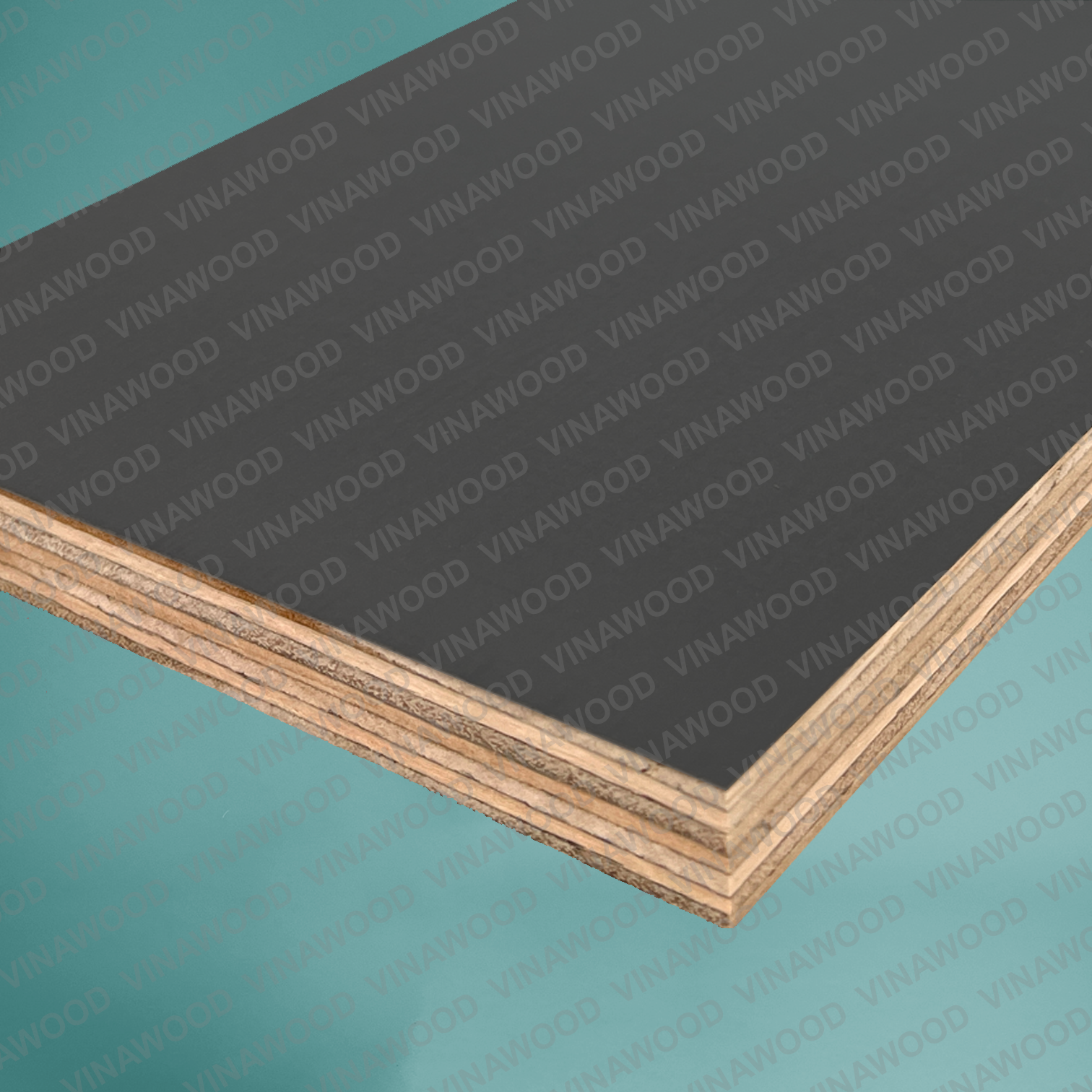
For shorter programmes, a melamine-cored panel is the economical fit. Form Extra and Form Basic use a WBP melamine-urea-formaldehyde (MUF) core glue under a phenolic film face, classed EN 636-2 / Class 2. Form Extra reaches up to 15 reuse cycles and Form Basic up to 10. The longer life on Form Extra comes from a more durable, higher-melamine-content MUF glue formulation, not a heavier face film; both panels carry the same film. These are weatherable Class 2 panels, so the cabinet-trade idea that "melamine means interior only" does not apply to them. One spec rule worth keeping: never label Form Extra or Form Basic as Class 3. Where a job genuinely needs Class 3, the answer is Pro Form or HDO, browsable across the film-faced plywood range.
About Vinawood
Vinawood is a Vietnamese plywood manufacturer established in 1992, shipping more than 5,000 containers a year to 55+ countries. Our product is the reusable forming face, not the stay-in-place systems above: film-faced and overlaid formwork panels in melamine-cored EN 636-2 and phenolic-bonded EN 636-3 grades, matched to reuse target and finish. Every sheet is inspected individually, and our panels carry CE marking under EN 13986, FSC-COC, PEFC, and EPA TSCA Title VI certification for the UK, EU, North American, and Australian markets. When a wall or column geometry repeats and a reusable panel beats a sacrificial form, browse the Pro Form range or contact our team for a specification.
Category
guides
Related Markets
Related Countries
Related Products
▶Sources & References (3)
- Permanent formwork — Concrete Society fingertips — The Concrete Society (2024)
- BS EN 1994-1-1 Eurocode 4: Design of composite steel and concrete structures — CEN (2004)
- Formwork (permanent insulated formwork) — Wikipedia (2025)