Permanent (Stay-in-Place) Formwork vs Reusable Plywood Formwork: When Each Makes Sense
Permanent formwork stays in the structure after the pour; reusable plywood is stripped and used again. Here is where each method earns its place, and how the cost maths actually works.
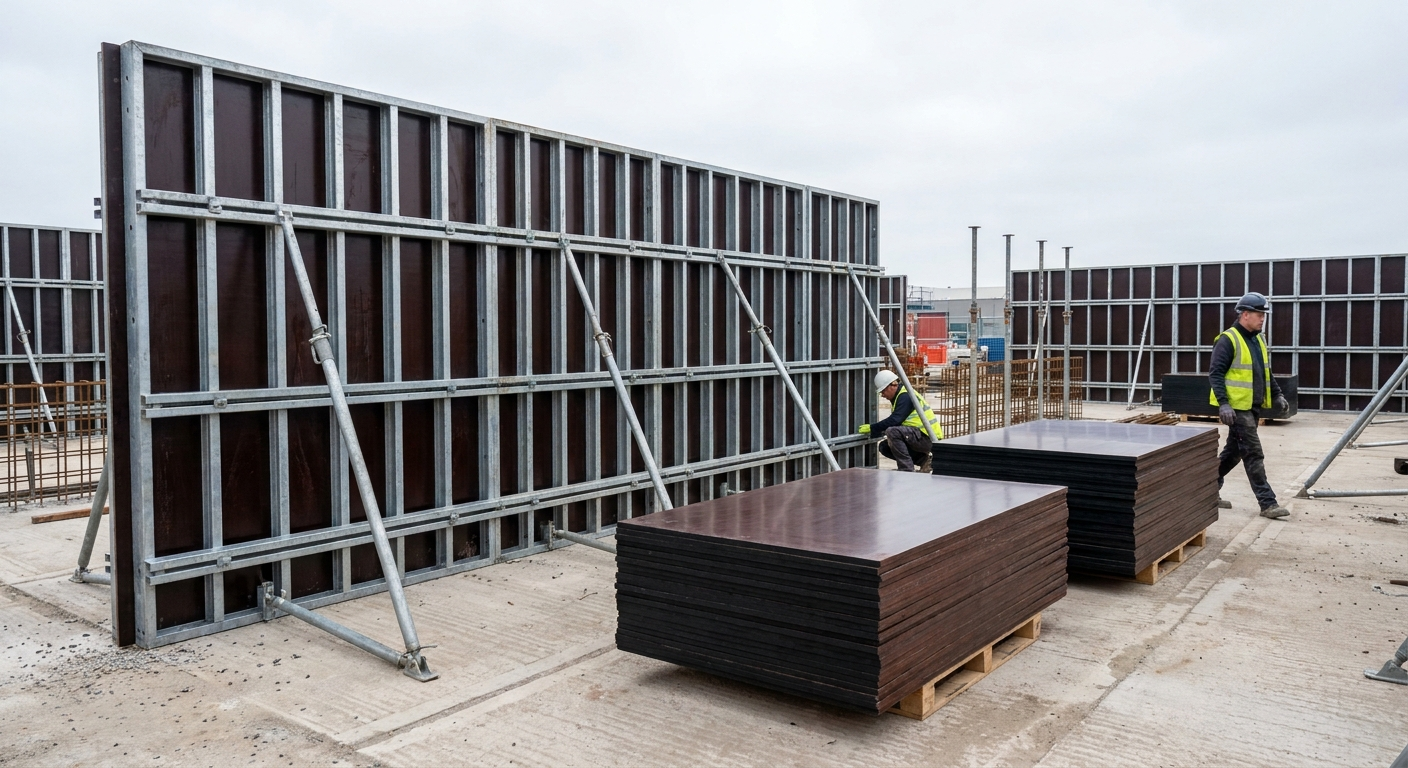
Permanent formwork stays in the structure after the concrete cures. Reusable formwork is stripped, cleaned and set up again for the next pour. That one difference drives almost every decision that follows, from labour on site to the finish you end up with on the concrete face.
The two approaches are not rivals so much as tools for different jobs. A pile cap buried in the ground has no reason to be stripped. A repeating apartment-block wall has every reason to be. This guide walks through what permanent formwork is, the two families it splits into, and the honest line where reusable film-faced or HDO plywood becomes the better-value choice.
What permanent formwork is
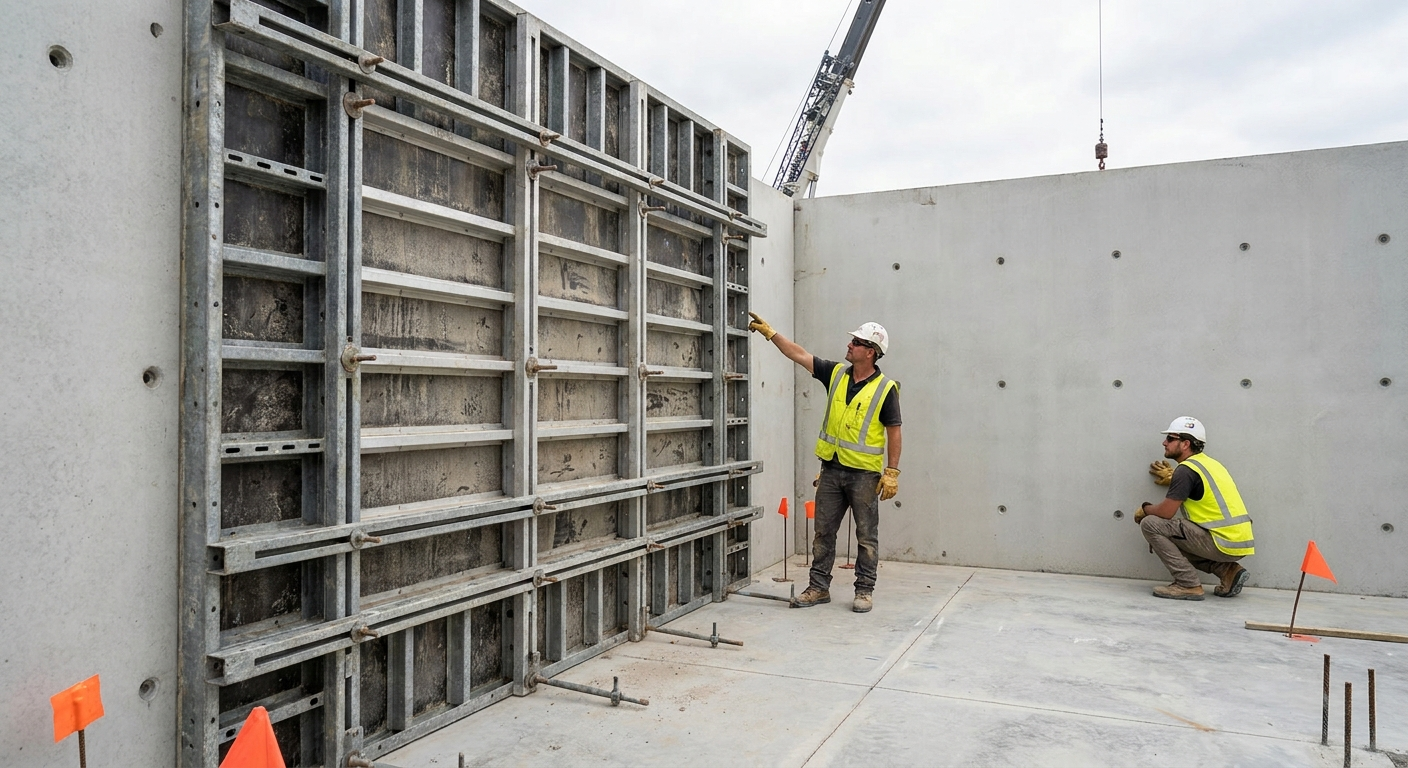
Permanent formwork (also called stay-in-place, sacrificial or lost formwork) is any forming material left in position once the pour has gained strength. Nobody comes back to strike it, scrape it, stack it or haul it away. In congested ground or over water, that saved step can be the whole reason a method gets specified.
The trade-off is material economics. A reusable panel is bought once and earns its keep across many pours. A permanent form is consumed by a single pour, so its cost lands entirely on that one element. Whether that maths works depends almost entirely on how many times you would otherwise have reused a panel.
Two families: non-participating and participating
The Concrete Society splits permanent formwork into two groups, and the distinction matters for design as much as for cost.
Non-participating (stay-in-place)
These forms shape the pour and then do nothing structural afterwards. They are there to contain wet concrete, not to carry load once it has set. Typical examples in the UK and Australian markets include corrugated plastic sheet, expanded polystyrene (EPS), and wire-mesh-and-film systems such as Cordek Sideform, Pecafil and Novoform. They suit pile caps, ground beams and trench fill, where excavation walls are rough and a thin sacrificial face is cheaper than building and stripping a timber box.
Participating (composite)
Participating systems become part of the finished structure and contribute to its load capacity. Precast concrete planks, profiled steel decking under a composite floor slab, and glass-reinforced concrete (GRC) permanent shutters all fall here. The form is engineered, the connection to the in-situ concrete is designed, and the whole assembly acts together once cured. This is common on composite steel-frame floors, where profiled decking is both the soffit form and the tension reinforcement for the slab.
Where permanent formwork wins
Permanent systems earn their place wherever striking is impractical, dangerous or simply not worth the labour:
- Pile caps, ground beams and trench fill — the form sits against soil and would never be recovered intact anyway.
- Difficult-access or congested sites — when there is no room to drop, clean and re-rig panels, a single-use form removes the bottleneck.
- Composite floor decks — profiled steel decking does double duty as form and reinforcement.
- Split joints between slab sections — a mesh stop-end stays put and lets the next bay pour against it.
- Jobs where striking creates risk — over water, beside live rail, or at height where panel handling is hazardous.
On those jobs, the absence of a strike cycle is the headline saving. There is no crane time for striking, no cleaning bay, no panel storage, and no transport back to a yard.
Where reusable plywood formwork wins
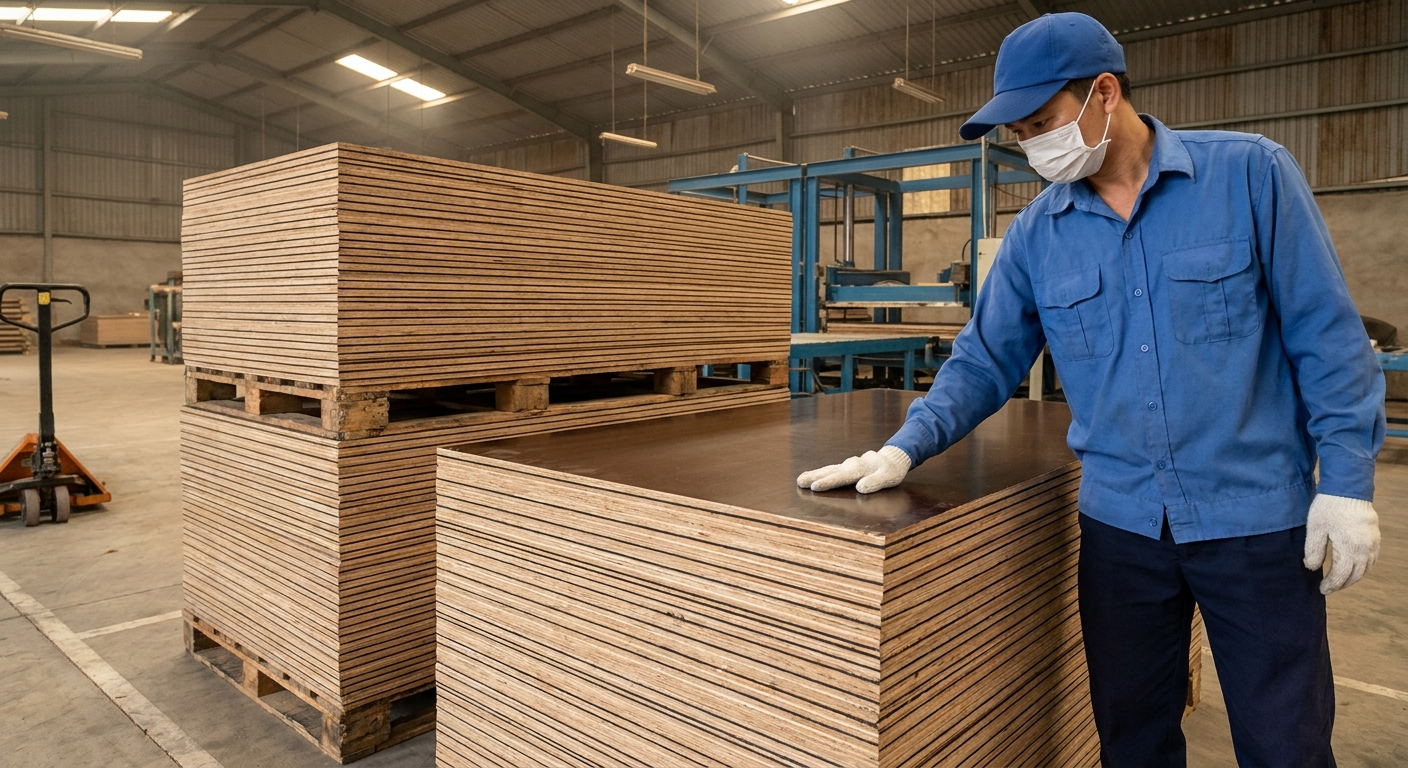
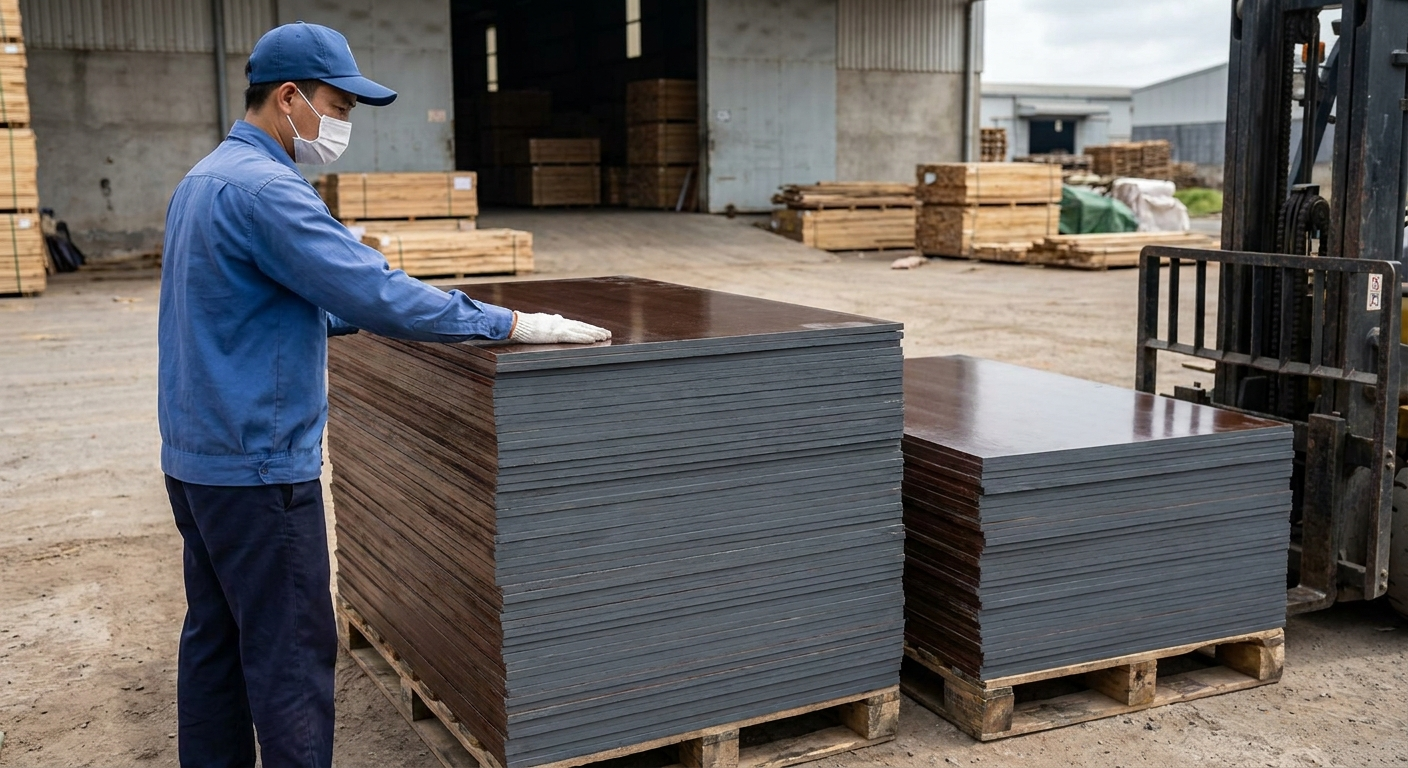
The picture flips the moment an element repeats. Walls, columns and suspended slabs on a multi-storey job get poured dozens of times against the same panel set, and that is exactly the condition reusable film-faced plywood is built for.
Reusable plywood wins on four fronts. First, repetition: a film-faced panel returns to the rack and goes up again, so its cost spreads across every pour rather than landing on one. Second, finish — a phenolic film face delivers a smooth, consistent fair-face concrete surface that mesh and EPS forms cannot match. Third, the cost-per-pour economics that follow from those reuses, covered in more detail in our piece on wall formwork plywood and the cost curve over multiple pours. Fourth, design control: you choose the contact face, the panel layout and the tie pattern, so the architectural result is yours to specify rather than a by-product of an off-the-shelf form.
Our customers in the UK and Australia who run repeat residential and commercial pours tend to land on plywood for the visible, repeating elements and keep permanent forms for the buried, one-off ones on the same project. It is rarely all of one or the other. For the forming-face fundamentals behind that choice, our guide to concrete form plywood covers face films, thicknesses and grades.
The cost question, framed honestly
The crossover between the two methods is a repetition count, not a fixed rule. Here is the shape of it.
Permanent formwork carries no striking labour and no recovery cost, but you pay the full material price for every square metre, every time, because the form is single-use. Reusable plywood carries a higher first cost per panel, plus the labour to strip and clean it, but that first cost divides across up to 20 pours for a phenolic panel. Below a handful of pours, the permanent form is usually cheaper. Above it, plywood pulls ahead and keeps widening the gap with each reuse.
The strike step is the hinge. Permanent forms delete it; plywood depends on it. If you want to understand how striking time and sequencing affect a reusable-panel programme, our note on formwork removal time and what controls it goes into the curing and cycle-time detail. We have watched plenty of UK contractors assume permanent formwork is the cheaper option across the board, when on a repeating superstructure the opposite is true once you count the pours. (Vinawood does not quote project pricing here — your panel supplier and groundworks contractor hold the real numbers.)
Sustainability: single-use against reuse
Permanent formwork is, by definition, consumed by one pour. Plastic mesh and EPS forms become embedded waste in the structure; that is acceptable where the alternative is more digging and more handling, but it is a single-use material footprint all the same.
A reusable plywood panel spreads its embodied impact across every pour it survives. Vinawood film-faced panels are made from FSC-certified plantation timber — Acacia, Eucalyptus and Hevea grown for the purpose, not cleared from natural forest — and a panel that reaches the end of its forming life can still be cut down for hoarding, edge protection or site joinery. The balanced read is simple: permanent forms cut handling and transport on the right jobs, while reusable panels cut material consumption on jobs that repeat. Neither is greener in the abstract; it depends on the pour count.
Decision matrix
| Scenario | Recommended method | Why |
|---|---|---|
| Pile caps, ground beams, trench fill | Non-participating permanent form | Form sits against soil; striking is impractical |
| Composite steel-frame floor | Participating permanent form (profiled decking) | Deck is both soffit form and reinforcement |
| Repeating walls and columns (multi-storey) | Reusable film-faced plywood | Cost-per-pour falls across up to 20 reuses |
| Fair-face / architectural concrete | Reusable phenolic plywood | Smooth, controllable contact finish |
| Congested or over-water access | Permanent form | No room or safe way to strike and re-rig |
| Short run, irregular one-off element | Permanent form | Too few pours to amortise a panel set |
Specifying the reusable side
If the job lands on reusable plywood, the panel grade should match how hard it will work. The reuse figures below are maximums under good site care — release agent applied, edges sealed, panels stored flat.
| Panel | Core glue | Standard | Face | Max reuse |
|---|---|---|---|---|
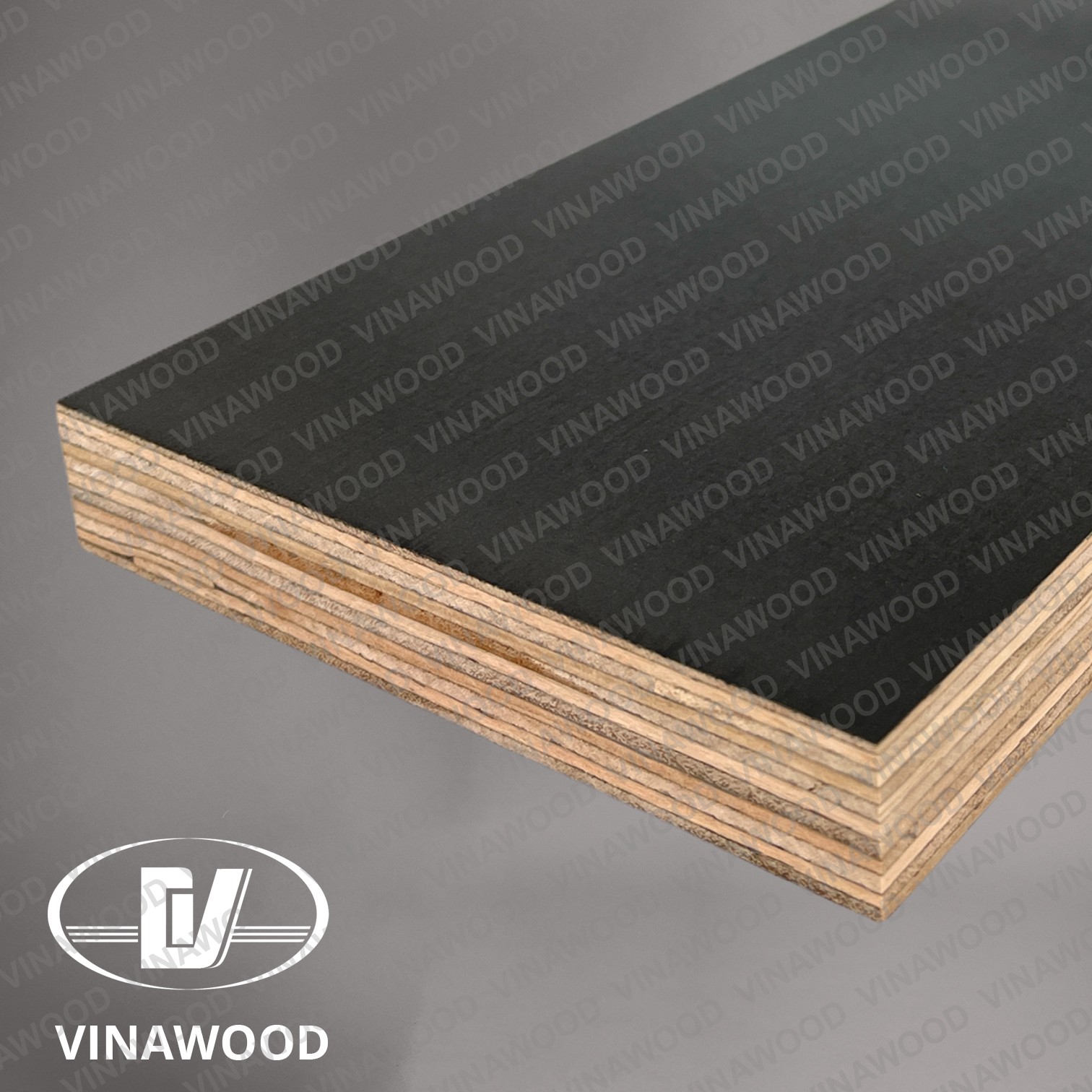
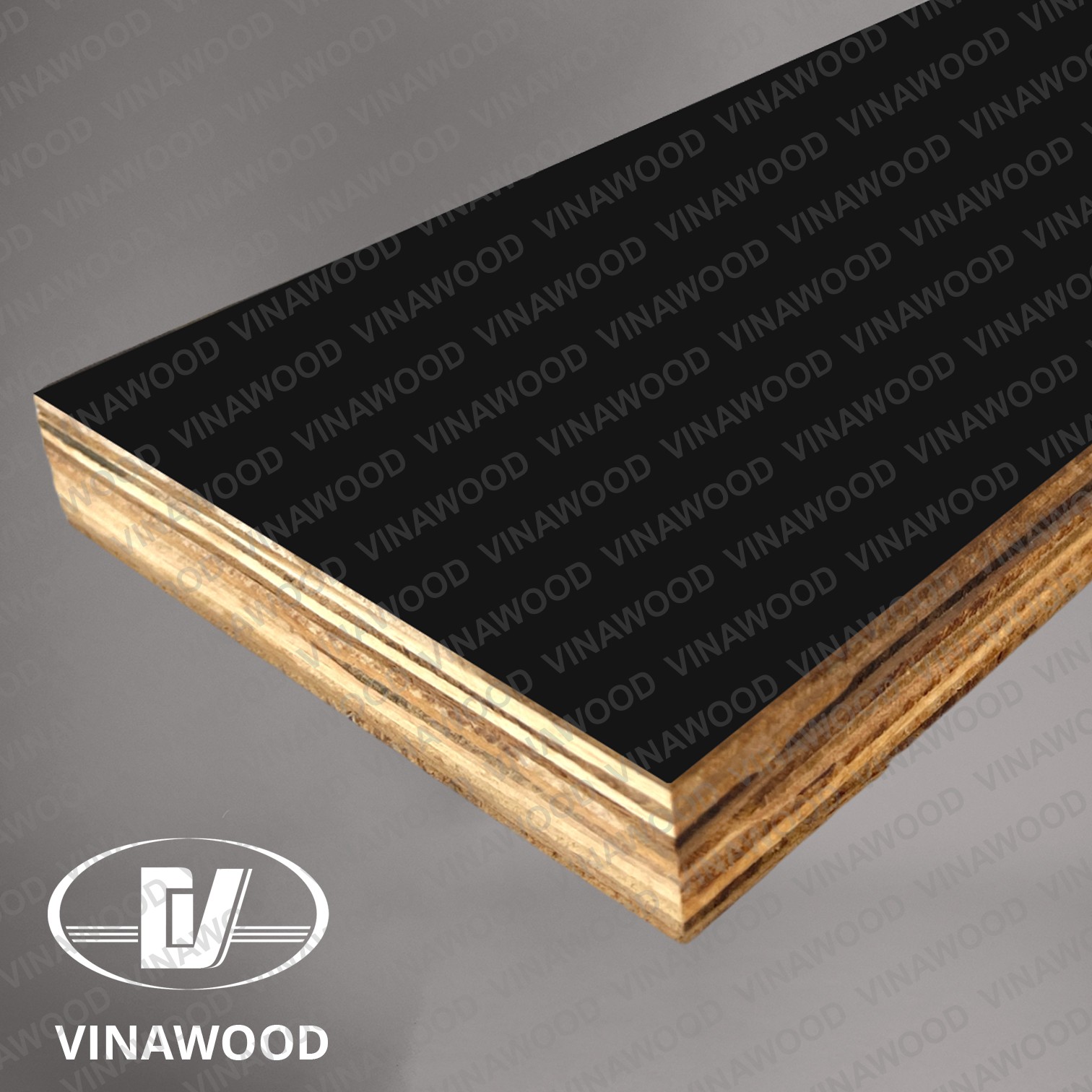
| Pro Form | WBP phenolic (PF) | EN 636-3 / Class 3 | Phenolic film, higher grade | up to 20 |
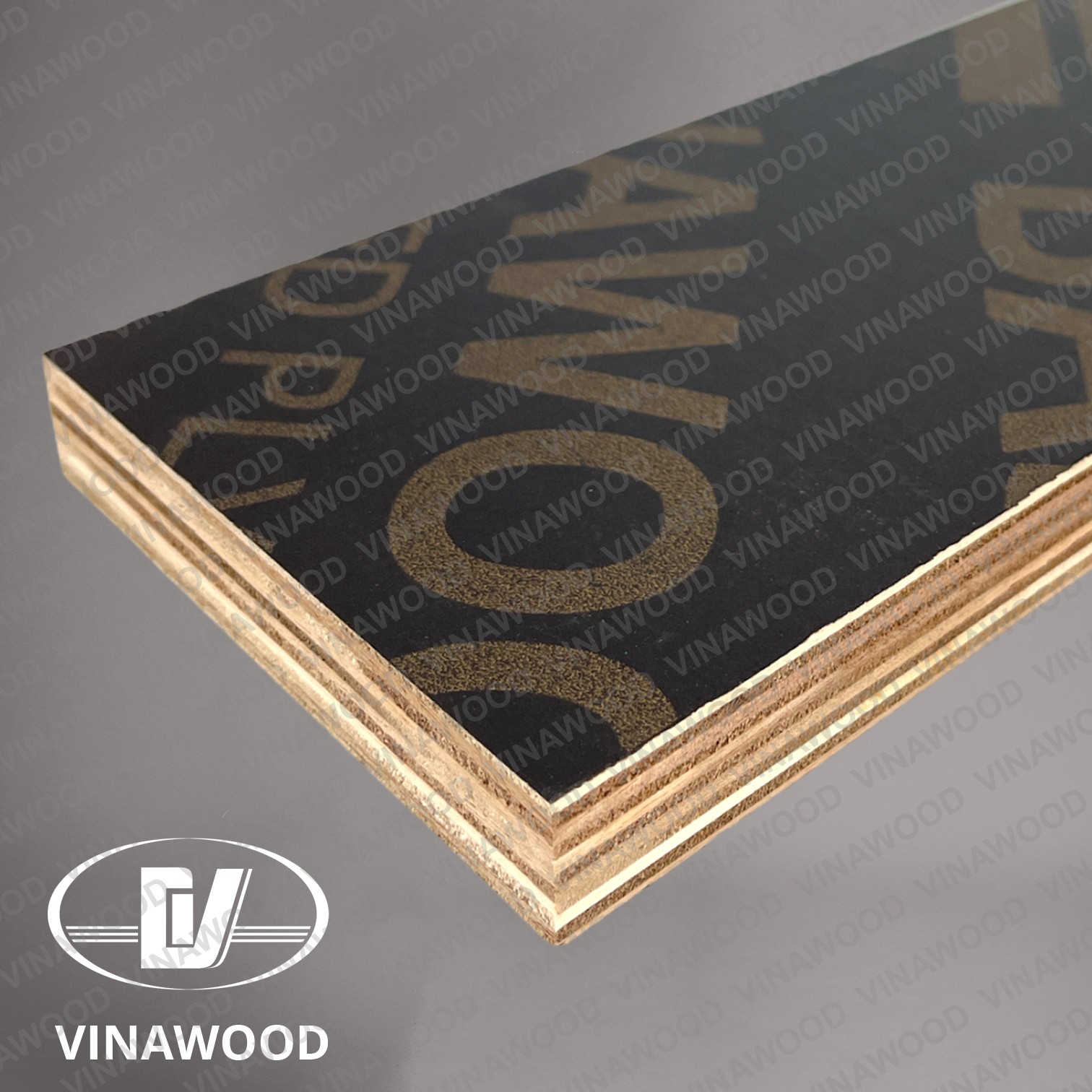
| Form Extra | WBP melamine core resin (MUF, higher-melamine-content glue) | EN 636-2 / Class 2 | Phenolic film | up to 15 |
| Form Basic | WBP melamine core resin (MUF) | EN 636-2 / Class 2 | Phenolic film | up to 10 |
For high-rotation walls and columns where the panel goes up and down dozens of times, the EN 636-3 phenolic-bonded board is the one to specify: Pro Form for European-standard work, and the HDO range for North American formply programmes. For shorter runs where the panel will not see 20 cycles, an EN 636-2 melamine-core panel such as Form Extra or Form Basic carries the same phenolic face at a lower entry cost. Form Extra's longer reuse life over Form Basic comes from a more durable, higher-melamine-content core glue, not from a heavier film — both carry the same phenolic face.
One point of accuracy worth holding onto: a melamine-core (MUF) formwork panel is weatherable at EN 636-2 and is a genuine formwork board, not the interior-grade "melamine" of kitchen carcasses. The two share a word and nothing else.
About Vinawood
Vinawood is a Vietnamese plywood manufacturer founded in 1992, shipping over 5,000 containers a year to 55+ countries. We make the reusable side of this comparison — film-faced and phenolic formwork plywood engineered for repeat pours — not permanent or lost-formwork systems. Every panel is built from FSC-certified plantation timber, inspected sheet by sheet, and backed by CE (EN 13986), UKCA, ISO 9001 and FSC chain-of-custody documentation for UK, EU and Australian projects. If you are weighing reusable plywood for a repeating superstructure, browse the Pro Form range or contact our team for grade guidance against your pour count.
Category
guides
Related Markets
Related Countries
Related Products
▶Sources & References (2)
- Formwork – Permanent — The Concrete Society (2024)
- Precast Concrete as permanent formwork — The Concrete Society (2024)