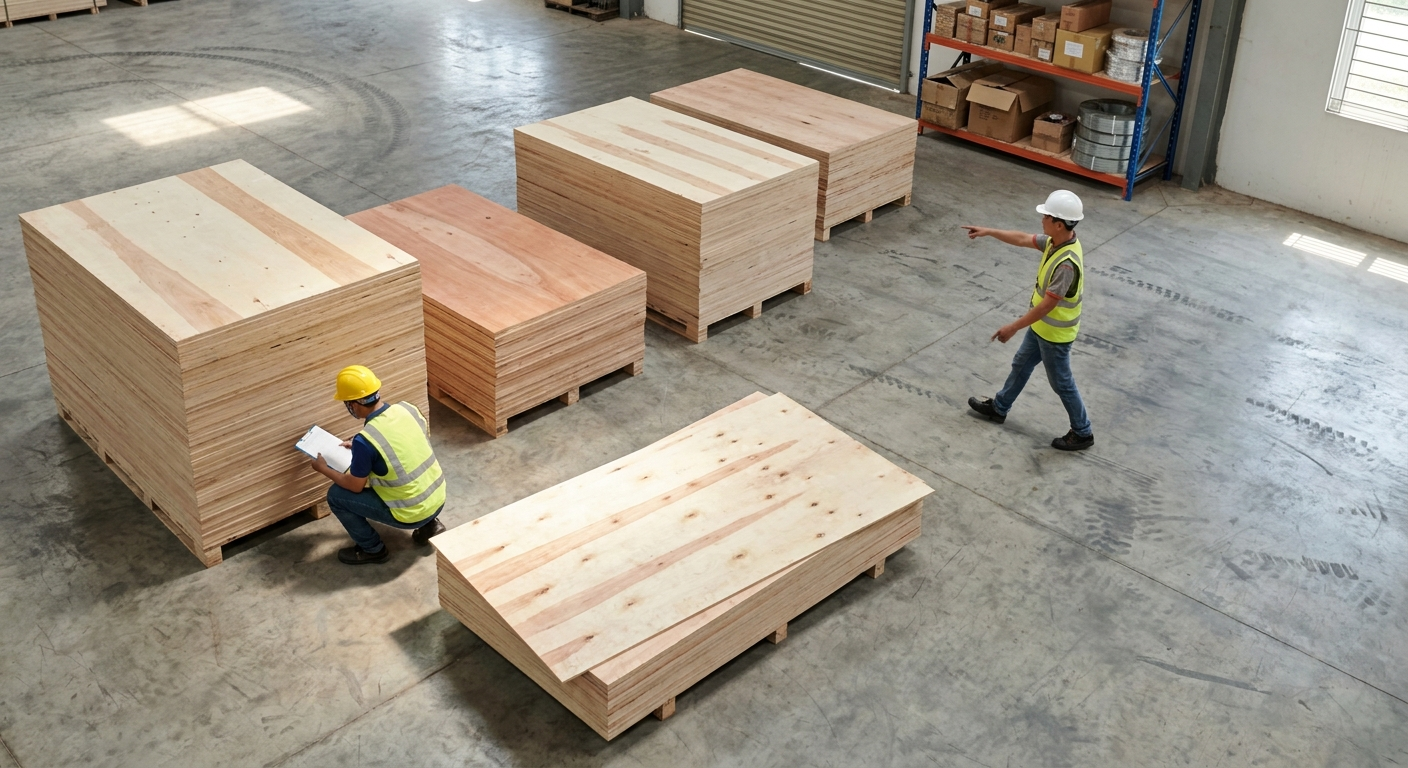
Plyboard vs Plywood: Which Is Better for Philippine Homes and Furniture?
Plywood and plyboard look similar at the hardware store but behave very differently in Philippine conditions. This 2026 builder's guide compares construction, strength, moisture resistance, and PHP retail pricing — and shows where each panel fits in Filipino homes, cabinets, and furniture.
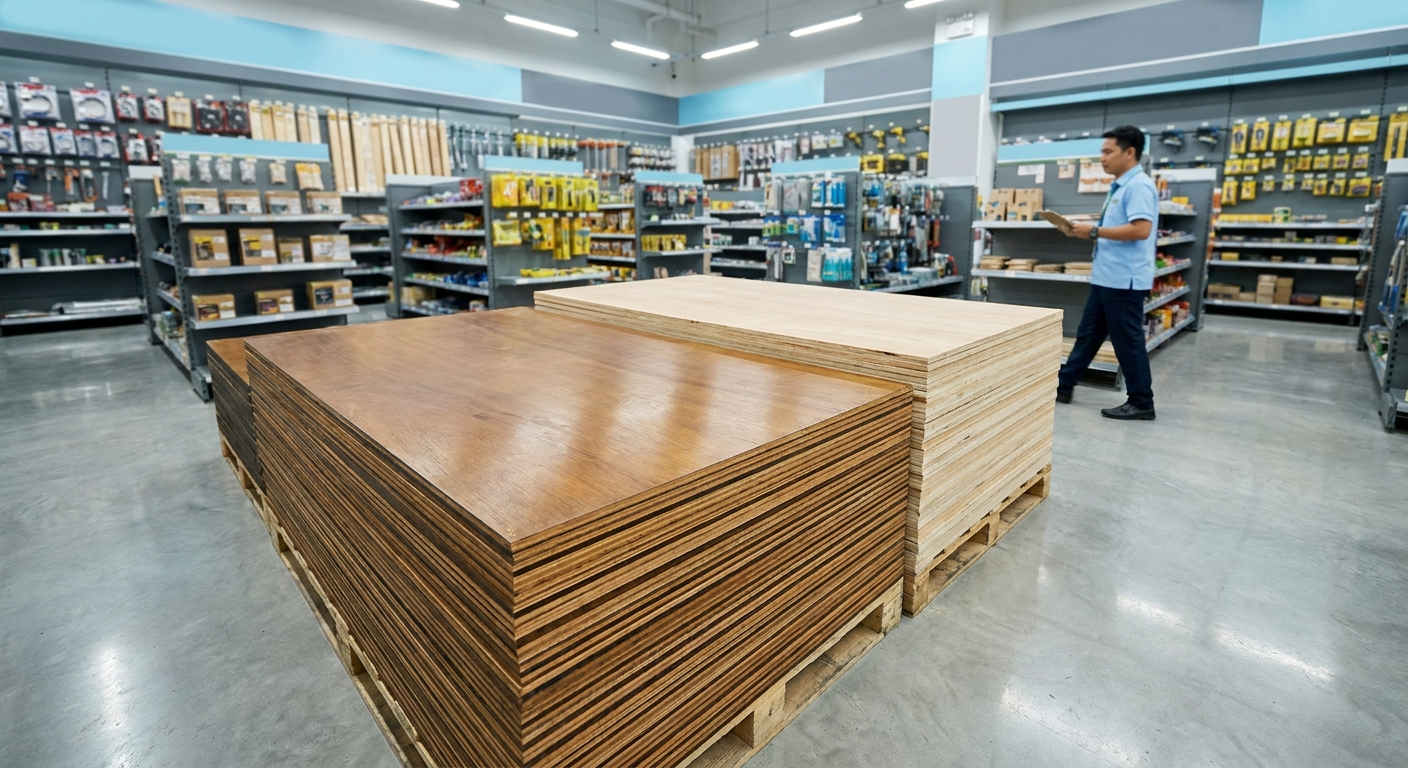
Our Manila distributor sees the same return order three times a year. A sari-sari shop owner in Quezon City uses 12 mm plyboard for kitchen base cabinets. Sixteen months later the doors no longer close square. The face veneers look fine. The softwood strips behind them are spongy from a slow leak under the sink. Plywood would have lasted a decade in the same spot. The price gap was about ₱260 per sheet at purchase. The repair cost the owner about ₱18,000 and a long weekend. We see this exact failure across the country every quarter, and almost every time it traces back to one decision at the hardware: the buyer picked the wrong panel for the room.
Plyboard and plywood look almost identical from the edge of a Wilcon stack. They behave very differently in PH humidity. This 2026 guide covers construction, strength, moisture behaviour, indicative PHP retail pricing in the table below, an application decision tree, and the four mistakes Filipino builders make most often. We're a Vietnamese mill exporting to the Philippines and 55+ markets globally.
What Is Plyboard? What Is Plywood?
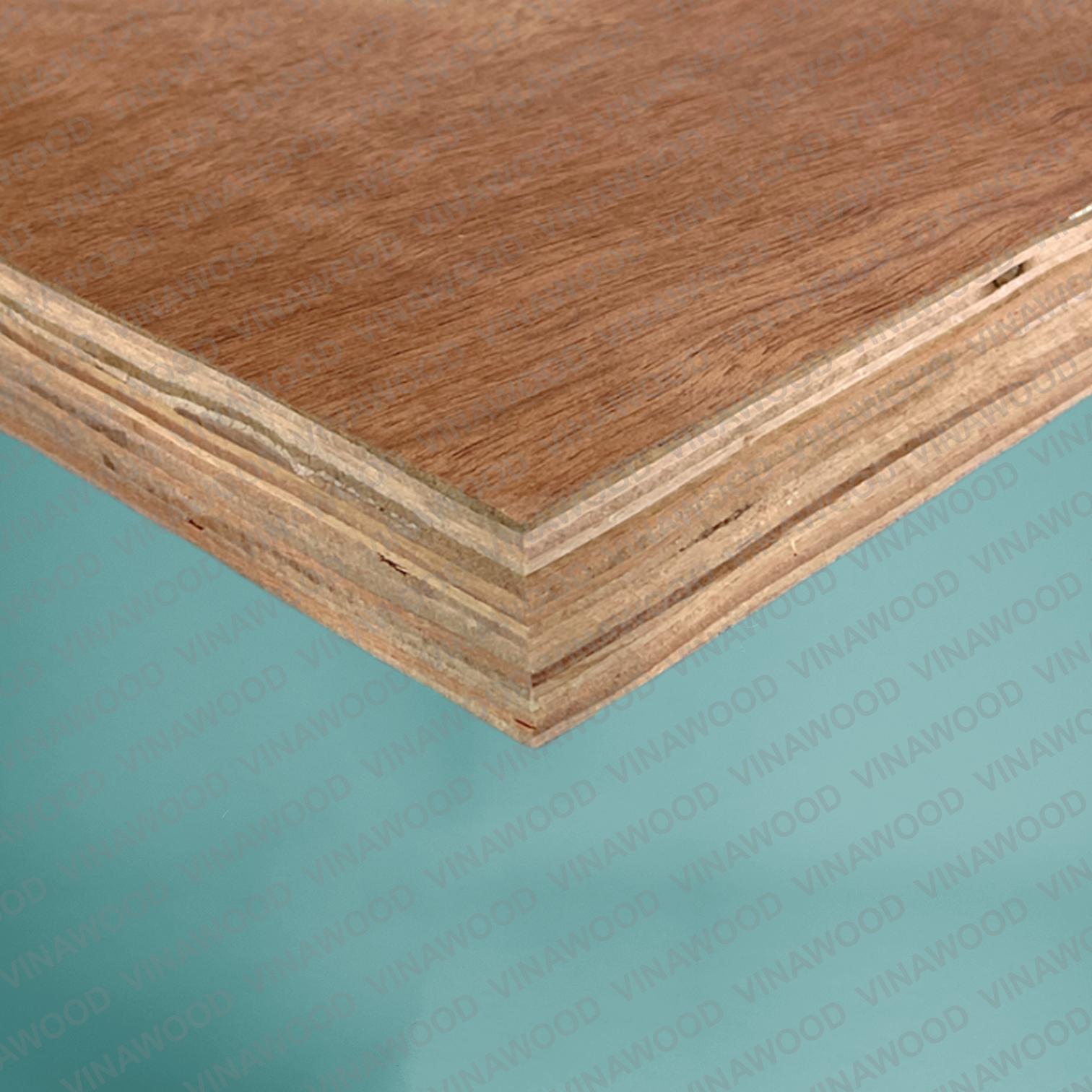
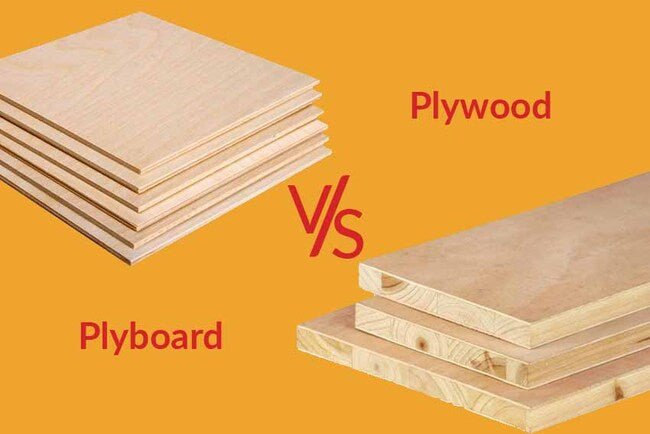
Plywood uses an odd number of thin wood veneers, usually 3, 5, 7, 9, or 11 plies. Each is laid with its grain perpendicular to the next, then hot-pressed together with adhesive. The cross-grain layup is what gives plywood its dimensional stability and bidirectional strength. The bond between veneers is rated by the adhesive used: urea-formaldehyde for interior-only panels, melamine for moisture-resistant grades, and phenolic resin for full WBP exterior service.
Plyboard, also called block board, is built around a core of solid softwood strips. The strips run typically 25 mm wide, edge-glued and laid in a single direction, sandwiched between two thin face veneers or thin plywood layers. The core does most of the structural work. The face veneers protect the softwood strips from minor impact and moisture and give the panel a smooth visible surface.
One important note for Filipino buyers. "Plyboard" in PH retail is the block-board construction described above. It is not hardiflex (fibre-cement, a completely different category, covered below). It is not plybamboo or any laminated bamboo product. When you ask for plyboard at a Philippine hardware, you are asking for block board with a softwood-strip core. Get the language right at the counter and the rest of the conversation gets easier.
For broader context on where plyboard sits among engineered panels, see our blockboard structure and applications guide and the global plyboard vs plywood comparison.
Construction Differences That Matter
Three construction differences drive almost every practical performance gap between the two panels. Layup direction is the first. Plywood's perpendicular veneer orientation distributes load in both directions across the panel, while plyboard's core strips run in one direction. So a plyboard shelf supported on its long edge can deflect more than the equivalent plywood shelf at the same thickness.
Weight is the second. A 4 × 8 plyboard sheet runs roughly 15 to 25% lighter than a same-thickness plywood sheet because the softwood strips are less dense than cross-laminated hardwood veneer. Lighter is sometimes a feature (partition cladding, wardrobe carcase) and sometimes a liability. The same softwood strips can swell, twist, and warp when wetted. Adjacent plies in plywood pull against each other and resist that movement.
Screw retention is the third. Plywood's many veneer plies and consistent glue lines give screws something to bite into across the entire panel thickness. Plyboard's softwood-strip core grips screws well in the strips themselves but poorly at the gaps between strips. For cabinet hinge plates, drawer slides, and any hardware that takes repeated stress, plywood is the more forgiving substrate.
Strength and Load-Bearing — How They Compare in Practice
For the Philippine homeowner, the practical strength comparison comes down to four common applications. On shelving, an 18 mm plywood shelf supported at 600 mm centres carries 25 to 30 kg without visible deflection, while the same span in 18 mm plyboard typically deflects 2 to 3 mm under the same load. For book-heavy shelves and pantry shelves carrying canned goods, plywood is the safer pick at the same thickness.
For cabinet boxes, 18 mm plyboard works well in dry conditions because the load is distributed to the carcase corners and back panel rather than spanning between supports. Plywood is preferred for kitchen cabinets specifically because of the moisture environment, not because of strength.
For partition framing, both panels work as non-load-bearing cladding when fixed to a stud frame. Plyboard's lighter weight is an advantage here. It reduces the load on the partition framing and makes installation easier for solo carpenters.
For subfloor and structural sheathing the answer is plywood only. Plyboard is not rated for structural floor or roof applications anywhere in international standards. Single-grain core construction does not handle the bidirectional loads in a building diaphragm.
Moisture Resistance — Critical for Philippine Climate
Average relative humidity across the Philippines runs 75 to 85% year-round, with kitchens and bathrooms regularly hitting 90%+ during cooking and bathing. Typhoon season brings driving rain that can find its way into wall cavities, soffits, and eaves. Any panel used in these conditions has to handle sustained moisture without delamination, swelling, or core rot.
This is where the bond class on the panel becomes the most important specification, not the panel type. Plywood and plyboard are both available in different bond grades, and the bond grade determines how the panel survives in PH humidity:
- MR (Moisture Resistant) / Interior bond. Urea-formaldehyde adhesive. Suitable for dry indoor furniture only. Will fail under sustained humidity above 70% RH.
- BWR (Boiling Water Resistant). Melamine-modified adhesive. Handles humid conditions and short exterior exposure. Acceptable for kitchen and bathroom cabinets in protected installations.
- BWP (Boiling Water Proof) / WBP (Water and Boil Proof). Phenolic adhesive. Full exterior service: sustained wetting, exterior soffits, formwork, and any high-humidity zone.
Genuine plyboard with a BWP-bonded core is rare in the PH market. Most retail plyboard uses MR or BWR adhesive on the softwood strips. Plywood is much more widely available across all three bond classes, including dedicated marine-grade and formwork-grade panels with BWP phenolic bond.
Practical rule: if the application sees moisture, ask for the bond class explicitly, not just the panel type. "Marine plywood" at PH retail typically means a BWR or BWP-bonded panel with denser core veneer. For the formal definition and how to verify genuine marine grade, see what marine plywood actually means and marine plywood vs regular plywood.
2026 Cost Comparison — What Filipinos Actually Pay
Indicative retail pricing for 4 × 8 ft (1220 × 2440 mm) panels in the Philippine market, mid-2026:
| Thickness | Ordinary Plywood | Marine / WBP Plywood | Plyboard (Block Board) |
|---|---|---|---|
| 1/2" (12 mm) | ~₱440–675 | ~₱900–1,200 | ~₱700–1,000 |
| 5/8" (15 mm) | ~₱600–850 | ~₱1,100–1,400 | ~₱950–1,400 |
| 3/4" (18 mm) | ~₱730–1,110 | ~₱1,300–1,700 | ~₱1,200–1,800 |
Indicative ranges only. Prices vary by retailer, brand, region (Metro Manila vs provincial), and date. Always confirm current quotes with your supplier before committing volume.
Pattern in this table: ordinary plywood is the cheapest, marine/WBP plywood and plyboard sit in a similar mid-tier range, and premium marine plywood reaches the upper end. For dry-zone interior projects where moisture is not a factor, plyboard often delivers acceptable performance at a price between ordinary and marine plywood. For project-scale procurement options, browse our marine plywood collection.
For deeper marine plywood pricing in the PH market, see marine plywood price in the Philippines 2026 and the broader plywood sizes Philippines reference.
Application Decision Tree
A practical decision tree for Philippine projects:
Choose plywood (preferably WBP-bonded) when:
- Building kitchen base or wall cabinets
- Building bathroom vanities or any cabinetry near plumbing
- Cladding exterior soffits, eaves, or any panel exposed to driving rain
- Building formwork for concrete pours
- Subfloor or roof sheathing in residential construction
- Any structural panel where bidirectional load matters
- Exterior signs and fascia panels
Choose plyboard when:
- Building interior wardrobes in dry, ventilated bedrooms
- Constructing bookshelves and study tables in protected interior locations
- Building lightweight partition frames covered by other finishes
- Door cores for interior solid doors
- Display panels in retail interiors away from entry-zone moisture
- Any project where weight reduction is a priority and moisture exposure is minimal
Common Mistakes Filipino Builders Make
The Quezon City sari-sari shop opener earlier in this article is the most common mistake we see, by a wide margin. Plyboard for kitchen base cabinets fails on a predictable timeline. Sink leaks, dishwasher splashes, and condensation underneath the kitchen sink rot the panel from the inside. Softwood strips swell within months of repeated wetting. The visible face veneers stay intact while the core fails behind them. By the time the cabinet door no longer closes squarely, the core is beyond repair. WBP plywood handles the same conditions for years.
The second mistake we see often: specifying interior-grade plywood for typhoon-exposed soffits. An MR-bonded plywood soffit looks fine from the ground but delaminates after the first major storm. The labour cost of stripping and replacing a soffit usually exceeds the price difference between MR and WBP grades on the original specification.
The third is assuming all hardware-shop "marine plywood" is genuinely waterproof. The term in PH retail typically describes a BWR or BWP-bonded panel, not the strict BS 1088 international marine standard. The label is honest enough for kitchens and bathrooms. It does not mean the panel is suitable for permanent water immersion or boat building. Read the bond class on the spec sheet, not just the brand label.
The fourth is confusing plyboard with hardiflex. Filipino DIYers occasionally substitute hardiflex (fibre-cement board) for plyboard, or vice versa. They are not interchangeable. Hardiflex is rigid, mineral-based, and designed for wet wall cladding and ceiling lining; it is not a load-bearing panel and cannot be used for cabinet boxes or shelving. Plyboard is a wood panel and behaves like wood.
What About Hardiflex, OSB, MDF, and Particle Board?
Hardiflex is fibre-cement board: a different category, cement-bonded fibre rather than wood. Used for wet-area wall cladding, ceiling lining, and exterior siding where moisture is constant. Not a substitute for plywood or plyboard in cabinetry or shelving applications.
OSB (Oriented Strand Board) is compressed wood strands aligned in cross-banded layers. Common in North American sheathing applications but rare in PH retail. Where available, can substitute for structural plywood in roof and wall sheathing at lower cost. Not suitable for visible cabinet faces. For the formal comparison see our OSB vs plywood guide.
MDF (Medium Density Fibreboard) is a compressed wood-fibre board with a smooth, paint-ready surface. Excellent for indoor furniture faces, painted cabinet doors, and decorative mouldings. Poor moisture tolerance. MDF swells permanently when wetted. Not a substitute for plywood in any humid application. See what is MDF for the construction comparison.
Particle board is the lowest-cost compressed wood-particle panel. Common in budget flat-pack furniture. Should be assumed not moisture-tolerant unless specifically rated.
Plywood remains the most versatile choice across the widest range of Philippine applications, with plyboard a sensible cost-saver for dry interior projects.
Buyer's Checklist Before You Pay
A quick six-point inspection at the hardware before you commit to a stack:
- Check the core type at the cut edge. Plywood shows continuous veneer plies; plyboard shows the solid softwood strips. Confirm you are buying what the price tag describes.
- Check the adhesive grade on the brand stamp or spec sheet. MR for indoor only; BWR for humid conditions; BWP for sustained moisture and exterior service.
- Check thickness consistency along the panel. A uniform sheet thickness within the EN 315 tolerance band (+0.7 / –0.9 mm on 18 mm sanded panels) indicates good QC. Sheets that taper or vary by 2 mm or more across the panel signal weak production.
- Check the edge condition. No visible voids, no large gaps in the glue line, no crushed or splintered corners. Edge integrity is the best single indicator of overall panel quality.
- Check the brand and any certifications. Genuine certifications under PNS 196:2022 (Philippine National Standards for plywood) or international standards like FSC, EN 13986, IS 303 carry traceable certificate numbers. Verify with the certifying body when buying premium grades.
- Get a sample piece of the actual stock. Not the showroom display panel. The stock from the stack you will be paying for. Quality varies between batches, and a sample lets you check colour match, face grade, and edge quality before committing.
Plyboard and plywood both have a place in Philippine homes, but they are not interchangeable. Match the panel to the application, check the bond class explicitly for any moisture-exposed surface, and verify quality at the cut edge before paying. Get the specification right at the hardware and the panel will outlast many of the cabinets you put it into.
Category
guides
Related Markets
Related Countries
Related Products
▶Sources & References (5)
- PNS 196:2022 — Plywood Specifications — Bureau of Philippine Standards (BPS) (2022)
- IS 303 — Plywood for General Purposes — Bureau of Indian Standards (BIS) (2017)
- EN 636:2012+A1:2015 — Plywood Specifications — European Committee for Standardization (CEN) (2015)
- PHILCON Prices — Construction Material Prices in the Philippines — PHILCON Prices (2026)
- PAGASA — Climate of the Philippines — Philippine Atmospheric, Geophysical and Astronomical Services Administration (2024)
![Marine Plywood Price in the Philippines [2026]: Per-Sheet Cost by Thickness, Brand & Application](https://kvwcunpmdrfnpzuibkdq.supabase.co/storage/v1/object/public/site-public/media/blog/3a51b653-1da2-41c8-a399-37fc913dbc13/marine-plywood-price-philippines-2026-featured-v2-20260429-b03e55.png)