Plywood for Hungarian Construction: Rétegelt Lemez Supplier
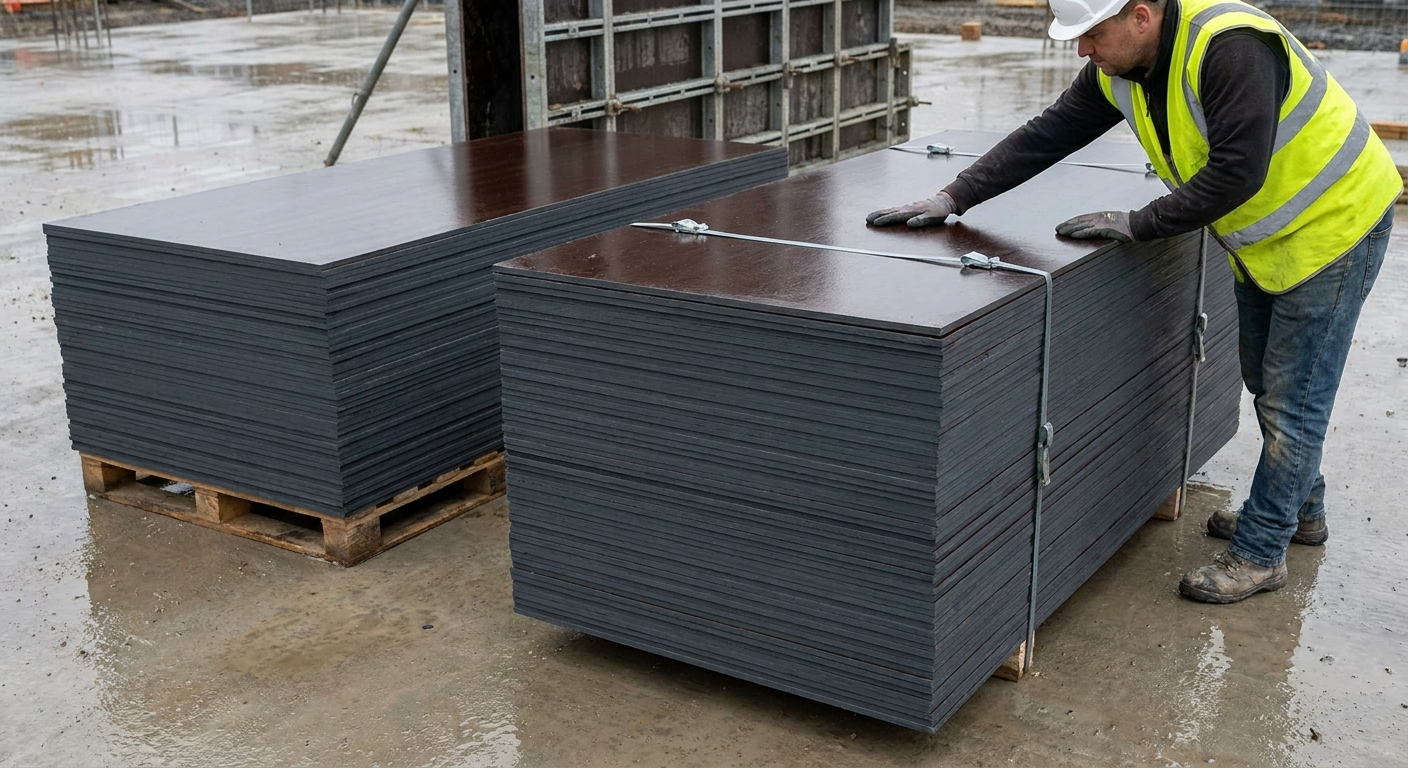
Vietnam film-faced plywood supplier for Hungarian construction. Vinawood rétegelt lemez panels meet EN 636-2 and EN 636-3, come in the 2500x1250mm EU format and ship via Koper to Budapest, quoted FOB or CIF on request.

Hungary's Construction Sector and the Demand for Quality Formwork Plywood
Hungary's construction industry has expanded rapidly over the past decade, driven by EU-funded infrastructure programmes, residential development in Budapest and regional cities, and a growing wave of commercial and industrial projects. Hungarian contractors working on reinforced concrete structures — from apartment blocks in Pest to logistics centres along the M1 corridor — need reliable formwork plywood that delivers clean concrete finishes and holds up across multiple pour cycles.
The domestic Hungarian timber market is dominated by European distributors and a handful of regional importers. Retail pricing for quality film-faced formwork panels (rétegelt lemez) in Hungary tends to reflect the margins of multi-step supply chains running through Austria or Germany. For contractors and importers buying at project scale, direct sourcing from a certified manufacturer in Vietnam offers a compelling alternative — EN 636-certified panels at factory pricing, shipped in EU-standard 2500x1250mm format.
Hungarian Plywood Terminology: Rétegelt Lemez, Furnérlemez, Zsaluzó Lemez
Hungarian construction vocabulary for plywood and formwork boards uses terms that can be unfamiliar to international suppliers. Here is a practical reference:
- Rétegelt lemez — The general Hungarian term for plywood (literally: layered board). This is the most commonly searched term and covers all plywood types, including formwork-grade panels.
- Furnérlemez — Veneer board / veneer plywood. Used interchangeably with rétegelt lemez in many contexts, though technically it emphasises the veneer construction method.
- Zsaluzó lemez — Shuttering board / formwork plywood. This is the specific term for plywood panels used in concrete formwork — equivalent to the English term shuttering plywood or the German Schaltafel.
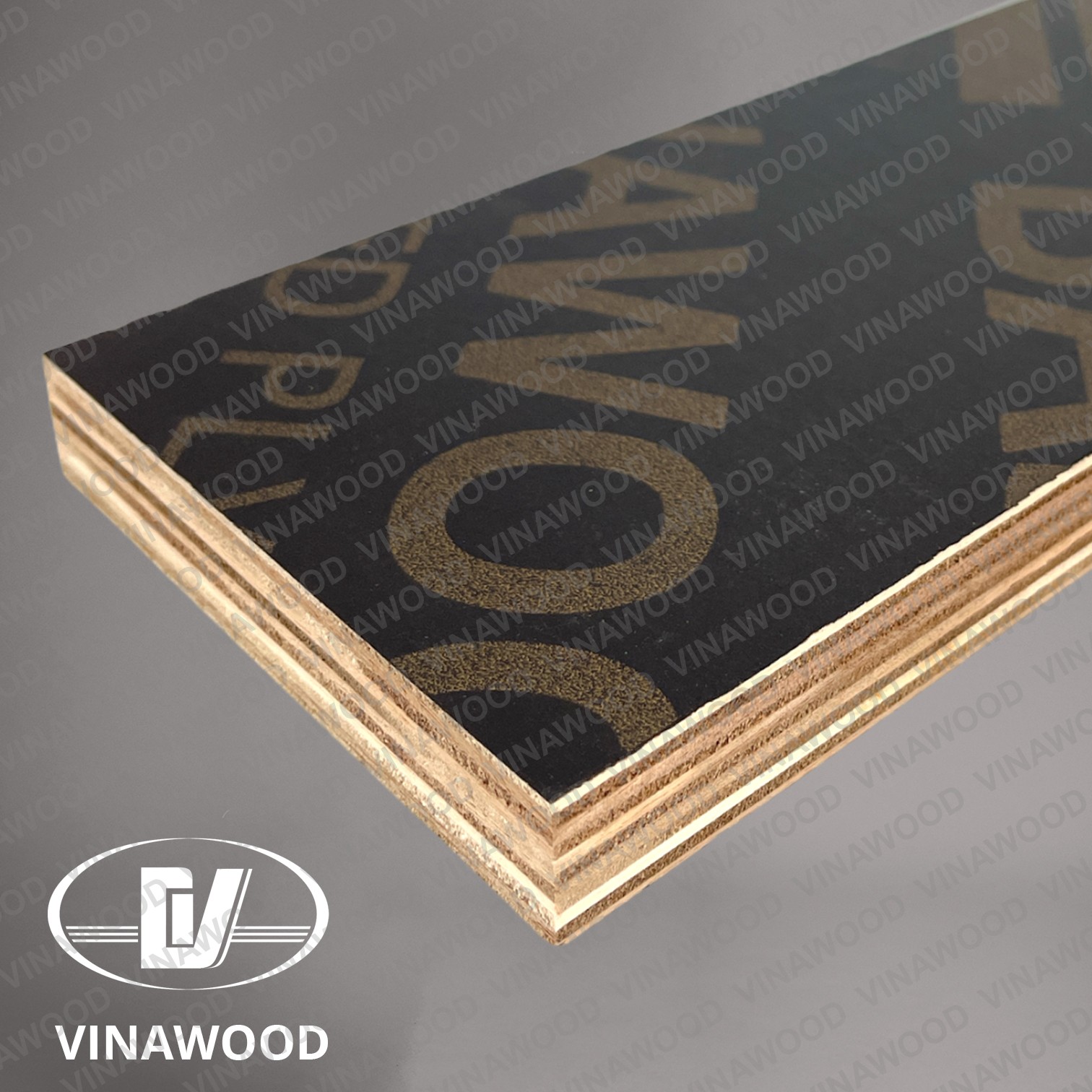
- Filmrétegelt lemez — Film-faced plywood. The Hungarian name for panels with a phenolic resin film overlay on the face — exactly what Vinawood manufactures for formwork applications.
- Víz- és időjárásálló rétegelt lemez — Weather and boil proof (WBP) plywood. This is the phenolic glue class behind EN 636-3 bond quality; the melamine (MUF) grades sit at EN 636-2.
When sourcing from Vietnam, Hungarian buyers should specify filmrétegelt lemez or zsaluzó lemez with the EN 636 class written on the order: EN 636-3 with WBP fenol ragasztó (WBP phenolic adhesive) where the work needs Class 3, or EN 636-2 for standard formwork.
Vinawood Film Faced Plywood for Hungary
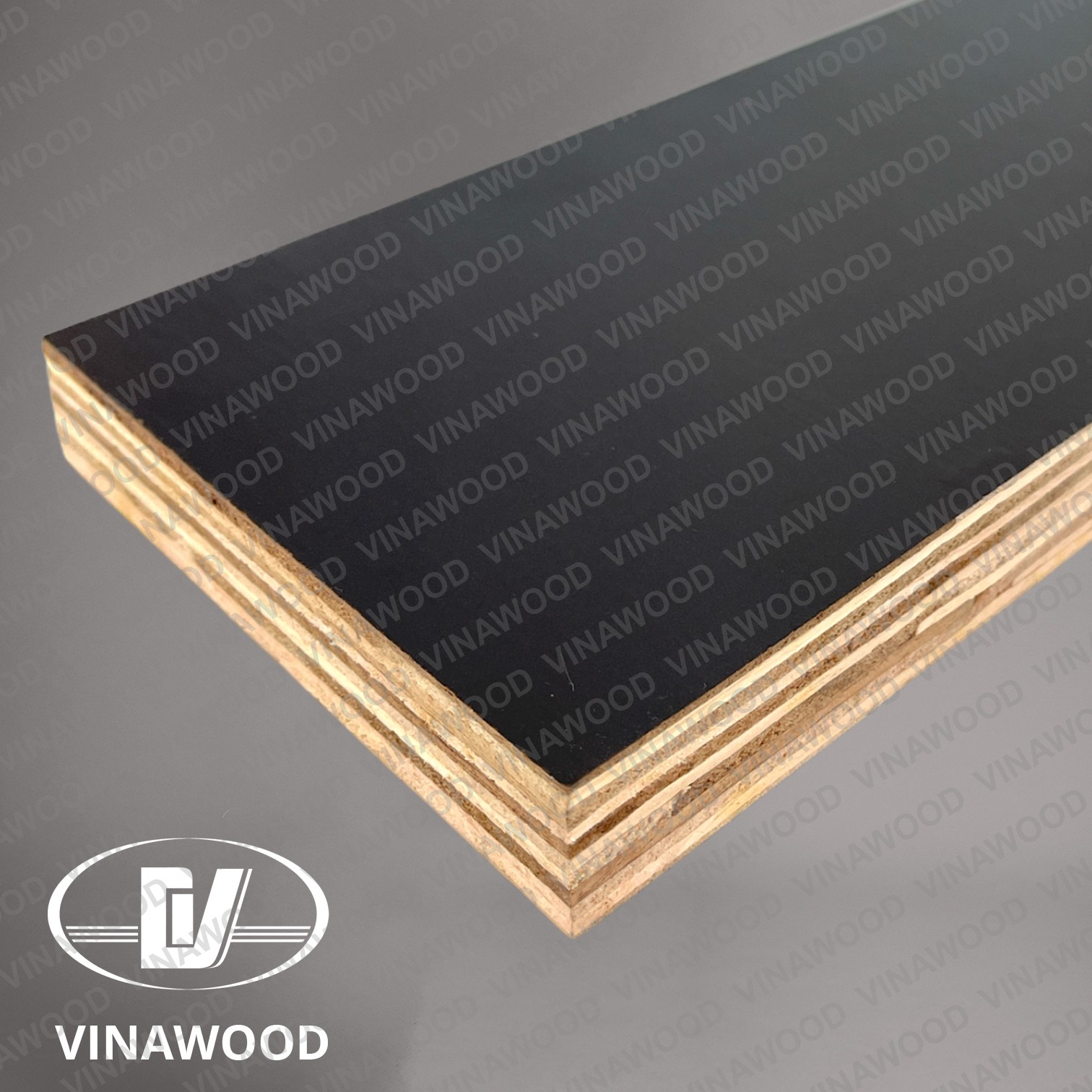
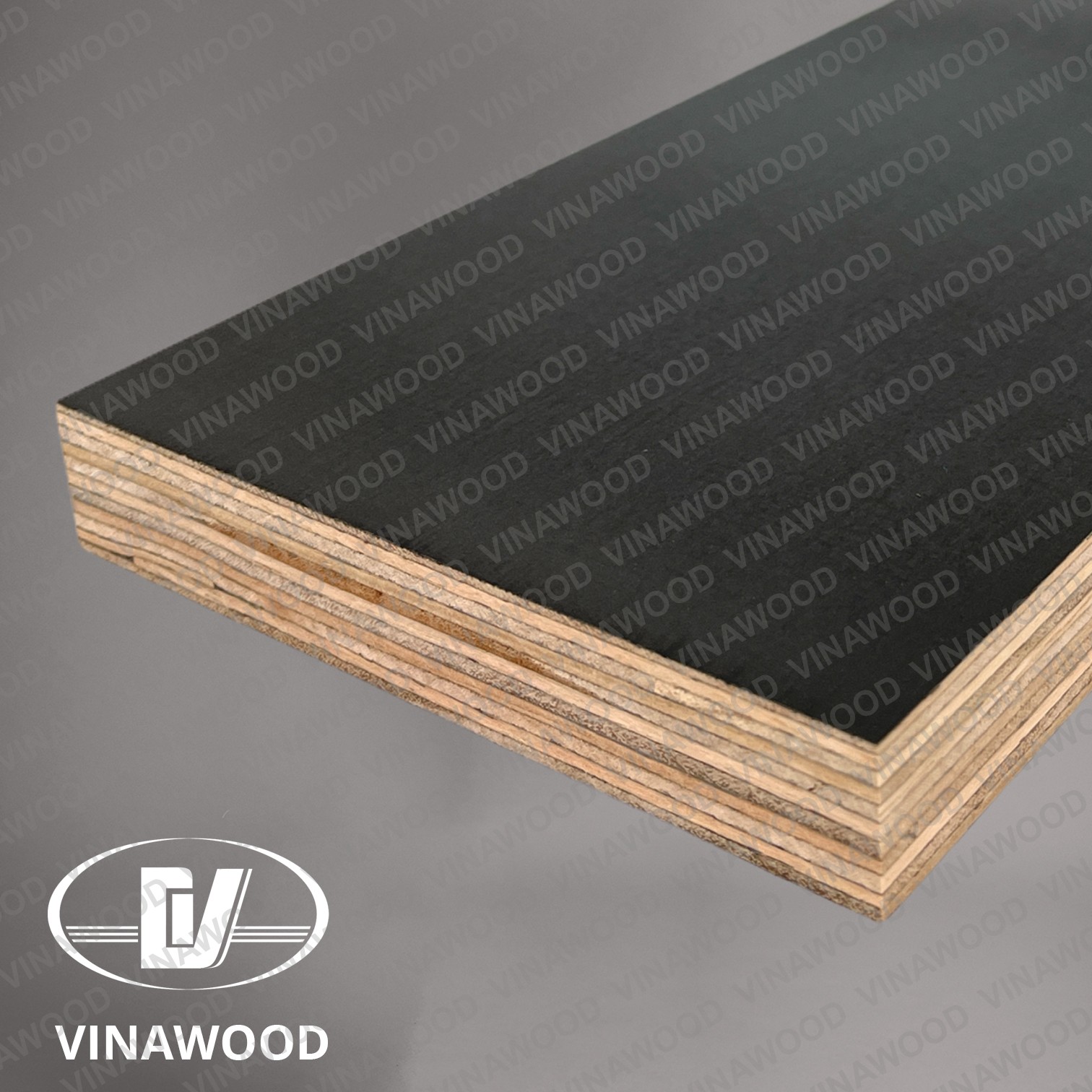
Vinawood manufactures three film-faced plywood grades suited to the Hungarian and Central European construction market. Eco Form Plus and Form Basic use a melamine (MUF) core glue at EN 636-2, Class 2, while Pro Form uses WBP phenolic glue at EN 636-3, Class 3. EU-standard 2500x1250mm sheet sizes are available across all grades — matching the metric dimensions used in Hungarian construction planning.
| Product | EN Standard | Face Film | Reuse Cycles | Thickness Range | Best Application |
|---|---|---|---|---|---|
| Eco Form Plus | EN 636-2 | 165 g/m² | up to 8 | 12–21 mm | Budget residential projects |
| Form Basic | EN 636-2 | 165 g/m² | up to 10 | 12–21 mm | Standard commercial formwork |
| Pro Form | EN 636-3 | 125 g/m² | up to 20 | 12–21 mm | Heavy infrastructure, high reuse |
All grades available in 2440x1220mm (standard) and 2500x1250mm (EU format). 18mm is the most popular specification for Hungarian contractors.
EN Standards and Hungarian Building Regulations
Hungary, as an EU member state, follows the harmonised European standards for construction products. The key standards governing formwork plywood are:
EN 636 — Plywood for Structural Use
EN 636-2 covers plywood for use in humid conditions (interior formwork, protected exterior). EN 636-3 covers panels for full exterior exposure and high-moisture environments. Both grades are essential for concrete formwork. Vinawood Form Basic and Eco Form Plus meet EN 636-2; Pro Form meets EN 636-3.
EN 13986 — Wood-Based Panels for Construction
This harmonised standard allows wood-based panels bearing CE marking to be used across all EU member states without additional national approval. Products compliant with EN 13986 can be specified directly in Hungarian building permits and tenders referencing the Construction Products Regulation (CPR).
Hungarian National Building Standards (MSZ)
Hungary's national standards body (MSZT — Magyar Szabványügyi Testület) adopted the EN framework. While older MSZ references may appear in legacy specifications, EN 636 and EN 13986 are the current governing standards. Contractors can reference EN-certified panels directly in Hungarian building documentation without additional MSZ conversion.
Formaldehyde Emission
Formaldehyde emission class is stated per grade on the mill certificate: the phenolic Pro Form is listed at E1 and the MUF-bonded grades at E2, so confirm the class your project requires on the quote, along with any emission test report a tender asks for. Vinawood's certification list also includes EPA TSCA Title VI (CARB Phase 2) and FSC chain of custody; ask for the certificate that covers the grade you order.
Construction Applications in Hungary
Film-faced plywood from Vinawood serves a wide range of Hungarian construction applications:
- Lakóépület zsaluzás (residential formwork): 18mm panels for wall, column, and slab formwork in apartment buildings and housing developments across Budapest, Debrecen, Szeged, and regional cities.
- Ipari és kereskedelmi építkezés (industrial and commercial construction): Warehouse foundations, factory floors, logistics centres along the M1 and M3 motorway corridors — large-volume projects where the cost advantage of direct import is most significant.
- Infrastruktúra (infrastructure): Bridge abutments, retaining walls, utility tunnel formwork. EN 636-3 certified Pro Form is specified for ground-contact and high-moisture applications.
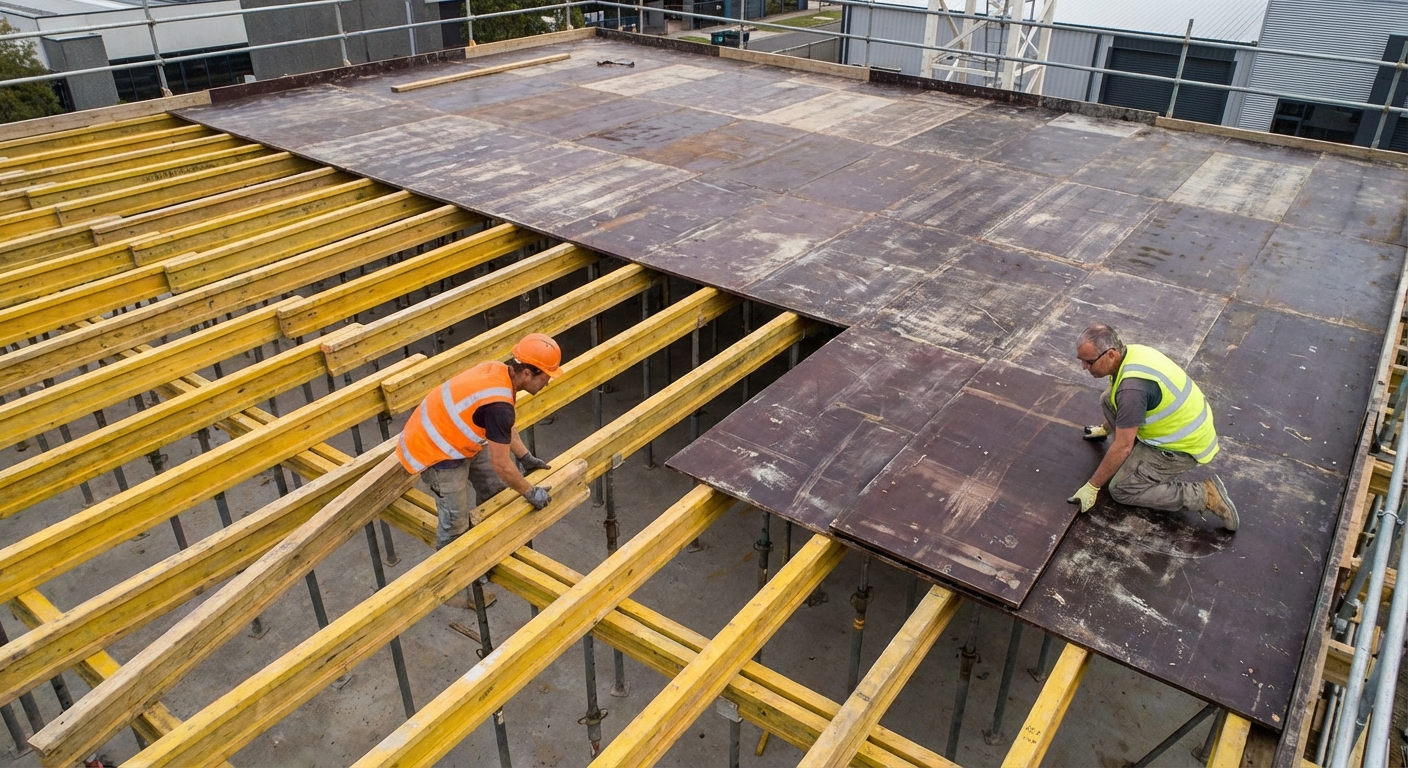
- Födém zsaluzás (slab formwork): Horizontal slab pours using 18-21mm panels. Pro Form's up to 20 reuse cycles reduce per-pour panel costs significantly on multi-storey projects.
- Oszlop zsaluzás (column formwork): Custom-cut panels for square and rectangular concrete columns in commercial buildings.
For a comprehensive overview of formwork plywood types and their applications, see the formwork plywood guide.
Cost Comparison: Direct Import vs. European Wholesale
Hungarian buyers who purchase through Austrian or German distributors pay for each step in that chain, so a direct container is worth pricing at project scale. Retail and merchant prices for single sheets are not a like-for-like benchmark for a container order, so the useful comparison is cost per pour: the landed price of a panel at the grade and thickness you need, divided by the pours your crews actually get from it. A grade that costs more but lasts longer often comes out cheaper per cast. Pro Form is rated for up to 20 reuses against up to 10 for Form Basic, which is why the phenolic grade can be the cheaper choice per pour on long programmes. Vinawood quotes FOB or CIF per grade and thickness on request through the RFQ form.
Payment terms are confirmed on your quotation. Order size and container loading are confirmed on your quotation, and several grades and thicknesses can share one container.
Logistics: Shipping to Hungary
Hungary is landlocked, so plywood imports arrive via nearby Adriatic or North Sea ports with onward road or rail transport:
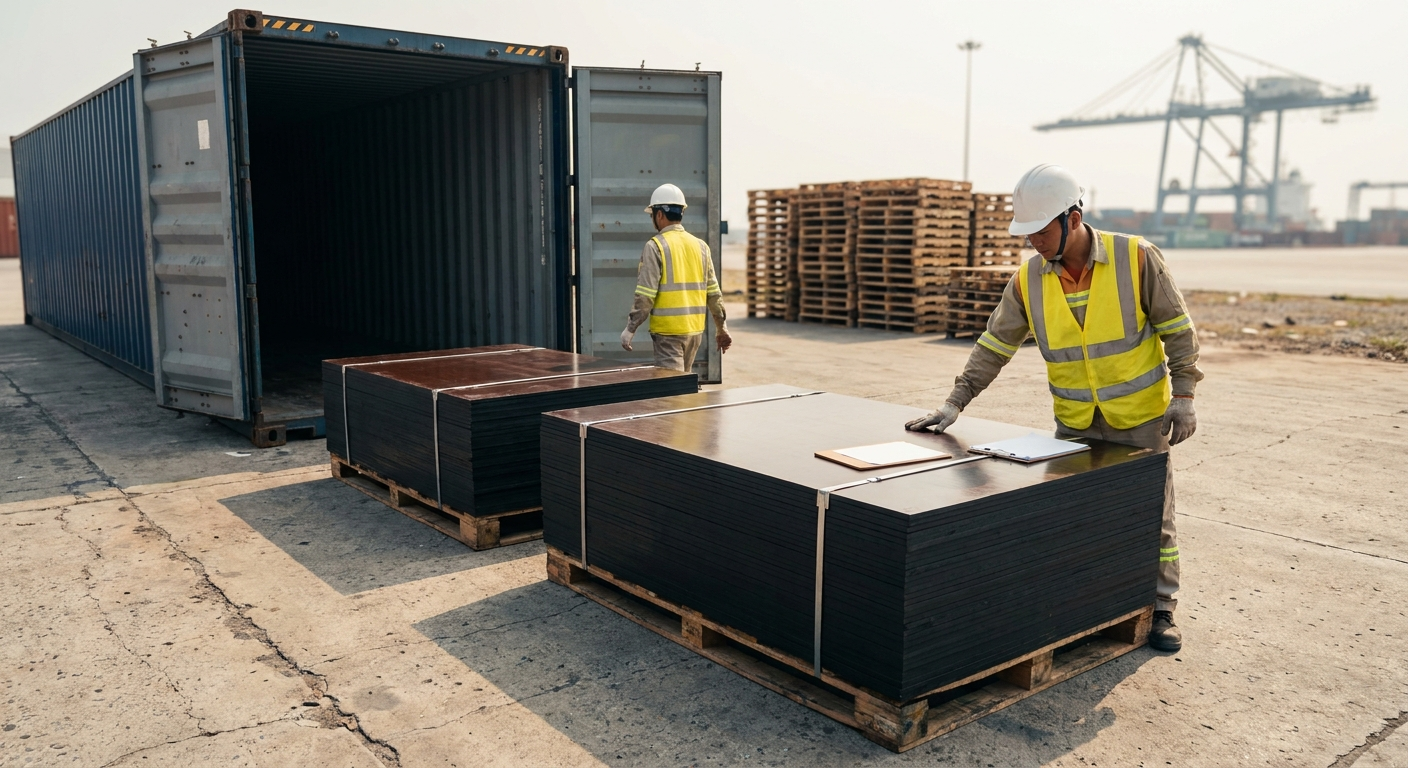
- Primary route — Koper (Slovenia) or Trieste (Italy): Transit time from Ho Chi Minh City or Hai Phong is approximately 25–30 days ocean, plus 1–2 days trucking to Budapest. This is the fastest and most cost-effective route for Hungarian buyers.
- Alternative route — Hamburg (Germany): 28–35 days ocean transit via Singapore or Port Klang, then 2–3 days road transport south to Budapest. Suitable for buyers who consolidate with other European orders.
- Alternative route — Constanța (Romania): Black Sea routing via Suez — approximately 22–28 days ocean. Overland trucking to Budapest takes 1–2 days. An emerging route for Central and Eastern European deliveries.
Standard shipping terms are FOB (buyer arranges ocean freight and inland transport). CIF Budapest (via Koper) is available on request. The HS code is 4412.31 or 4412.33 (plywood of wood veneer sheets; confirm the exact subheading with your customs broker). Hungarian customs clearance follows standard EU import procedures — no additional national duties beyond the common EU external tariff.
Why Hungarian Contractors Are Sourcing from Vietnam
Several factors are driving Hungarian construction companies to look beyond traditional Austrian and German distributors for their formwork plywood supply:
- Shorter supply chain: buying direct from the mill removes distributor steps, and the landed quote can be compared line by line with Central European wholesale pricing.
- EU-format sizing: 2500x1250mm panels match Hungarian metric construction drawings without custom cutting or waste.
- Full certification: EN 636, EN 13986, CE marking documentation, mill certificates, and Declarations of Performance provided for building authority submissions.
- Reuse performance: A phenolic film face over the right core glue delivers clean concrete release and consistent reuse counts — critical for contractors managing formwork inventories across multiple projects.
Request a Quote — Rétegelt Lemez for Hungarian Construction
Vinawood supplies film-faced formwork plywood to construction companies, timber importers, and building material distributors across Hungary. Our team provides EN 636-certified panels at factory-direct pricing with full documentation for Hungarian building authority compliance. Explore our European formwork plywood range:
Category
guides
Related Markets
Related Products
▶Sources & References (3)
- EN 636: Plywood Specifications — CEN European Committee for Standardization (2012-01-01)
- EN 13986: Wood-based panels for use in construction — CEN European Committee for Standardization (2004-01-01)
- Construction Products Regulation (CPR) — EU 305/2011 — European Parliament and Council (2011-03-09)