Reveal 5 Most Common Issues With Vietnam Plywood
The five defects that most often spoil a Vietnamese plywood order, from mould and thin sheets to delamination, weak glue and transit damage, and what to write into the spec to stop each one.
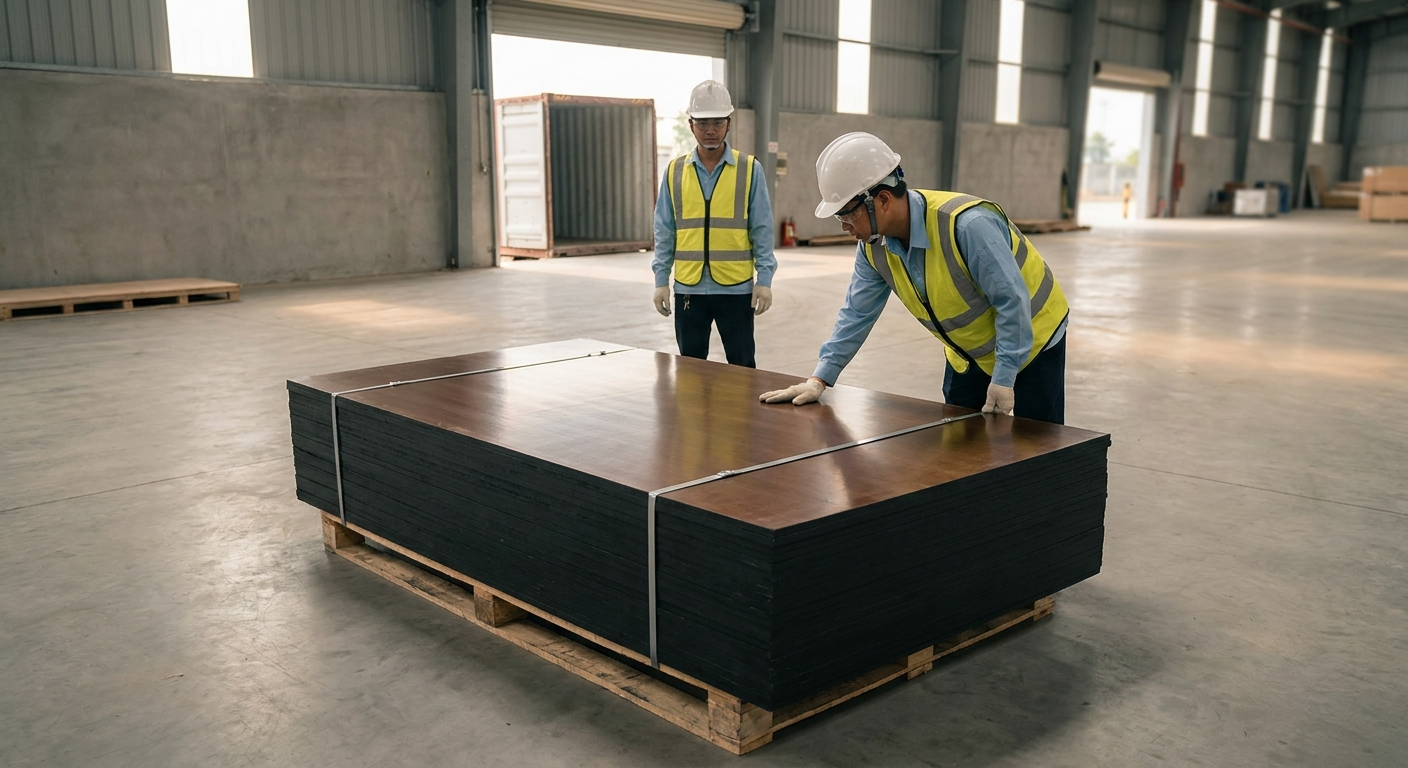
Plenty of Vietnamese plywood arrives in perfect shape. Some doesn't. And when a container does go wrong, it's nearly always one of the same five things: mould, sheets thinner than the order said, plies coming apart, glue that can't take the weather, or bundles that got knocked about on the way. None of these is a mystery. Each has a cause inside the mill, and each has a fix you can put into the purchase order before a single veneer is peeled.
We've made construction plywood in Vietnam since 1992, and we ship around 5,000 containers a year to 55+ countries. So yes, we've seen all five, sometimes from the wrong side of a claim. If you're trying to separate myth from fact about Vietnamese plywood in general, our piece on five common misconceptions covers the beliefs. This one sticks to real defects and what stops them.
1. Mould and moisture
You crack the container doors and there's a grey bloom on the faces. Or a musty smell coming from the middle of a bundle. Mould on plywood almost always goes back to veneer that went into the press too wet; when the drying stage gets rushed (or skipped on a cheap grade to save money), the water locked in the core has nowhere to go once the bundle is wrapped and shut inside a hot steel box for weeks.
So start on paper. Put a moisture content limit on the PO, and ask the mill how it dries veneer before you ask about price. Our spec sheets list moisture content at 12% for the film-faced and HDO panels, and that's the number we test to. When the goods land, a cheap pin-type moisture meter on a few sheets pulled from different bundles will tell you plenty in ten minutes. Reading well over spec? Take photos before anyone breaks the bundles open, because that's what your claim will rest on.
2. Thickness tolerance: why an 18 mm sheet isn't exactly 18 mm
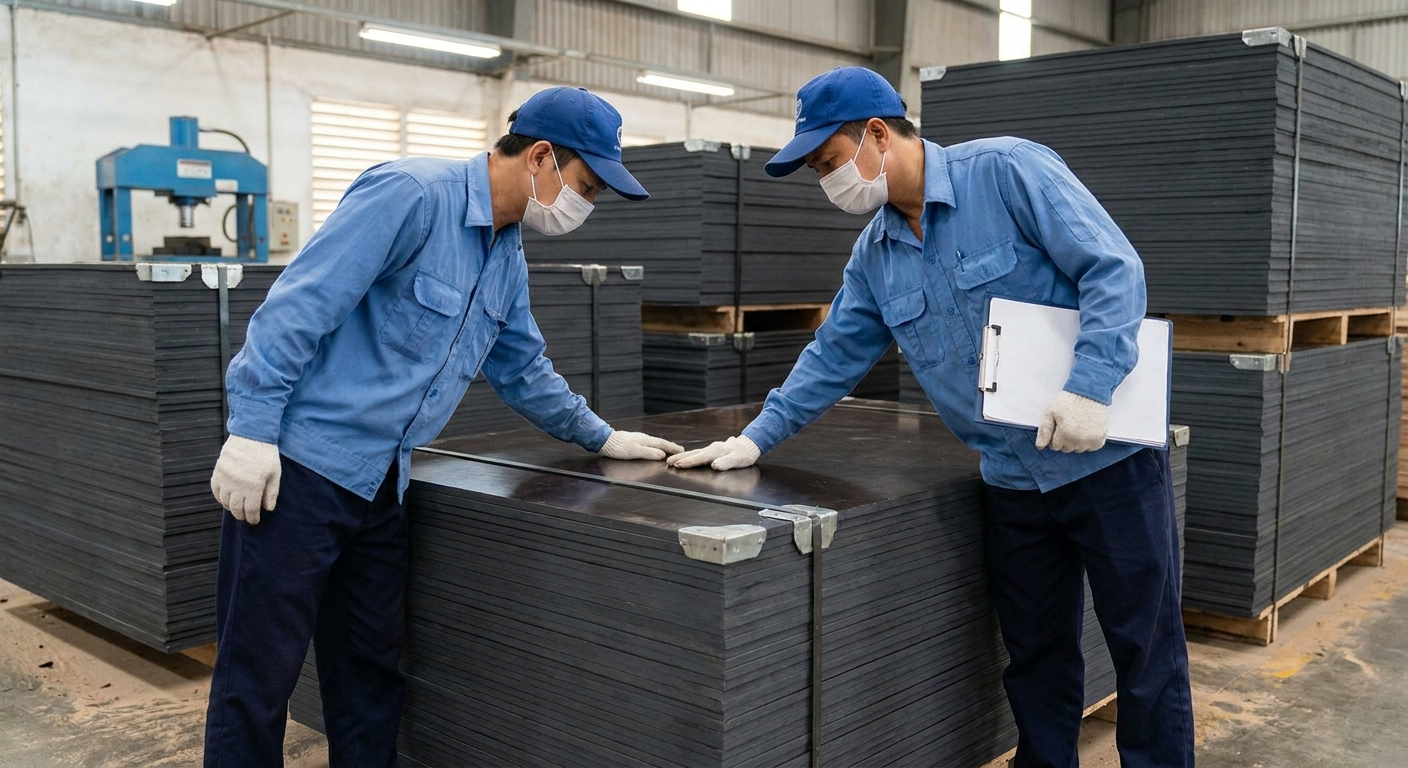
We hear this complaint more than any other, and honestly it's the easiest one to prevent. "18 mm" is a nominal size, not a measurement. What you actually get depends on how evenly the veneers were peeled, how hard the press squeezed the stack, and how much came off at the sander before the face film went on. Cheap panels tend to run thin for a simple reason: thinner veneer, or one ply fewer, saves timber. On a slab deck you'll see it as lips between sheets, and those lips print straight into the concrete.
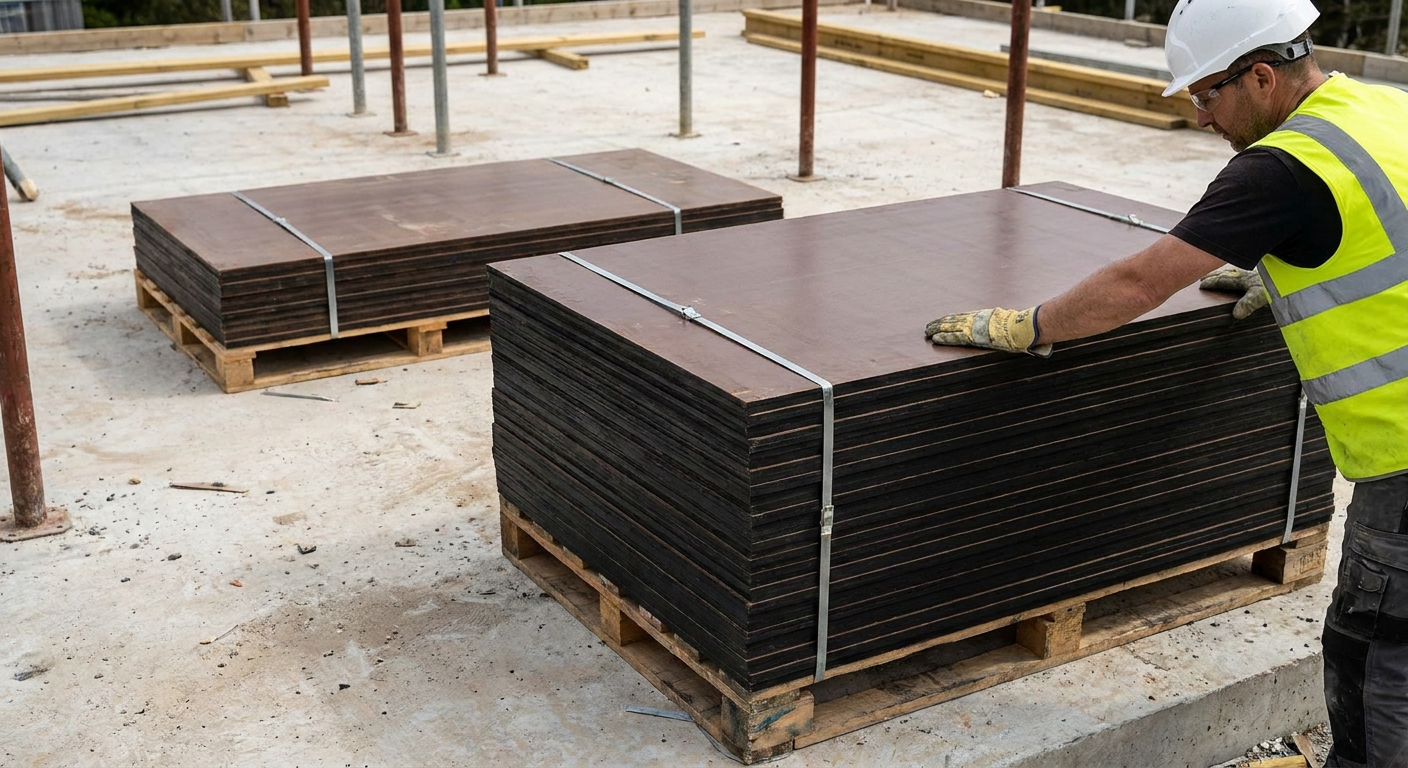
The standard that covers this is EN 315, which sets tolerances on plywood dimensions. Name it on the order. Our catalogue gives +0.7 / -0.9 mm for 18 mm Eco Form, Eco Form Plus and HDO sheets under EN 315, and +0.8 / -1.0 mm at 21 mm. Whoever you buy from, ask for the figure printed on their own product sheet, then go and check it. Put digital calipers on a few sheets per bundle, at several points along each edge but a little in from the very end, where sanding can skew things. A thin batch shows up fast. If you're still deciding which thickness to order, our formwork plywood thickness guide works through span and pour pressure.
3. Delamination
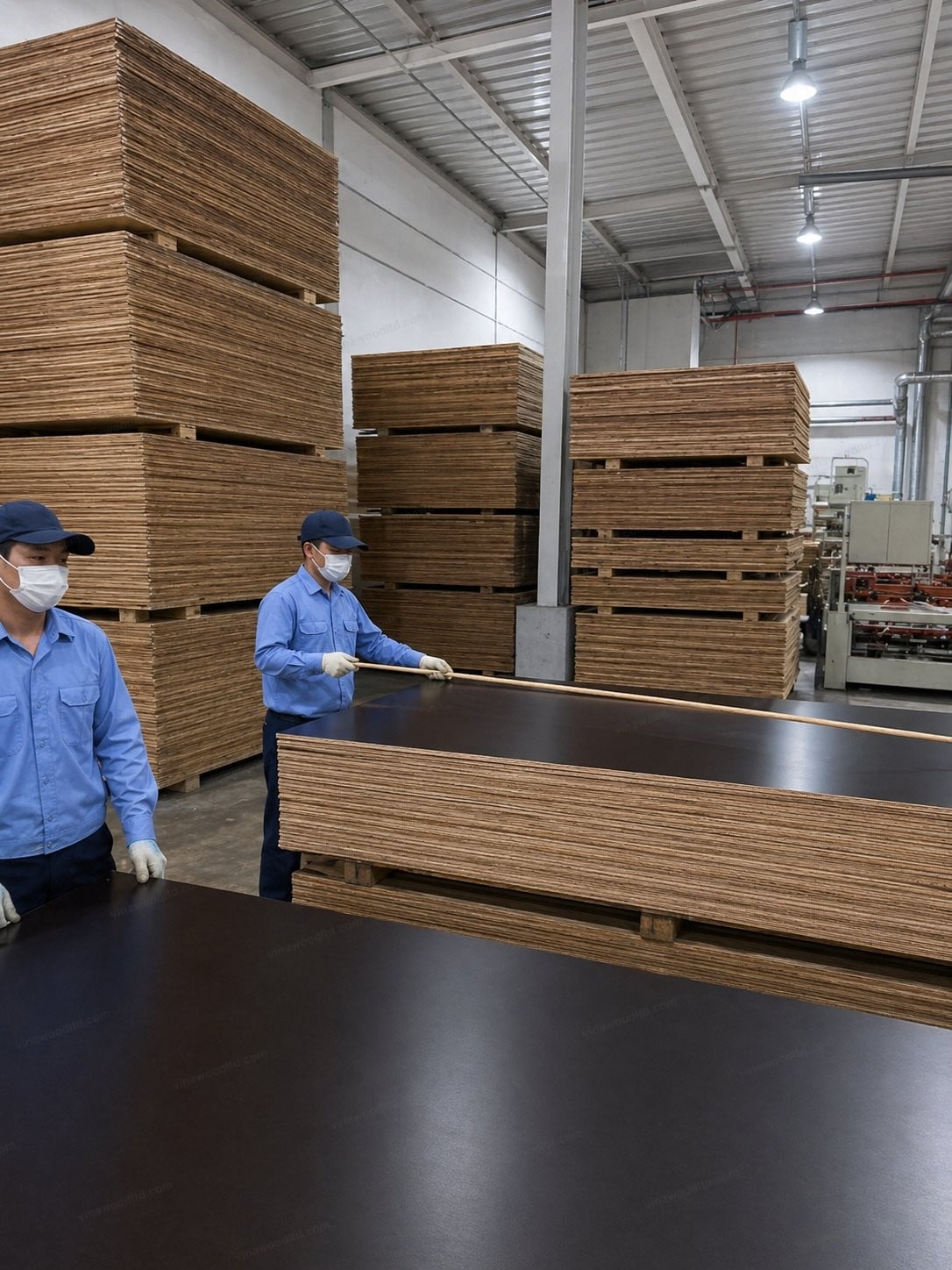
This is the one nobody forgives. Plies separate, the face blisters, and on formwork that sheet is done, sometimes after only one pour. It's a glue line failure. Maybe too little glue was spread, or the press ran too cool or too short, or uneven veneers left gaps the glue couldn't bridge. The nasty part is that the sheet can look fine leaving the factory.
A good reputation won't save you here, but a test report will. EN 314-2 sorts bond quality into three classes: Class 1 for dry interiors, Class 2 for humid conditions, Class 3 for exterior exposure. EN 636 then uses those same three service classes for the finished panel. Ask for a recent bond test for the exact grade you're buying, not a general certificate for the factory. On arrival, try a rough knife test on an offcut; if the plies peel apart cleanly along the glue with no wood fibre torn off, you've got a problem worth raising. We test bond strength in our own lab on every production run, and independent labs such as SGS, TÜV, Eurofins and Quatest do the testing when a buyer wants outside proof.
4. Glue type and boil resistance
Will Vietnamese plywood stand up to water? It's water-resistant, not proof against it, and the same is true of plywood from anywhere. Good formwork panels use WBP glue lines (weather and boil proof), which means the bond survives soaking and boil tests. Leave raw edges open in the rain, though, and the core will still soak water up. What really decides how a sheet copes is the resin in the core.
Formwork uses two glue families. MUF, short for melamine-urea-formaldehyde, is the core glue in our Form Basic and Form Extra. Form Extra uses our Superior Glue, rated EN 636-2 for humid service, with the same phenolic face film Form Basic carries; it lasts longer because the glue line is tougher, but it isn't Class 3 and we won't call it that. Phenolic (PF) glue is what gets a panel to Class 3. Pro Form and Pro Form Lite are both PF and Class 3, and so are HDO Standard and HDO Premium. HDO Basic is Class 2.
Before a sample is bond-tested it goes through a pretreatment, such as soaking or boiling cycles, set out in EN 314-1. So when someone hands you a test report, check which pretreatment it used. A Class 1 pass and a Class 3 pass are very different things. Our phenolic plywood guide digs further into bond classes. And a quick word on the face, since people mix it up with the glue: the glossy brown layer is a phenolic film, a resin-soaked paper pressed onto the surface. A heavy film can't rescue a weak core.
5. Packing and transit damage
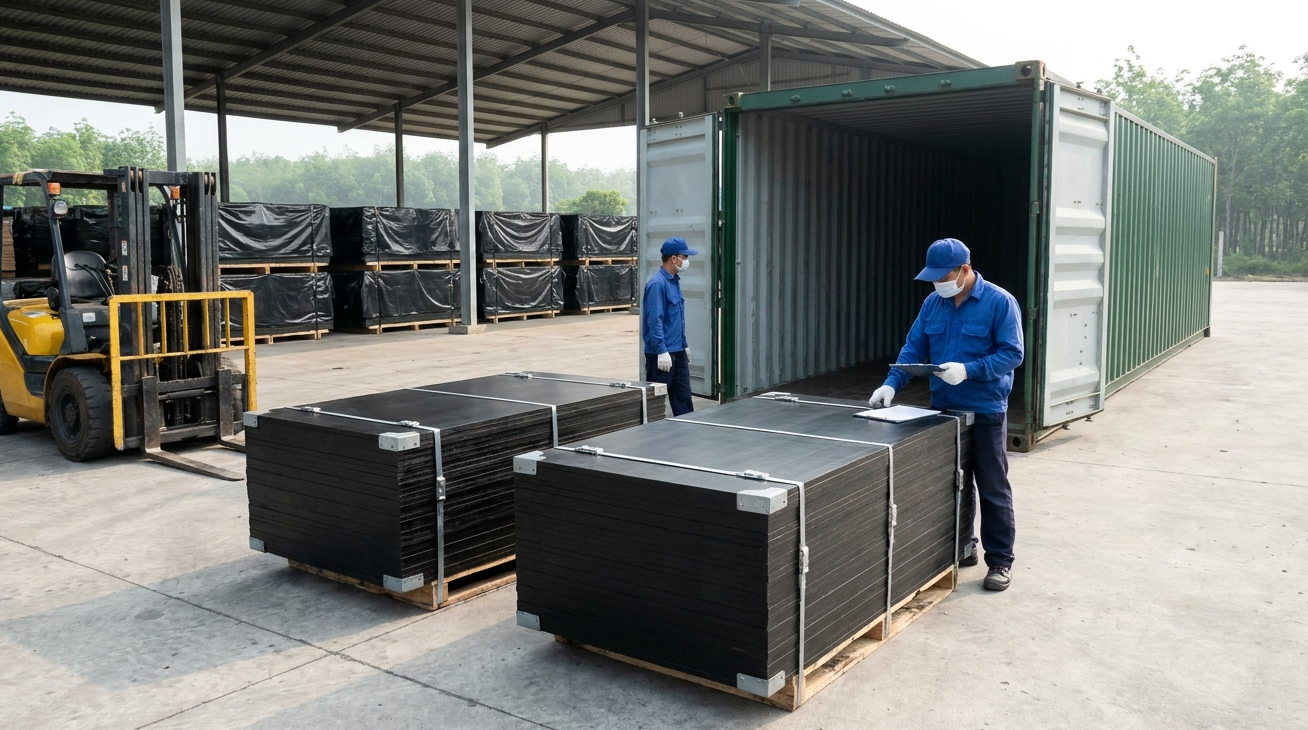
A perfect sheet can still turn up wrecked. Forklift tines crush corners. Banding pulled too tight splits edges, and a bundle that shifted at sea arrives with scuffed faces on the outer sheets. Rain during loading, or a box left to bake in a hot port, adds moisture on top. Most of that is settled before the container door shuts.
Don't accept "standard export packing" as a line on the order; spell it out. Ask for wooden pallets sized to the bundle and steel banding over corner protectors. Ask for sealed edges on every sheet too, since edge sealing is the cheapest insurance you'll ever buy against water getting into the core. If your port insists on heat-treated pallets, say so up front, because they need the ISPM 15 mark. Then look over the first bundles off the truck for corner damage before you sign the delivery note.
Preventing all five before the order ships
Pretty much every defect above can be headed off with a decent spec pack and a handful of checks. Write down the thickness with its EN 315 tolerance and the sheet size. Add glue class and face film weight. Then moisture content, emission class, packing. Ask for samples of any new grade and actually try them on site. On bigger orders, pay for a pre-shipment inspection with lab reports from the real production run; it costs far less than a rejected container. That's the advice we'd give a friend buying from any mill, ours included.
Emissions need their own line on the order. E0 and E1 in Europe, or CARB P2 compliance under EPA TSCA Title VI in the US, are tested product by product. Ask for the certificate that matches your grade, and be wary of a blanket claim covering everything a factory makes. At our end, every sheet gets inspected individually, and the in-house lab tests bending strength and stiffness (MOR and MOE), bond strength and formaldehyde.
How do you verify a factory before you visit? Look its FSC-COC certificate up in the FSC database. Ask for the CE declaration under EN 13986 and the ISO 9001 certificate, both of which can be checked with the issuing body. Then, if you can, go and walk the floor. Our certifications page lists everything we hold, and our guide to vetting plywood manufacturers in Vietnam covers the factory side in more depth.
And the question that comes up every few weeks: is Vietnamese eucalyptus strong enough for construction? Our cores are plantation-grown Acacia and Eucalyptus, with some Hevea, and in a panel that's been glued and pressed properly they do the job on formwork. Strength comes from the whole build (veneer quality, ply count, the glue line) far more than from the name of the tree. When you're ready to put a spec together, request a quote here.
▶Sources & References (4)
- EN 315: Plywood. Tolerances for dimensions — European Committee for Standardization (CEN) (2000)
- EN 314-2 Plywood. Bonding quality. Requirements — European Committee for Standardization (CEN) (1993)
- EN 636:2012+A1:2015 Plywood Specifications — European Committee for Standardization (CEN) (2015)
- Formaldehyde Emission Standards for Composite Wood Products (TSCA Title VI) — US EPA (2024)