Single-Sided Formwork: How One-Sided Wall Forming Works — and Where the Plywood Sits
Single-sided formwork casts a wall with access on one side only. How the bracing carries the concrete pressure without through-ties, when you need it, and which plywood face to spec for the forming surface.
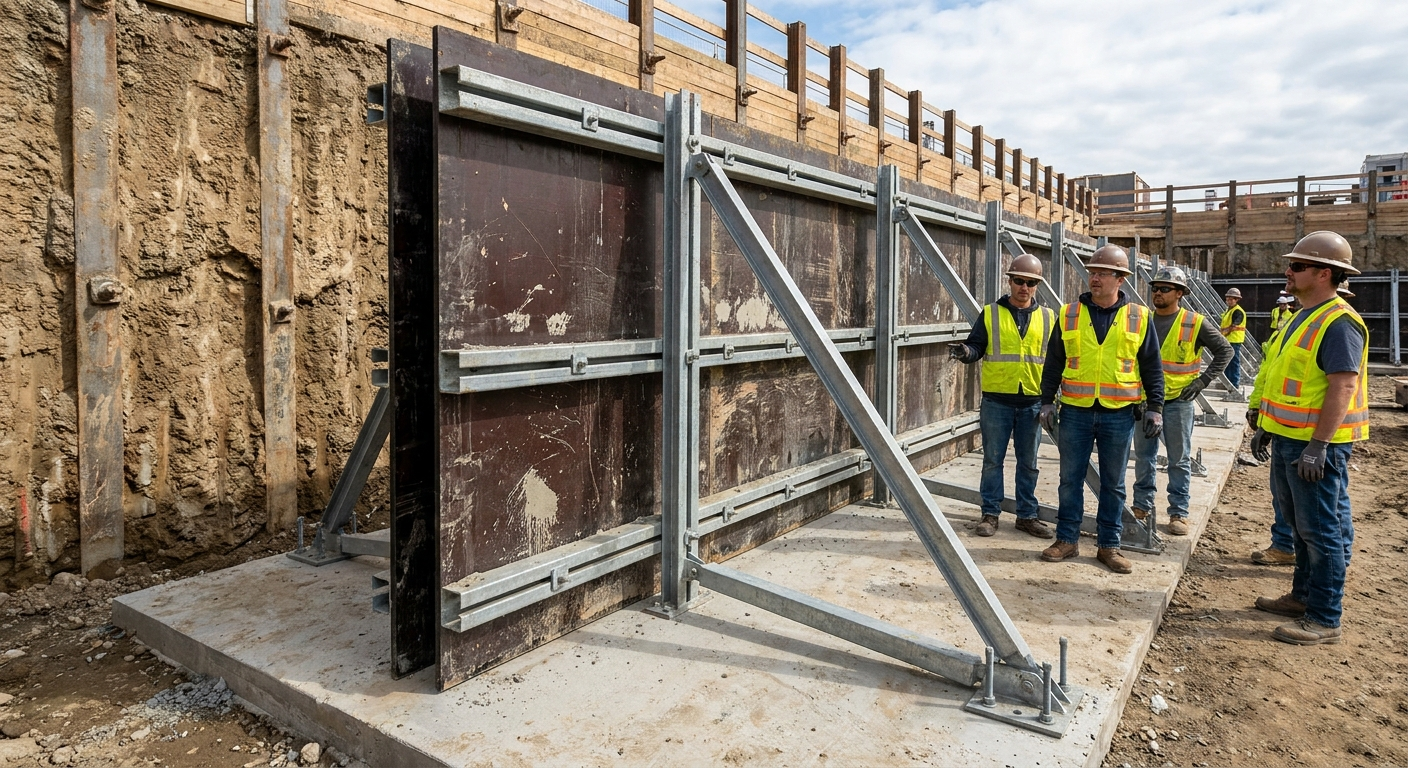
Two-sided forming is the default. You set two parallel faces, tie them together through the wall, and the ties take the concrete pressure on both sides. Single-sided formwork is what you reach for when the second face is not available: the wall is cast against earth, against sheet piling, against an existing structure, or hard up to a property line. There is nothing behind the wall to tie into, so the whole job of resisting the pour falls to one side.
That changes how the load is carried, and it changes what you have to brace against. It does not change the part Vinawood makes. The forming face is still film-faced plywood. What sits behind it is a steel A-frame bracing rig anchored into the slab, and that rig is supplied by a formwork system house, not by us. We make the skin that meets the concrete. This guide covers how single-sided forming works, when it is the right call, and how to spec the face.
What single-sided formwork is
Single-sided formwork (also called one-sided or single-face wall formwork) forms a concrete wall using a form on one face only. Because there is no opposing form, the fluid pressure of the wet concrete cannot be balanced by ties running through to a second face. Instead the pressure pushes back against a single braced assembly, which has to resist both the horizontal thrust and the overturning moment that thrust creates.
The pressure itself is not small. Fresh concrete behaves as a fluid until it stiffens, so the lateral pressure builds with pour height and pour rate. On a two-sided wall the ties soak that up. On a single-sided wall the bracing and its anchors are the only load path, which is why the rig is engineered and the pour is paced.
When you need it
Single-sided forming shows up wherever the back of the wall is unreachable or must stay sealed:
- Retaining walls cast against the excavation face or against earth-retention shoring, where the back of the wall is permanently buried.
- Basement and underground walls poured against soldier piles, sheet piling, or an existing foundation, with no room or access behind.
- Urban sites at the property line, where the wall goes right up to the boundary and there is no space to stand a back form.
- Water-resisting walls where the spec wants to avoid tie penetrations through the wall, since every through-tie is a potential leak path.
The common thread is that the wall has a working face and a sealed face, and only the working face can be formed and stripped.
How the load path works
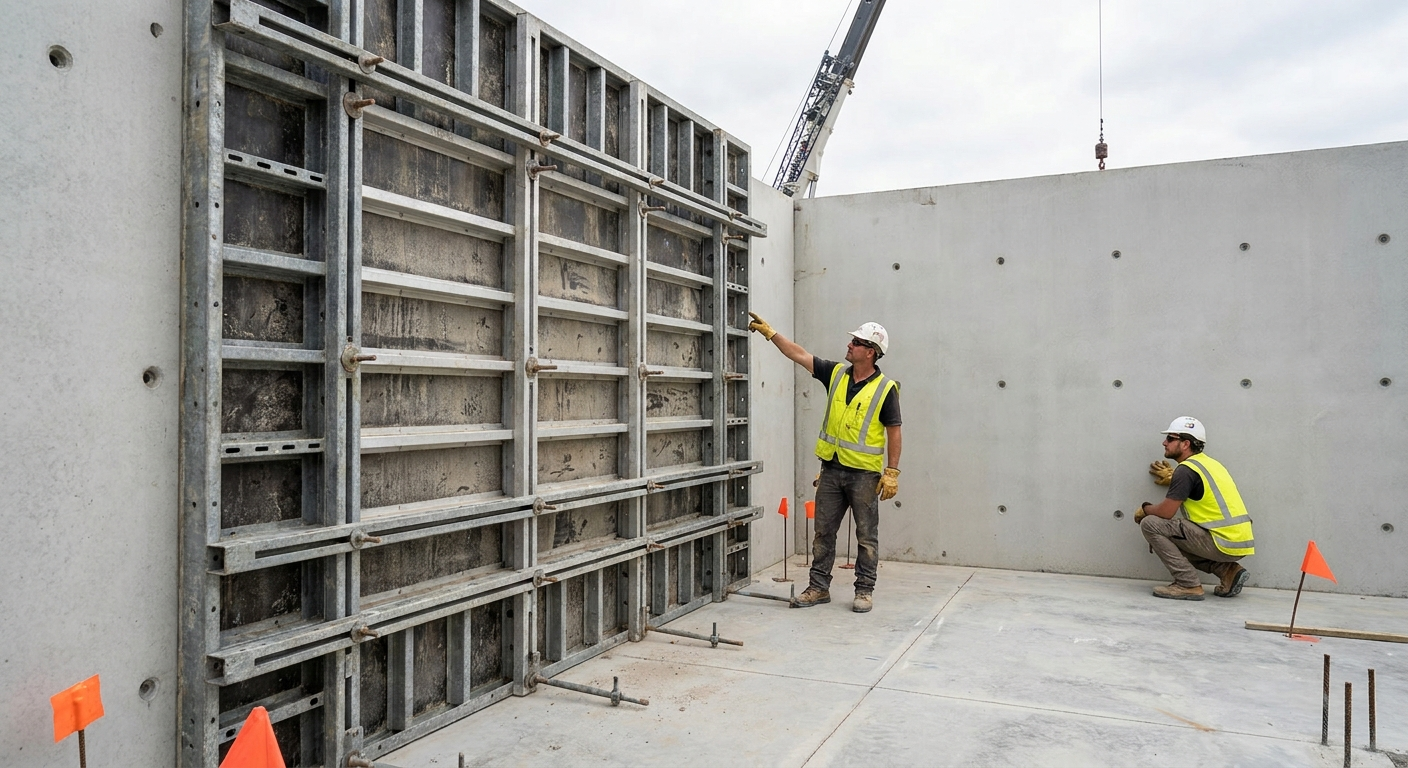
With no through-ties, the load travels a different route. The concrete pressure pushes on the plywood face. The face passes it to the steel gang frame behind it. The frame passes it to an inclined A-frame or strongback bracing rig. The rig transfers the combined horizontal thrust and overturning moment down into the base slab through cast-in anchors set before the pour.
Two details decide whether that works. The anchors have to be positioned and cured before forming starts, because they are what stops the whole assembly from sliding or tipping under load. And the base of the form needs blowout protection, because there is no opposite face to push against and seal the kicker joint. We have seen single-sided lifts go wrong at the base far more often than at the top, almost always where the kicker seal or the anchor sequence was rushed. Our companion guide to falsework vs formwork walks the same support-versus-face split for horizontal work.
Single-sided vs double-sided
The two methods solve different access problems, and the spec follows from that.
| Double-sided (conventional) | Single-sided | |
|---|---|---|
| Faces formed | Both | One |
| How pressure is resisted | Through-ties between the two faces | Braced A-frame anchored to the base slab |
| Through-wall ties | Yes | None (no tie penetrations) |
| Typical use | Free-standing walls, cores, columns | Against earth, piling, existing structure, boundary |
| Pour-rate limit | Higher, ties share the load | Capped by the bracing design |
Neither is better in the abstract. Where you can reach both faces and tie through, double-sided is faster and cheaper. Where you cannot, single-sided is the only option, and you pay for it in bracing and pour discipline.
Pour rate and pressure discipline
A single-sided assembly is designed for a maximum concrete pressure, and the way you stay under it is by controlling the rate of rise. Pour slower and the concrete near the base of the lift starts to stiffen before the full height is placed, so the peak pressure at the bottom never reaches the fluid maximum. Pour too slowly, though, and you risk a cold joint between layers. The pour rate is therefore set by the formwork designer, balancing the pressure ceiling against the working time of the mix.
The European references for the pressure model are CIRIA Report 108 and DIN 18218; design of the concrete itself follows EN 1992. None of these turns single-sided forming into a site judgement call. The bracing rig, the anchors, and the allowable pour rate are engineered together, and the site follows the method statement.
Where the plywood sits
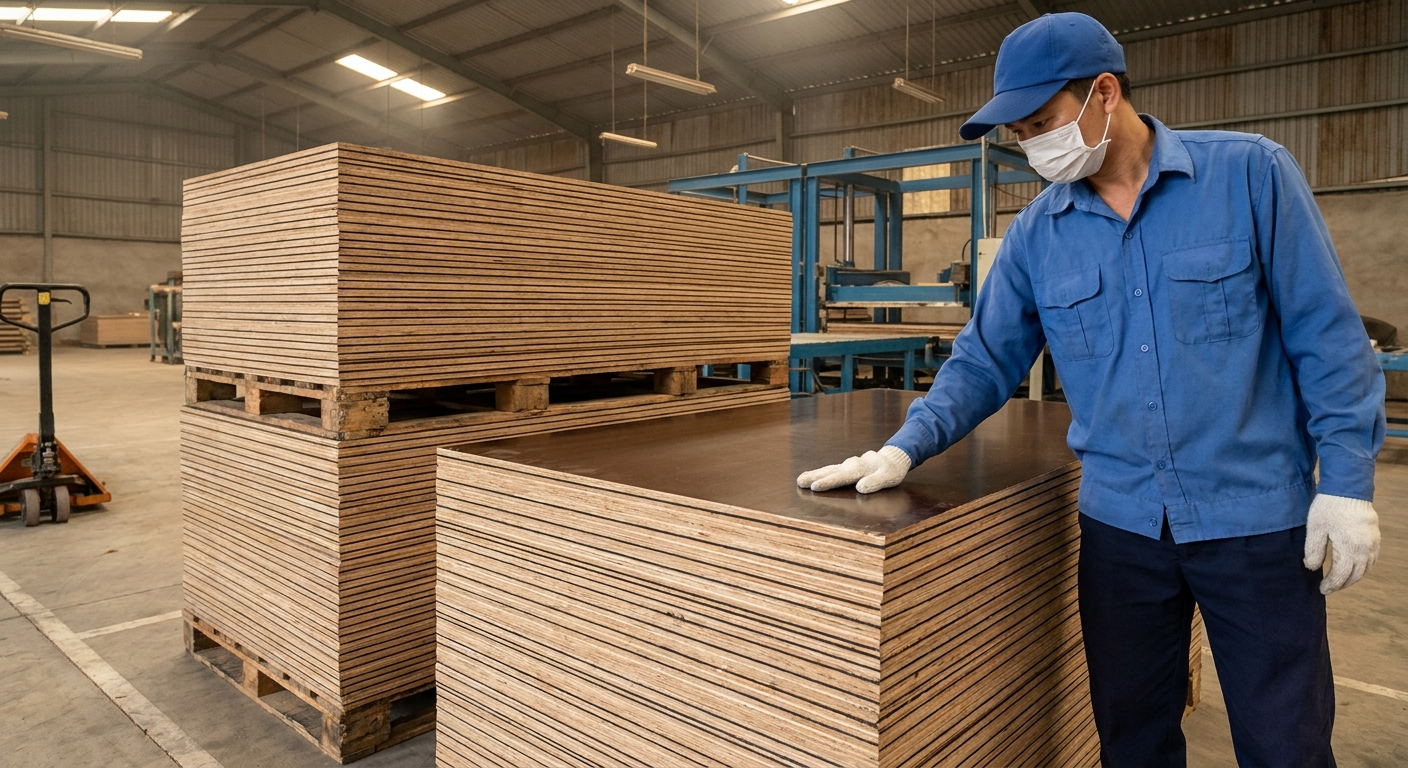
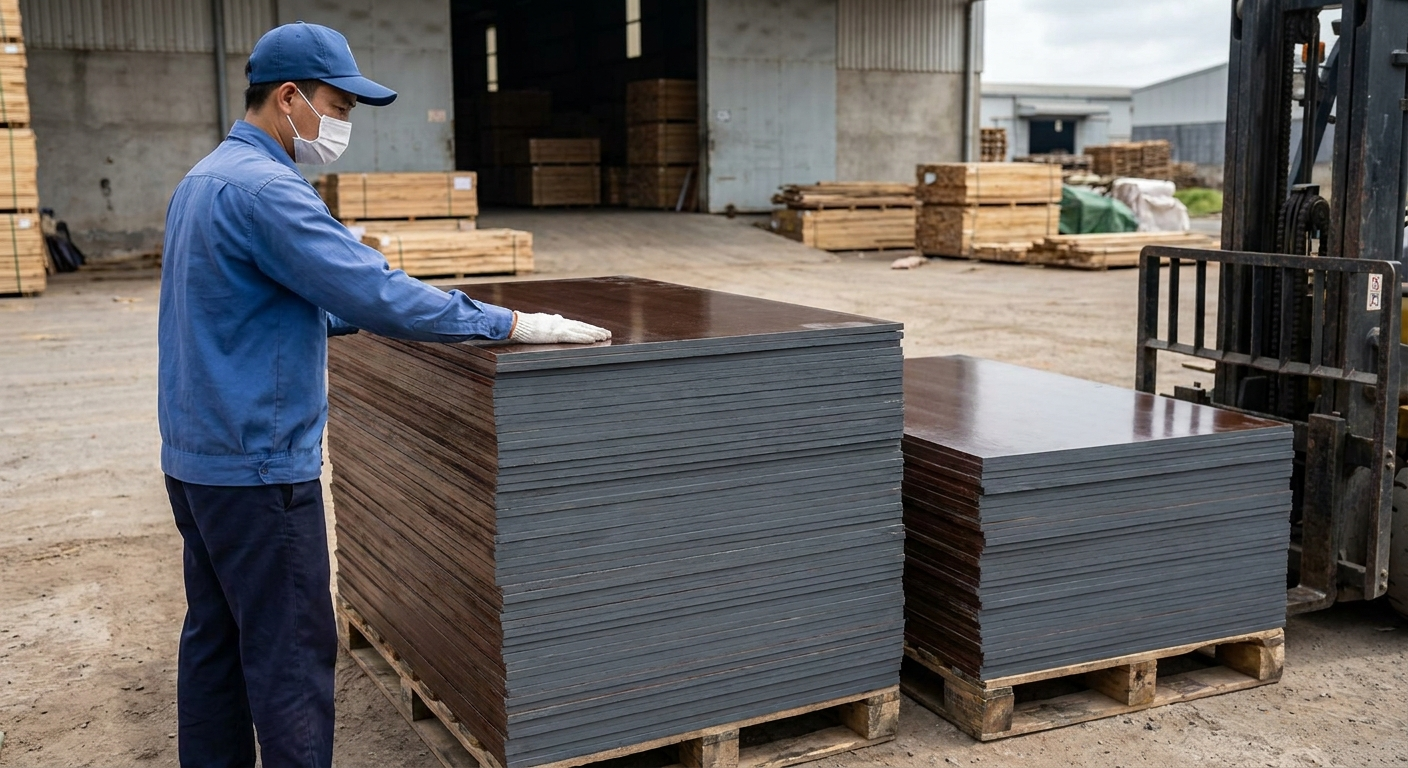
For all the steel behind it, the surface the concrete actually touches is film-faced plywood, bolted to the front of the gang frame. The frame and the A-frame carry the load; the plywood gives the wall its face and is the part that wears. So you spec it the same way you would any forming face: by adhesive class and reuse target.
This matters more on single-sided walls than most, because many are specified tie-hole-free precisely so the visible face can be a clean fair-face finish. With no tie pattern to hide behind, the panel choice carries the finish.
Choosing the face
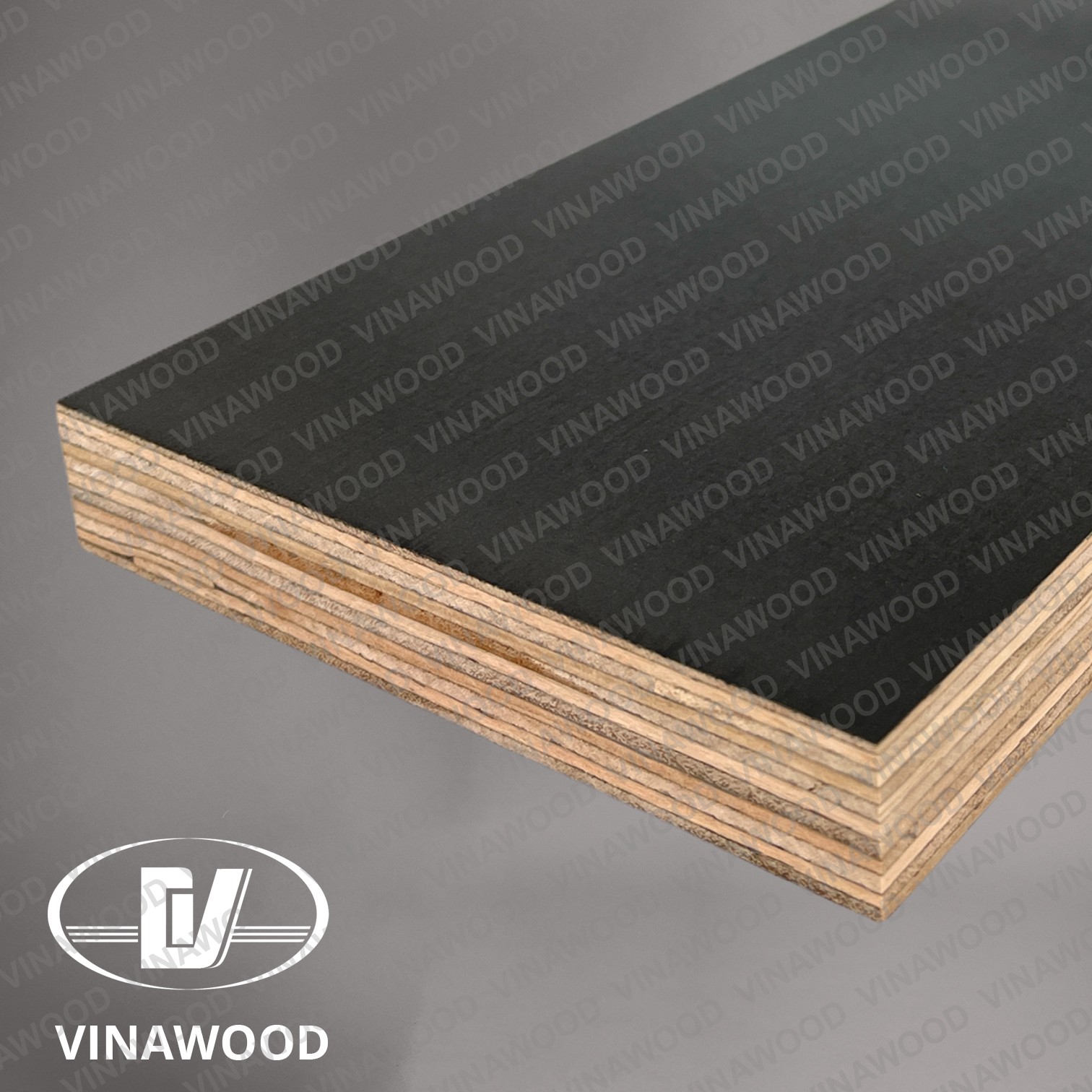
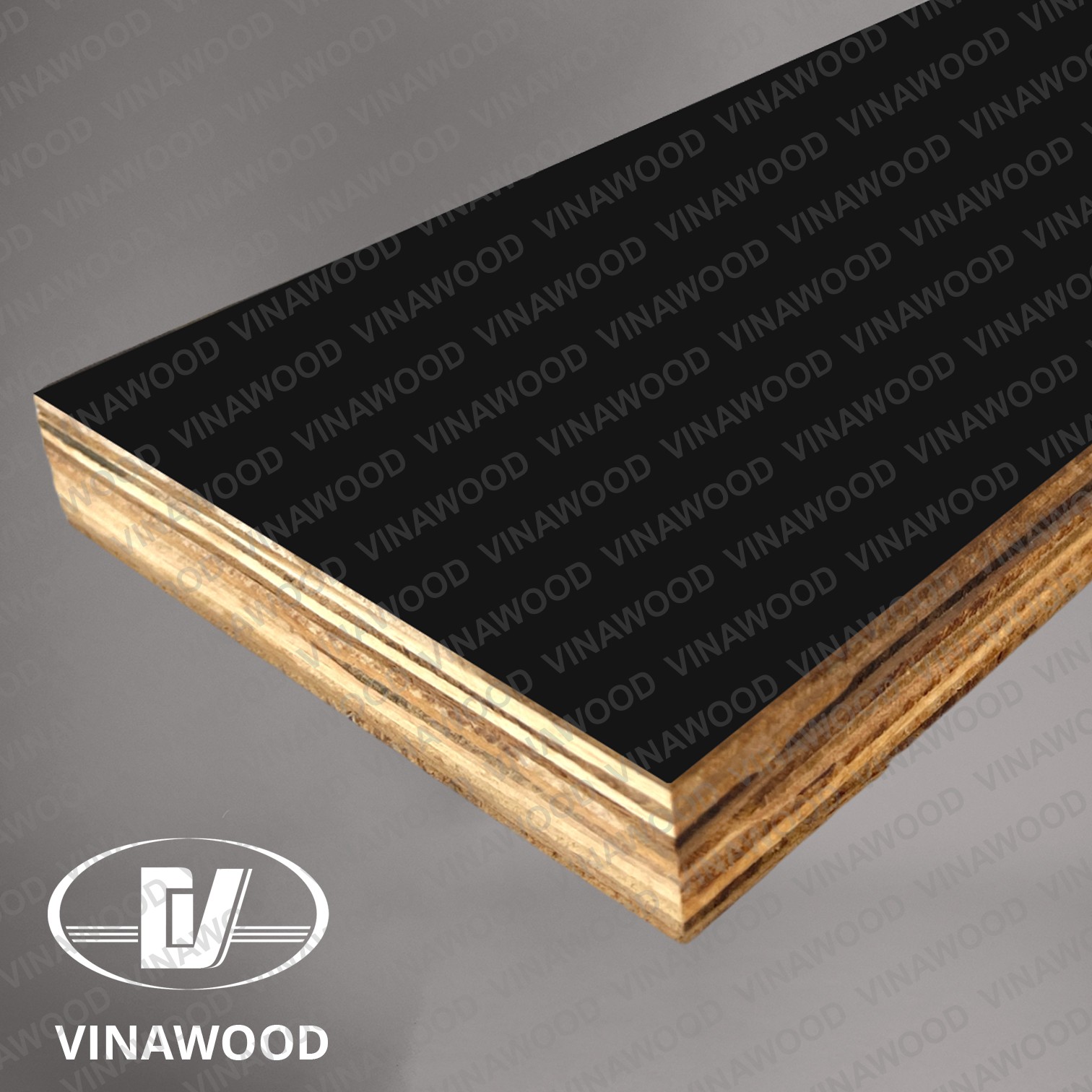
For repeat single-sided lifts and fair-face work, use a phenolic panel. Pro Form is WBP phenolic-bonded, EN 636-3 / Class 3, rated up to 20 reuse cycles with a phenolic film face that holds a clean surface across repeats. In North America the equivalent repeat-lift choice is the HDO range, also phenolic-bonded and Class 3, engineered for high-rotation wall work.
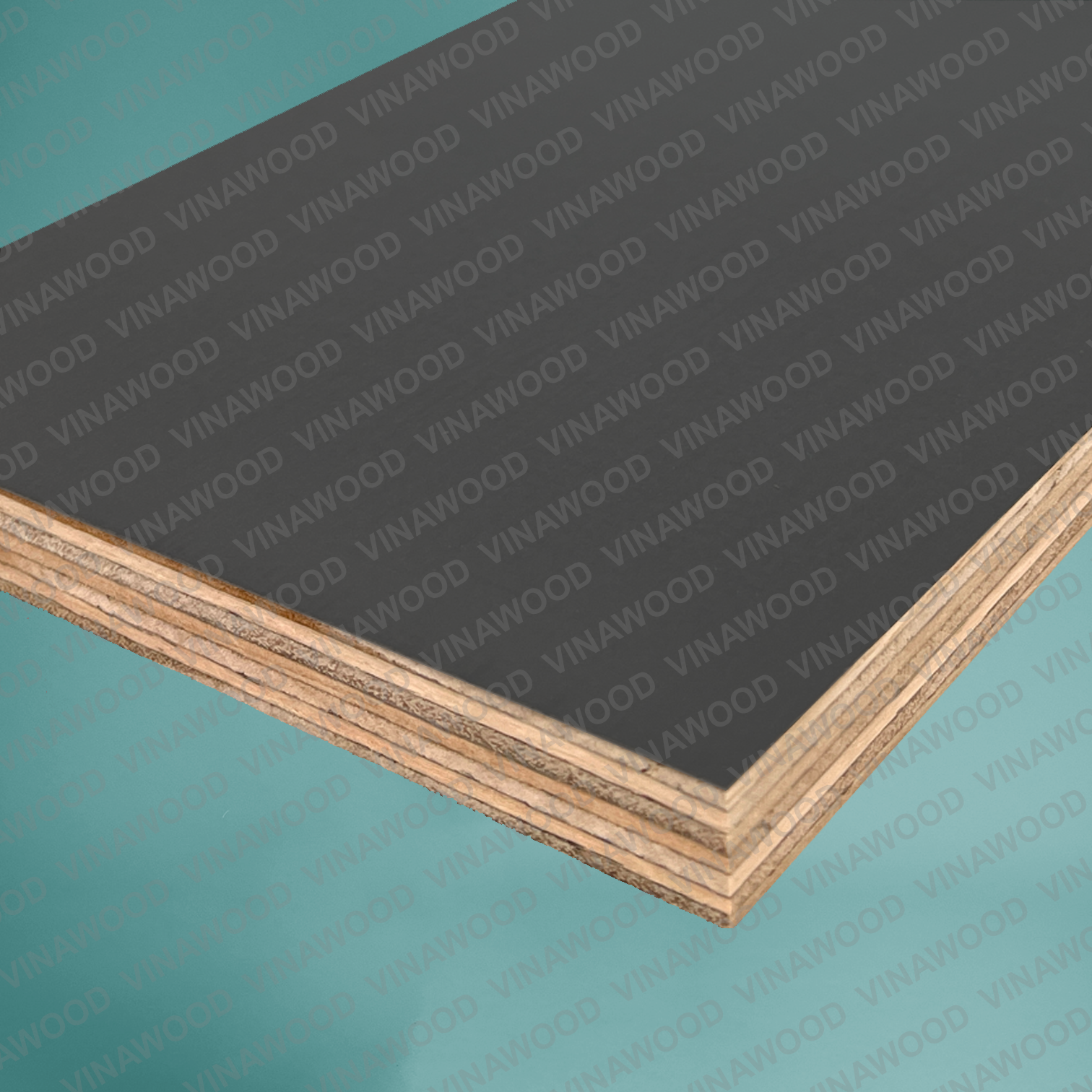
For shorter runs, a melamine-cored panel is the economical fit. Form Extra and Form Basic use a WBP melamine-urea-formaldehyde (MUF) core glue under a phenolic film face, classed EN 636-2 / Class 2. Form Extra reaches up to 15 reuse cycles and Form Basic up to 10. The longer life on Form Extra comes from a more durable, higher-melamine-content MUF glue formulation, not a heavier face film; both panels carry the same film. These are weatherable Class 2 panels, so the cabinet-trade idea that "melamine is interior only" does not apply here. The one rule to hold: never label Form Extra or Form Basic as Class 3. Where the job genuinely needs Class 3, the answer is Pro Form or HDO. The full range sits in the film-faced plywood collection.
Surface finish on single-sided walls
Because single-sided walls are often tie-hole-free for fair-face, the face panel decides the result more than on a tied wall. A fresh phenolic film gives the cleanest, most uniform concrete face, and the practical move on a multi-lift wall is to rotate the newest panels onto the lifts that will stay visible and the older ones onto buried or back-filled sections. The same face panel run across the whole visible area keeps the finish consistent from lift to lift. For the double-sided counterpart and the cost-curve behind plywood-faced walls, see our guide to plywood for wall formwork.
About Vinawood
Vinawood is a Vietnamese plywood manufacturer established in 1992, shipping more than 5,000 containers a year to 55+ countries. On single-sided work we make the face, not the frame: film-faced and overlaid plywood in melamine-cored EN 636-2 and phenolic-bonded EN 636-3 grades, matched to reuse target and finish. Every sheet is inspected individually, and our panels carry CE marking under EN 13986, FSC-COC, PEFC, and EPA TSCA Title VI certification for the US, UK, EU, and Australian markets. For repeat single-sided lifts where the face stays visible, browse the Pro Form range or contact our team for a specification.
Category
guides
Related Markets
Related Countries
Related Products
▶Sources & References (3)
- CIRIA Report 108 — Concrete pressure on formwork — CIRIA (1985)
- DIN 18218 — Pressure of fresh concrete on vertical formwork — DIN (2010)
- BS EN 1992-1-1 Eurocode 2: Design of concrete structures — CEN (2004)