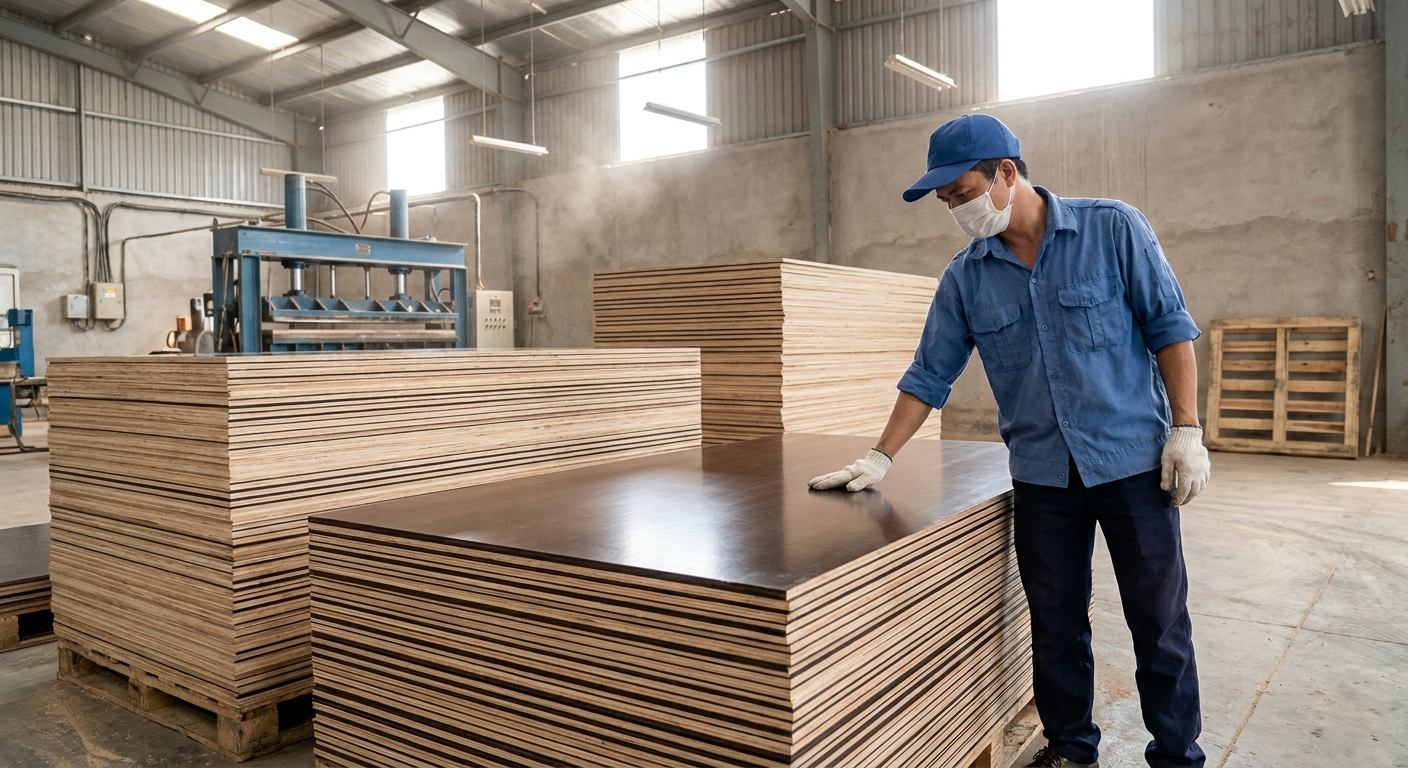
Plywood for Table & Flying Formwork: Choosing the Deck Panel That Survives the Cycle Count
Table and flying formwork carries the building's most repetitive slab pours — and the deck taking every cycle is plywood. Here is how to spec that deck panel for thickness, film weight, adhesive class, and realistic reuse.
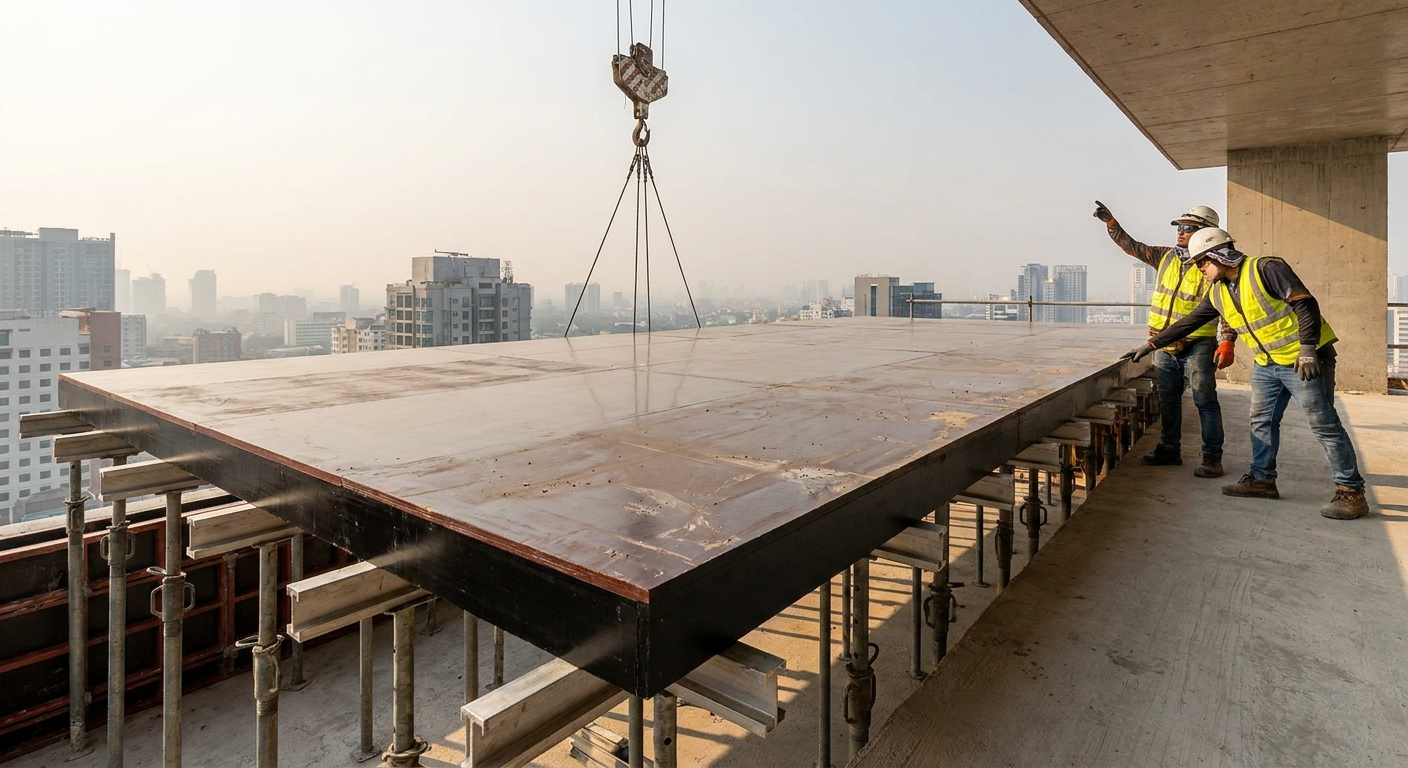
A flying table is the most efficient way to form a repetitive concrete floor plate. The crew assembles one large slab table once, pours a floor, then a crane lifts the whole table out through the perimeter and sets it on the floor above. High-rise residential towers, hotels, hospitals and multi-storey car parks all lean on this method because the same table forms twenty near-identical floors with almost no re-assembly.
The table frame — aluminium or steel beams, props, table heads, lifting hooks, handrails — comes from a system vendor such as Doka, PERI or ULMA. What faces the wet concrete on top of that frame is a plywood deck, and that deck is a consumable. It takes every pour, every fly cycle and the occasional knock during the lift, while the frame underneath outlives several deck refits. Choosing that panel well is where a contractor either gets a clean soffit for many floors or ends up re-decking far too early.
What table and flying formwork actually is
Table formwork (the two terms describe the same method — "flying" refers to the crane move between floors) is a pre-assembled horizontal forming unit sized to a structural bay. Instead of striking and rebuilding slab formwork floor by floor, the crew releases the table, rolls it to the slab edge on trolleys, and the crane flies it up to the next level. A tower with a regular column grid can cycle a table on a few-day rhythm once the rhythm is set.
The economics only work when the deck panel survives the cycle count you planned for. A deck that delaminates or swells at floor eight on a twenty-floor job forces an unplanned refit, and the refit eats the schedule saving that justified the table in the first place.
Anatomy of the table — and where the plywood sits
A table has four parts that matter here. The primary beams (usually aluminium) span between props and carry the load back to the structure. Secondary beams or joists sit across the primaries at closer centres. The props and table heads carry the table during the pour and allow it to be lowered for the fly. And the deck, the plywood, is screwed or clamped to the top of the secondary beams as the face the concrete is cast against.
Everything except the deck is durable system hardware you buy or hire once. The deck is the wear item. That split is the whole reason this article exists: most table-formwork content sells the system, and nobody hands the buyer a spec framework for the one part that is actually a recurring purchase. For the stationary version of this decision, our guide to slab formwork plywood covers fixed slab decks; this piece covers the crane-flown table.
Deck thickness by beam spacing
Deck thickness follows the spacing of the beams that support it, the same deflection logic that governs any slab soffit. The wider the gap the panel spans between secondary beams, the thicker it has to be to hold a flat soffit under the wet-concrete load.
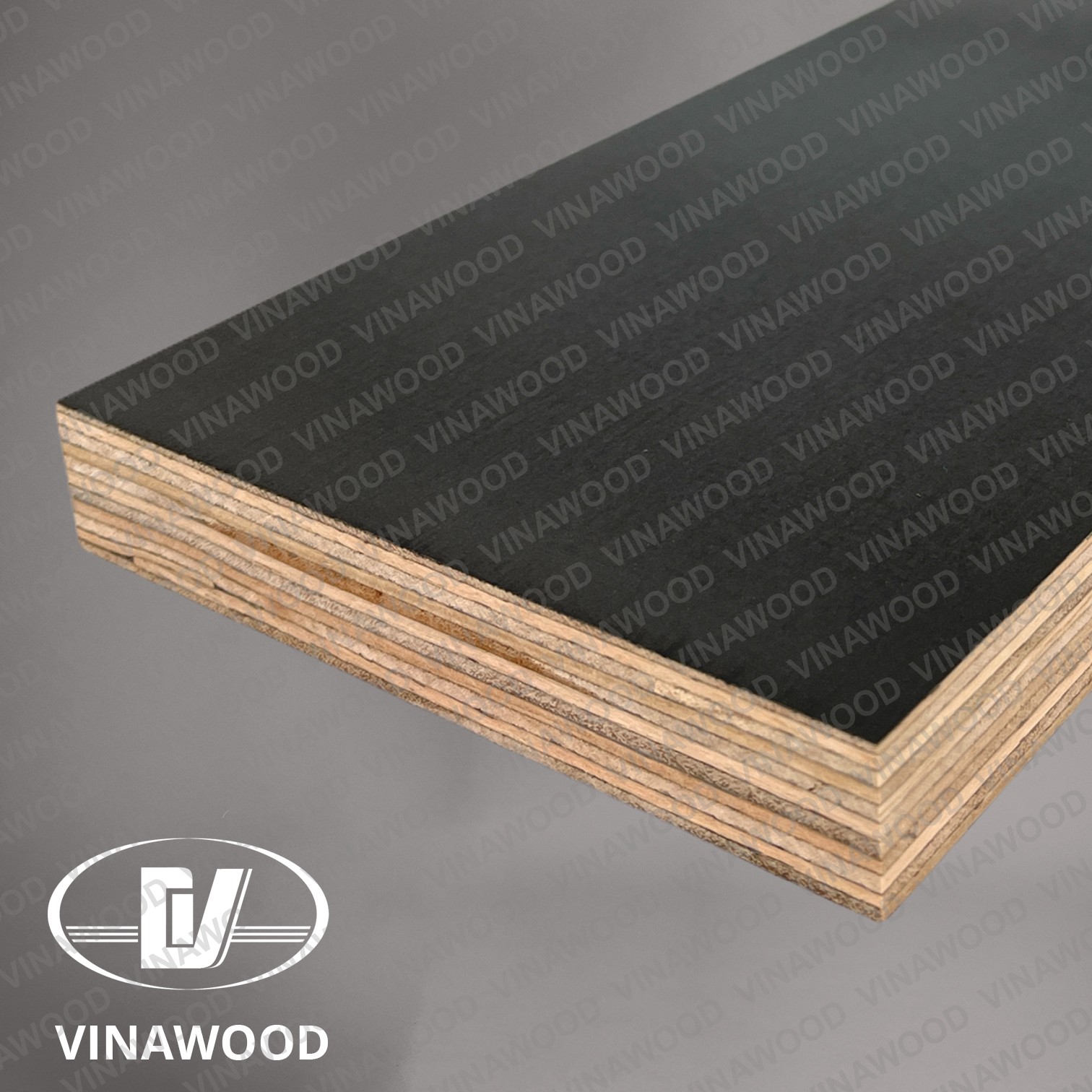
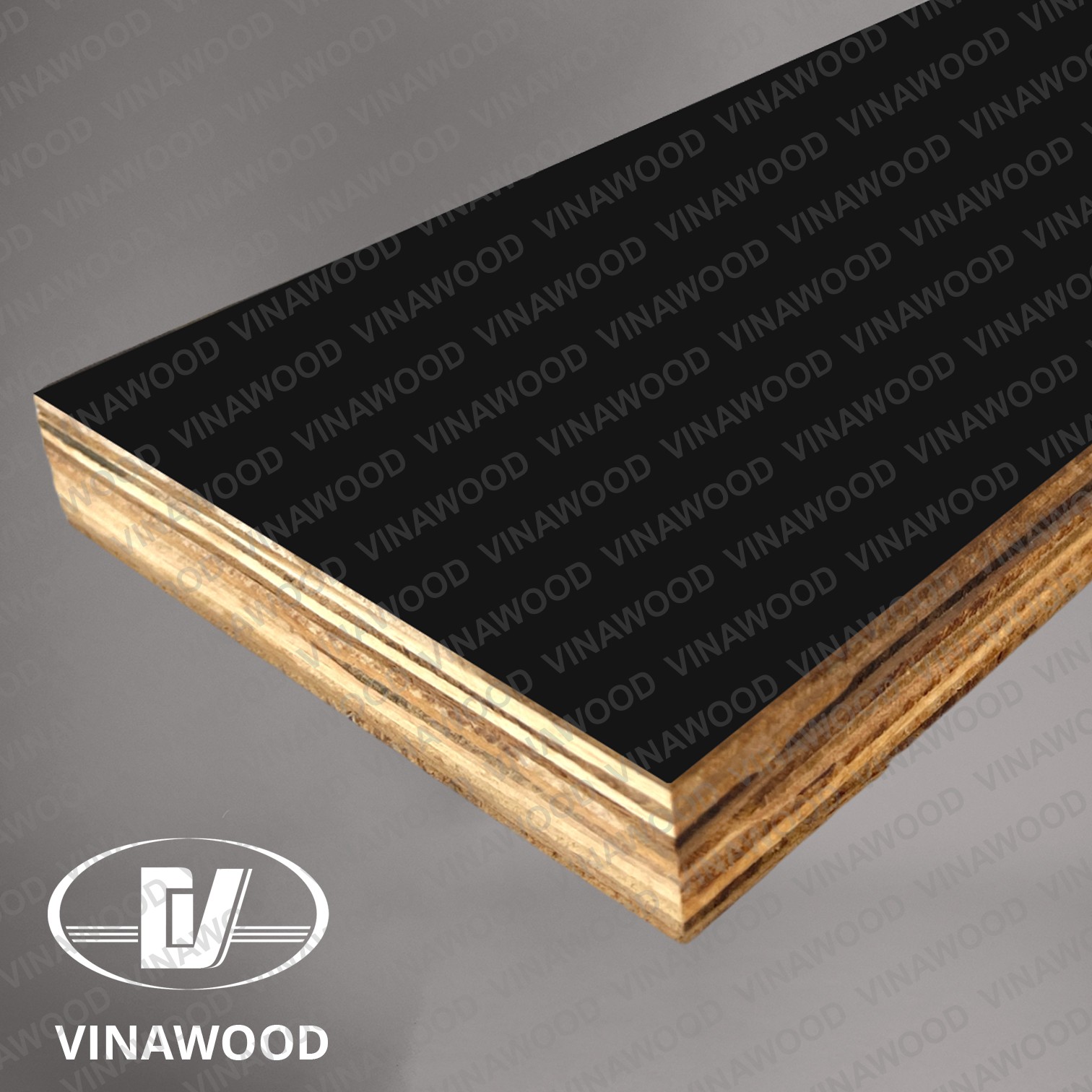
18 mm film-faced plywood is the working baseline for typical secondary-beam centres and normal slab depths. Step up to 21 mm where beam spacing is wide, where the slab is deep and the live load is heavy, or where the finish specification leaves no room for between-beam deflection telegraphing into the soffit. Thinner than 18 mm belongs to light-duty or closely supported decks, not a flying table that has to stay flat through repeated handling.
Face film weight and finish class
The phenolic face film does two jobs: it gives the concrete its finish and it protects the wood beneath from water. A flying table soffit is visible on every floor, so the film grade telegraphs straight into the building. For repeat high-rise work where the same deck has to keep producing an acceptable soffit deep into the cycle count, specify a heavier film, in the region of 120 g/m² and up. Lighter films around 90 to 120 g/m² suit shorter programmes or jobs where the soffit will be finished later.
Heavier film also resists the surface abrasion that comes from sliding tables, vibrating pokers and the general traffic of a working deck. The film is the part that wears first; spend on it where the cycle count is high.
Adhesive class by cycle target
The glue bonding the veneers inside the panel sets the ceiling on reuse. This is a different decision from the face film, and conflating the two is the most common spec error on formwork panels.
| Deck panel | Core glue | Bond class | Best for | Max reuse |
|---|---|---|---|---|
| Pro Form | WBP phenolic (PF) | EN 636-3 / Class 3 | High floor-count towers, long repetitive programmes | up to 20 cycles |
| Form Extra | WBP melamine core resin (higher-content MUF) | EN 636-2 / Class 2 | Moderate programmes, mid-rise repetition | up to 15 cycles |
For a tall tower where one table flies through many floors, the phenolic-bonded Class 3 panel earns its price on cycles alone. Pro Form uses a weather-and-boil-proof phenolic core glue and carries up to 20 reuses. Form Extra reaches up to 15 reuses on a more durable, higher-melamine-content MUF core resin — the melamine here is the glue inside the panel, not a decorative laminate and not the face film. Its longer life over standard Form Basic comes from that tougher glue chemistry, not from a heavier face film; both carry the same phenolic film. Form Extra is an EN 636-2 panel, never Class 3.
We have seen contractors over-spec and under-spec this in equal measure. From a Vietnamese mill's vantage point, the cleanest decision rule is simple: count the planned flies, then match the panel's cycle ceiling to that number with a margin, rather than buying the top-tier panel for a six-floor job or the moderate panel for a forty-floor one.
What actually kills table decks
Most decks that fail early do not fail because of a panel defect. The usual causes are on the site, and naming them honestly saves arguments later. Edge swell shows up first, and it almost always starts at saw cuts and drilled holes that were never resealed — bare end-grain drinks water and lifts the film around it. A clean factory edge seal does nothing once a panel has been cut on site and the fresh edge left raw.
Drop damage during the fly is the second killer. A table swinging into a column or landing hard cracks the deck at the impact line, and that crack becomes the next water path. Prolonged standing water on a deck left flat between pours, with no drainage and no cover, works the film loose over time. None of these is a manufacturing fault; each one points back to handling, edge discipline and storage. A panel that swells at an unsealed cut may indicate nothing more than a missed seal step on site.
Re-decking economics and panel format
A table frame is a long-term asset; the deck is a refit line in the budget. Re-deck when the soffit finish drops below spec or when edge swell and surface wear start showing in the concrete, not on a fixed calendar. Tracking the cycle count against the panel's reuse ceiling lets the buyer plan the refit into a quiet point in the programme instead of reacting to a failure.
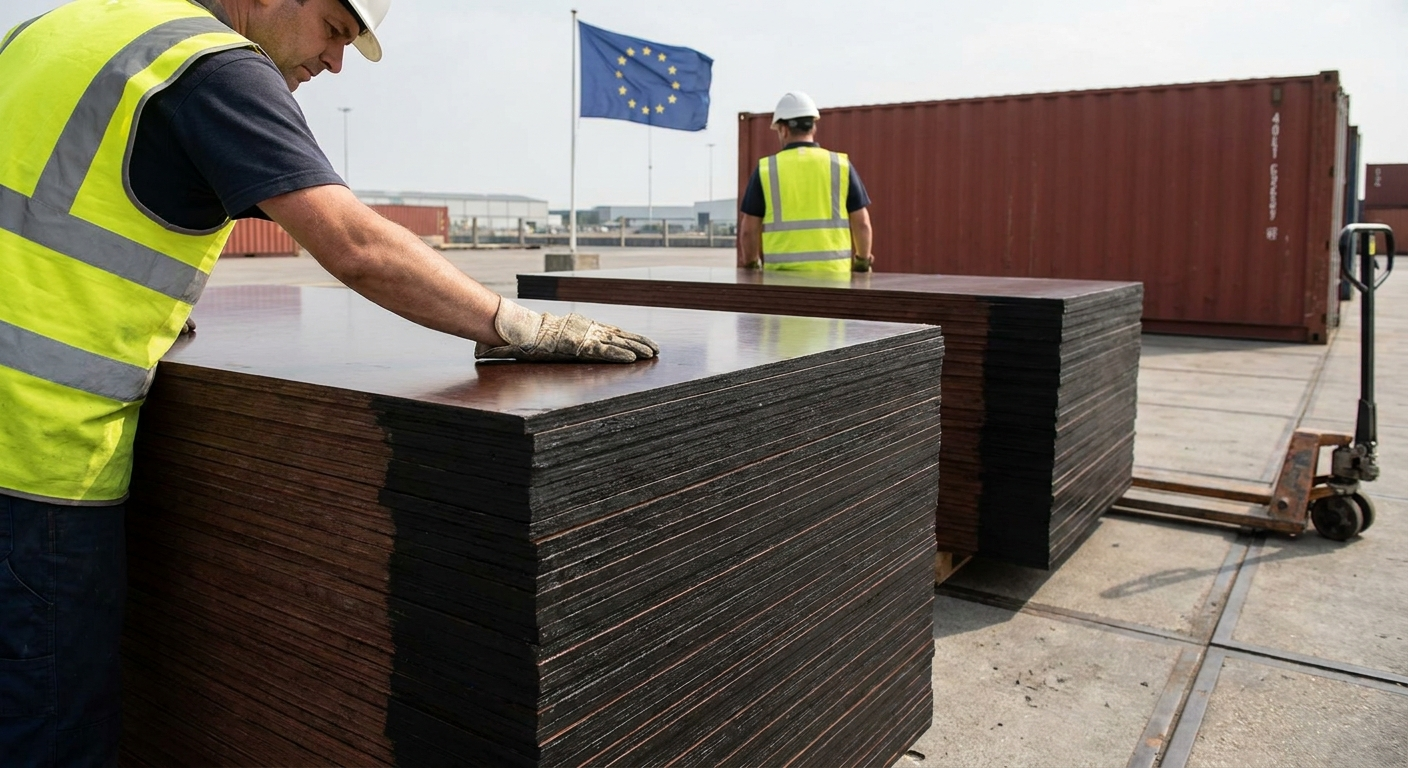
Match the panel format to the table's beam grid so cuts and waste stay low. North American and Australian tables generally run on the 1220×2440 mm sheet; European and UK tables on 1250×2500 mm. Ordering the wrong format means cutting every sheet, and every cut is another unsealed edge to manage. Where the table sits next to drop beams or downstands, our beam formwork plywood guide covers how those edges interact with the deck.
Sourcing checklist
Before ordering deck panels for a table or flying formwork programme, confirm the following: adhesive class matched to the cycle target (EN 636-3 phenolic for high floor counts, EN 636-2 higher-melamine MUF for moderate ones); face film weight matched to finish class and reuse; panel format matched to the table beam grid (1220×2440 mm or 1250×2500 mm); and the market compliance set — CARB P2 / EPA TSCA Title VI for the United States, CE marking to EN 13986 for the EU and UK, and FSC chain-of-custody where the project requires it. For the wider context of how film-faced panels behave under concrete, see our concrete form plywood pillar and the full film-faced plywood range.
About Vinawood
Vinawood has manufactured plywood in Vietnam since 1992, shipping more than 5,000 containers a year to 55+ countries. We supply the deck panel that faces the concrete on table and flying formwork (not the table system itself) across our film-faced range, with phenolic Class 3 Pro Form for high-cycle programmes and higher-melamine MUF Class 2 Form Extra for moderate ones. North American buyers working in HDO can browse the HDO plywood range. Every panel ships with full certification: ISO 9001, CE to EN 13986, EPA TSCA Title VI / CARB P2, and FSC chain-of-custody. To match a deck panel to your table programme and pour schedule, contact our team for a specification and quote.
Category
how-to