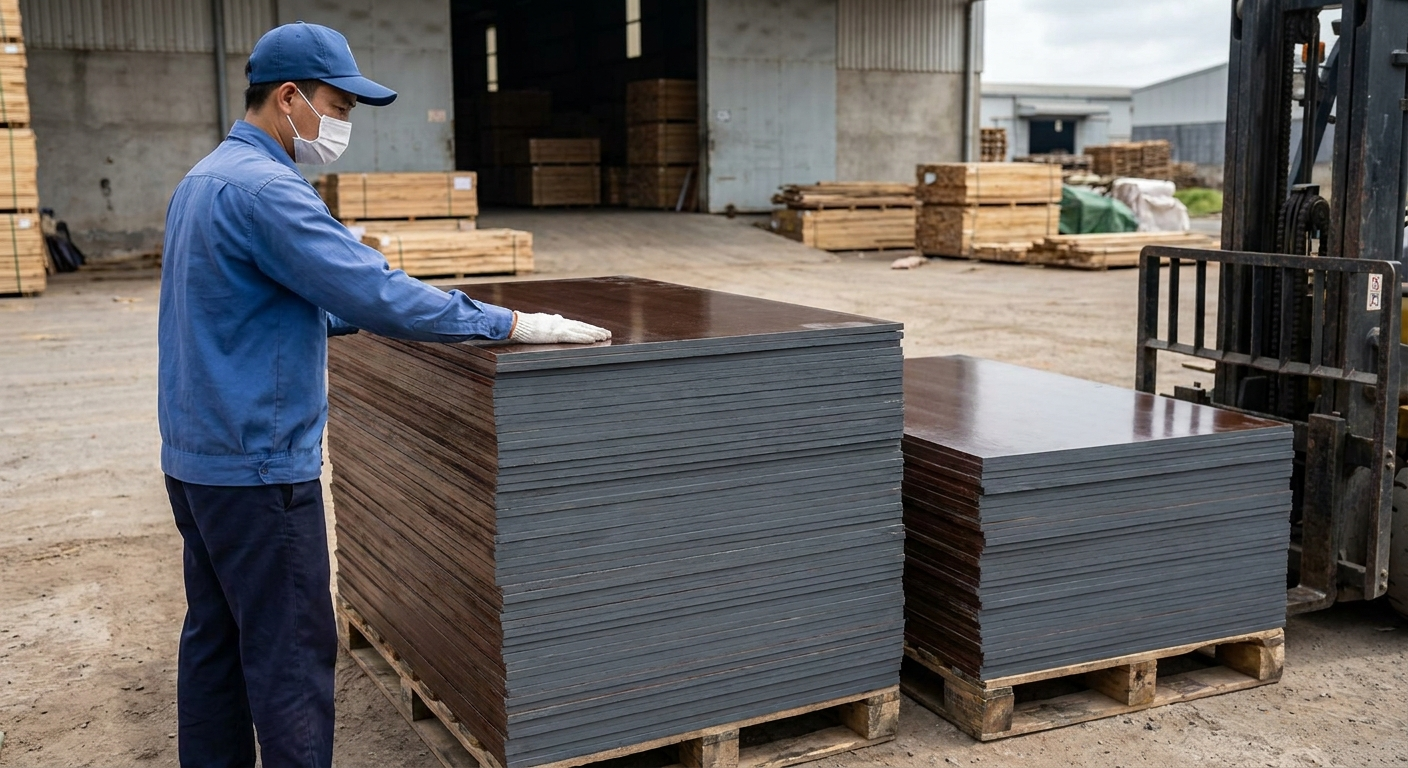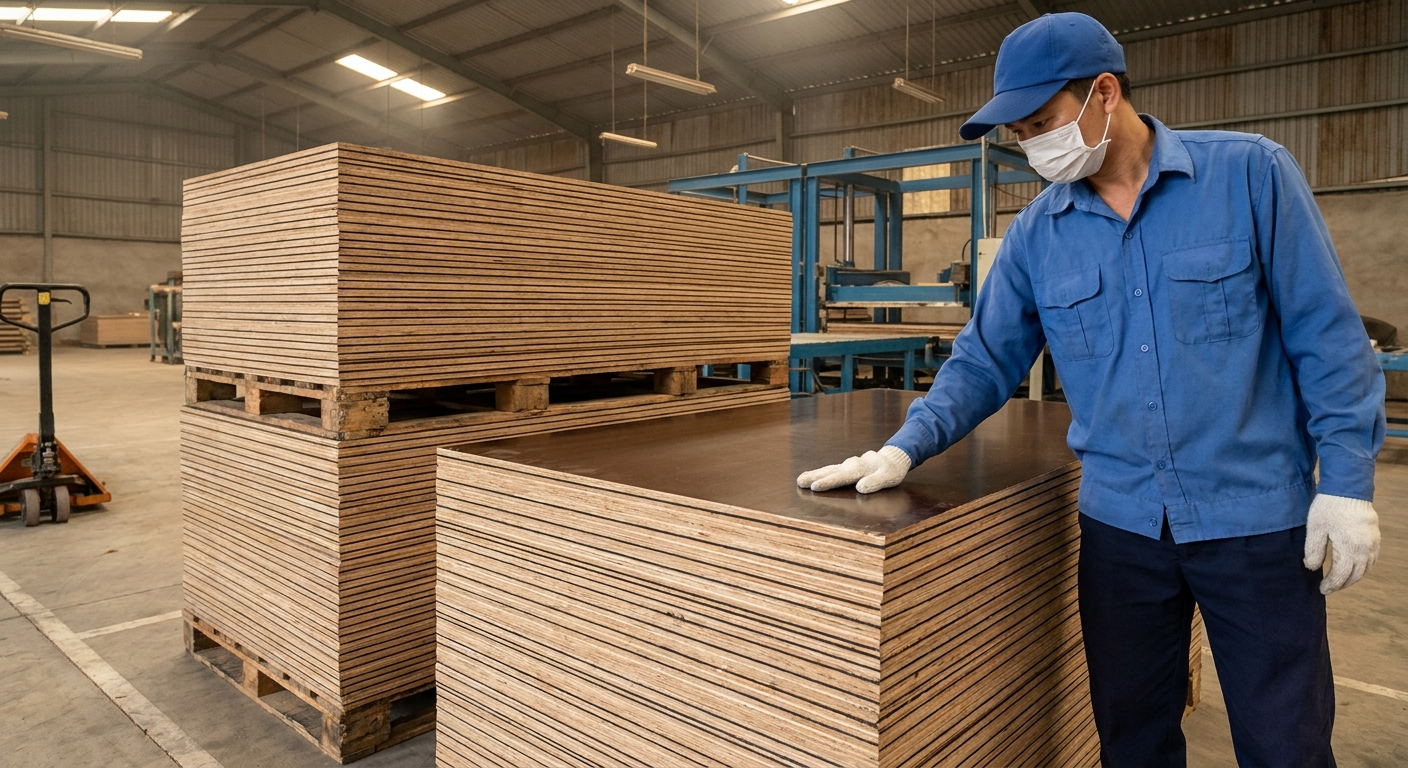
Termite-Resistant Plywood: How It Works, Indian Standards & How to Verify Claims at the Yard
Three different mechanisms get sold as 'termite-resistant plywood' in India, and most buyers cannot tell which one is doing the work. This guide breaks down glue-line treatment, preservative-treated veneers, and species selection, then walks the IS standards (303, 710, 401, 5539) and gives a…
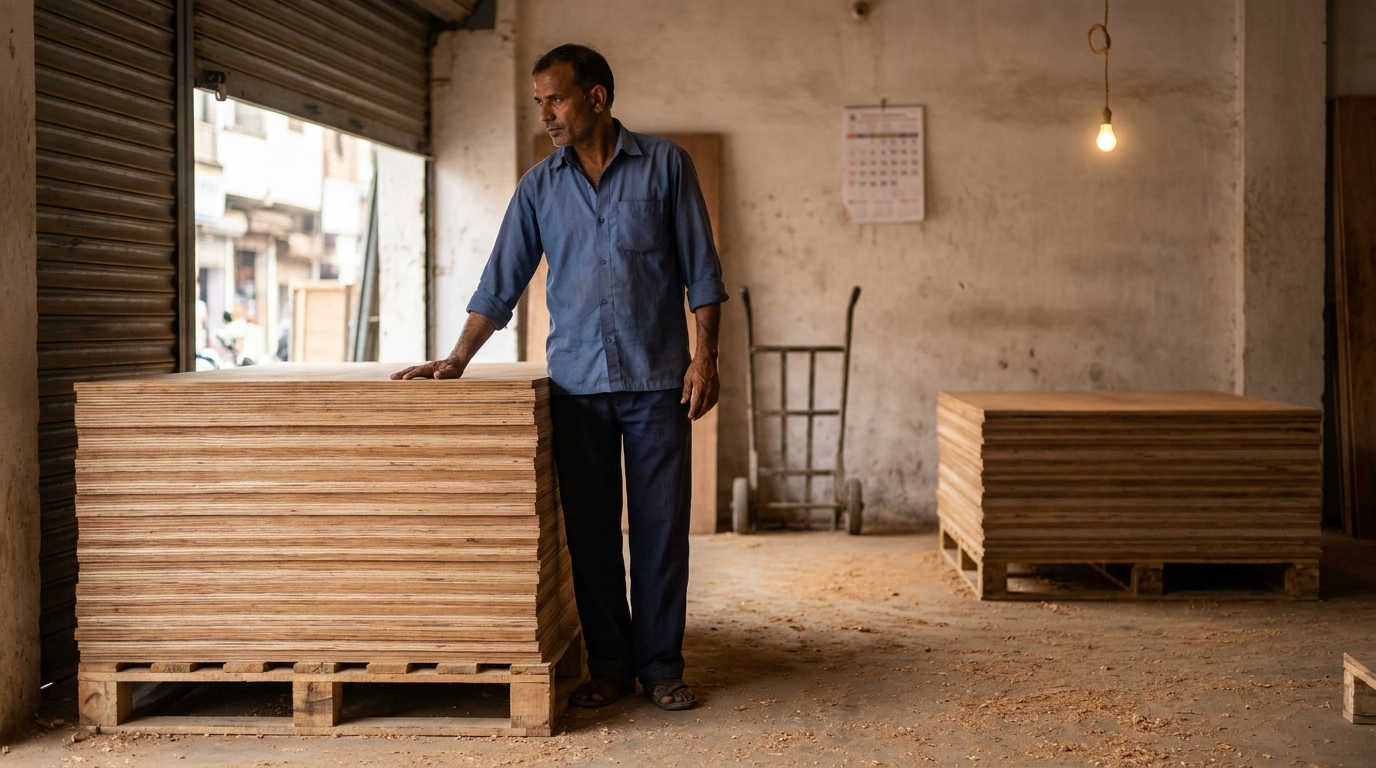
Three words, three mechanisms. "Termite-resistant plywood" gets sold that way in Bangalore, Chennai, and Manila yards every week. Buyers pay for one layer and expect all three. Then the sticker wins the argument until the first swarm season.
Here is how the protection is actually built, which Indian Standards force it, and how to check a bundle at the yard before money leaves.
What the label hides
Glue-line chemistry. Treated veneers. Species that termites dislike. Same marketing phrase. Different cost, lifespan, and proof path.
A serious marine panel often stacks more than one. A cheap commercial sheet may lean on a single layer and still print the same claim. Ask which mechanism is doing the work.
Mechanism 1 — Glue-line treatment
Boron compounds, IPBC, and copper fungicides go into the resin before the press. After cure, the chemistry sits inside every glue line. Sanding the face or trimming an edge does not wipe it off the way a surface dip can disappear.
You cannot see the loading after pressing. Retention in kg/m³ on a datasheet plus a lab certificate — that is the dispute file. Without both, the claim is a story.
Mechanism 2 — Treated veneers
Peels hit a dip tank or a pressure cylinder before lay-up. CCA still appears in some marine and structural packs where residential bans do not apply. ACQ is the modern residential path. Boron stays common for interior-only service.
IS 401 covers timber preservation practice. IS 5539 covers plywood sold as preservatively treated. If the sticker says treated, those papers should exist on the desk.
Mechanism 3 — Species
Acacia and eucalyptus plantation hardwoods start ahead of pine, fir, or spruce. Extractives, density, and silica slow some colonies. Softwood packs lean almost entirely on chemistry.
Species alone is not enough. Moisture and time still win. Stack a resistant core with treated glue or treated veneers and the envelope holds longer. We see that ask from coastal buyers in Mumbai and Cebu who want the species choice to stretch whatever chemical layer sits on top.
Indian Standards — quick reference
| Standard | Scope | Termite resistance status |
|---|---|---|
| IS 303 | General-purpose plywood — MR, BWR, BWP | Optional declaration |
| IS 710 | Marine plywood (BWP) | Mandatory borer and termite resistance |
| IS 401 | Timber preservation practice | Process — chemistry and retention |
| IS 5539 | Preservatively treated plywood | Mandatory when sold as treated |
IS 710 puts termite resistance in the grade. IS 303 BWP only guarantees the boil-proof glue story. Termite chemistry on commercial BWP is optional until the mill declares it and you verify it.
BWP is not automatically IS 710
Indian marketing pairs "BWP" with "termite-proof" because of IS 710. That marine standard requires the pest tests. Commercial BWP under IS 303 does not.
Marked "BWP" alone → glue class. Marked "IS 710 marine" → glue plus termite chemistry. Kitchen carcasses and bathroom vanities in termite country should cite IS 710 on the RFQ, and the ISI stamp should say the same number.
Yard checklist
- ISI with the standard number. IS 710 or IS 5539. No number, no deal.
- FIPL or IPIRTI report under IS 1734.
- Datasheet chemistry — mechanism, active, retention.
- Cut three edges. Continuous glue lines. Powder or frass ends the conversation.
- Warranty exclusions in writing. Ground contact, plumbing leaks, untreated edges, missing brand stamps — those clauses kill most "lifetime" claims.
Hardwood vs softwood on service life
A hardwood-faced BWP panel with moderate glue-line treatment often outlasts a softwood panel with heavy chemistry in humid interiors. The substrate is not inviting attack. Hardwood also takes laminate and edge banding cleaner, which closes the secondary moisture paths colonies use.
Softwood CDX-style packs are a different job — sheathing, not termite-critical cabinetry. Do not mix the categories on a furniture RFQ.
Where Vinawood fits
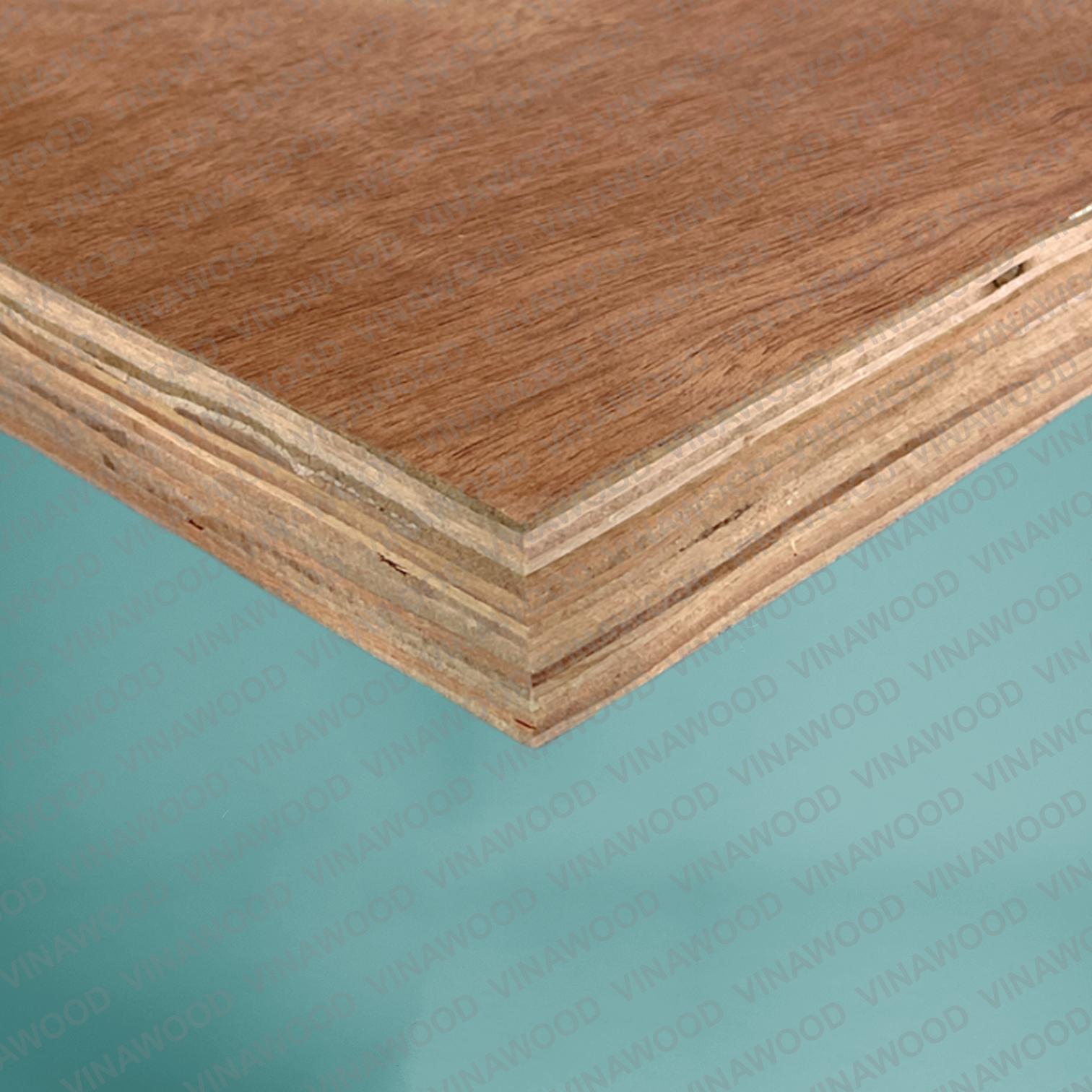
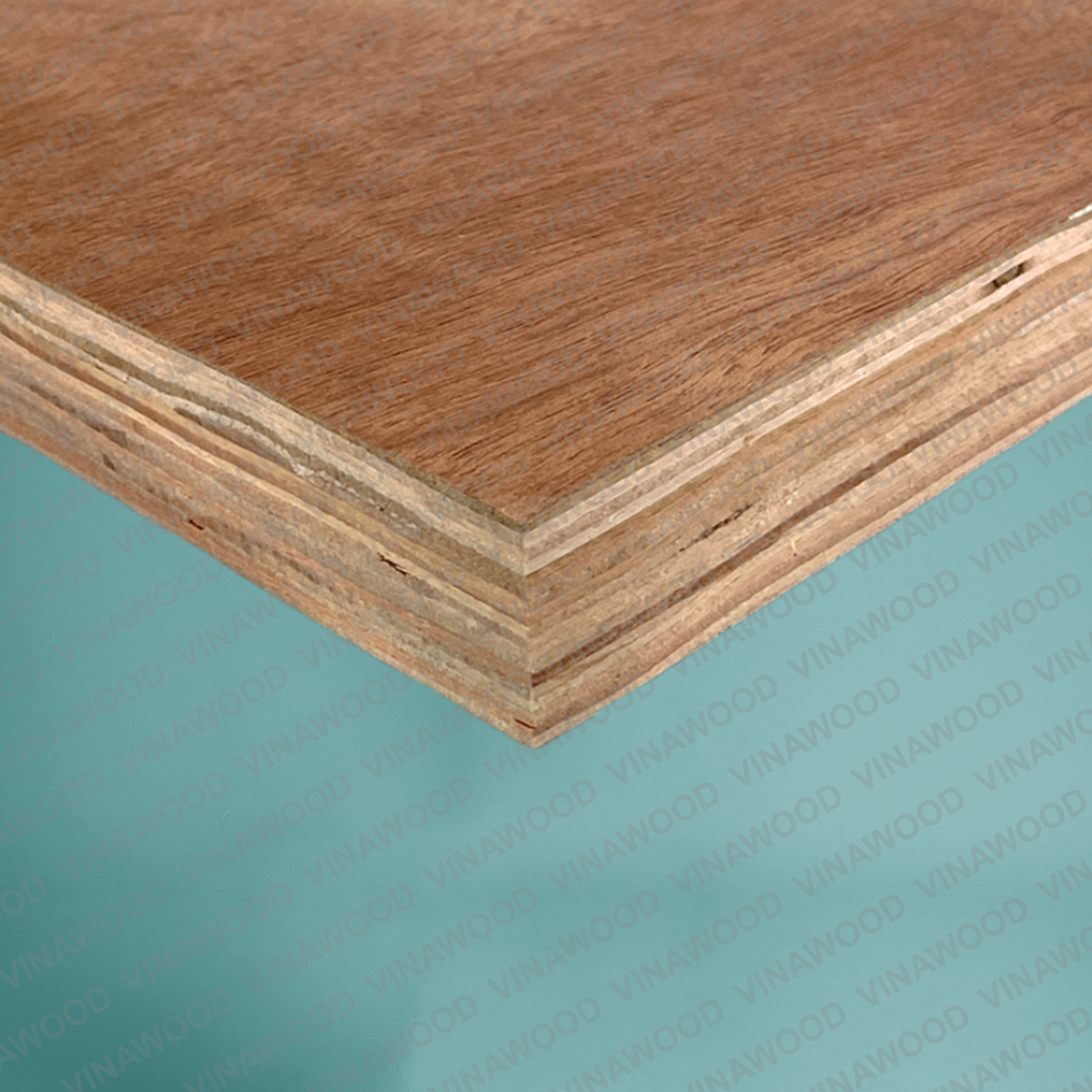
We press plantation acacia, eucalyptus, and hevea. Marine plywood runs on BS 1088 and IS 710 compatible specs with WBP phenolic glue that accepts boron additives when the RFQ asks. Commercial furniture grades can ship with preservative-treated faces and an IS 401 retention certificate on request.
Against domestic Indian brands, the quote talk we usually have is which mechanisms to stack — not which single slogan to buy. For standards context see Indian plywood standards and best plywood for furniture in India. The IS 710 / BS 1088 reference panel in our range is Marine Extra plywood.
Category
guides
Related Markets
Related Countries
Related Products
▶Sources & References (4)
- IS 710 — Specification for Marine Plywood — Bureau of Indian Standards (2010)
- IS 303 — Plywood for General Purposes — Bureau of Indian Standards (1989)
- IS 401 — Code of Practice for Preservation of Timber — Bureau of Indian Standards (2001)
- IS 5539 — Preservatively Treated Plywood — Bureau of Indian Standards (1998)