HDO vs MDO Plywood: A Complete Comparison for Builders and Contractors
HDO vs MDO plywood for concrete forms: HDO's hard resin overlay strips clean and lasts longest (HDO Standard and Premium Class 3, up to 20); MDO for forming usually means a matte phenolic face such as MatteFace, rated per panel. One table, bond classes and reuse by grade.
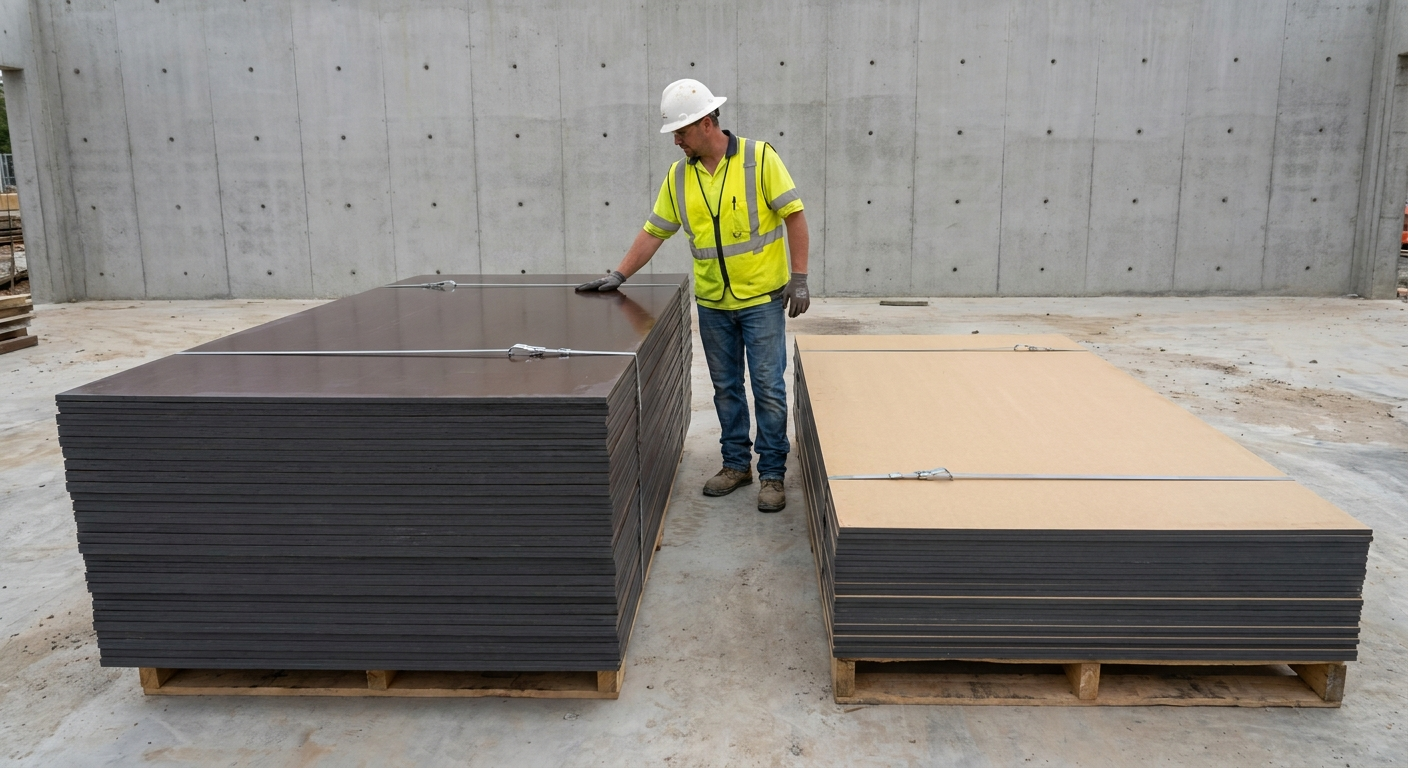
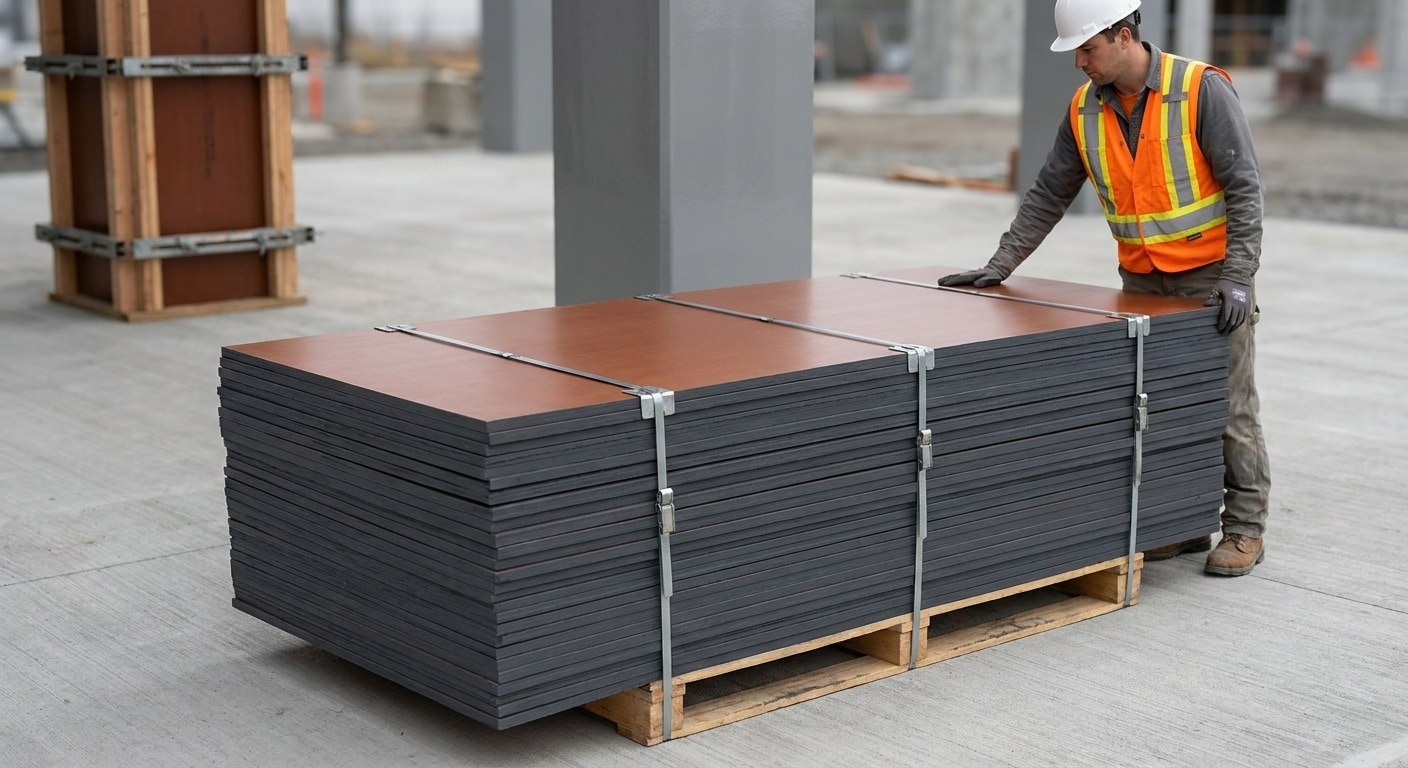
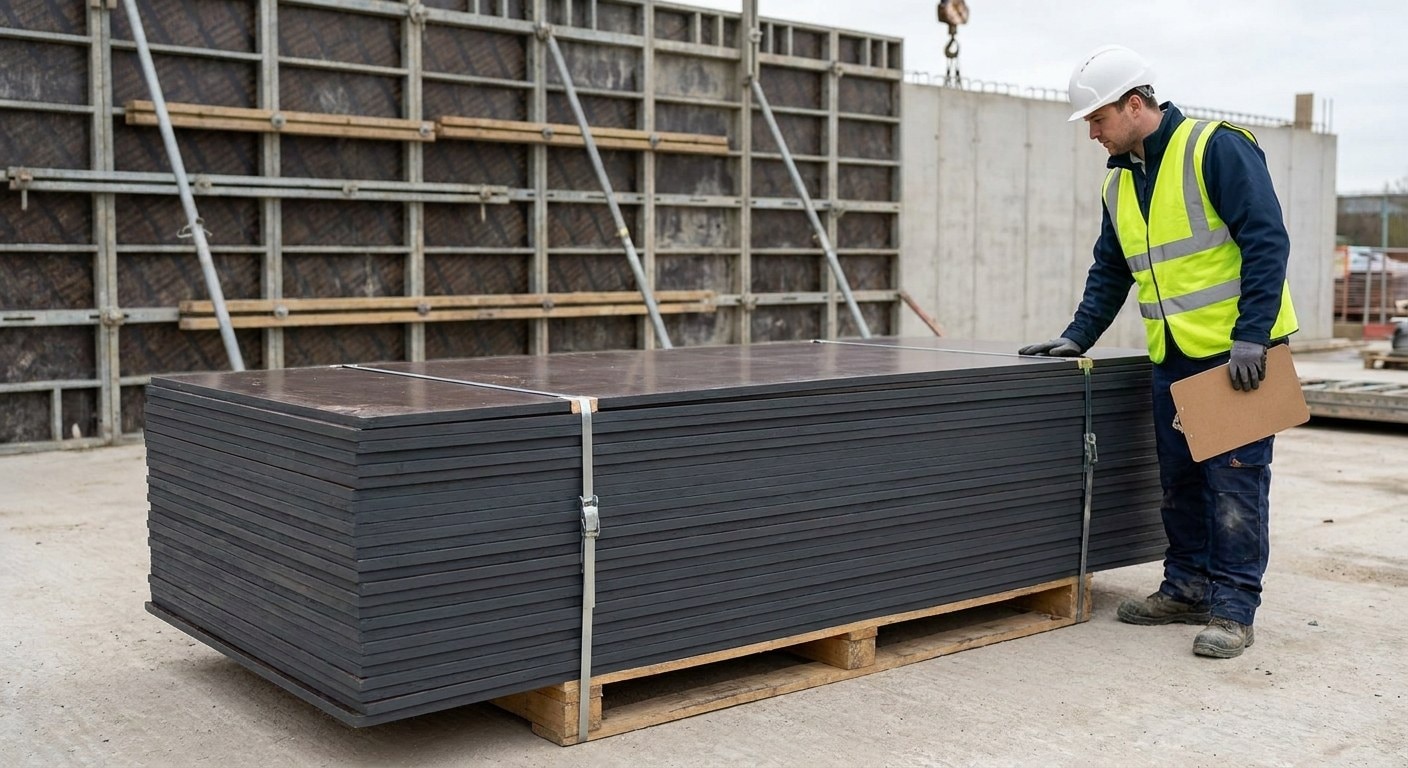
For concrete forms, HDO is the harder panel. Its dense resin overlay lets go of the concrete cleanly and lasts the most pours, and on our HDO Standard and HDO Premium grades the glue line is a Class 3 phenolic bond. MDO started life as a softer, paintable overlay for signs, and it was never meant to take pour after pour, so when a forming buyer asks us for "MDO" these days they nearly always mean a matte forming face, which is what MatteFace is for.
That's the short version. Why bother with the long one? Because people swap the two acronyms on take-offs constantly. Nobody notices until about the twelfth strip, when a face goes fuzzy and the wall has three weeks left to run. First comes the table we keep open when an RFQ lands, then a short pick-list, then the why.
HDO vs MDO for concrete forms
| Feature | HDO (high density overlay) | MDO (medium density overlay) / MatteFace for forming |
|---|---|---|
| Overlay type | Hard, resin-saturated fibre overlay, hot-pressed onto the face veneer | Classic MDO: resin-treated paper overlay for paint. Forming version: matte phenolic surface film (MatteFace Surface 325 gsm) |
| Surface and cast finish | Smooth, near-glossy cast with very little grain transfer | Classic MDO: paintable face, not a forming surface. MatteFace: even matte cast on exposed concrete |
| Glue and bond class | HDO Basic: M-Bond, Class 2. HDO Standard and HDO Premium: WBP phenolic, Class 3 | MatteFace: WBP phenolic, Class 3 |
| Reuse (Vinawood rating) | HDO Basic up to 10. HDO Standard, HDO Premium and HDO Premium HD up to 20 | MatteFace 1SF and Panel 1S up to 15, MatteFace HD 1SF up to 17, MatteFace Panel 2S up to 25 |
| Typical use | High-rotation walls, columns, decks and glossy exposed concrete | Exposed matte walls and soffits where the spec rejects gloss. Classic paper MDO belongs on signs and painted trim |
| Price | On request | On request |
Choose HDO or MDO: a quick decision
Choose HDO when:
- the panel faces a long pour programme and you want the highest cycle ceiling per sheet (HDO Standard or Premium, up to 20)
- the architect wants a smooth, near-glossy cast with almost no grain showing
- the job is short and cost-led, and HDO Basic (Class 2, up to 10) covers the pour count
Choose MDO (for forming, a matte panel such as MatteFace) when:
- the concrete stays exposed and the spec calls for a matte, low-sheen face
- you want a Class 3 phenolic bond under a matte film instead of a gloss one
- you'd rather flip a double-faced panel, where MatteFace Panel 2S is rated up to 25 uses
So what is HDO, physically?
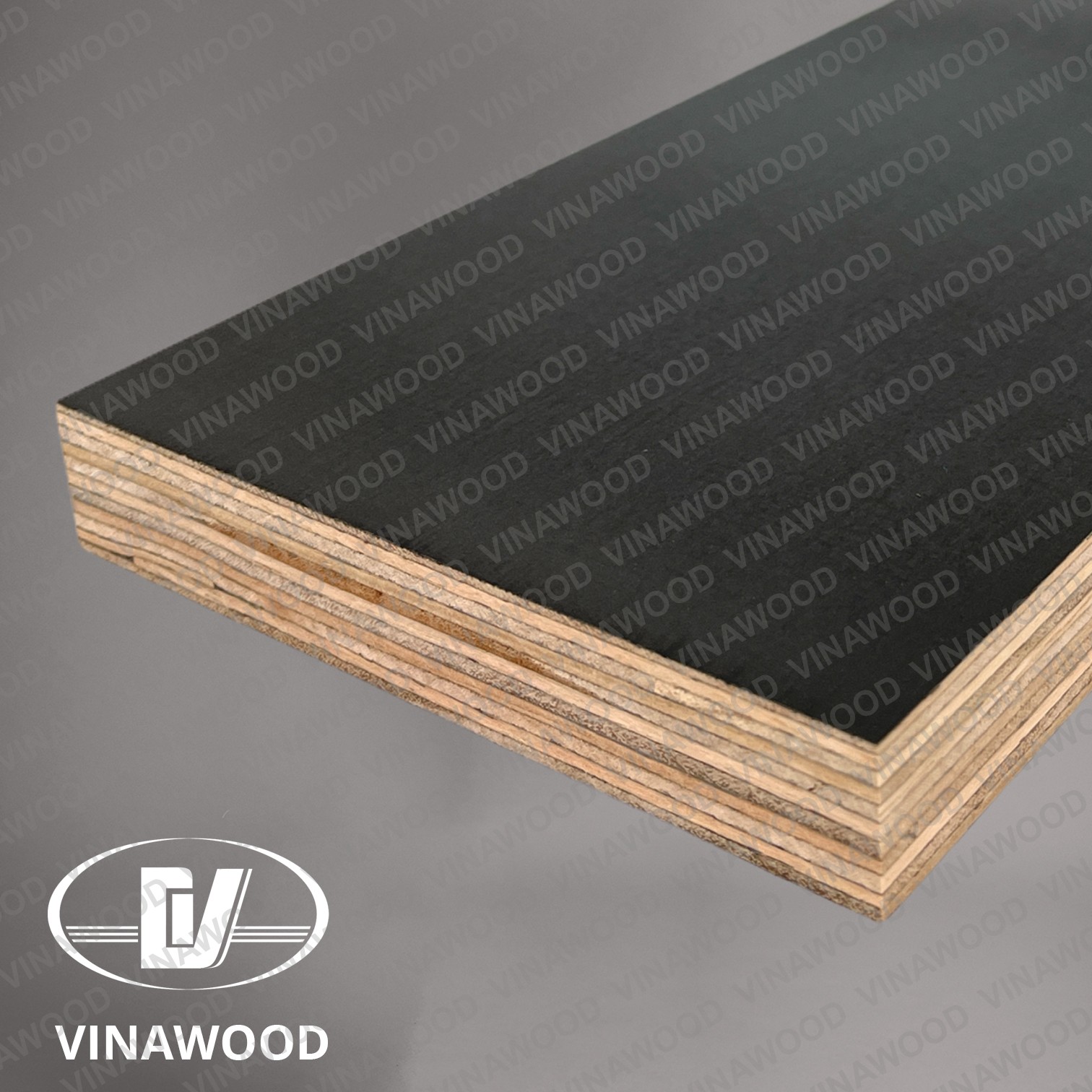
Take paper-like fibre, soak it in resin that sets with heat, then hot-press it onto the face veneer. What comes out of the press has a skin you'd swear was plastic if you ran a thumbnail over it. Cement paste can't get much purchase on that, which is why HDO strips clean and leaves a smooth, slightly shiny cast. APA, the North American standards body for engineered wood, treats HDO and MDO as two separate overlay classes, and that split is the whole story in miniature.
The face is only half of it, though. Under the overlay sits the glue line, and our HDO range splits there. HDO Basic is bonded with our M-Bond glue and rated Class 2, good for up to 10 uses on shorter jobs where price leads. HDO Standard and HDO Premium go to WBP phenolic glue, Class 3, rated up to 20. If you want the full grade ladder, the HDO plywood guide has it, and the HDO collection lists every face and thickness we press.
And MDO, on a forming job?
Classic MDO is a resin-treated paper bonded to the face so paint lays down flat. Highway signs. Soffits. Painted exterior trim. It does that job well. Put it against wet concrete, a vibrator and a stripping bar every couple of days, though, and the paper starts to lift and roughen well before a wall programme is done.
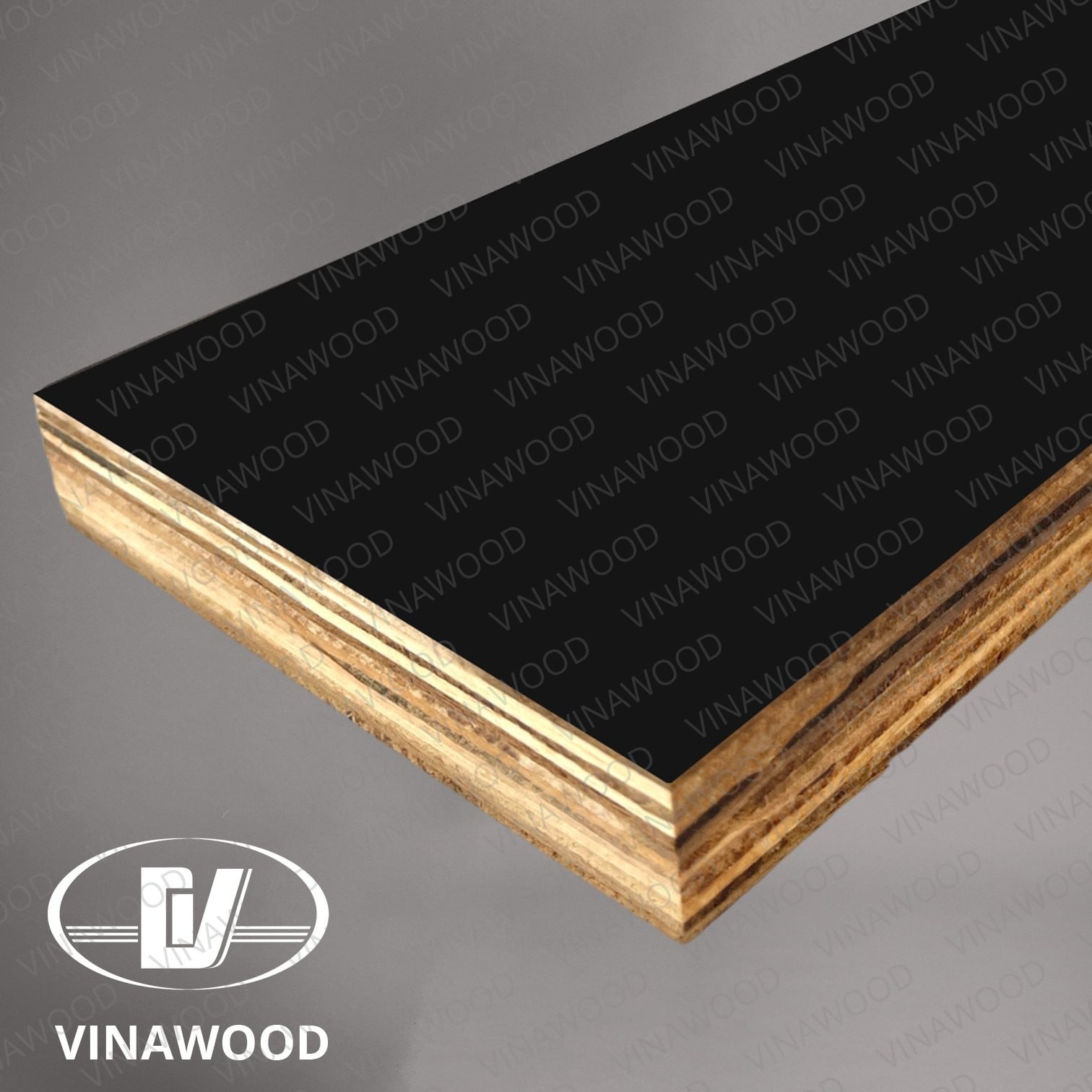
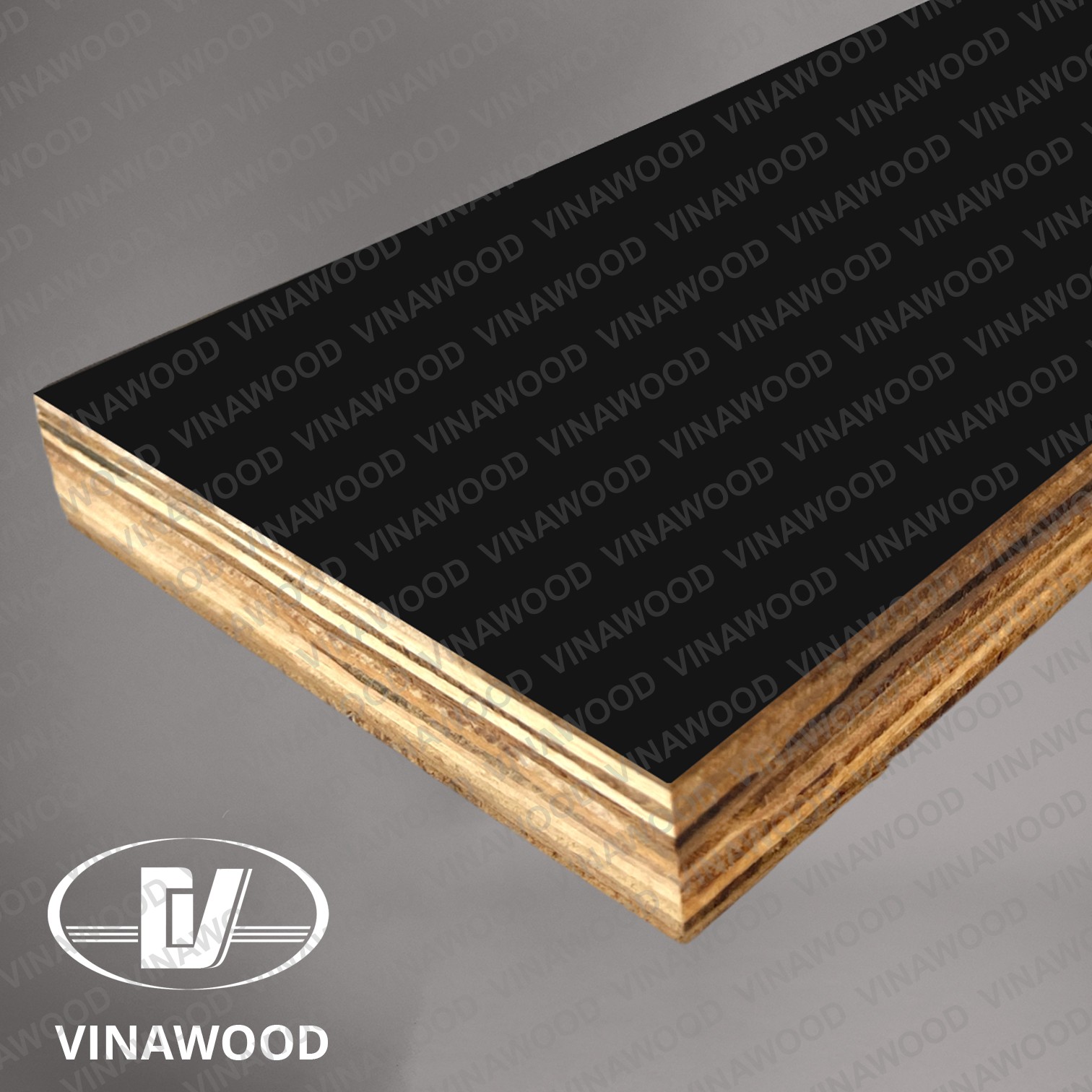
Forming crews kept the word because they liked the look it promised, a flat matte concrete face with no glare. That's why buyers often search for MatteFace as MDO formwork plywood. MatteFace Plywood (MTF) has no paper in it. The face is a matte phenolic surface film, listed in our product data as MatteFace Surface 325 gsm, and the core is WBP phenolic to Class 3. It's a formwork panel and nothing else; don't buy it to paint or to make signs.
Five panels make up the range: MatteFace Panel 1S (MTF1000), Panel 2S (MTF2000), 1SF (MTF3000), HD 1SF (MTF3HDP) and Eco 1SF (MTF3ECO). Don't quote one reuse figure for all of them, because each has its own: up to 15 for 1SF and Panel 1S, up to 17 for HD 1SF, up to 25 for Panel 2S since it has two working faces. You can get them at 12, 15, 18 or 21 mm thick, cut 1220×2440 or 1250×2500 mm.
Reuse and cost per pour
Everyone looks at sheet price first. It's also the least helpful number here. What the job really pays is sheet price over the pours you actually get, plus the patching crew time a worn face adds in its last few cycles, and a dearer HDO sheet often wins on a 20-pour wall while losing badly on a six-pour footing.
Our ratings are ceilings, reached with decent site care, so we write "up to" and quote on that basis. We'd say the gap between rating and reality comes down to handling far more often than to the overlay. Skipped release agent on a cold morning. A cut edge nobody re-sealed. Panels levered off with a steel bar, or stacked wet and left to cup in the sun. Any one of those eats cycles on HDO and MatteFace alike, and crews who clean, seal and strip with wedges get a lot closer to the number on the sheet.
How do we use the table ourselves? Count pours first. Then take the cheapest grade whose rating beats that count by a margin you're comfortable with. Ten pours or fewer and HDO Basic, or a Class 2 film-faced sheet, usually covers it. From 10 to 20 we look at HDO Standard or Premium if the spec says gloss and MatteFace if it says matte. Beyond 20? Flip a two-faced panel like MatteFace Panel 2S and let both sides share the beating.
What the concrete looks like
If the concrete is left bare, whatever the panel face looks like is what the client gets, so finish tends to settle the choice before anyone argues about reuse. HDO hands its slickness over to the wall. Columns, feature walls, bridge abutments and soffits come off it even and faintly shiny. The catch is that it also prints every scratch. Abuse a face once and you'll see it on the next pour.
Matte film lets you get away with more. Small dings vanish into a MatteFace cast, and when low sun hits the wall from the side it looks closer to sawn stone than poured grey. Designers who want raw concrete minus the glare ask for it by name. Paper MDO can give a matte cast for a pour or two. It's a paint base at heart, so for a real forming programme we'd go with the phenolic film. Buried footings are another matter: nobody sees them, and HDO Basic or a Class 2 film-faced sheet is normally plenty, as the concrete form plywood guide explains.
Film-faced plywood: the third option
In North America the argument is HDO versus MDO. In Europe, the Gulf and most of Asia the everyday forming panel is glossy phenolic film-faced plywood, which has a resin film on the face rather than a fibre or paper overlay and is graded mostly by the glue in its core. Pro Form and Pro Form Lite use WBP phenolic glue and are Class 3. Form Basic and Form Extra use an MUF core glue (melamine-urea-formaldehyde) rated EN 636-2, which suits mid-length programmes, and the trick is matching that adhesive class to how wet and how long the job runs. Our film-faced vs MDO vs HDO comparison puts all three faces side by side.
Buying HDO and MatteFace from Vinawood
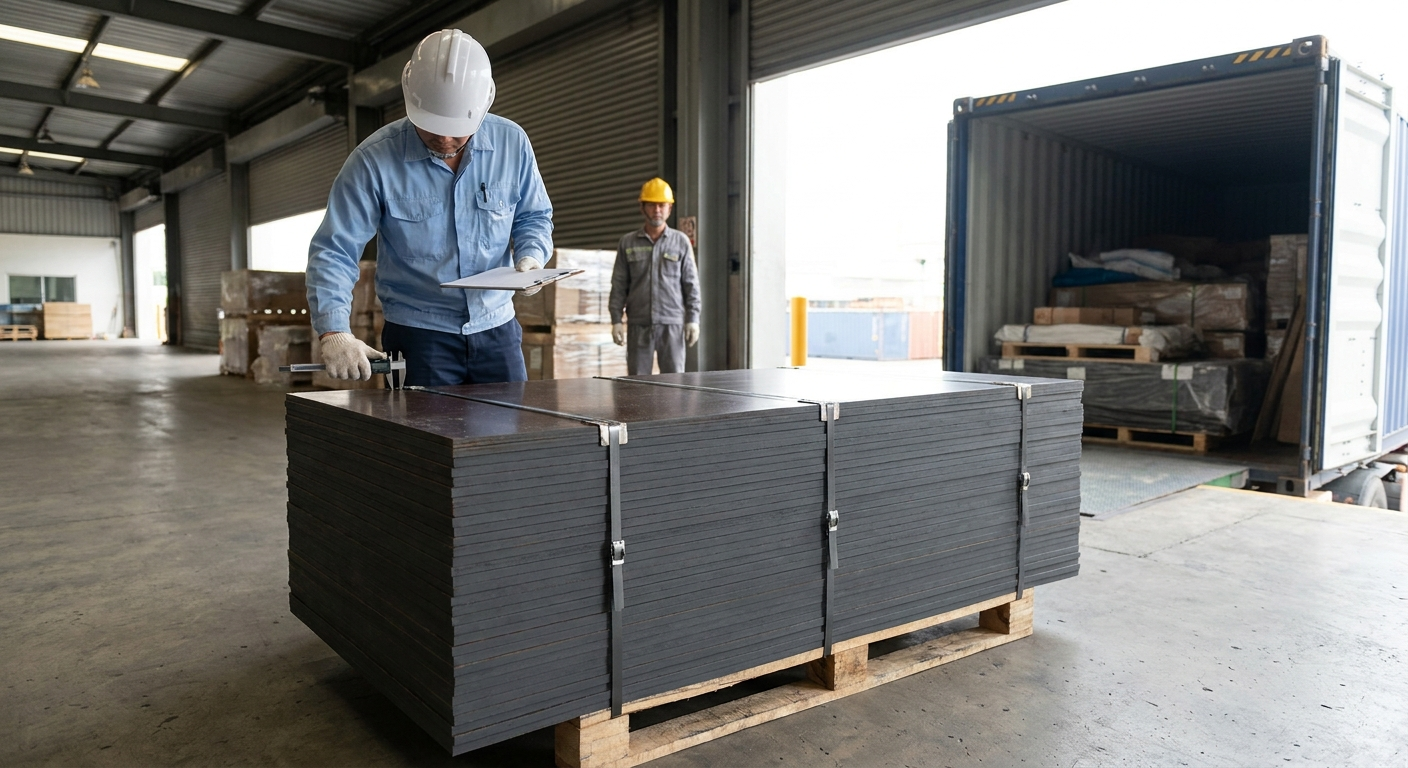
We've made formwork plywood in Vietnam since 1992. Around 5,000 containers a year leave Hai Phong for 55+ countries, and every sheet is checked by hand before it's bundled. Cores are plantation-grown Acacia, Eucalyptus and Hevea. North American buyers can also lean on our distribution warehouses there, which keep ready stock for local distributors. Trying a new grade needn't mean a whole container.
Writing in? Name the overlay first: HDO Basic, Standard, Premium or the MatteFace SKU. Add thickness, sheet size and a rough pour count. We'll confirm the bond class and rating for that exact panel and quote on request. Send it through the RFQ form or contact our team with drawings if you have them.
Category
how-to
Related Markets
Related Countries
Related Products
▶Sources & References (1)
- APA Engineered Wood Association — Overlaid Plywood Standard — APA — The Engineered Wood Association (2024-01-01)