Formwork Plywood Ireland: Shuttering Plywood Supplier for Irish Construction
EN 636-certified formwork and shuttering plywood for Irish construction projects. Vinawood supplies film faced plywood in 2500×1250mm EU format, shipped FOB Dublin at factory-direct pricing for contractors, formwork hire companies, and timber importers across Ireland.

Why Irish Contractors Are Sourcing Formwork Plywood Directly
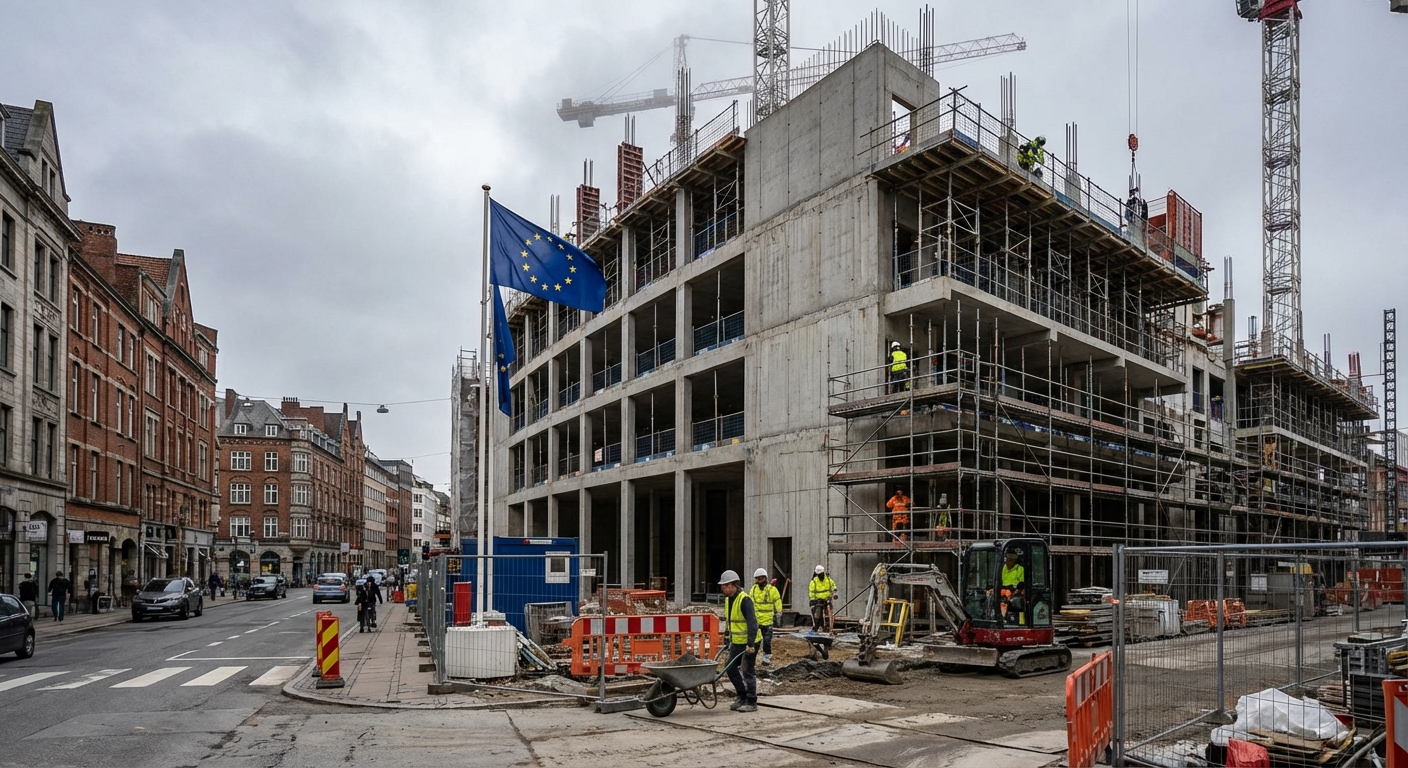
Ireland is building at a pace it has not managed in years. The government wants 33,000 new homes a year. Data centres keep going up around Dublin, Cork and the midlands, and the motorway upgrades and MetroLink are adding heavy civil work on top. All of it needs formwork, and the traditional supply chain has struggled to keep up at a sensible price.
Most Irish builders still get their shuttering ply through UK merchants. Follow one sheet back and you find a manufacturer selling to a UK importer, who sells to a distributor, who sells to the builder's merchant down the road. Everyone in that line takes a cut. On a small job nobody minds. On a job that eats a few hundred panels, people start asking whether they could just buy from the mill.
That is the conversation we have most often with Irish buyers. Vinawood has been making plywood since 1992 and sends out around 5,000 containers a year to more than 55 countries. We sell EN 636-certified formwork plywood straight to Irish contractors, formwork hire firms and timber merchants, and the CE marking documents come with every load.
Vinawood European-Grade Formwork Products for Ireland
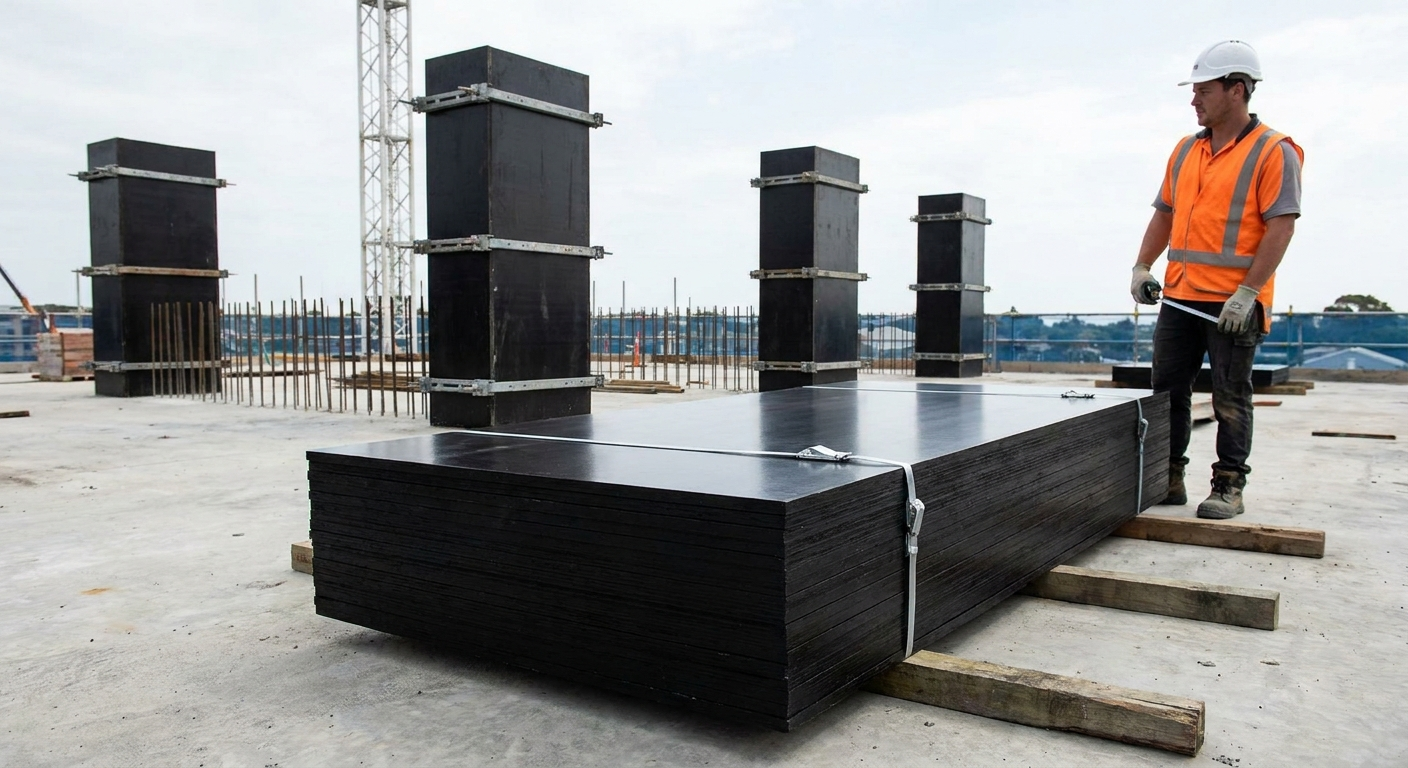
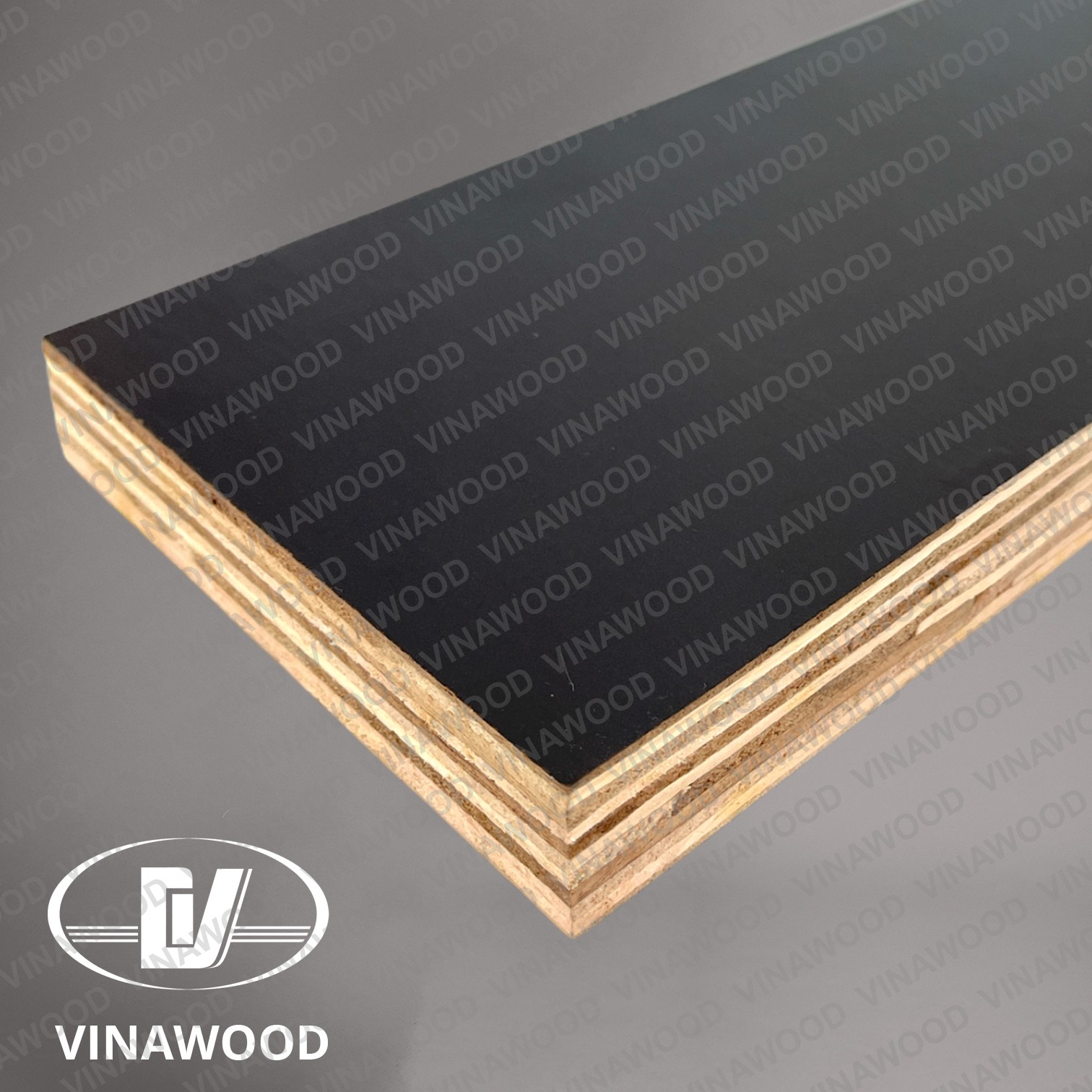
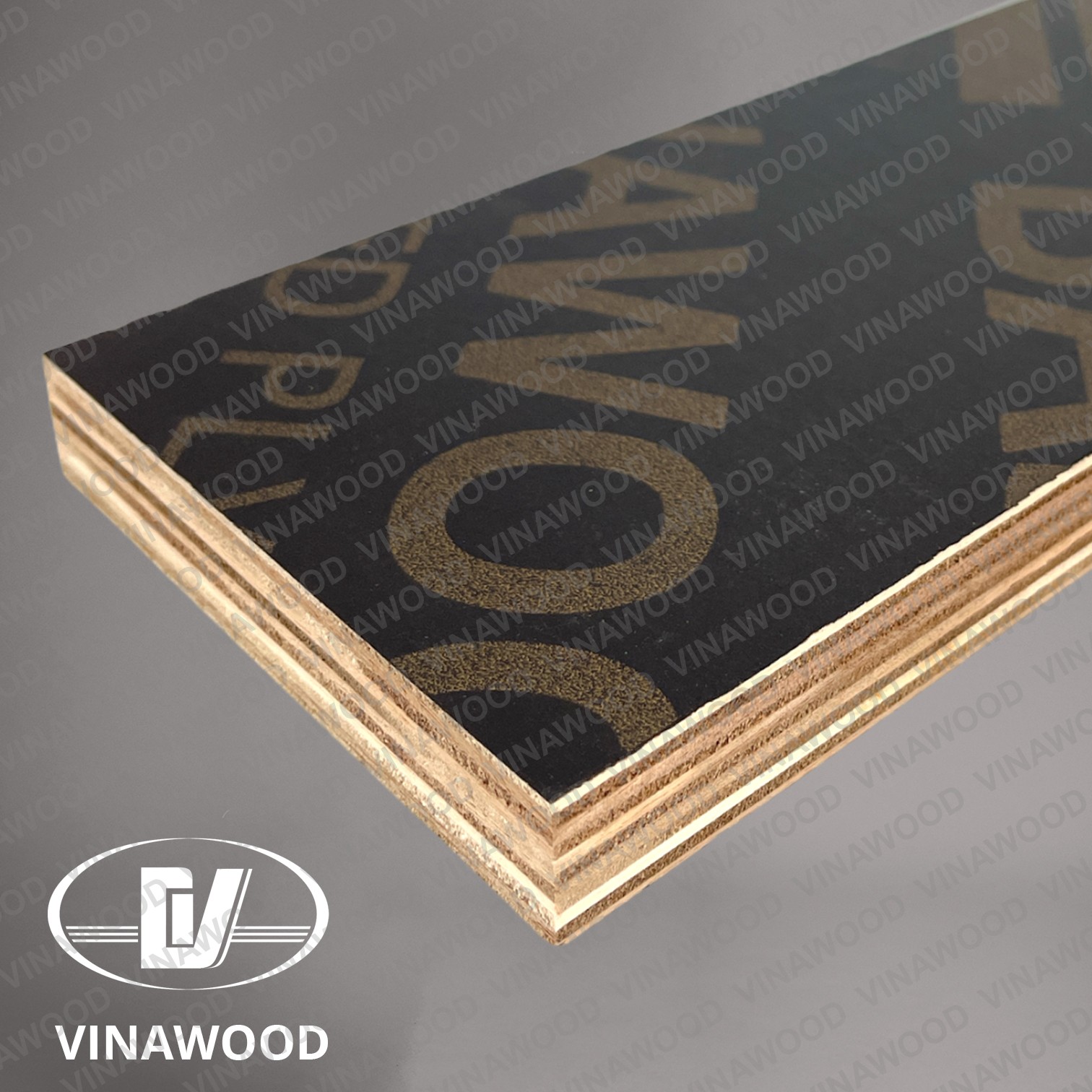
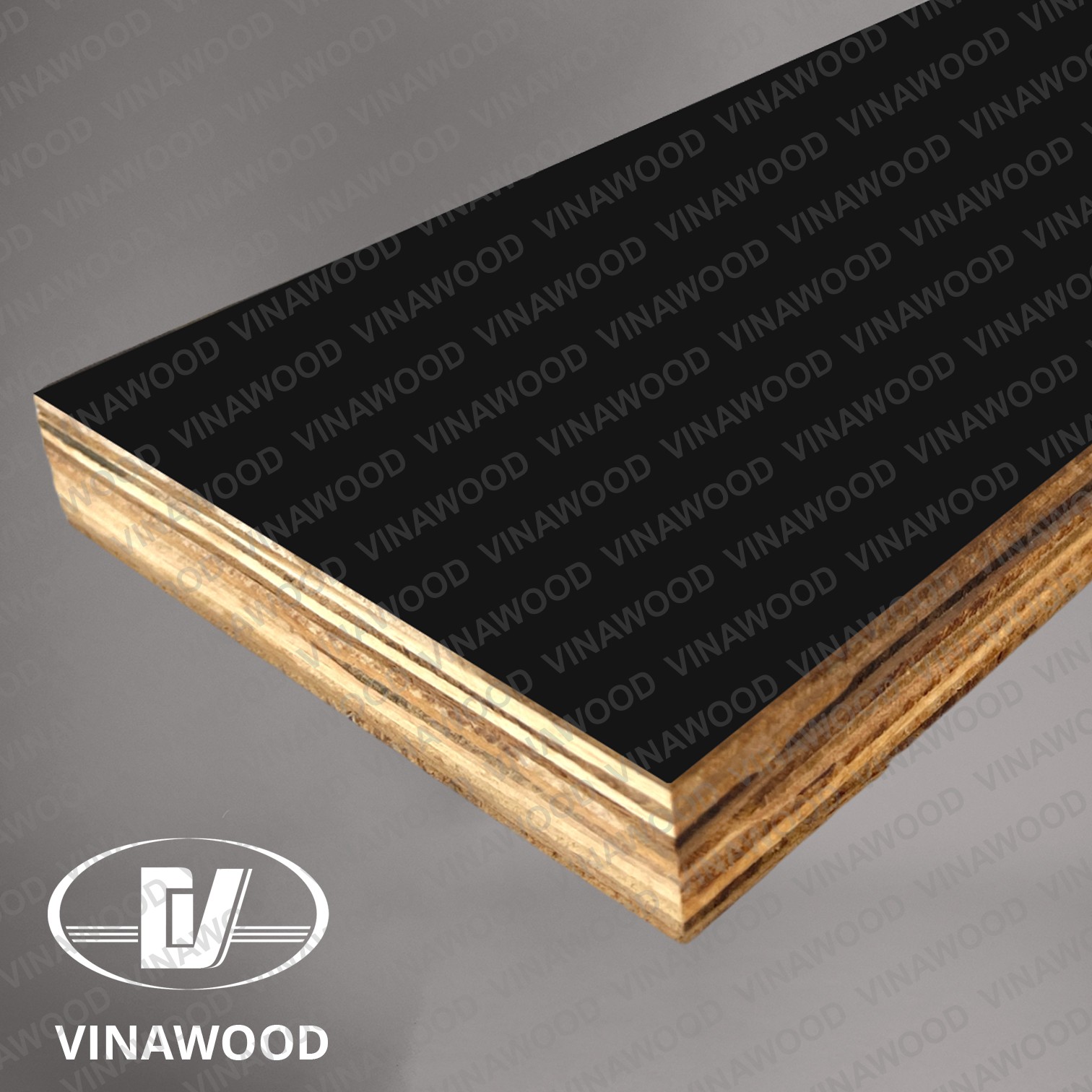
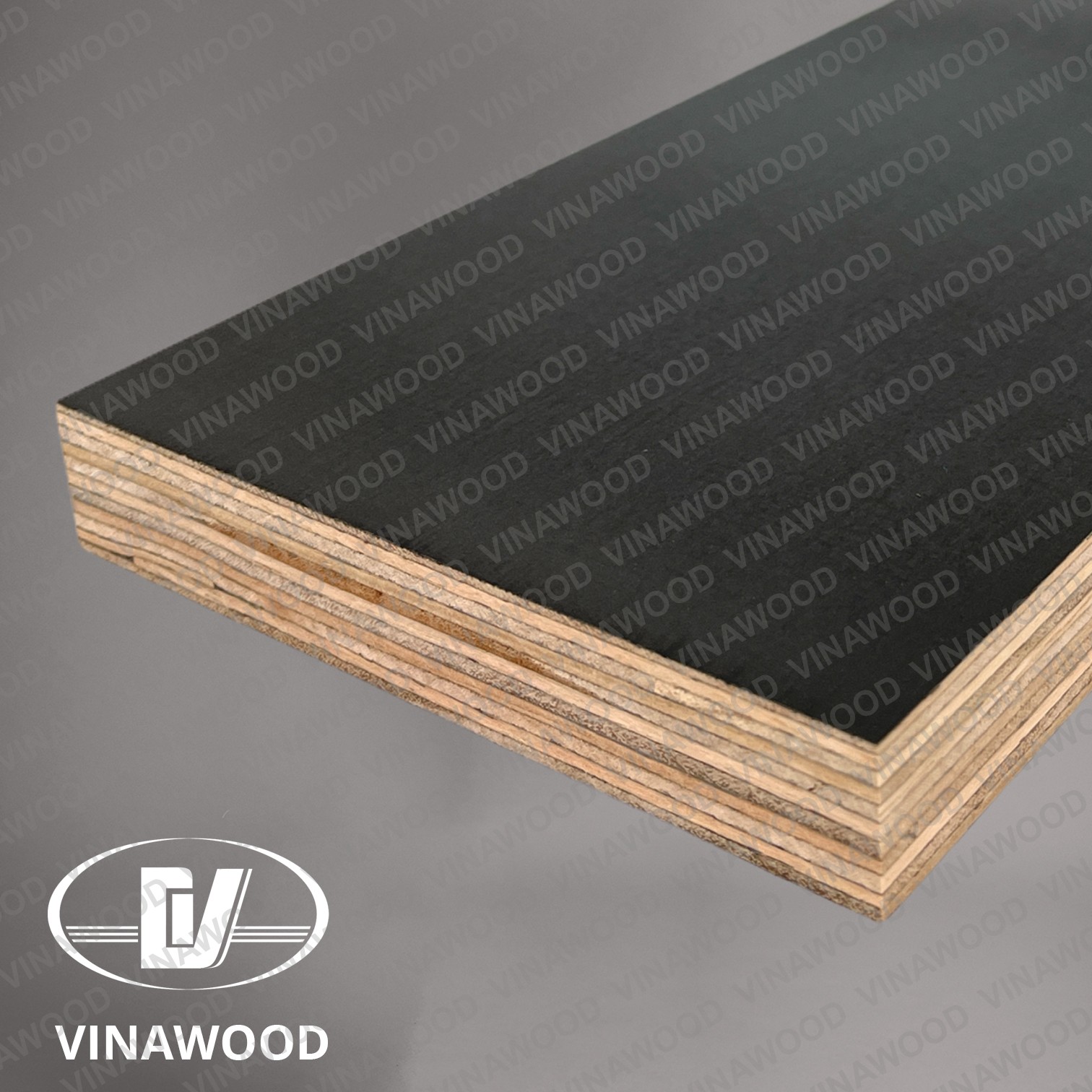
There are five film faced grades in the Irish range. Three of them are Class 2 (EN 636-2) and glued with melamine (MUF); Pro Form and Pro Form Lite are Class 3 (EN 636-3) and glued with WBP phenolic. You can have any of them in the 2500×1250mm EU size or the usual 2440×1220mm.
| Product | EN Standard | Glue Type | Face Film | Reuse Cycles | Thickness | Best For |
|---|---|---|---|---|---|---|
| Eco Form Plus | EN 636-2 | Melamine Standard (MUF) | 165 g/m² | Up to 8 | 12–21 mm | Budget residential projects |
| Form Basic | EN 636-2 | Melamine Standard (MUF) | 165 g/m² | Up to 10 | 12–21 mm | Standard commercial forming |
| Form Extra | EN 636-2 | Melamine Top (MUF) | 165 g/m² | Up to 15 | 12–21 mm | Heavy-duty, high reuse |
| Pro Form Lite | EN 636-3 | WBP phenolic | 165 g/m² | Up to 15 | 12–21 mm | Class 3 work at a moderate pour count |
| Pro Form | EN 636-3 | WBP phenolic | 125 g/m² | Up to 20 | 12–21 mm | Exterior, infrastructure, Class 3 |
Irish sites mostly order 18mm.
If you only remember one thing when specifying shuttering ply, make it the glue class. The EN 636-2 grades (Eco Form Plus, Form Basic, Form Extra) have a melamine (MUF) glue line meant for humid conditions, and that covers most walls, columns and slabs. Where panels will sit out in the weather for long stretches, on bridge abutments, retaining walls or anything near the sea, you want Pro Form or Pro Form Lite, whose WBP phenolic bond is rated EN 636-3. The shuttering plywood guide goes through grade choice in more detail.
EN Standards and Irish Building Regulations
Ireland takes its construction standards from Europe through the National Standards Authority of Ireland (NSAI). For plywood used in construction, three of them matter:
EN 636 — Plywood for Structural Use
EN 636 sorts plywood by the conditions it will serve in. EN 636-1 is for dry use, EN 636-2 for humid conditions, which is the baseline for formwork, and EN 636-3 for exterior exposure. Our Eco Form Plus, Form Basic and Form Extra are EN 636-2 panels. Pro Form and Pro Form Lite meet the higher EN 636-3 class.
EN 13986 — Wood-Based Panels for Construction
EN 13986 is the harmonised standard behind CE marking for wood-based panels in construction. A panel marked under it can go onto an Irish job without a separate national approval, because Irish Building Control and the Construction Products Regulation (EU) No 305/2011 both recognise the CE mark.
IS EN Standards (NSAI)
Irish standards carry an IS EN prefix, and they are straight adoptions of the European text. So when a specification calls for IS EN 636, it is asking for exactly what EN 636 says, and our EN 636 panels meet it as they are.
Formaldehyde Emissions
Formaldehyde emission class is stated per grade on the mill certificate. The phenolic grades, Pro Form and Pro Form Lite, are listed at E1, while the melamine (MUF) bonded Class 2 grades are listed at E2, so name the class your project needs on the enquiry and we confirm it on the quotation. Vinawood also holds CARB P2 and TSCA Title VI certification. For LEED or BREEAM projects, FSC-COC and PEFC chain-of-custody documentation and an Environmental Product Declaration (EPD) are available on request.
Construction Applications Across Ireland
Here is where our panels end up on Irish jobs:
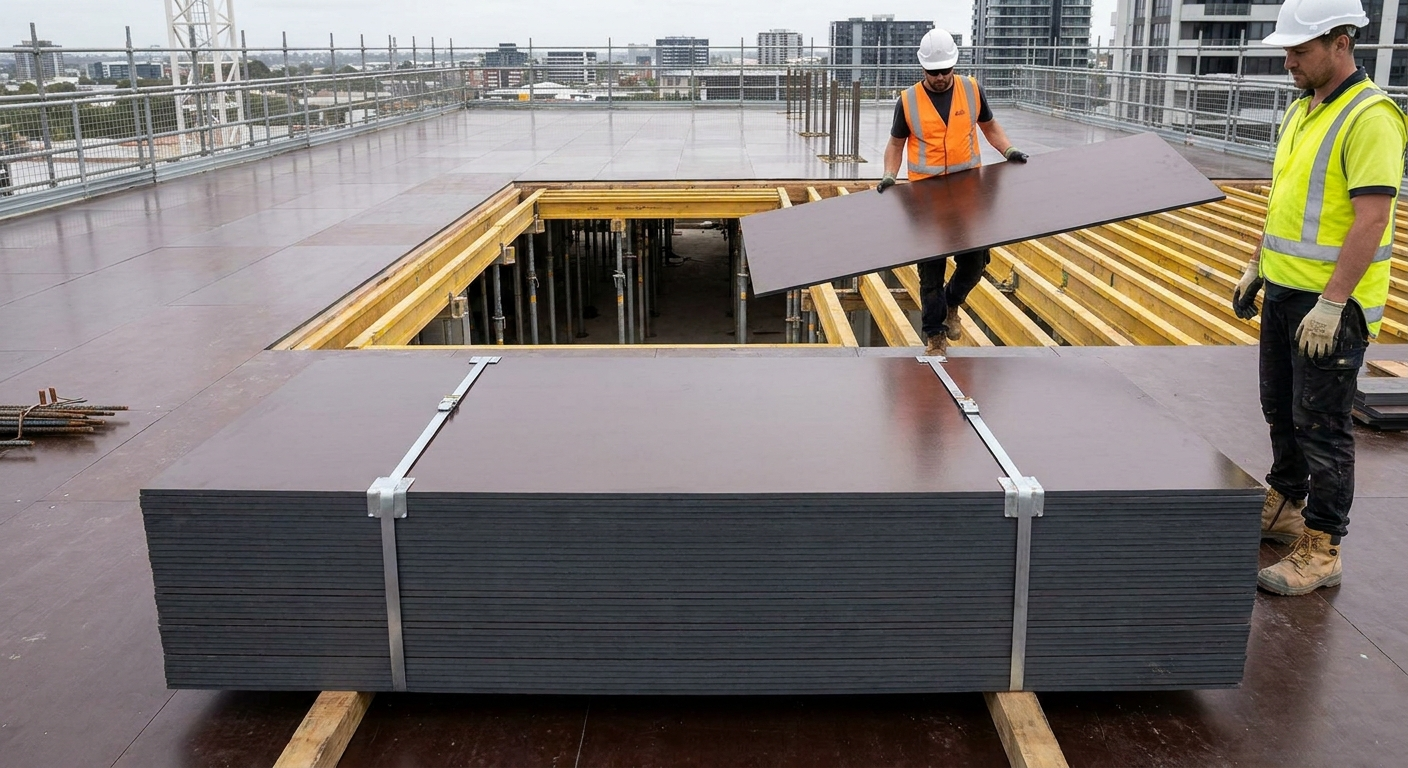
- Residential housing: Estate builds, apartment blocks and social housing get through a lot of 18mm shuttering plywood, mostly on foundation walls, ground floor slabs and stair cores. For that kind of work Form Basic, at up to 10 reuses, usually gives the best cost per pour.
- Commercial construction: Offices in the Dublin docklands, schemes in Cork city centre and mixed-use blocks in Galway tend to ask more of a panel. Form Extra (up to 15 reuses) is specified where crews want more pours from a Class 2 panel; its extra life comes from the Melamine Top (MUF) glue, and it carries the same 165 g/m² film as Form Basic.
- Data centre construction: Ireland is one of Europe's main data centre locations, with facilities across Dublin, Athlone, Ennis, and the midlands. A single campus can use thousands of panels on foundation pads, server hall walls and service corridors, and at that scale a direct container nearly always pays.
- Infrastructure: National road upgrades, the N6 Galway City Ring Road, MetroLink, and flood defence schemes require EN 636-3 rated panels for extended outdoor exposure. Pro Form, with its WBP phenolic bond (Class 3), is the correct specification for these applications.
Shipping and Logistics to Ireland
We ship to Dublin Port and the Port of Cork regularly. From Hai Phong it takes around 28–35 days, with transhipment in Singapore or Port Klang. Some containers go via Rotterdam or Antwerp and finish on a feeder to Dublin, which lands at much the same time, about 30–38 days.
Order size, container loading and how many grades or thicknesses can share one container are all set out on your quotation, along with payment terms and any deposit. Letters of Credit are fine. We normally sell FOB, with the buyer booking freight, though CIF Dublin or CIF Cork can be arranged. HS heading 4412 (plywood) applies, and the exact subheading follows the face veneer species declared on the commercial invoice. Clearance follows the normal EU process, and the CE documents, the Declaration of Performance (DoP) and the phytosanitary certificate travel with every shipment.
Merchant Supply or a Direct Container?
Builder's merchants in Dublin, Cork and Limerick earn their place. They hold stock, deliver tomorrow and let you buy ten sheets when ten is all you need. Specialist formwork suppliers and hire companies buy on better terms, but the panel has still passed through a distributor or two before it reaches them.
Buying a container direct shifts the sum. Freight, port handling and any duty all go on top of the mill price, so look at cost per pour instead of price per sheet: what the panel costs you landed, divided by the pours your crew actually gets. Honestly, a board that lasts twice as long almost never costs twice as much.
Below about a container's worth of panels, the merchant usually wins on lead time and flexibility. Above that, and on housing schemes or data centre programmes that run for months, a direct supply line from Vietnam is worth pricing. Pricing, order size and payment terms are confirmed on your quotation.
Request a Quote — FOB Dublin
Vinawood supplies formwork plywood to construction companies, formwork hire operators, and timber importers across Ireland. Our team provides certified EN 636 shuttering plywood direct from the mill with full CE marking documentation for Irish building regulation compliance. Explore our European formwork plywood range:
- Pro Form — EN 636-3, up to 20 reuses, WBP phenolic glue (Class 3), 125 g/m² film
- Pro Form Lite — EN 636-3, up to 15 reuses, WBP phenolic glue (Class 3), 165 g/m² film
- Form Extra — EN 636-2, up to 15 reuses, 165 g/m² film over a Melamine Top (MUF) core
- Form Basic — EN 636-2, up to 10 reuses, standard commercial forming
- Eco Form Plus — EN 636-2, up to 8 reuses, best value for residential
Category
guides
Related Markets
Related Countries
Related Products
▶Sources & References (3)
- EN 636: Plywood — Specifications — CEN European Committee for Standardization (2012-01-01)
- EN 13986: Wood-based panels for use in construction — CEN European Committee for Standardization (2004-01-01)
- Construction Products Regulation (EU) No 305/2011 — European Parliament and Council (2011-03-09)