Grades Of Plywood and Their Applications
Plywood grades rate the appearance of the face and back veneers, not strength. This guide explains the A, B, C, D letter system, the X exterior-bond suffix in CDX and ACX, how the grades map across APA PS 1, EN 635 and IS 303, and which grade suits each job.
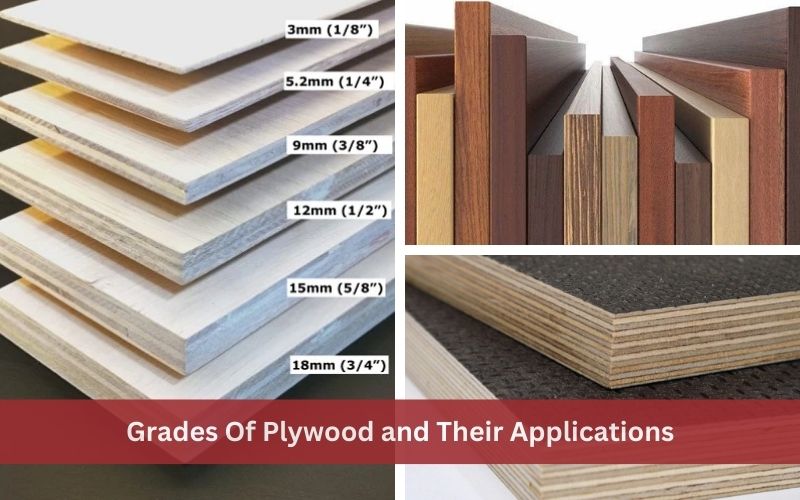
Plywood grades describe the quality of the wood veneers on the face and back of a panel. The system looks simple, a letter for each side, but a few things trip buyers up. The letters rate appearance, not load capacity. The same sheet carries two grades, one per face. And the X in CDX has nothing to do with the grade at all. This guide reads the A, B, C, and D letters, explains the exterior-bond X suffix, and lines the North American system up against the European and Indian standards so you can read a stamp and pick the right panel.
Grading is fixed by published standards, not by a mill's catalogue. North America works to US Product Standard PS 1, administered through APA – The Engineered Wood Association, with hardwood and decorative panels under ANSI/HPVA HP-1. Europe classifies surface appearance under EN 635. India uses IS 303. A face called "B" in one system is not the same as "B" in another, which is why the mapping table further down matters the moment you import across regions.
How the two-letter grade works
Most structural and hardwood plywood carries a two-letter grade. The first letter is the face veneer, the second is the back. An A-C panel pairs a clean, paintable A face with a utility C back, which is the usual choice when one side shows and the other sits against a joist or wall. Matching a better face to a rougher back is how a mill keeps veneer cost in line with where the panel will actually be seen.
| Grade pair | Face | Back | Typical use |
|---|---|---|---|
| A-A | A | A | Both sides visible: cabinet doors, fixtures, display joinery |
| A-B | A | B | One show face, one mostly-hidden side that still needs a sound surface |
| A-C | A | C | Paint-grade face, structural or hidden back |
| B-C | B | C | Utility panels where a tidy face helps but is not critical |
| C-D | C | D | Sheathing and subfloor, fully hidden in service |
| CDX | C | D | C-D panel with exterior glue: roof and wall sheathing |
What A, B, C, and D mean
The letters track how clean the veneer is and how much repair work the face has had. They do not rate the glue bond or the structural rating, both of which are separate marks on the stamp.
A grade
Smooth, sanded, and effectively free of open defects. Any knots are small, tight, and filled; repairs are neat and few. A faces take paint and clear finish well, so they go on cabinetry, furniture, and anything where the surface is the point.
B grade
Solid and sound, with a slightly more worked surface than A. Small tight knots, minor patches, and a few football repairs are allowed within the grade. A B face is fine under paint and for most visible utility work.
C grade
A working surface. Tight knots up to about 38 mm, occasional knotholes, splits, and patches are permitted. Those features are grade characteristics, not faults, so a C panel with the knots its grade allows has not failed anything. C is the standard face for sheathing.
D grade
The most relaxed appearance grade. Larger knots and knotholes and more open splits are allowed because the panel is meant to be hidden in the finished structure. D almost always shows up as the back of a sheathing panel rather than a face.
The X suffix: CDX, ACX, and BCX
This is the single most misread part of a plywood stamp. The X is not a grade. It marks the glue line: an exterior or weather-and-boil-proof bond rather than an interior one. CDX is a C-face, D-back panel built with exterior glue. ACX is an A face over a C back with the same exterior bond, and BCX sits between them. The letters still describe the two veneers; the X just tells you the adhesive will survive moisture and the wet-dry cycling of a framing job before the roof goes on.
We see this confusion constantly in buyer specs. A contractor will ask for "CDX grade" as if the X were a premium tier, when all it signals is exterior glue on an otherwise ordinary sheathing panel. The reverse trap matters more: an exterior glue bond does not make a panel suitable for permanent weather exposure. CDX shrugs off the rain during construction; it is not a long-term outdoor board. For continuous exposure you move up to a marine or film-faced specification, which is a different grading system entirely. Our guide to CDX plywood covers where that line sits.
Grade pairs at a glance
| Grade | Surface | Repairs allowed | Best suited to |
|---|---|---|---|
| A | Smooth, paintable | Few, neat | Cabinetry, furniture, show faces |
| B | Solid, lightly worked | Small knots, patches | Paint-grade utility, visible backs |
| C | Working face | Tight knots, small holes | Sheathing, subfloor faces |
| D | Utility, rough | Larger knots and holes | Hidden backs, concealed structure |
| X (suffix) | Exterior glue bond | n/a — bond, not appearance | Construction-stage moisture exposure |
How grades map across PS 1, EN 635, and IS 303
Letter grades are a North American convention. Europe and India publish their own appearance scales, and the names do not line up one to one. The table below is a practical cross-reference for reading an imported panel, not an exact legal equivalence, since each standard sets its own defect limits and measurement rules.
| APA / PS 1 (US) | EN 635 class (Europe) | IS 303 (India) | Appearance |
|---|---|---|---|
| A | E or I | BWP/MR grade, A-class face | Near-flawless, finish-ready |
| B | II | B-class face | Sound, minor allowed repairs |
| C | III | BB-class face | Working surface, tight knots |
| D | IV | C / utility face | Utility, hidden use |
EN 635 runs its best class as E, then I through IV as appearance loosens. IS 303 separates the bond grade (MR for moisture resistant, BWR and BWP for boiling-water resistant and proof) from the face-veneer class, so an Indian panel stamp carries both a bond label and a veneer label. The takeaway when you import: read the standard named on the stamp, then translate, rather than assuming a letter means the same thing everywhere.
Which grade for which job
| Application | Sensible grade | Why |
|---|---|---|
| Cabinet doors, furniture, joinery | A-A or A-B | Both faces, or the show face, need a clean finish surface |
| Paint-grade panelling | A-C or B-C | One good face is enough; the back is hidden |
| Roof and wall sheathing | CDX | Structural rating plus an exterior glue bond for the build phase |
| Subfloor | C-D or CDX | Covered by the finish floor; strength and bond matter, looks do not |
| Concealed structure | C-D | Never seen, so pay only for the grade the load needs |
| Concrete formwork | Film-faced (separate system) | Graded by EN 636 bond class and film, not by A/B/C/D |
For the wider catalogue of named panel types and where each grade shows up, our reference on the 20 types of plywood and grades goes case by case, and the cabinet-specific picks sit in our note on plywood for kitchen cabinets.
Formwork plywood is graded differently
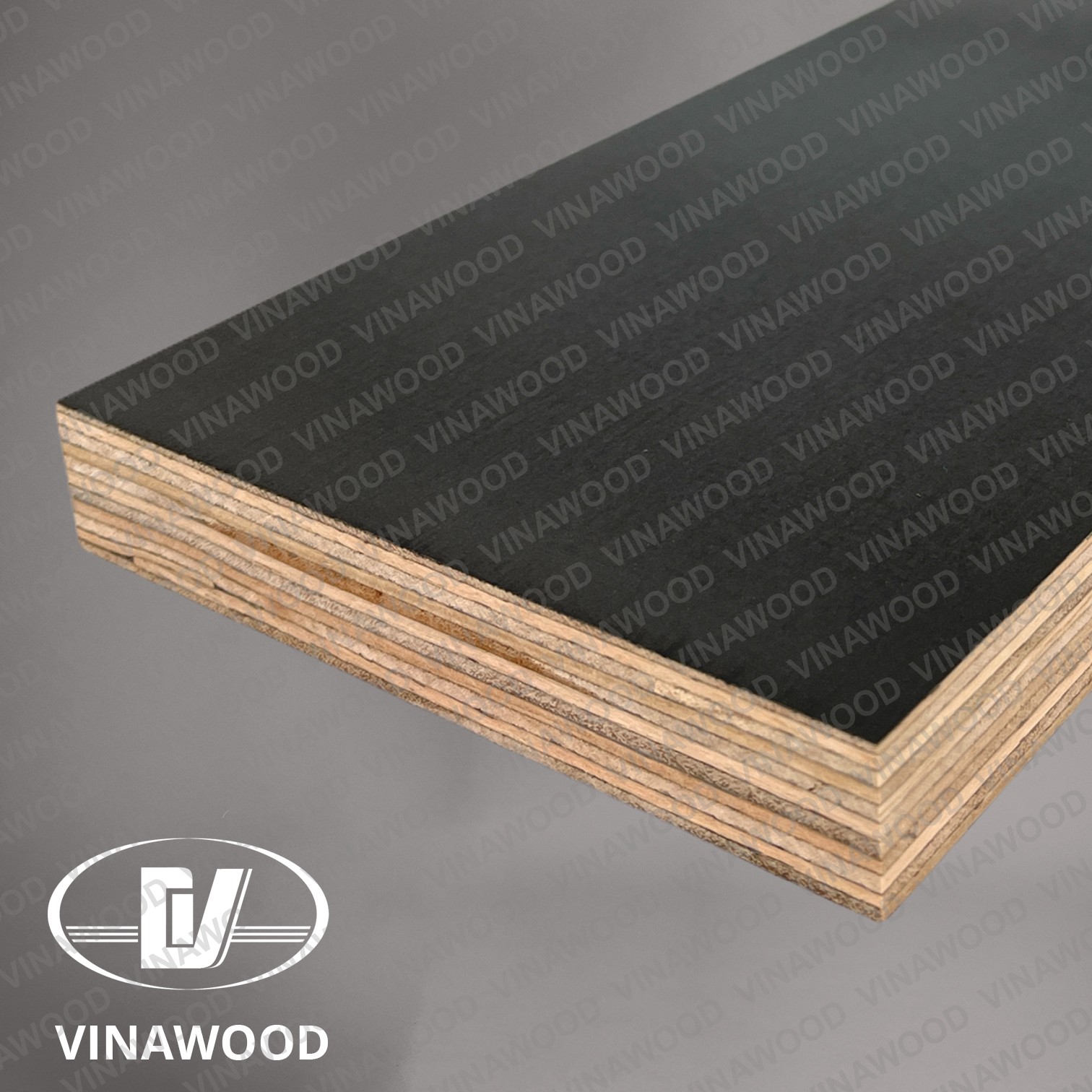
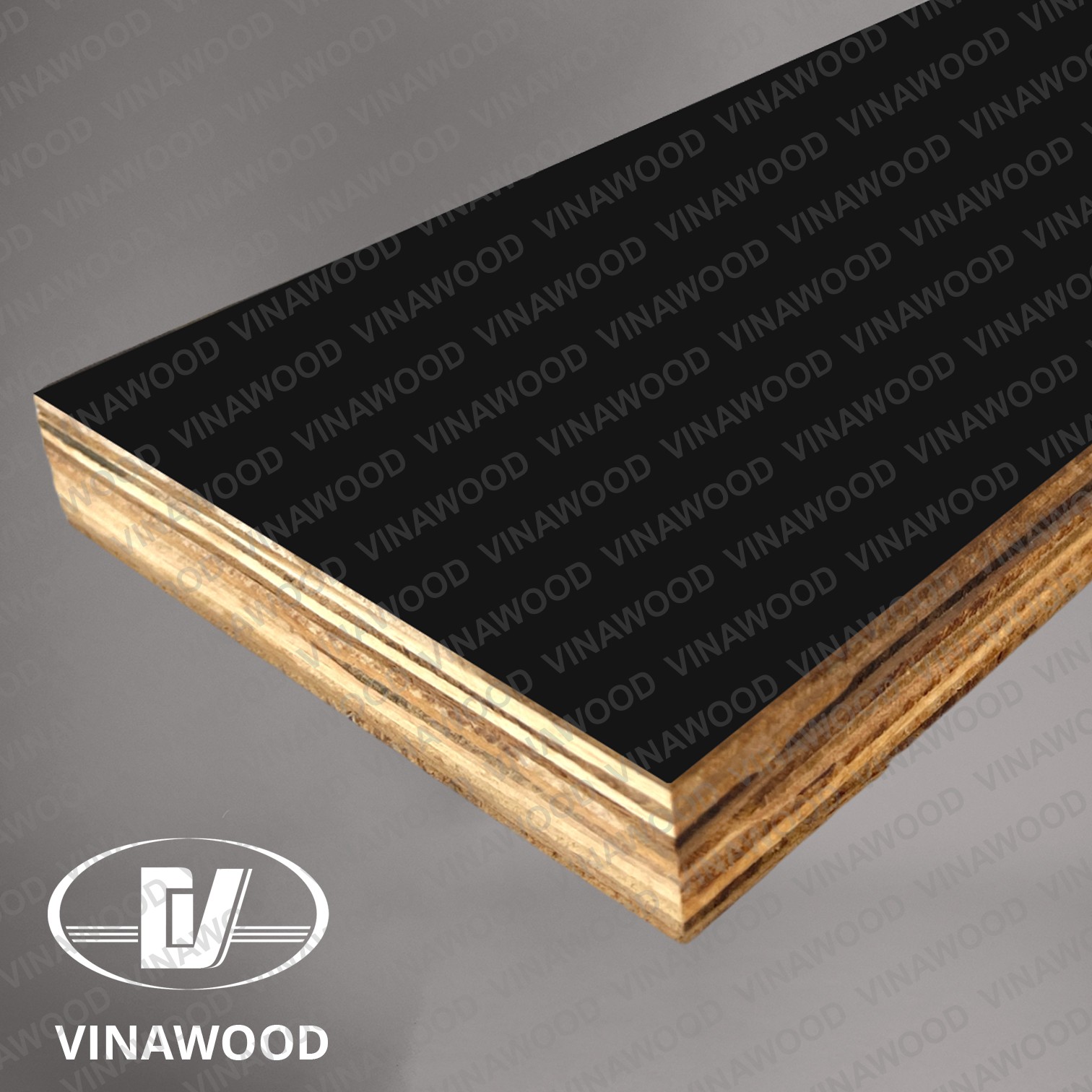
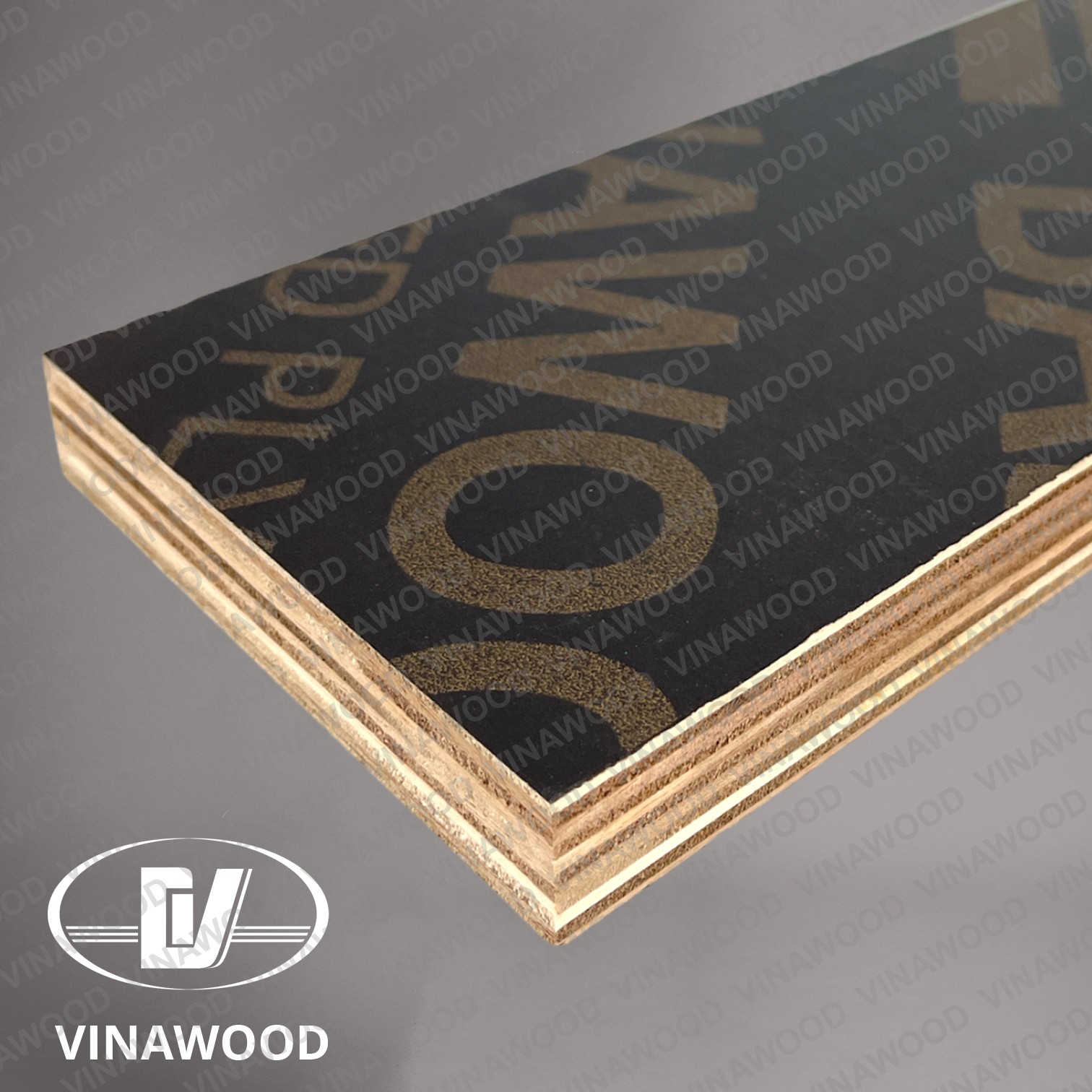
Concrete formwork does not use the A/B/C/D appearance system at all. A film-faced formwork panel is rated by its glue-bond class under EN 636 and by the phenolic film on its faces, because the panel is judged on how many concrete pours it survives, not on how its bare veneer looks. The face you care about is the film, and the grade that matters is the bond.
Two bond classes cover most work. EN 636-2 panels use a melamine-urea-formaldehyde (MUF) core glue, weatherable for standard forming: Vinawood Form Basic runs up to 10 reuses and Form Extra up to 15, the extra life coming from a more durable, higher-melamine-content MUF formulation rather than a heavier film. EN 636-3 panels use a phenolic (PF) core glue for the heaviest rotation: Vinawood Pro Form and the HDO range reach up to 20 reuses. Matching the bond class to the pour count is the whole decision. Our film-faced formwork guide and the breakdown of melamine versus phenolic film-faced plywood walk through it.
About Vinawood
Vinawood has manufactured plywood in Vietnam since 1992 and ships more than 5,000 containers a year to over 55 countries. Every sheet passes individual inspection across a 12-step process, with in-house testing for bond strength, moisture, and formaldehyde. Panels carry ISO 9001, FSC chain-of-custody, EN 13986 CE marking, and EPA TSCA Title VI / CARB P2 compliance, so grade and bond claims arrive with the documentation to back them. To match a grade or formwork spec to your project, contact our team for factory-direct guidance.
Category
how-to
Related Markets
Related Countries
Related Products
▶Sources & References (4)
- Voluntary Product Standard PS 1-19: Structural Plywood — APA – The Engineered Wood Association / US Dept. of Commerce (2019)
- EN 635: Plywood — Classification by surface appearance — European Committee for Standardization (CEN) (1995)
- ANSI/HPVA HP-1: American National Standard for Hardwood and Decorative Plywood — Decorative Hardwoods Association (HPVA) (2020)
- IS 303: Plywood for General Purposes — Specification — Bureau of Indian Standards (BIS) (1989)