Wood Species Used in Plywood: How Core and Face Choice Affects Performance
Plywood's properties — strength, weight, finish, cost, environmental footprint — are decided by the wood species in the core and face veneers. This buyer's reference covers the foundational hardwood/softwood split, the major core species (eucalyptus, acacia, hevea, birch, poplar), face veneer…
Two panels with the same nominal grade and thickness can land on a job site and behave differently. The reason usually isn't the spec sheet. It's the wood species sitting inside the laminate. Core species drives stiffness, density, weight, and screw retention. Face species drives appearance, finish behaviour, and how the panel grades on the visible-surface market. Most spec sheets either skip species or hide it under a generic "hardwood core" label, which is where the variation comes from.
This is a manufacturer-side reference on the species used in commercial plywood: the major hardwoods and softwoods, the core/face split, density and weight, sustainability framing, and how Vinawood's Vietnamese export panels are built on plantation-grown eucalyptus and acacia cores. Vinawood has manufactured in Vietnam since 1992 and exports to 55+ countries.
Why Species Choice Matters
Four properties of the finished panel trace back to the species choice.
Density. Heavier species produce heavier, stronger panels with better screw and nail retention. Density typically lands between 380 kg/m³ for light softwoods and 750 kg/m³ for high-density hardwoods.
Veneer integrity. Knots, splits, and grain pattern depend on the species. Tight-grained species (birch, maple) take a clean face grade. Coarser-grained species (some pines, eucalyptus) typically grade lower on appearance.
Adhesive uptake. Some species absorb resin more readily than others. That affects bond strength and pressing parameters. Mills calibrate adhesive formulations to the species being run.
Sustainability and traceability. Plantation-grown species (acacia, eucalyptus, hevea, plantation pine) are renewable and FSC-traceable. Species harvested from natural forest carry stronger environmental scrutiny and may face import restrictions in regulated markets like the EU under the EU Timber Regulation and EUDR.
Hardwood vs Softwood — the Foundational Split
Hardwood plywood is built from species in the angiosperm botanical group, which is the broadleaf trees. Common hardwoods in plywood production: birch, oak, maple, beech, eucalyptus, acacia, hevea, poplar (botanically a hardwood despite low density), bintangor, okoume.
Softwood plywood is built from gymnosperm species, the conifers. Common softwoods in plywood: Douglas fir, southern yellow pine, plantation pine, spruce, larch.
One practical caveat. "Hardwood" and "softwood" are botanical classifications, not strength rankings. Some hardwoods (poplar at ~400 kg/m³, basswood at ~370 kg/m³) are softer than some softwoods (Douglas fir at ~520 kg/m³, southern yellow pine at ~600 kg/m³). For predicting panel strength, density is the better signal than the hardwood/softwood label.
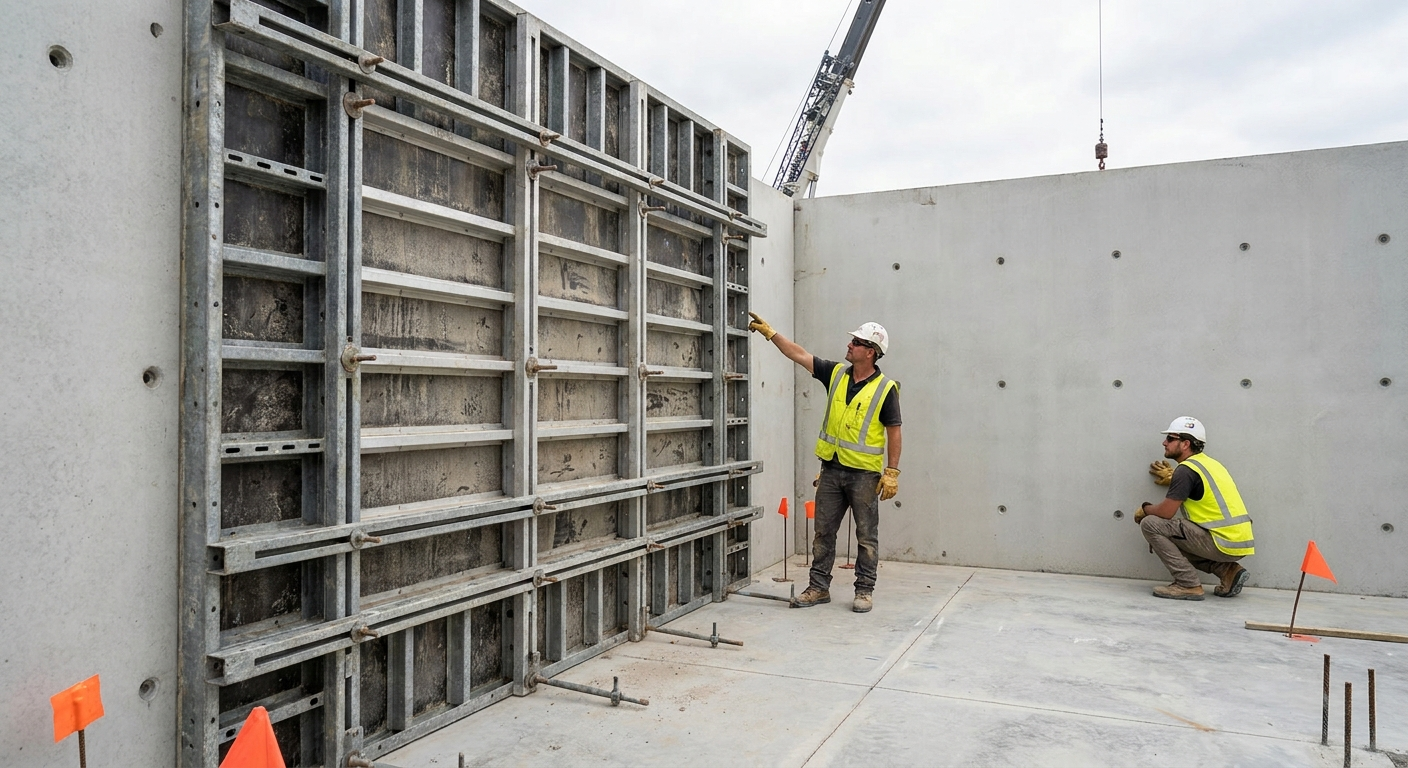
For formwork, hardwood-cored panels (eucalyptus, acacia) outperform softwood cores in density, reuse cycles, and stripping cleanliness. For furniture, hardwood faces are the visible specification driver, with face species often more important than core species.
Core Species — the Hidden Determinant of Performance
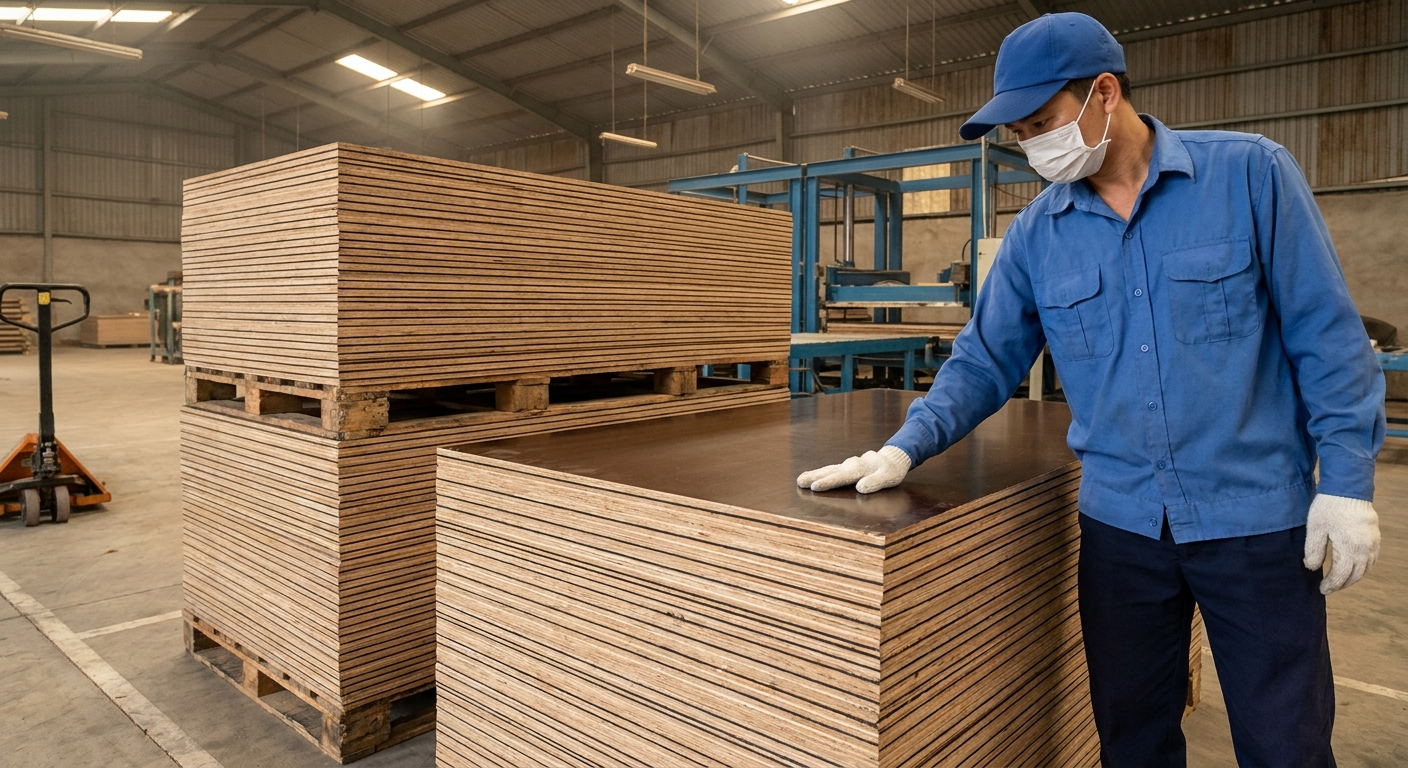
Eucalyptus. The dominant Vietnamese plantation hardwood for export plywood. Density 600–750 kg/m³. High bending strength, excellent for formwork, marine, and structural plywood. Eucalyptus urophylla and E. grandis are the principal commercial species.
Acacia. The second major Vietnamese plantation species. Density 500–650 kg/m³. Slightly lower density than eucalyptus but tighter grain and less prone to splitting during peeling. Acacia mangium and A. auriculiformis are the principal species. Acacia is a mainstream commercial plywood species, not a lesser tier.
Hevea (rubberwood). Plantation hardwood from former rubber plantations after the trees stop producing latex. Density 600–700 kg/m³, typically the densest of the Vietnamese plantation hardwoods. Light cream colour, takes finish well, popular for furniture-grade plywood and Asian-market interior applications.
Birch. Russian, Latvian, and Chinese plantation. Density 650–700 kg/m³. Premium core for cabinet, drawer, and visible architectural plywood. Betula pendula (silver birch) is the dominant commercial species. For the deeper birch reference, see birch plywood overview and birch plywood density and strength.
Poplar. Chinese plantation. Density 400–500 kg/m³. Light weight, used in budget interior plywood. Lower reuse cycles in formwork applications due to lower density.
Combination cores ("combi"). Alternating hardwood and softwood plies. Common in budget commercial plywood, performance generally lower than pure hardwood construction. Often labelled "hardwood plywood" even when only the face plies are hardwood. Verify against the spec sheet rather than the marketing label.
Face Veneer Species — What You See on the Panel
Birch. Light cream face, fine grain, hardest to fault. The premium cabinet face for clear-finished and paint-grade work.
Maple, oak, cherry. US and European furniture-grade faces. Maple takes a particularly clean clear finish. Oak's prominent grain pattern is the visible character. Cherry darkens with age and develops a recognisable patina.
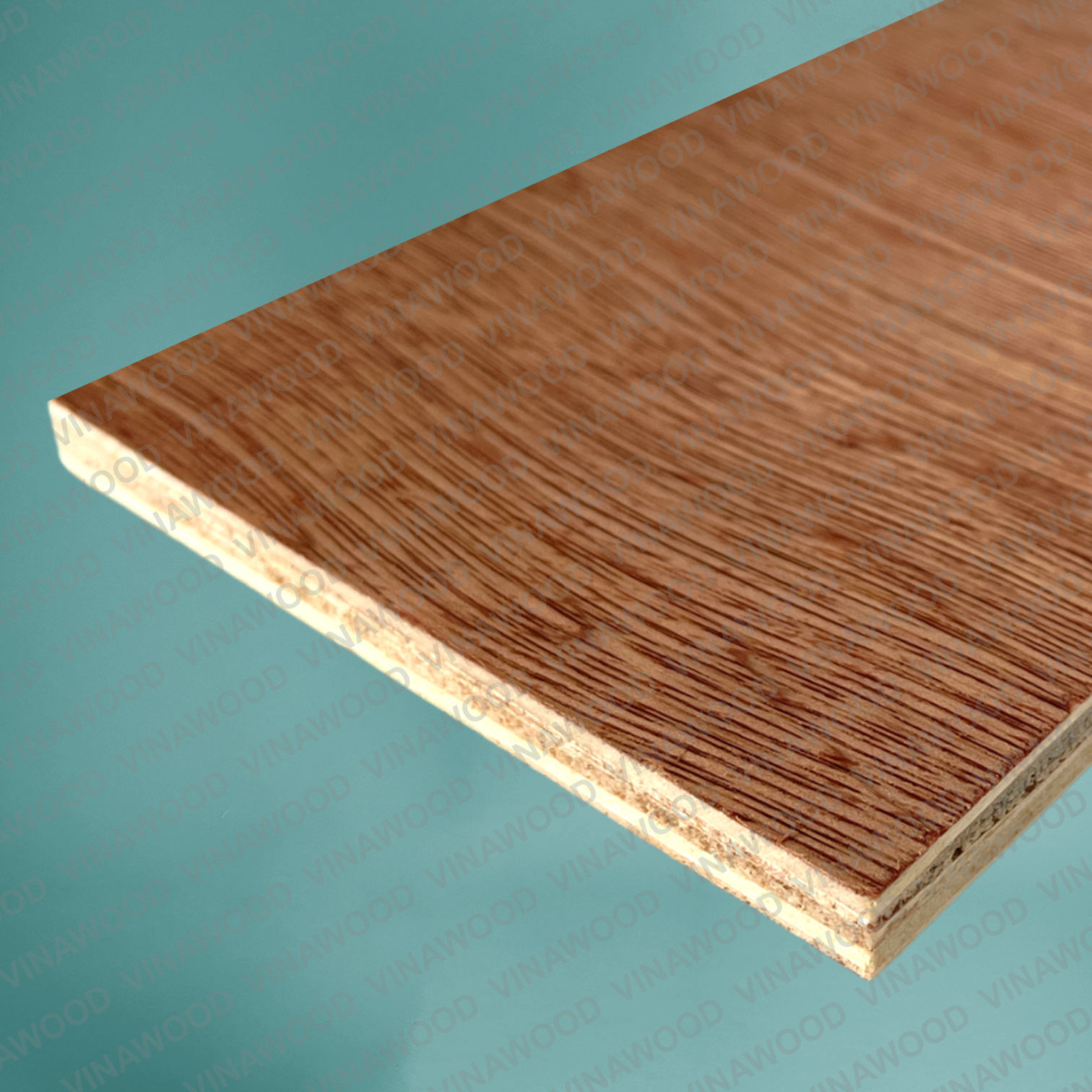
Bintangor. Asian plantation hardwood face used widely in commercial plywood across Southeast Asia. Light pinkish-tan colour, smooth finish. Used on Vinawood's Consply commercial Bintangor plywood for hidden-face structural applications, packaging, and substrate.
Okoume. African plantation hardwood, traditional in marine plywood and high-end European plywood. Light salmon colour, fine grain, low density (~400–450 kg/m³) for its category.
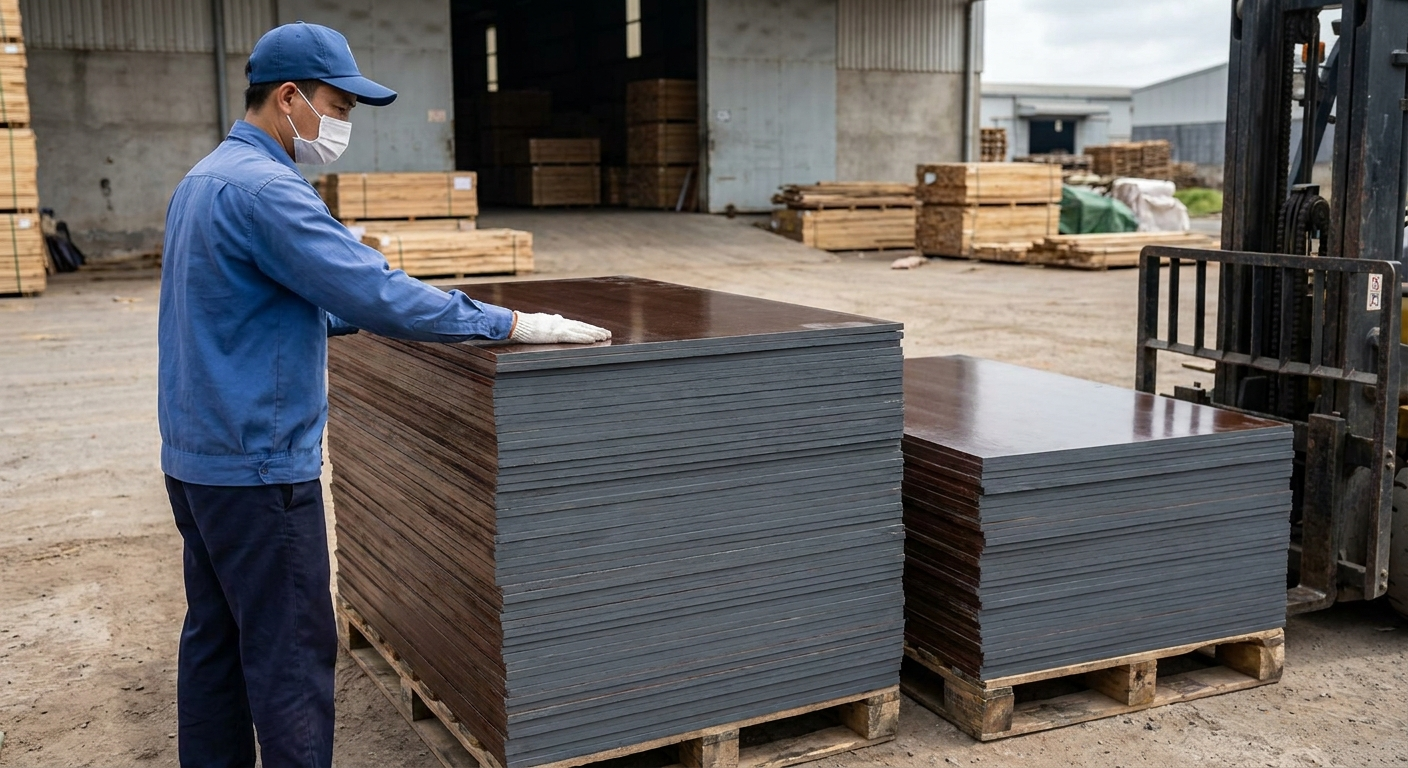
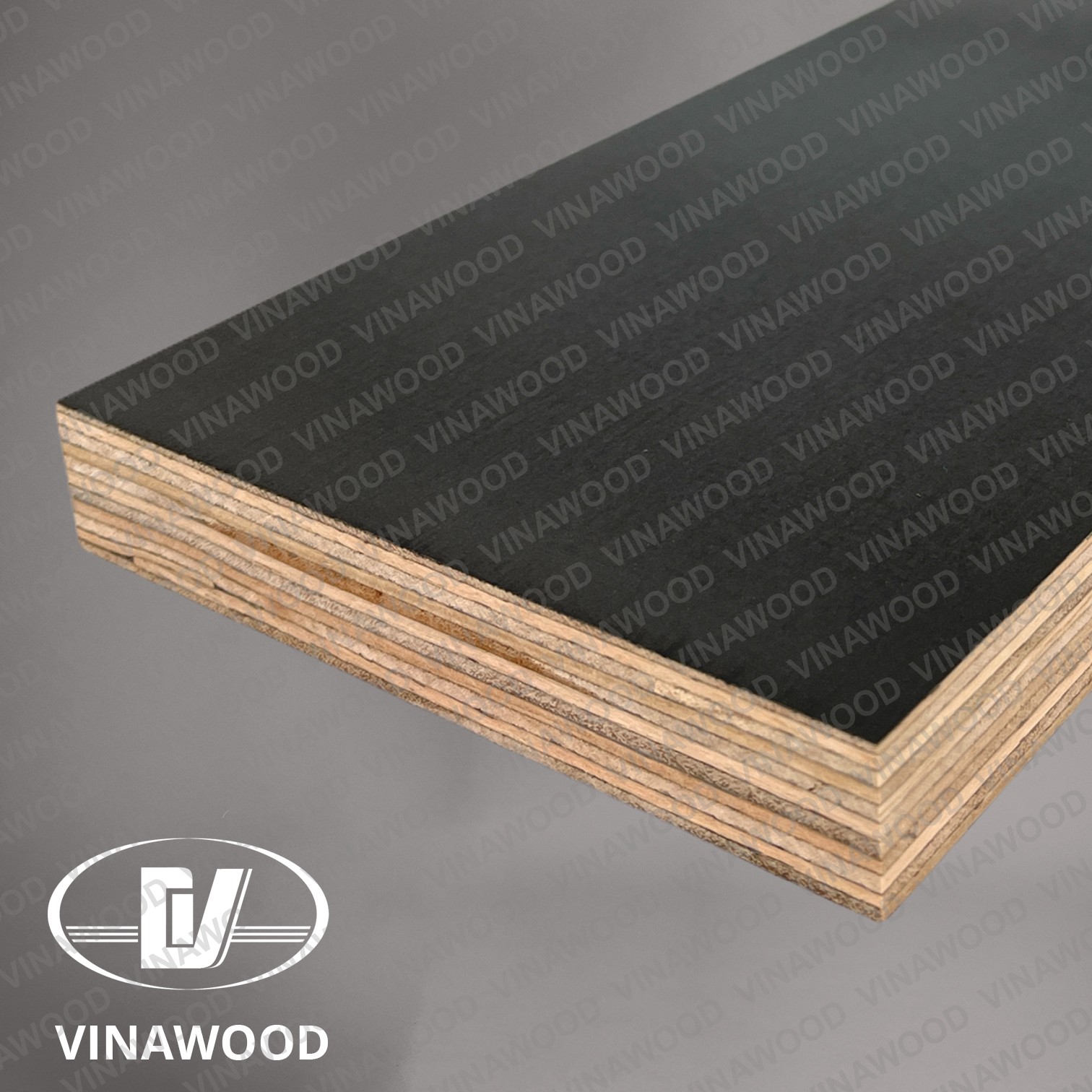
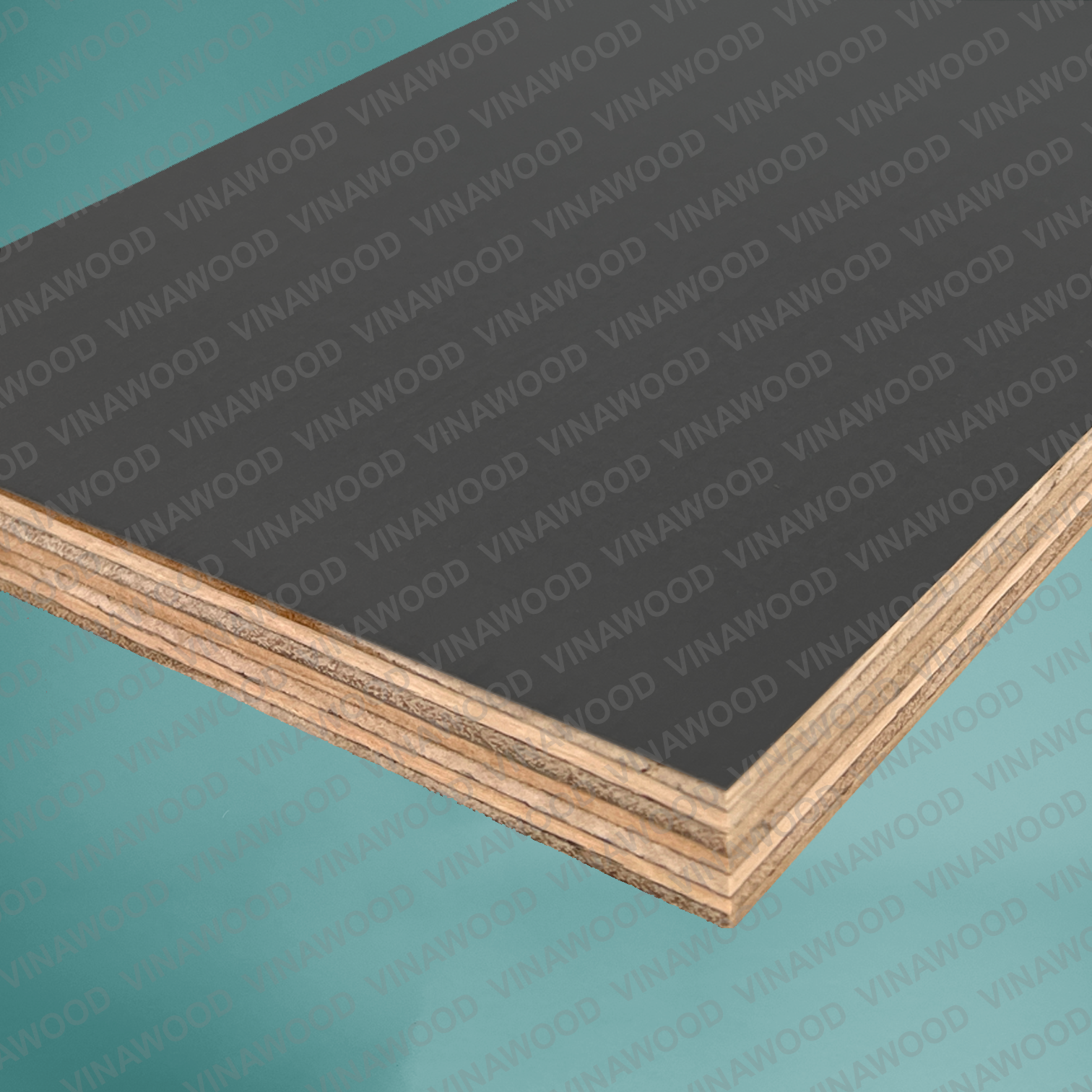
Phenolic film overlay. Not a wood face technically, but functionally takes the role on film-faced and HDO plywood. The kraft paper saturated with phenolic resin and pressed onto the panel covers whatever face veneer is underneath. That's why film-faced plywood typically uses B-grade or C-grade veneer underneath the film without compromising the visible product. For deeper film-faced context, see phenolic plywood.
For formwork specifically, face veneer choice doesn't matter directly because the phenolic film is the surface contacting concrete. The face veneer underneath is graded for structural integrity rather than appearance.
Species and Sustainability — What "Plantation-Grown" Means
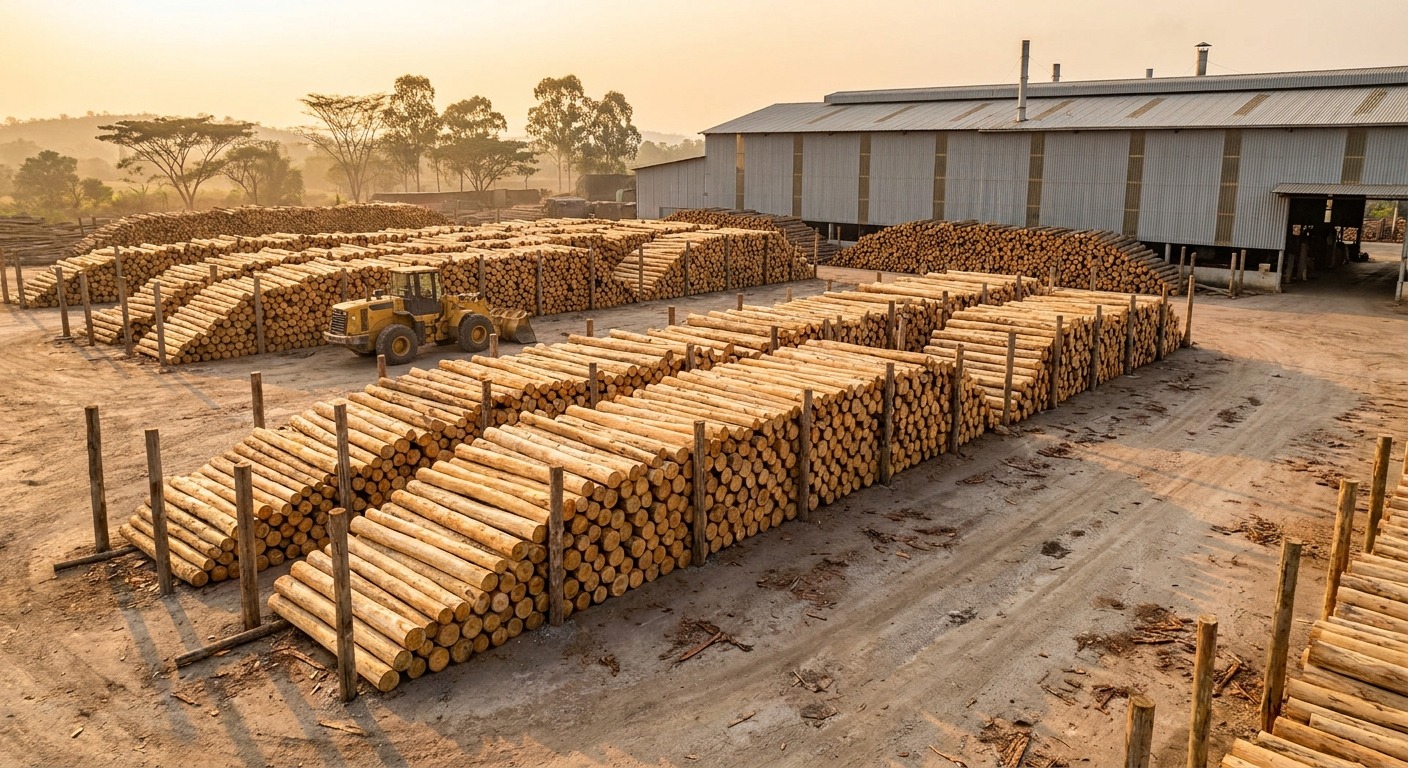
Plantation-grown means the trees are cultivated on dedicated forestry plots, harvested on regular cycles (typically 5–12 years for fast-growing acacia and eucalyptus, longer for slower species), and replanted. This is fundamentally different from natural-forest harvest, where trees are cut from naturally regenerating ecosystems with longer recovery cycles and higher biodiversity impact.
All Vinawood core species (acacia, eucalyptus, hevea) are plantation-grown in Vietnam under FSC Chain-of-Custody traceable supply chains. Birch is plantation-grown in Russia, Latvia, Estonia, and increasingly in Chinese commercial forestry. Okoume and African species are increasingly plantation-grown in West African concessions, but verification of FSC or PEFC documentation is essential before treating any African-origin species as plantation-sourced. For supplier vetting, see plywood supplier Vietnam.
The terminology matters. "Plantation-grown hardwood plywood" is the accurate descriptor for the major Vietnamese export plywood supply chain. "Tropical hardwood plywood" is technically incorrect for plantation supply and carries connotations of natural-forest harvest and illegal logging concerns. Use "plantation-grown" wherever the supply chain documentation supports it, and verify FSC-CoC certificates per shipment.
Species-Specific Density and Weight Reference
| Species | Type | Density (kg/m³) | Weight per 18 mm 4×8 sheet | Typical use in plywood |
|---|---|---|---|---|
| Birch | Hardwood | 650–700 | ~62–67 lb (~28–30 kg) | Cabinet face, drawer boxes, premium architectural |
| Eucalyptus | Hardwood | 600–750 | ~57–71 lb (~26–32 kg) | Formwork core, marine core, structural |
| Hevea (rubberwood) | Hardwood | 600–700 | ~57–67 lb (~26–30 kg) | Furniture-grade core, Asian interior |
| Acacia | Hardwood | 500–650 | ~48–62 lb (~22–28 kg) | Formwork core, packaging, general commercial |
| Maple | Hardwood | 600–700 | ~57–67 lb (~26–30 kg) | Furniture face, US cabinet |
| Oak | Hardwood | 600–700 | ~57–67 lb (~26–30 kg) | Furniture face, architectural panels |
| Bintangor | Hardwood | 450–550 | ~43–52 lb (~20–24 kg) | Commercial face, packaging substrate |
| Poplar | Hardwood (light) | 400–500 | ~38–48 lb (~17–22 kg) | Budget interior, combi core |
| Pine (plantation) | Softwood | 450–550 | ~43–52 lb (~20–24 kg) | Sheathing, structural, budget plywood |
| Douglas fir | Softwood | 500–560 | ~48–53 lb (~22–24 kg) | Structural Plyform, US sheathing |
| Spruce | Softwood | 380–470 | ~36–45 lb (~16–20 kg) | Light structural, packaging |
Densities are typical ranges. Actual values vary with growing region, age at harvest, and moisture content. For the underlying density reference for birch specifically, see birch plywood density, weight and strength.
How to Read a Plywood Spec Sheet
A clean plywood spec sheet should make species choice explicit. Look for the following.
Explicit core species declaration. "Eucalyptus core" or "acacia core" rather than the generic "hardwood core." Generic descriptors are red flags. They often mask combi cores or undisclosed mixed-species sourcing.
Face/back veneer species listed separately. Face and back can be different species, and pricing depends heavily on which combination.
Adhesive type. PF (phenol-formaldehyde, premium and structural), MUF (melamine-urea-formaldehyde, mid-tier), UF (urea-formaldehyde, interior only), or NAF (no added formaldehyde, soy/MDI/polyurethane). For the deeper formaldehyde standards picture, see formaldehyde-free plywood buyer's guide.
Density (kg/m³). The single number that best predicts panel performance. Strength, screw retention, weight per sheet.
Veneer count. A 9-ply 18 mm panel has different dimensional stability characteristics than a 5-ply 18 mm panel. More plies generally means better balance and reduced warping.
Certifications. FSC-CoC for sustainable sourcing, CARB P2 / EPA TSCA Title VI for North American emission compliance, EN 636 for bond class, EN 13986 for European construction-product compliance.
Vinawood's Species Mix
Vinawood manufactures film-faced and HDO formwork plywood with plantation-grown eucalyptus or acacia core, FSC-traceable from Vietnamese plantations. Density typically lands at 580–680 kg/m³ in the finished panel. The phenolic film overlay (220 g/m² on the premium Pro Form range) covers the face veneer and is the surface that contacts concrete. Underneath, the face veneer is graded for structural integrity rather than appearance.
Vinawood's Consply commercial plywood uses Bintangor face on a hardwood core with WBP melamine adhesive (EN 636-2 / Class 2). Bintangor delivers a smooth, light pinkish-tan face appropriate for hidden-face cabinet structure, packaging, and substrate applications.
All cores are bonded with WBP phenolic adhesive (PF) on the Pro Form and HDO ranges, or WBP melamine adhesive (MUF) on the Form Basic, Form Extra, and Consply lines. Manufactured in Vietnam since 1992. Supplied to 55+ countries.
For the broader formwork product range, see the film-faced plywood collection. For commercial-grade plantation hardwood, see commercial plywood. For US-market HDO formwork, see HDO plywood. For the formwork-pillar context, see concrete form plywood.
Wood species choice is the underappreciated lever in plywood specification. Two panels that look identical on the spec sheet can perform meaningfully differently because their cores are sourced from different species. Read the spec sheet for explicit species declaration, check the density figure, verify the FSC certification per shipment, and pick the species that matches the application, not by the marketing label.
Category
guides
Related Markets
Related Countries
Related Products
▶Sources & References (4)
- Wood Handbook — Wood as an Engineering Material (Chapter 12: Mechanical Properties of Wood) — USDA Forest Products Laboratory (2021)
- FSC Plantation Forest Standard FSC-STD-30-001 — Forest Stewardship Council (2023)
- USDA Foreign Agricultural Service — Vietnam Wood Products Annual Report — United States Department of Agriculture (2024)
- EN 636:2012+A1:2015 — Plywood Specifications — European Committee for Standardization (CEN) (2015)