Concrete Pitting: Causes, Prevention & When It Signals a Real Problem
Concrete pitting is a scatter of small surface craters, driven mostly by the mix, finishing, de-icing salt and trapped air rather than the form panel. Here are the real causes, how it differs from bug holes, spalling and crazing, how to prevent it, and where the form face honestly fits.

Concrete pitting is the scatter of small, shallow holes or craters you sometimes find across a concrete surface. Each one is usually only a few millimetres across and a millimetre or two deep, and they tend to show up in clusters rather than singly. People notice them most on a new driveway that has started to flake and dimple over its first winter, or on a formed wall after the forms come off. The surface reads as rough and pocked instead of closed and even.
From a panel manufacturer's seat, the honest framing is this. Pitting is a surface-quality story driven by the mix, the finishing, the weather, and the way air sits against a form. It is not a sign that the concrete is weak through its depth, and on a formed face it is almost never a fault in the plywood. A clean, sealed form face helps, and we will get to exactly where it fits. But the levers that decide whether a surface pits are mostly held by the mix design and the crew. Here is what actually causes it, how it differs from the defects it gets confused with, and how to keep it down.
What concrete pitting actually is
Pitting is localised loss of the very top layer of paste, leaving small open craters in the surface. On a flat slab it usually starts as the thin surface skin breaking down and popping out small flakes, which leaves a dimpled, pocked face. On a vertical formed face it is the imprint of small air or water pockets that sat against the form and could not escape before the concrete set. Either way it is shallow. The aggregate and the body of the concrete below are sound; what failed or never formed properly is the surface mortar.
That distinction matters because pitting looks worse than it usually is. A pocked driveway can be alarming to a homeowner, but scattered shallow pits are a finish and durability-of-surface question, not a structural one. The time to take it more seriously is when the pits are deep, spreading fast, or the surface around them is crumbling, which points to a weak or contaminated surface layer rather than ordinary pitting.
Pitting, bug holes, spalling and crazing: name the difference
These four get used interchangeably, and they have different causes and different fixes. Sorting them is the first practical step, because the wrong name leads to the wrong response.
| Surface condition | What it looks like | Where it shows | Root cause |
|---|---|---|---|
| Pitting | Clusters of small shallow craters or flaked spots in the surface | Slabs, driveways, and formed faces | Bleed water, over-finishing, de-icing salt, freeze-thaw, trapped air |
| Bug holes | Small rounded individual craters, usually under 15 mm (5/8 in) | Vertical formed faces | Entrapped air and bleed water against the form face |
| Spalling | Concrete flakes or breaks away in fragments, exposing aggregate or rebar | Decks, balconies, driveways, facades | Rebar corrosion, freeze-thaw, fire, low cover (develops later) |
| Crazing | A fine web of shallow hairline cracks, like cracked glaze | Slabs and troweled faces | Rapid surface drying and over-finishing of the top skin |
The lines that matter: pitting and crazing are both surface-skin problems on finished flatwork, but pitting leaves holes while crazing leaves cracks. Bug holes are the formed-face cousin of pitting, individual air voids rather than a flaked field. Spalling is the odd one out, a durability mechanism that shows up months or years later as the concrete comes apart from the inside. Our companion guides go deeper on each: bug holes on the air-void side, concrete crazing on the hairline-crack side, and concrete spalling on the later-life durability side.
Why new concrete pits
Most pitting questions come from new flatwork, a driveway or a slab that pitted in its first season. The causes there sit almost entirely with the mix and the finishing.
- Bleed water and over-finishing. When a slab is troweled while bleed water is still rising, that water gets worked back into the surface and leaves a weak, porous top skin. Once that skin is in place, it breaks down easily and pits. Finishing too early is the single most common cause of a pitted new slab.
- An over-wet mix. Too much water raises the water-cement ratio at the surface, weakens the paste, and increases bleed. A wetter mix is easier to place and worse to live with.
- De-icing salt. Chlorides are hard on a young surface. A first-winter driveway that gets salted before the concrete has matured often pits and scales along the salted zones. Many flatwork pitting complaints in the US and Canada trace straight back to early salt exposure.
- Freeze-thaw. Water held in a weak or non-air-entrained surface expands when it freezes and fatigues the top layer apart. This compounds the salt problem in cold climates.
Look at that list and the pattern is plain. New-slab pitting is a placing, finishing and exposure problem. The forms barely enter into it on flatwork, because the troweled top face never touches a form panel at all.
Pitting on formed and vertical surfaces
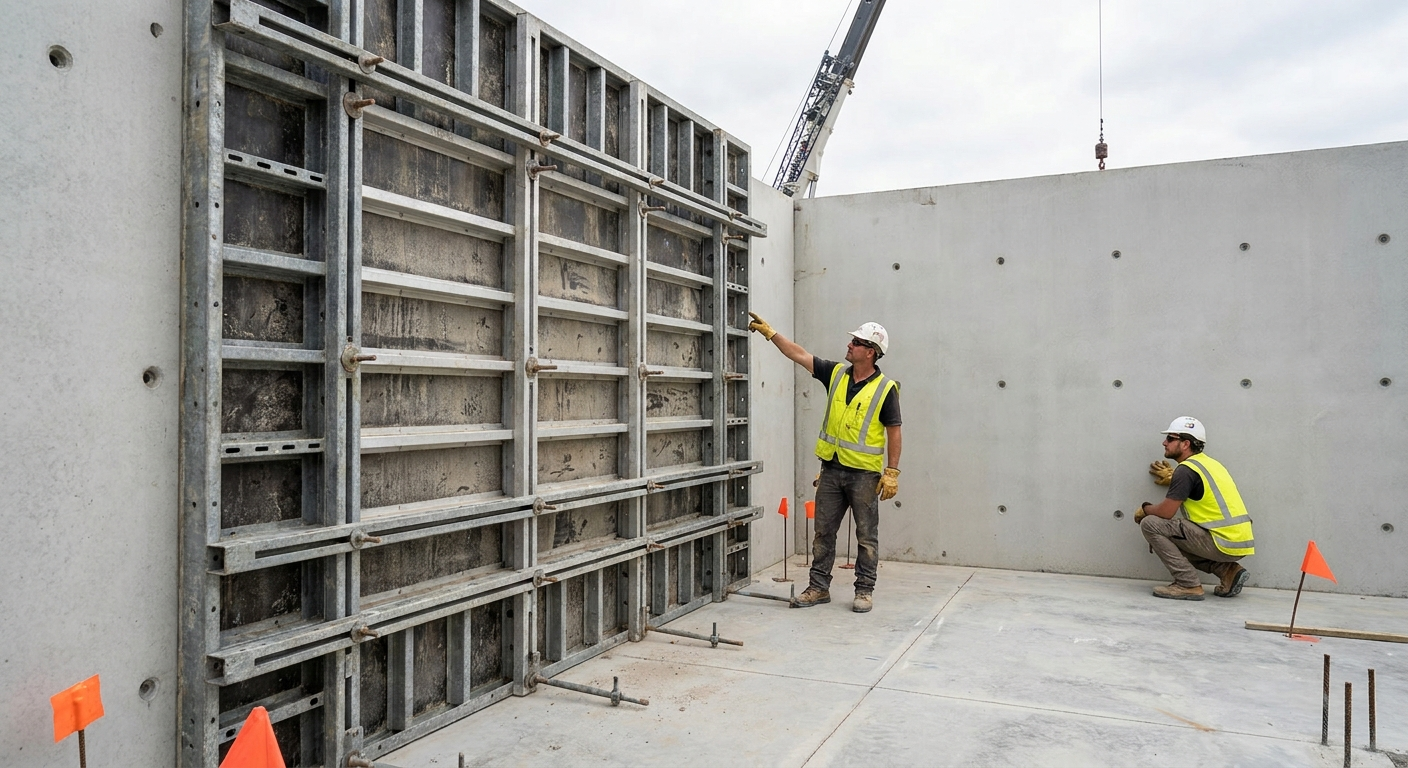
On walls and columns the picture shifts, because now the surface is cast against a form. Here pitting and bug-holing run together: small pockets of air, or bleed water, get pinned between the concrete and the form face and read as craters when the form strips. The drivers are the ones that govern any air-void problem on a formed face.
Workability and water content come first. A harsh, under-workable or over-wet mix holds onto its surface air. Vibration comes next: too little leaves air pinned at the face, while badly placed vibration can pull air in or drive bleed water up. Pour rate and lift height feed in too, since a tall, fast lift gives surface air less time to rise before the concrete stiffens. The release agent is the other big one, and over-application is a named cause, not a cure. Too much release agent pools at the face and traps bubbles in place.
In our own export experience, when a customer reports persistent surface pitting on a job running our panels, the trail leads to release-agent technique, vibration, or a wet mix far more often than to the sheet itself. The detail on dosing the release film sits in our note on the concrete form release agent.
How the form face influences surface density
This is where a plywood maker can speak with some authority, so it is worth being precise about what the face does and does not do. A smooth, sound, low-porosity form face gives entrapped air a slick boundary to travel along as it rises, which helps it clear the surface instead of lodging against it. A sealed phenolic or HDO face also does not draw water out of the concrete skin the way a raw, absorbent panel can. An absorbent or worn face pulls moisture unevenly from the surface paste, which can leave a weaker, more porous skin that is readier to pit.
So the form face is part of the prevention picture on vertical work, not the cause of pitting. A quality film face supports a denser, more uniform cast surface. It does not override a wet mix or poor consolidation, and no panel cures pitting on its own. For the wider link between the form face and the as-cast result, our guide to fair-faced concrete covers the finish brackets, and board-formed concrete shows how directly the face transfers to the wall.
How to prevent pitting
Prevention splits cleanly by surface type. On flatwork it is finishing discipline; on formed faces it is placement discipline, with the form playing a supporting part.
- Design the mix for the job: enough workability to place and consolidate, without the excess water that weakens the surface and worsens bleed.
- Wait out the bleed water before finishing a slab. Do not trowel water back into the surface. This one habit prevents most new-slab pitting.
- Air-entrain any concrete that will face freeze-thaw, and keep de-icing salt off a young slab through its first winter.
- On formed faces, vibrate properly to bring entrapped air up, and control lift height and pour rate so each lift can release air before the next buries it.
- Prepare the form face: a smooth, clean, sound face with no torn film or dried residue, with a thin, even release film reapplied every pour and pooled agent wiped from corners.
Cure the finished surface properly afterwards. A well-cured surface skin is denser and far more resistant to the salt and frost that drive pitting later.
When to investigate further
Most pitting is cosmetic and needs nothing beyond a sensible repair. Before treating it as a real problem, classify what you are seeing and rule out the common, benign causes first. Work the list in this order:
- Storage and handling. On a precast or formed element, was the piece exposed to salt spray, rain runoff, or rough handling before or after strip? Surface damage from handling reads like pitting but is not a casting fault.
- Finishing and timing. On flatwork, was the slab troweled too early into bleed water, or finished in fast-drying conditions? This is the first thing to check on a pitted slab.
- Mix and water content. Was the mix over-wet or poorly consolidated? A high surface water-cement ratio explains most weak, pit-prone skins.
- Exposure. Did the surface meet de-icing salt or freeze-thaw cycling early in its life? In US and Canadian climates this is a frequent driver.
- Then, and only then, the form face. A worn, torn, or heavily absorbent form face can contribute to a less dense cast skin. It sits last on the list because it is the least common cause and the easiest to over-blame.
Genuine cause for a closer look is pitting that is deep rather than shallow, spreading rather than stable, or paired with a surface that crumbles under a key or a coin. That pattern can result from a contaminated or badly over-finished surface and is worth a closer assessment. Scattered shallow pits on an otherwise sound surface are a finish question, and the documentation of size, depth and location settles most disputes at handover. For the line between genuine panel wear and a manufacturing fault, our note on formwork plywood defects versus normal wear is the reference.
Repairing pitted concrete at a glance
Where pitting needs attention, the sequence is familiar and mostly cosmetic. Clean the pitted area of dust, flaking material and any salt contamination. Dampen the surface so the repair material bonds without the substrate drawing its water out. Work a cementitious patching compound or a thin resurfacer into the pits, filling them flush, then finish to match the surrounding texture. For a broadly pitted slab, a bonded overlay or resurfacer across the whole area gives a more uniform result than spot-filling dozens of small craters. Seal the finished surface afterwards, and on exterior flatwork keep salt off it through the next winter so the repair is not undone by the original cause.
How a quality form face supports a denser cast surface
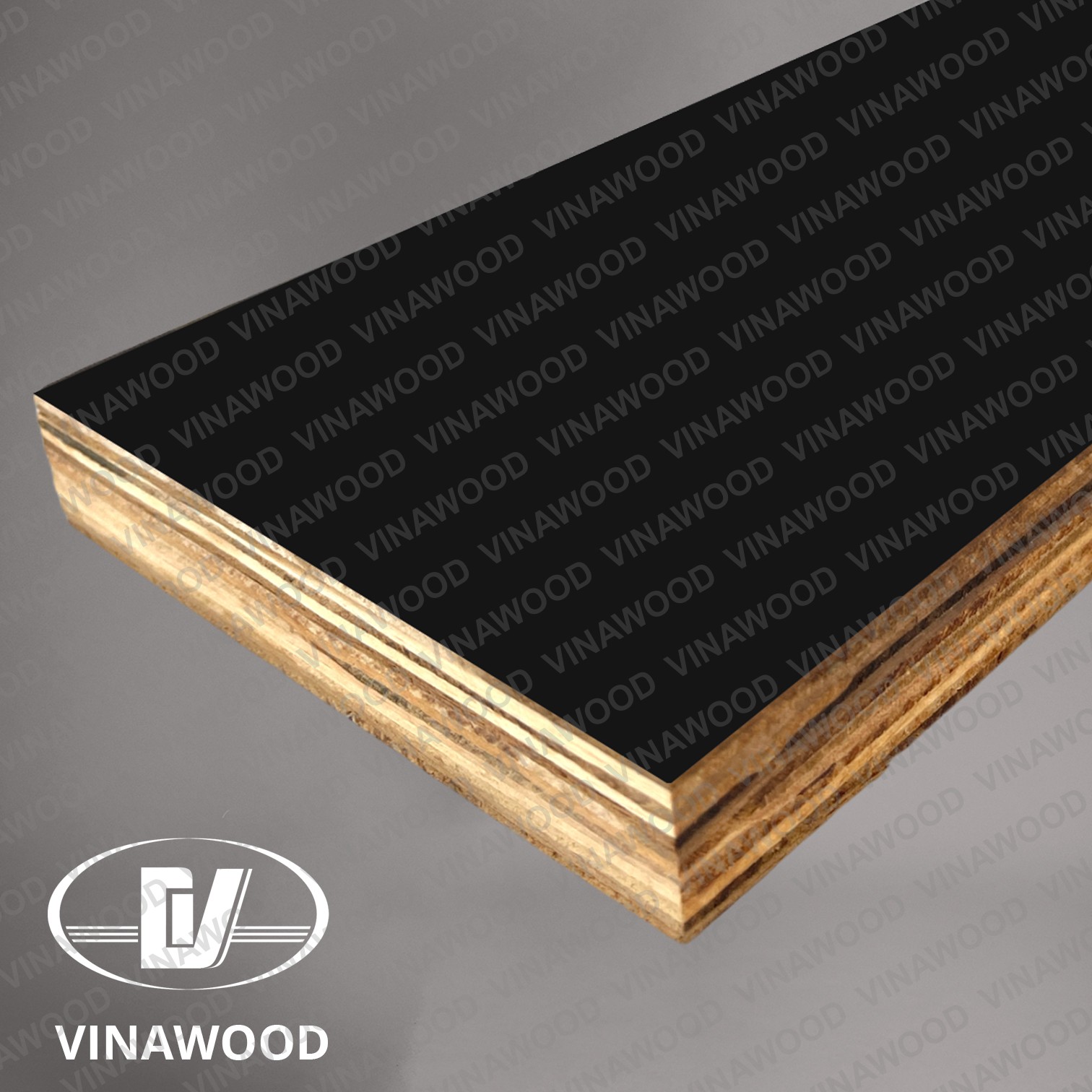
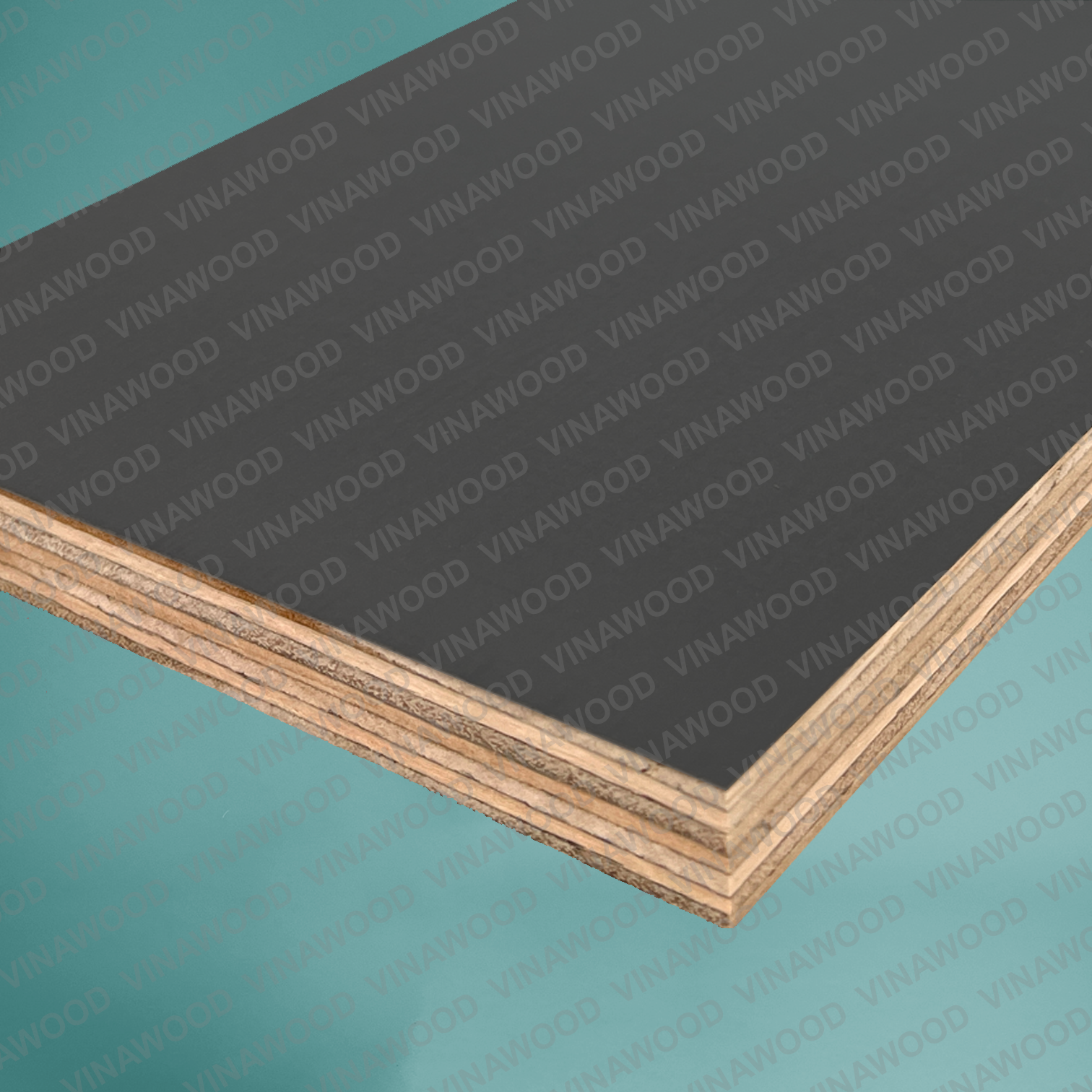
On vertical and architectural work, the form face is the prevention lever a manufacturer can actually offer. A smooth, sealed, low-porosity face presents a clean boundary that lets surface air escape and does not wick water unevenly from the concrete skin, which is exactly what helps a cast face come out dense and even rather than porous and pit-prone. Vinawood manufactures film-faced and phenolic formwork plywood in Vietnam, with factory edge-sealing and 100% individual sheet inspection across the range. For North American contractors working to imperial sizes and ACI finish classes, the HDO formwork plywood range carries a high-density overlay that holds a clean, low-absorbency face across high-rotation pours; HDO Basic 1SF Formply is the single-face workhorse and HDO Premium 2S Formply the two-face panel for repeat finish-critical forming, both WBP phenolic to EN 636-3 and rated up to 20 reuse cycles. None of these prevents pitting on its own. The mix, the finishing and the consolidation decide most of it, and a clean form face removes one of the contributors on the formed side. Request a quote with your panel sizes, finish class and project volume.
Category
guides
Related Markets
Related Countries
Related Products
▶Sources & References (2)
- Concrete Slab Surface Defects: Causes, Prevention, Repair (IS177) — Portland Cement Association (2001)
- Guide to Durable Concrete (ACI 201.2R) — American Concrete Institute (2016)