Plywood for Concrete Stair Formwork: Riser, Stringer & Soffit Spec
How to spec plywood for cast-in-place concrete stairs — the raking soffit, riser boards, and side forms. Thickness and bond class by reuse target, why stairs are the most cut-heavy form on the job, and edge sealing as the main reuse lever.

A poured concrete stair is the most cut-intensive form on most jobs. Every riser is a fresh board, the raking soffit is cut to the pitch of the flight, and the side forms follow the steps down. By the time the carpenter is done, the form is mostly edges. That is exactly why panel choice and edge sealing decide how the stair turns out, and how many times the panels come back for the next flight.
This guide treats the stair as three working surfaces: the inclined waist or soffit panel that carries the wet concrete and the foot traffic during the pour, the riser boards that take direct placement pressure, and the side forms or stringers that hold the flight together. The structural design and the striking schedule belong to the engineer. The panel spec is where we can keep you out of trouble.
Anatomy of a stair form
A cast-in-place stair form starts from the soffit. The waist panel is the inclined underside of the flight, set on bearers and props, and it carries everything above it until the concrete cures. On top of that sit the riser boards, one per step, held by a cleat or a riser bracket and aligned to strike the nosing line. The side forms close the flight off and define its width.
There are two common arrangements. A flight cast between two existing walls only needs the soffit and risers, because the walls form the sides. A free-standing flight needs full side forms or stringers as well, and those carry more load than people expect once the concrete is in. The riser layout is the same either way: the straightness of every nosing depends on the riser board not bellying under placement pressure.
Why stairs punish the wrong panel
Three things make a stair harder on plywood than a flat slab. The cut-to-area ratio is high, so a single flight turns one sheet into a dozen small pieces, each with fresh edges. The arrises are exposed: every nosing is a corner that has to come off clean, and a chipped nosing is the most visible defect on a finished stair. And deflection telegraphs. A riser board that bows even slightly under the pour leaves a curved nosing line that no amount of patching fully hides.
So the panel has to hold its face flat between supports and take repeated cutting without the core drinking water at every new edge. That points straight at film-faced plywood with a disciplined sealing routine, and at matching the bond class to how many flights the form will see.
Soffit and waist panel spec
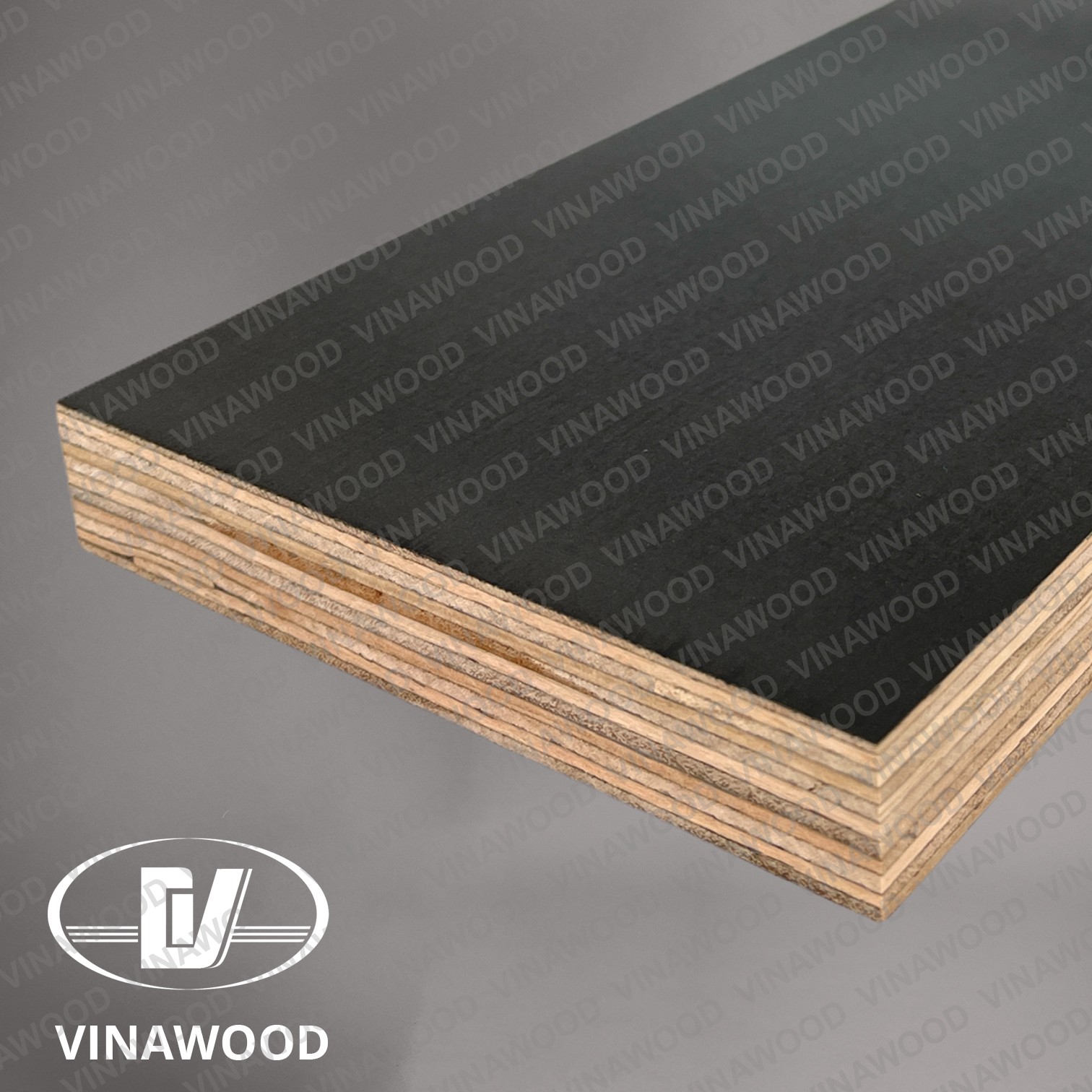
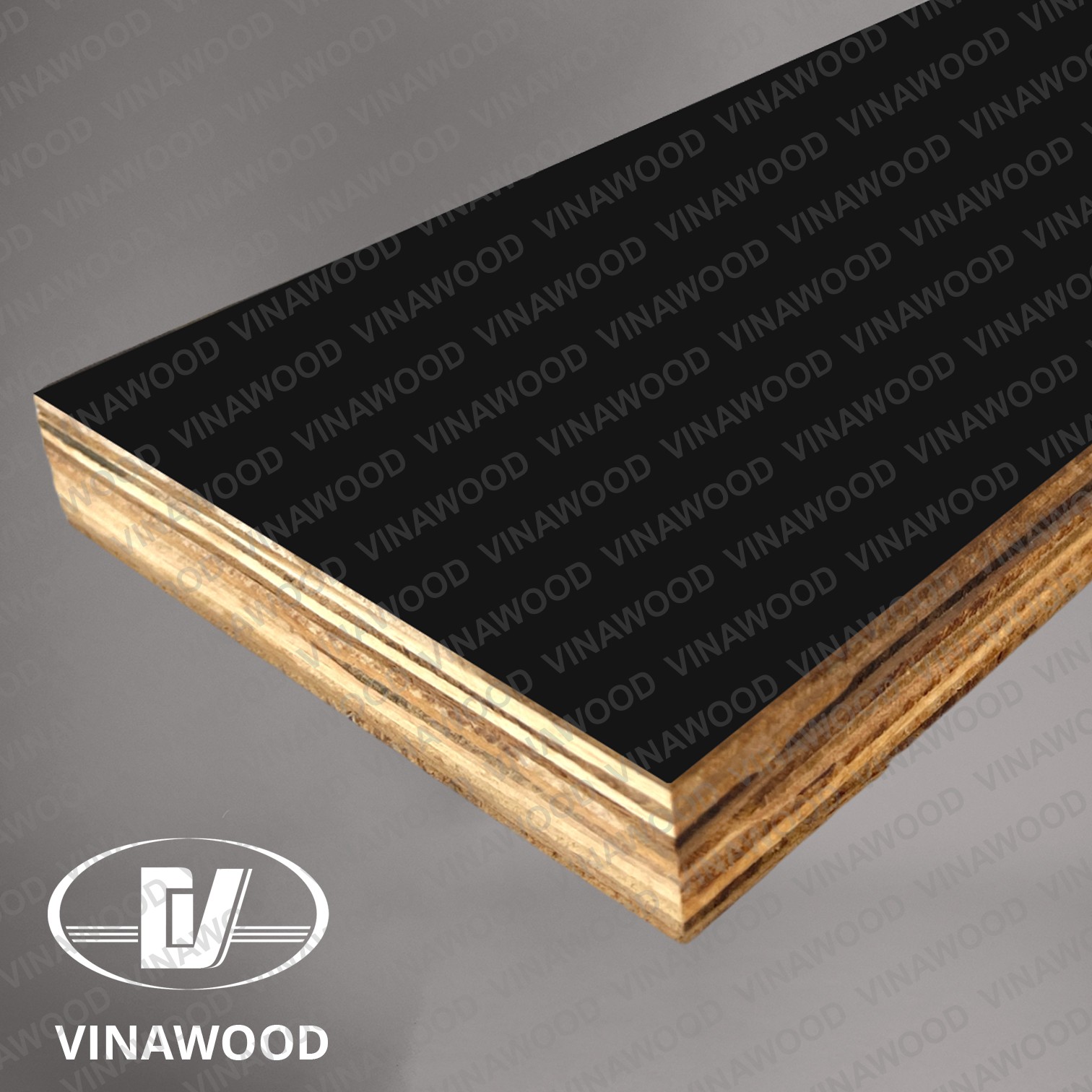
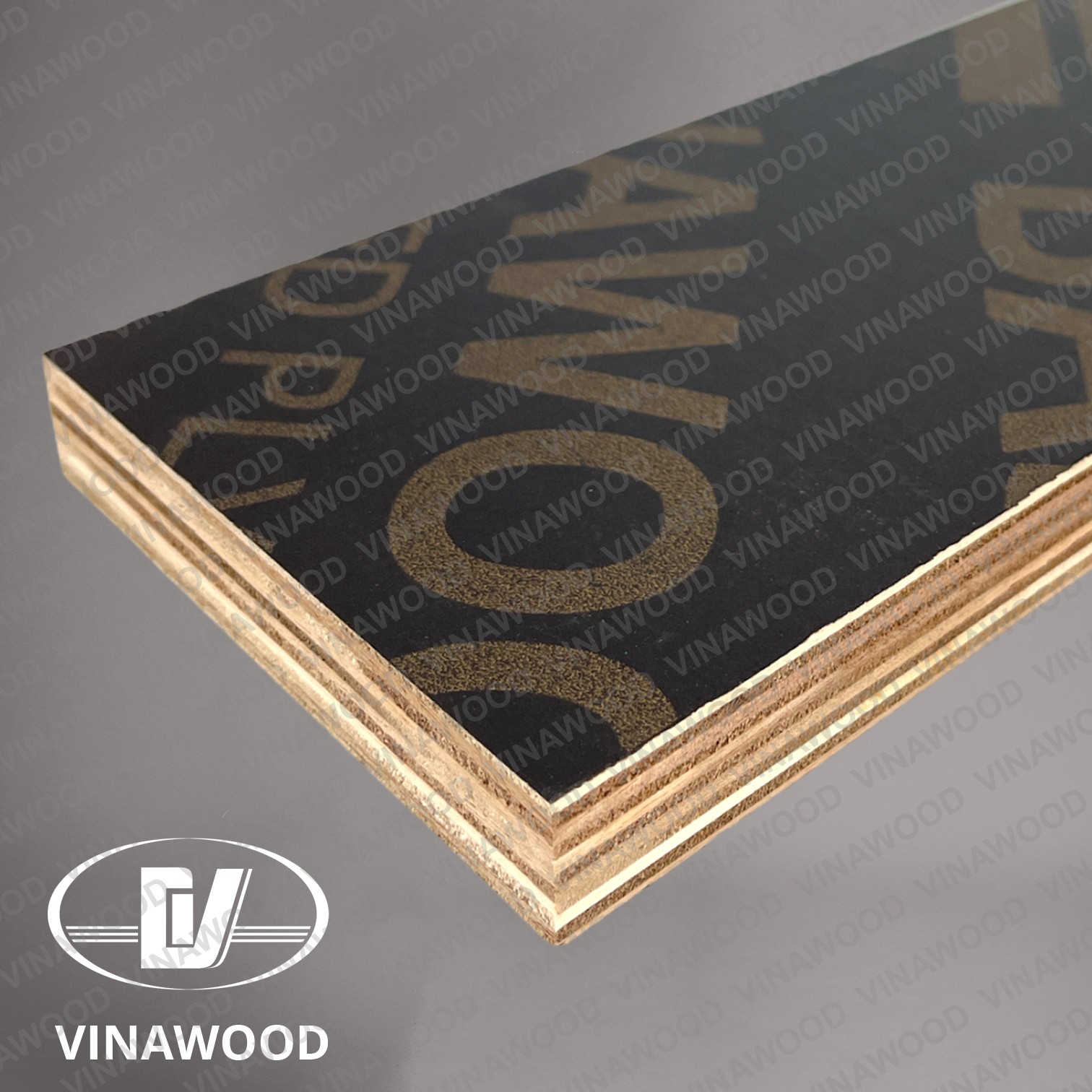
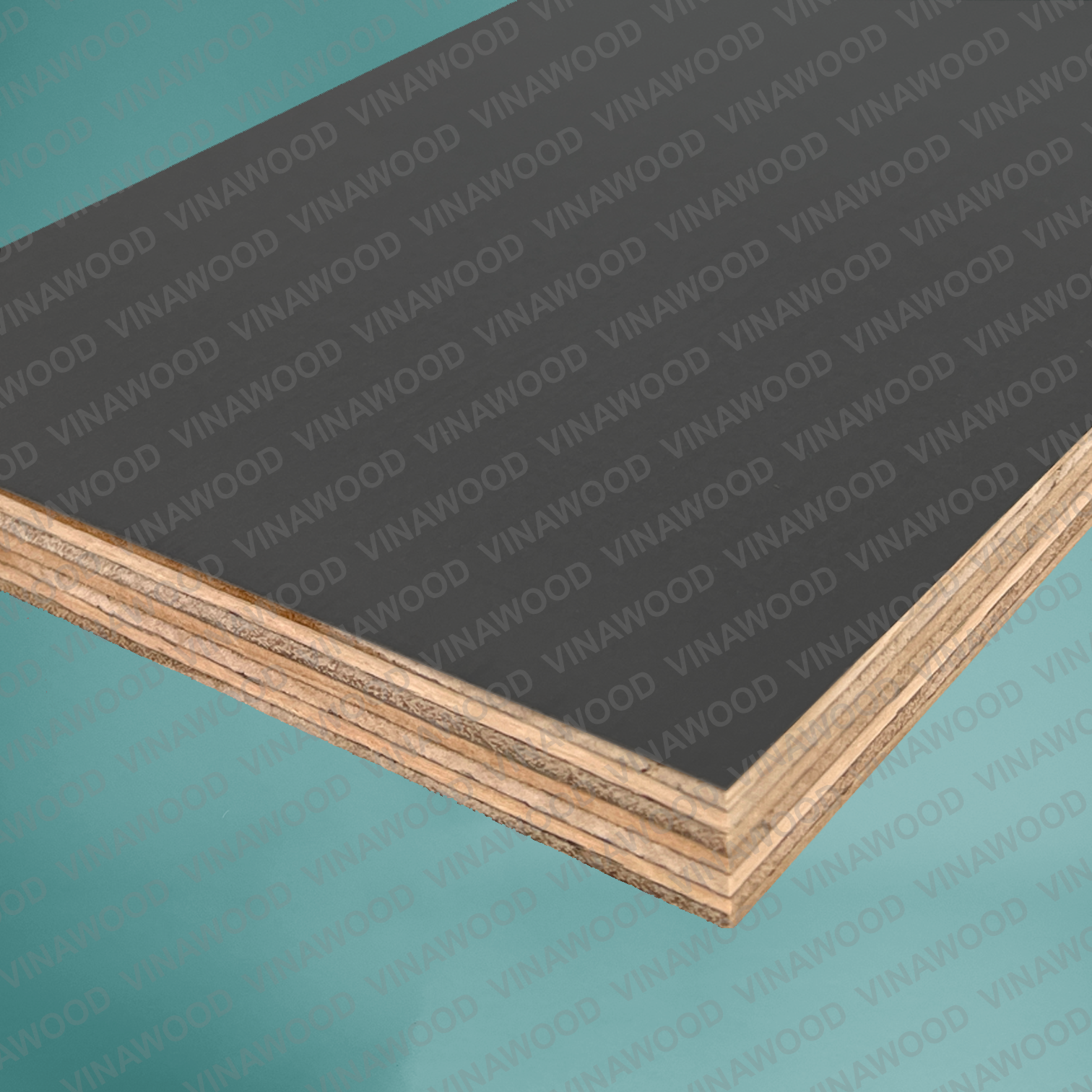
The raking soffit is the hardest-working surface on the form. It holds the full weight of the wet flight plus the crew walking the steps during placement, all on an incline. For typical residential and light commercial flights, 18 mm (3/4 in) film-faced plywood is the working baseline on close bearer spacing. The phenolic film matters here because the soffit underside often stays exposed on an open-stringer or feature stair, and a fair-face finish needs a sealed film, not bare veneer.
Where the soffit stays visible as architectural concrete, or the flight is wide and the bearer spacing has to open up, step to 21 mm (13/16 in). The extra stiffness keeps the underside plane true across the span.
Riser and side-form spec
Riser boards take direct placement pressure as the concrete is dropped in, and they set the nosing line. The thickness and the backing-stud spacing together decide whether that line stays straight. A thin riser on wide cleat spacing bows, and the nosing follows. Run 18 mm risers on tight backing, brace each one against the step above, and check the line before the pour, not after.
Side forms on a free-standing flight carry lateral load along the full rake. They want the same film-faced panel as the soffit so the cast sides match the underside finish, with stringer backing sized to the flight width.
Bond class by reuse target
How many flights a set of stair forms gives you comes down to the core glue and the edge care, not the film alone.
| Panel | Core glue | Bond class | Face | Max reuse | Stair fit |
|---|---|---|---|---|---|
| Form Extra | WBP MUF (higher-melamine-content) | EN 636-2 / Class 2 | phenolic film | up to 15 | Typical residential and commercial stair runs |
| Pro Form | WBP phenolic (PF) | EN 636-3 / Class 3 | phenolic film | up to 20 | Repeat precast-style forms, fair-face soffits |
| Form Basic | WBP MUF (standard) | EN 636-2 / Class 2 | phenolic film | up to 10 | Single-flight or short-run work |
The reuse numbers are maximums under good edge care. Class 3 (EN 636-3) is the phenolic-bonded tier: Pro Form in the EU range and the HDO range for North American crews. Form Extra is not a Class 3 panel. Its longer life over Form Basic comes from a more durable, higher-melamine-content MUF glue formulation, not a heavier face film. The face film is the same on both.
A vocabulary note, since stairs often land in residential work where the cabinet trade overlaps. "Melamine" in a formwork panel means the melamine-urea-formaldehyde core resin bonding the plies, not the decorative melamine laminate from kitchen carcassing. The MUF formwork range is weatherable at EN 636-2 and belongs on a stair soffit.
Cut-heavy work makes edge sealing non-negotiable
This is the part crews skip and regret. A stair form is dominated by cut edges, and every fresh cut is open core. Seal each one the day it is cut, before it ever sees concrete or sits out overnight. On stair work this single habit does more for reuse than any other spec decision.
We see the proof in our own returns data. The stair panels that come back unusable after two or three flights almost never failed on the face. They failed at the cut edges, which were left raw and stacked damp. A sealed edge plus a thin film of release agent is what carries a panel to the top of its reuse band. The storage and maintenance guide has the full routine.
Stripping and striking time
Strip with a wedge, never a crowbar levered against the nosing. The nosings are the most fragile geometry on the whole form, and a pried corner chips the concrete and tears the film in one move. Strike the risers first, working down, then the side forms, then the soffit once the engineer signs off on the concrete strength. Form-removal timing belongs to the designer and the relevant code (ACI 347 or local equivalent), because a stair carries load early and stripping a soffit too soon is a structural problem, not a finish one.
Common issues, and where they actually come from
Chipped nosings usually trace to hard stripping, not a panel fault. Lever a riser off against the fresh arris and the corner goes with it. Edge swelling may indicate an unsealed cut or damp storage, so the first thing to check is handling history. A wavy nosing line is almost always a riser board that bowed under placement pressure on backing that was spaced too wide.
None of these are reasons to reject a panel at delivery. They are site-discipline outcomes on the most demanding form on the job. A panel that arrives flat, sealed on all four edges, and within thickness tolerance has done its part. The rest is layout, bracing, and a wedge instead of a bar.
Sourcing checklist
| Spec | What to confirm |
|---|---|
| Adhesive class | EN 636-3 (Class 3) for fair-face soffits and repeat forms; EN 636-2 (Class 2) for typical runs |
| Thickness | 18 mm (3/4 in) baseline; 21 mm (13/16 in) for wide flights and architectural soffits |
| Edge sealing | Factory-sealed on all four edges; re-seal every site cut the day it is made |
| US | CARB P2 / TSCA Title VI compliance certificate per shipment |
| UK | UKCA marking; CE under EN 13986 where specified |
| Australia | Match to AS/NZS 6669 formply expectations for structural work |
For the neighbouring elements, the beam formwork guide covers downstand beam and U-channel forms, and the wall formwork guide covers vertical forms. Australian builders working to AS/NZS 6669 can cross-check F17 grading in the Australian formwork plywood guide.
About Vinawood
Vinawood has manufactured plywood in Vietnam since 1992, shipping more than 5,000 containers a year to 55+ countries. The formwork range spans EN 636-2 (Form Basic, Form Extra) and EN 636-3 (Pro Form, HDO range), with ISO 9001 quality management, CARB P2 / TSCA Title VI compliance for the United States, and CE marking under EN 13986 for export markets. For stair work, lead with Form Extra on typical flights and Pro Form or the HDO range where the soffit stays exposed or the forms run flight after flight. For a panel recommendation against your stair schedule, request a factory-direct quote.
Category
how-to